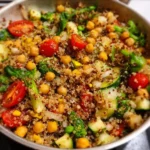
Ingredients
Scale
This recipe relies on simple, accessible ingredients that come together to create a complex and satisfying flavor profile. Using pre-cooked quinoa is the key to achieving the 15-minute timeframe.
- For the Stir-Fry:
- 1 tbsp Avocado Oil or Sesame Oil: Avocado oil is great for high-heat cooking, while sesame oil adds a wonderful nutty aroma right from the start.
- 2 cloves Garlic, minced: The aromatic foundation of any good stir-fry. Fresh is best, but garlic paste works in a pinch.
- 1 tsp Ginger, freshly grated: Adds a warm, zesty kick that brightens up the entire dish.
- 1 cup Broccoli Florets, small: Cut into small, bite-sized pieces for quick cooking. They provide a wonderful texture and a dose of vitamins.
- 1 Red Bell Pepper, thinly sliced: Adds sweetness, vibrant color, and a healthy dose of Vitamin C.
- 1 Carrot, julienned or thinly sliced: Provides a sweet crunch and beta-carotene. Using a julienne peeler makes this step extra fast.
- 1 (15-ounce) can Chickpeas, rinsed and drained: The protein-packed star of the show. Rinsing removes excess sodium and the “canned” taste.
- 2 cups Cooked Quinoa: The hearty, gluten-free grain that serves as the base. Using leftover or microwavable pre-cooked quinoa is the ultimate time-saver.
- For the Savory Stir-Fry Sauce:
- ¼ cup Low-Sodium Soy Sauce or Tamari: The salty, umami backbone of the sauce. Use tamari or coconut aminos for a gluten-free version.
- 1 tbsp Maple Syrup: Provides a touch of sweetness to balance the saltiness of the soy sauce. Agave nectar or honey (if not vegan) also works.
- 1 tsp Toasted Sesame Oil: A little goes a long way! This finishing oil adds an incredibly rich, nutty flavor that is essential for that classic stir-fry taste.
- 1 tbsp Rice Vinegar: Adds a subtle tang that cuts through the richness and brightens all the other flavors.
- 1 tsp Cornstarch (optional): Whisked into the sauce, this will help it thicken slightly and cling beautifully to every ingredient.
Instructions
The magic of this recipe is in its speed. The key is to have all your ingredients prepped and ready to go before you even turn on the stove—a technique chefs call mise en place.
- Prepare the Sauce: In a small bowl, whisk together all the sauce ingredients: low-sodium soy sauce (or tamari), maple syrup, toasted sesame oil, and rice vinegar. If you want a slightly thicker sauce, whisk in the cornstarch until it’s completely dissolved. Set the sauce aside. This step is crucial to do first, as the cooking process moves very quickly.
- Sauté the Aromatics: Heat the 1 tablespoon of avocado oil in a large skillet or wok over medium-high heat. Once the oil is shimmering, add the minced garlic and grated ginger. Sauté for about 30 seconds, stirring constantly, until fragrant. Be careful not to burn them, as this will make the entire dish bitter.
- Cook the Vegetables: Add the broccoli florets and carrots to the hot skillet. Stir-fry for 3-4 minutes. You want them to become tender but still retain a bit of a crisp bite. Since they are the hardest vegetables, they need a head start.
- Add Peppers and Chickpeas: Add the sliced red bell pepper and the rinsed and drained chickpeas to the skillet. Continue to stir-fry for another 2-3 minutes. The bell pepper should soften slightly but remain vibrant, and the chickpeas just need to be heated through.
- Combine Everything: Add the 2 cups of cooked quinoa to the skillet. Use your spatula to break up any clumps and toss everything together to combine evenly with the vegetables and chickpeas. Let it heat through for about 1-2 minutes.
- Sauce and Serve: Pour the prepared sauce over the entire mixture in the skillet. Stir everything continuously for 1-2 minutes, ensuring every grain of quinoa and piece of vegetable is coated. The sauce will bubble and thicken slightly, creating a delicious glaze. Remove from the heat immediately and serve hot.
Nutrition
- Serving Size: one normal portion
- Calories: 500
- Carbohydrates: 70g
- Fiber: 14g
- Protein: 18g