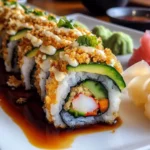
Ingredients
- Sushi Rice (Japanese Short-Grain Rice): 2 cups (approx. 400g) – This is crucial for its sticky texture, which holds the rolls together.
- Water: 2 ½ cups (600ml) – For cooking the rice to the perfect consistency.
- Rice Vinegar: ¼ cup (60ml) – The base for the sushi rice seasoning, providing a tangy flavor.
- Granulated Sugar: 2 tablespoons – Balances the vinegar and adds a subtle sweetness to the rice.
- Salt: 1 teaspoon – Enhances the overall flavor of the seasoned rice.
- Nori Sheets: 8-10 full sheets – Dried seaweed sheets that form the outer layer of the sushi rolls.
- Cucumber: 1 large, firm – Julienned into long, thin matchsticks for a cool, crisp crunch.
- Carrots: 2 medium – Peeled and julienned into long, thin matchsticks, adding sweetness and vibrant color.
- Bell Peppers: 2 (e.g., 1 red, 1 yellow) – Cored, seeded, and julienned into thin strips for sweetness and crunch.
- Avocado: 2 ripe but firm – Peeled, pitted, and sliced thinly, providing a creamy texture to contrast the crunch.
- Asparagus Spears: 1 bunch (approx. 10-12 spears) – Trimmed and lightly blanched or steamed, then cooled, for a tender-crisp bite. (Optional, but highly recommended for extra crunch and flavor)
- Toasted Sesame Seeds: 2 tablespoons – For sprinkling inside or outside the rolls, adding a nutty flavor and visual appeal.
- Panko Breadcrumbs or Tempura Flakes: ½ cup (optional, for extra crunch) – These can be lightly toasted and sprinkled inside the rolls for an amplified crunchy texture.
- For Serving (Optional):
- Soy Sauce or Tamari (for gluten-free): For dipping.
- Wasabi Paste: For a spicy kick.
- Pickled Ginger (Gari): To cleanse the palate between bites.
- Spicy Mayo: A mixture of mayonnaise and sriracha for a creamy, spicy dip.
Instructions
1. Prepare the Sushi Rice:
* Rinse the Rice: Place the sushi rice in a fine-mesh sieve and rinse under cold running water until the water runs mostly clear. This removes excess starch and prevents gummy rice. Drain well.
* Cook the Rice: Combine the rinsed rice and 2 ½ cups of water in a medium saucepan with a tight-fitting lid. Bring to a boil over medium-high heat. Once boiling, reduce the heat to the lowest setting, cover, and simmer for 15-20 minutes, or until all the water is absorbed. Do not lift the lid during this time.
* Rest the Rice: Once cooked, remove the saucepan from the heat and let it stand, covered, for another 10-15 minutes. This allows the rice to finish steaming and achieve the perfect texture.
* Prepare Sushi Vinegar (Sushi-zu): While the rice is resting, combine the rice vinegar, sugar, and salt in a small saucepan. Heat gently over low heat, stirring, until the sugar and salt are completely dissolved. Do not let it boil. Remove from heat and let it cool slightly.
* Season the Rice: Transfer the hot cooked rice to a large, non-metallic bowl (wood, glass, or plastic is ideal – a traditional wooden hangiri is best if you have one). Gradually pour the sushi vinegar mixture over the rice. Using a rice paddle or spatula, gently “cut” and fold the vinegar into the rice using slicing motions. Avoid stirring or mashing the rice. Fan the rice as you mix (traditionally done with a hand fan, but a piece of cardboard works) to help it cool down quickly and give it a glossy sheen. Cover the seasoned rice with a damp cloth to prevent it from drying out while you prepare the fillings. It should be used when it’s at room temperature or slightly warm.
2. Prepare the Vegetables & Other Fillings:
* Julienne Vegetables: Wash and prepare all your vegetables. Peel the carrots. Core and seed the bell peppers. Trim the ends off the cucumber. Cut the cucumber, carrots, and bell peppers into long, thin matchsticks (julienne), approximately ¼ inch thick.
* Avocado: Peel, pit, and slice the avocado into thin strips just before you’re ready to roll, to prevent browning. You can toss it with a tiny bit of lemon or lime juice if preparing slightly ahead.
* Asparagus (if using): Snap off the tough ends of the asparagus. Blanch them in boiling water for 1-2 minutes until tender-crisp, then immediately plunge into an ice bath to stop the cooking process and retain their bright green color. Pat dry and set aside.
* Panko/Tempura Flakes (if using): If using panko, you can lightly toast them in a dry skillet over medium heat for a few minutes until golden brown for extra flavor.
3. Assemble the Sushi Rolls:
* Set Up Your Rolling Station: You’ll need a bamboo sushi mat (makisu), a small bowl of water (Tezu – often with a splash of rice vinegar mixed in, to prevent rice from sticking to your hands), your nori sheets, the prepared sushi rice, and your vegetable fillings. If you don’t have a bamboo mat, a clean tea towel covered with plastic wrap can work in a pinch.
* Place Nori: Lay one sheet of nori, shiny side down, on the bamboo mat with the lines of the nori running parallel to the bamboo slats.
* Spread the Rice: Dip your fingers in the Tezu water to prevent sticking. Take a handful of sushi rice (about ¾ to 1 cup) and spread it evenly over the nori sheet, leaving a 1-inch border خالی along the top edge (the edge furthest from you). Be gentle and don’t press the rice down too hard; you want a light, even layer.
* Add Fillings: Arrange your chosen vegetable fillings in a horizontal line across the center of the rice, or slightly closer to the edge nearest you. Don’t overfill, or the roll will be difficult to close. A sprinkle of toasted sesame seeds or panko/tempura flakes here adds great texture. For example, a line of cucumber, carrot, bell pepper, and a couple of slices of avocado.
* Roll the Sushi:
* Lift the edge of the bamboo mat closest to you (with the nori and rice on it).
* Carefully roll it over the fillings, tucking the edge of the nori under the fillings to start a tight cylinder.
* Continue rolling, using the mat to guide and shape the roll, applying gentle but firm pressure to create a compact roll.
* As you approach the end of the nori sheet, lightly moisten the 1-inch border of exposed nori with a little water from your Tezu bowl. This will help seal the roll.
* Complete the roll, pressing gently to seal.
4. Slice the Sushi Rolls:
* Prepare Your Knife: Use a very sharp knife. Dip the blade in water or wipe it with a damp cloth before each cut. This prevents the rice from sticking and ensures clean slices.
* Slice: Place the sushi roll on a clean cutting board. First, cut the roll in half. Then, place the two halves side-by-side and cut them into three or four equal pieces each, resulting in 6 or 8 pieces per roll. Wipe your knife clean between cuts if necessary.
5. Serve:
* Arrange the crunchy veggie sushi rolls on a platter. Serve immediately with soy sauce (or tamari), wasabi, and pickled ginger on the side. A sprinkle of extra toasted sesame seeds over the top looks lovely.
Nutrition
- Serving Size: one normal portion
- Calories: 350