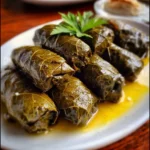
Ingredients
- Jarred Grape Leaves: 1 jar (approx. 16 ounces or 450g), containing about 60-70 leaves in brine. These are the foundation, providing the signature tangy, slightly tough wrapper that tenderizes beautifully upon cooking.
- Ground Beef: 1 lb (450g), lean (85/15 or 90/10). This provides the savory, rich protein base for the filling. Lamb or a mix of beef and lamb also works wonderfully.
- Short-Grain Rice: 1 ½ cups, such as Calrose or Arborio, uncooked. It’s crucial to use short-grain rice as its high starch content creates a creamy, tender filling that holds together well, unlike long-grain rice which can be too firm.
- Yellow Onion: 1 large, finely diced. This builds the aromatic foundation of the filling, adding a subtle sweetness and depth.
- Fresh Parsley: 1 large bunch, finely chopped. It imparts a fresh, clean, and slightly peppery flavor that is essential to the Mediterranean profile.
- Fresh Dill: 1 large bunch, finely chopped. Dill provides a unique, slightly sweet, and anise-like aroma that is characteristic of classic stuffed grape leaves.
- Fresh Mint: ½ cup, finely chopped. Mint adds a cool, bright counterpoint to the richness of the meat and spices.
- Olive Oil: ½ cup, extra virgin, plus more for drizzling. A good quality olive oil is non-negotiable, lending its fruity, peppery notes throughout the dish.
- Canned Diced Tomatoes: 1 can (14.5 ounces or 411g), undrained. These are mixed into the filling to add moisture, a gentle acidity, and a hint of sweetness.
- Lemon Juice: From 2 large lemons (about ½ cup), freshly squeezed. Lemon is the star brightener, cutting through the richness and infusing the entire dish with a vibrant, tangy flavor.
- Allspice: 1 ½ teaspoons, ground. This warm spice adds a complex, slightly sweet, and peppery note reminiscent of cloves, cinnamon, and nutmeg.
- Cinnamon: ½ teaspoon, ground. A small amount of cinnamon adds a subtle warmth and depth that complements the meat and allspice perfectly.
- Salt: 2 teaspoons, or to taste. Essential for enhancing all the other flavors.
- Black Pepper: 1 ½ teaspoons, freshly ground. Provides a gentle, lingering heat.
- Water or Broth: 4 cups, for cooking. You can use water, beef broth, or vegetable broth to simmer the grape leaves, each adding a different level of flavor.
- Potato or Tomato Slices: For lining the pot. This is a crucial step to prevent the bottom layer of grape leaves from scorching during the long simmer.
Instructions
Step 1: Prepare the Grape Leaves
Begin by carefully removing the grape leaves from the jar. Unroll the bundles and place them in a large bowl. Cover them with hot water and let them soak for about 15-20 minutes. This process helps to rinse off the excess brine and makes the leaves more pliable and easier to roll. After soaking, drain the water and gently separate the leaves, handling them with care to avoid tearing. Snip off any tough stems at the base of each leaf with a pair of kitchen scissors. Set aside the most torn or imperfect leaves to line the bottom of your cooking pot.
Step 2: Create the Aromatic Filling
In a large mixing bowl, combine the uncooked short-grain rice, finely diced yellow onion, and the lean ground beef. Add the finely chopped fresh parsley, dill, and mint. Pour in the undrained can of diced tomatoes. Next, add the seasonings: the ground allspice, cinnamon, salt, and freshly ground black pepper. Drizzle in ¼ cup of the extra virgin olive oil and the juice of one lemon. Using your hands or a large spoon, mix everything together thoroughly until all the ingredients are evenly distributed. Do not overmix, as this can make the meat tough. The rice should be uncooked at this stage; it will cook inside the leaves while simmering, absorbing all the delicious flavors from the meat, herbs, and cooking liquid.
Step 3: The Art of Rolling the Grape Leaves
Now for the most rewarding part of the process. Set up your rolling station: your bowl of filling, the stack of prepared leaves, and a large plate or baking sheet to place the rolled leaves on. Take one grape leaf and lay it on your work surface with the shiny side facing down and the veined side facing up. The stem end should be closest to you. Place about one to two teaspoons of the filling in a small log shape near the stem end of the leaf. Be careful not to overstuff, as the rice will expand during cooking.
To roll, first, fold the bottom of the leaf up and over the filling. Then, fold the left side of the leaf in towards the center. Next, fold the right side in towards the center, similar to how you would fold a burrito. Finally, starting from the bottom, roll the leaf upwards into a tight, compact cylinder. The roll should be firm but not so tight that the leaf might burst when the rice expands. Place the finished roll, seam-side down, on your plate and repeat the process with the remaining leaves and filling. This step takes time and patience, so put on some music and enjoy the meditative rhythm of rolling.
Step 4: Layering the Pot for Cooking
Select a large, heavy-bottomed pot or Dutch oven. First, line the bottom of the pot with the torn or unused grape leaves you set aside earlier. You can also use a layer of sliced potatoes or tomatoes. This protective layer is essential as it prevents the stuffed grape leaves on the bottom from sticking to the pot and scorching during the long, slow simmer.
Once the bottom is lined, begin arranging the stuffed grape leaves in the pot. Place them seam-side down in a single, tight layer, packing them snugly next to each other. This snug fit helps them stay rolled and intact during cooking. Once the first layer is complete, start a second layer on top, continuing until all the rolls are in the pot. You can arrange them in a circular pattern for a beautiful presentation.
Step 5: Simmering to Perfection
Drizzle the remaining ¼ cup of olive oil and the juice of the second lemon over the packed grape leaves. Pour in the 4 cups of water or broth. The liquid should come about three-quarters of the way up the grape leaves, but not completely submerge them. To prevent the leaves from unravelling and floating around as they cook, place a small, heat-proof inverted plate directly on top of the rolls. This weight is the secret to perfectly shaped stuffed grape leaves.
Bring the pot to a gentle boil over medium-high heat. Once it’s boiling, reduce the heat to the lowest possible setting, cover the pot with a tight-fitting lid, and let it simmer for 1.5 to 2 hours. The key is a long, slow simmer. After about 1.5 hours, you can carefully remove one roll to test for doneness. The leaf should be very tender, and the rice filling should be fully cooked through.
Step 6: Resting and Serving
Once the grape leaves are cooked, turn off the heat and let them rest in the pot, covered, for at least 30 minutes. This allows the flavors to meld further and helps them firm up, making them easier to handle. Carefully remove the inverted plate. You can serve them warm directly from the pot or let them cool to room temperature. They are equally delicious either way.
Nutrition
- Serving Size: one normal portion
- Calories: 320