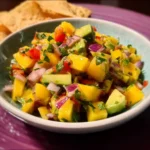
Ingredients
- 3 large, ripe mangoes, diced (about 3 cups): These are the sweet, tropical heart of the salsa. Look for mangoes that have a slight give when gently pressed and a fragrant, fruity aroma near the stem. Ataulfo (or Honey) mangoes are fantastic for their creamy, non-fibrous texture, but Kent or Keitt varieties also work beautifully. The goal is a deep, natural sweetness that forms the foundation of the salsa.
- 2 large, ripe Hass avocados, diced (about 2 cups): The avocados provide the creamy, buttery counterpoint to the mango’s sweetness. A perfect avocado will yield to gentle pressure but not feel mushy. This rich creaminess balances the acidity and adds a luxurious mouthfeel that is simply irresistible.
- 1 medium red onion, finely diced (about 1 cup): Red onions are essential for their mild, slightly sweet flavor and vibrant purple hue, which adds stunning visual contrast. Dicing them finely ensures their flavor is distributed evenly without overpowering the delicate fruit.
- 1 large jalapeño, seeded and minced: This is your source of heat. The jalapeño provides a gentle, fresh warmth that cuts through the richness of the avocado and sweetness of the mango. For a milder salsa, be sure to remove all seeds and the white membrane. For a spicier kick, leave some in.
- 1 cup fresh cilantro, chopped: There’s no substitute for the bright, citrusy, and slightly peppery flavor of fresh cilantro. It ties all the other ingredients together, lending an unmistakable freshness that defines a great salsa.
- Juice of 2 large limes (about 1/4 cup): Freshly squeezed lime juice is non-negotiable. It serves two critical purposes: its zesty tang brightens and enhances all the other flavors, and its acidity helps to prevent the avocado from oxidizing and turning brown.
- 1/2 teaspoon fine sea salt, or to taste: Salt is a flavor enhancer. It doesn’t just make the salsa salty; it makes the mango taste sweeter, the avocado richer, and the lime zestier. Start with half a teaspoon and adjust as needed after the flavors have had a moment to meld.
Instructions
Creating this salsa is less about complex cooking techniques and more about careful preparation and assembly. Follow these steps to ensure a perfect texture and flavor combination every time.
Step 1: Prepare Your Produce
Begin by thoroughly washing all your produce—mangoes, avocados, jalapeño, cilantro, and limes—under cool running water. Pat them dry with a clean kitchen towel. This simple step is crucial for food safety and ensures no unwanted residue makes its way into your beautiful salsa.
Step 2: The Art of Dicing the Mango
The mango is often the most intimidating part for many, but a simple technique makes it easy.
- Stand the mango on its end on a cutting board. The mango has a large, flat pit in the center. Slice downwards on either side of the pit, cutting off the two fleshy “cheeks.”
- Take one cheek and, without cutting through the skin, carefully score the flesh in a grid-like pattern to create small cubes.
- Once scored, you can either gently push the skin from underneath to pop the cubes outward (the “hedgehog” method) and slice them off, or use a large spoon to scoop the diced flesh away from the skin and into a large mixing bowl.
- Repeat with the other cheek and trim any remaining flesh from around the pit to dice.
Step 3: Preparing the Creamy Avocado
- Slice the avocados in half lengthwise, cutting around the large pit.
- Gently twist the two halves to separate them. To remove the pit, carefully but firmly tap the blade of a heavy knife into it, then twist the knife to lift the pit out.
- Just as with the mango, score the avocado flesh into cubes directly in the skin. Be careful not to pierce through to your hand.
- Use a spoon to scoop the diced avocado out of the skin and add it to the bowl with the mangoes.
Step 4: Finely Chop the Aromatics and Herbs
- Red Onion: Dice the red onion as finely as you can. A fine dice integrates the onion’s flavor seamlessly, providing a subtle crunch and savory note in every bite.
- Jalapeño: Slice the jalapeño in half lengthwise. Using a small spoon, scrape out the seeds and the white pith (the membrane), as this is where most of the intense heat resides. Mince the remaining green flesh very finely.
- Cilantro: Gather the cilantro into a tight bunch and chop it finely. Include the tender stems, as they are packed with flavor.
- Add the diced red onion, minced jalapeño, and chopped cilantro to the bowl with the mango and avocado.
Step 5: Combine, Season, and Marry the Flavors
- Pour the freshly squeezed lime juice over all the ingredients in the bowl. The lime juice will immediately begin to work its magic, preventing the avocado from browning.
- Sprinkle the sea salt over the top.
- Using a large rubber spatula or spoon, gently fold all the ingredients together. Be very gentle during this step. The goal is to combine everything without mashing the soft avocado and mango cubes. You want to maintain the distinct textures of each component.
Step 6: The Crucial Resting Period
- Once everything is gently combined, cover the bowl and let the salsa rest for at least 15-30 minutes at room temperature (or in the refrigerator if you’re not serving it right away). This resting period is essential. It allows the salt to draw out some of the juices and gives all the individual flavors a chance to meld and marry into the cohesive, delicious salsa you’re aiming for. Give it one last gentle stir and a taste before serving, adjusting salt or lime juice if necessary.
Nutrition
- Serving Size: one normal portion
- Calories: 180