
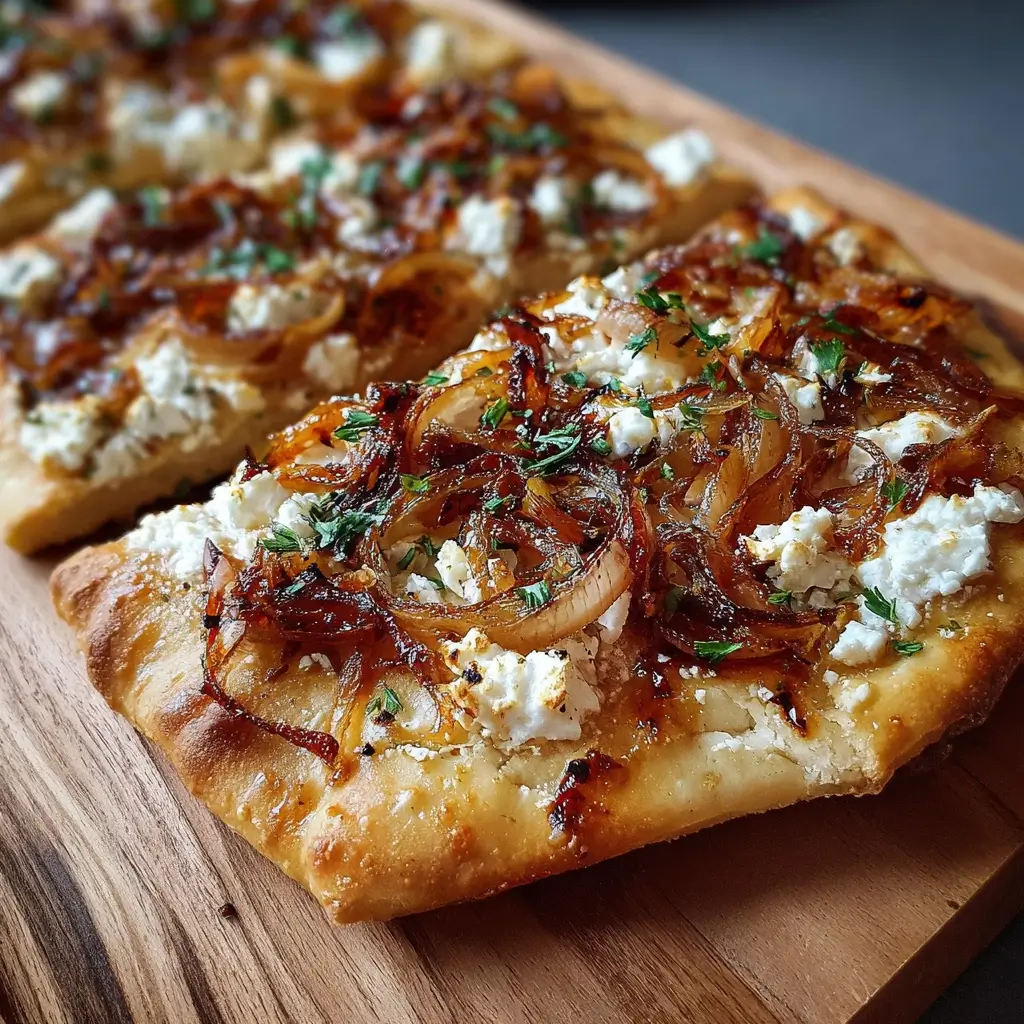

There are some recipes that just feel like a warm hug for your soul, and this Caramelized Onion and Feta Flatbread is unequivocally one of them. The first time I made it, the house filled with the intoxicatingly sweet and savory aroma of onions slowly melting down in the pan, a scent that promised something truly special. I had friends coming over for a casual get-together, and I wanted an appetizer that was impressive yet fuss-free. As I pulled the golden, bubbling flatbread from the oven, with its crispy edges, jammy onions, and pockets of salty, tangy feta, I knew I had a winner. It was devoured in minutes, with everyone asking for the recipe. Since that day, it has become a staple in our home. It’s the perfect Friday night dinner with a simple salad, a show-stopping party appetizer, and even a comforting lunch with a bowl of soup. The magic lies in its simplicity; a handful of humble ingredients transform into something elegant and utterly delicious. It’s a testament to the fact that you don’t need a complicated recipe to create a memorable meal—just a little patience for those beautiful caramelized onions.
Ingredients
Here is everything you will need to create this stunningly simple yet sophisticated flatbread.
For the Homemade Flatbread Dough:
- 3 ½ cups (420g) Bread Flour: Provides a chewier, more structured crust, but all-purpose flour works well in a pinch.
- 2 ¼ teaspoons (1 packet) Instant Yeast: The leavening agent that gives our dough its light, airy texture.
- 1 ½ teaspoons Granulated Sugar: A little food for the yeast to help it activate and add a touch of flavor.
- 2 teaspoons Kosher Salt: Crucial for flavor; it controls the yeast and strengthens the gluten structure.
- 1 ½ cups Warm Water (105-115°F / 40-46°C): The perfect temperature to activate the yeast without harming it.
- 2 tablespoons Extra Virgin Olive Oil: Adds richness, flavor, and softness to the dough.
For the Toppings:
- 3 large Yellow or Sweet Onions: These varieties contain more sugar, making them ideal for achieving a deep, sweet caramelization.
- 3 tablespoons Unsalted Butter: Adds a rich, nutty flavor to the onions as they cook.
- 2 tablespoons Extra Virgin Olive Oil: Used for both caramelizing the onions and brushing the dough.
- 1 teaspoon Kosher Salt: To draw out moisture from the onions and season them perfectly.
- ½ teaspoon Black Pepper: Freshly ground for the best flavor.
- 1 cup (about 5 oz) Crumbled Feta Cheese: Use a block of feta packed in brine and crumble it yourself for superior flavor and texture compared to pre-crumbled varieties.
- 1 tablespoon Fresh Thyme Leaves: (Optional) Adds a wonderful earthy, floral note that complements the onions beautifully.
- Balsamic Glaze: (For serving) A drizzle at the end provides a sweet and tangy finish that ties all the flavors together.
Instructions
Follow these detailed steps to craft the perfect flatbread. We will break it down into three main stages: preparing the dough, caramelizing the onions, and finally, assembling and baking your masterpiece.
Part 1: Preparing the Flatbread Dough
This versatile dough is easy to make and provides the perfect canvas for our toppings.
- Activate the Yeast: In the bowl of a stand mixer or a large mixing bowl, combine the warm water, instant yeast, and granulated sugar. Give it a gentle whisk and let it sit for 5-10 minutes. You’ll know the yeast is active when the mixture becomes foamy and smells fragrant. If it doesn’t foam, your yeast may be old or the water was too hot/cold; you’ll need to start over.
- Mix the Dry Ingredients: In a separate medium bowl, whisk together the bread flour and kosher salt. This ensures the salt is evenly distributed and doesn’t come into direct contact with the yeast initially, which can inhibit its activity.
- Combine and Knead (Stand Mixer Method): Attach the dough hook to your stand mixer. With the mixer on low speed, gradually add the flour mixture to the wet ingredients. Once combined, add the 2 tablespoons of olive oil. Increase the speed to medium-low and knead for 6-8 minutes. The dough should become smooth, elastic, and pull away from the sides of the bowl. It should be slightly tacky to the touch but not overly sticky.
- Combine and Knead (By Hand): If you don’t have a stand mixer, add about half the flour to the yeast mixture and stir with a wooden spoon until combined. Add the remaining flour and olive oil, and mix until a shaggy dough forms. Turn the dough out onto a lightly floured surface. Knead for 10-12 minutes, adding a little extra flour to your hands and the surface as needed to prevent sticking. The dough is ready when it’s smooth, elastic, and springs back when you poke it gently.
- First Rise (Proofing): Form the dough into a ball. Lightly grease the mixing bowl with olive oil and place the dough inside, turning it over once to coat the top. Cover the bowl with a clean kitchen towel or plastic wrap. Let it rise in a warm, draft-free place for 60-90 minutes, or until it has doubled in size.
Part 2: The Art of Caramelizing Onions
This is the most time-consuming part, but it’s where the magic happens. Patience is your most important ingredient here.
- Prep the Onions: Peel the onions, cut them in half from pole to pole (root to stem), and then slice them thinly into half-moons.
- Start the Sauté: In a large, heavy-bottomed skillet or Dutch oven, melt the butter and olive oil over medium-low heat. The combination of butter for flavor and oil for a higher smoke point is ideal.
- Cook Low and Slow: Add the sliced onions to the pan, along with the 1 teaspoon of kosher salt and the black pepper. The salt will help draw moisture out of the onions. Stir to coat them in the fat. Let the onions cook slowly, stirring every 5-7 minutes. Do not rush this process by turning up the heat, as the onions will burn before they have a chance to sweeten and caramelize.
- The Caramelization Process (30-45 minutes):
- First 10 minutes: The onions will soften and become translucent.
- Next 10-15 minutes: They will start to turn a pale, golden yellow and release a lot of their liquid. You might see some brown bits (fond) forming on the bottom of the pan – this is pure flavor!
- Final 10-20 minutes: The onions will take on a deep amber or rich brown color and become incredibly soft and jam-like. Stir more frequently now to prevent burning. If the fond on the bottom of the pan looks like it’s getting too dark, deglaze the pan by adding a tablespoon of water and scraping the bits up with your wooden spoon.
- Finish: Once the onions are a deep, rich brown and have a jammy consistency, remove them from the heat. Stir in the fresh thyme leaves, if using. Set aside to cool slightly.
Part 3: Assembling and Baking the Flatbread
Now it’s time to bring all the elements together.
- Preheat Your Oven: Place a baking stone or a large, inverted baking sheet on the middle rack of your oven. Preheat the oven to 450°F (232°C). Preheating your baking surface is key to achieving a crispy bottom crust.
- Divide and Shape the Dough: Once the dough has doubled in size, gently punch it down to release the air. Transfer it to a lightly floured surface and divide it into two equal pieces. Let the pieces rest for 5 minutes to allow the gluten to relax, which makes shaping easier.
- Roll it Out: Working with one piece of dough at a time, gently stretch and roll it into a rustic, oblong or circular shape, about 1/4-inch thick. Place the shaped dough onto a piece of parchment paper.
- Top the Flatbread: Brush the entire surface of the dough with a thin layer of extra virgin olive oil. This prevents the crust from getting soggy and adds flavor. Spread half of the cooled caramelized onions evenly over the dough, leaving a small ½-inch border around the edges. Sprinkle half of the crumbled feta cheese over the onions.
- Bake to Perfection: Carefully slide the parchment paper with the flatbread onto your preheated baking stone or sheet. Bake for 12-15 minutes, or until the crust is a deep golden brown and the feta is slightly melted and toasted.
- Repeat: While the first flatbread is baking, you can assemble the second one on another piece of parchment paper.
- Garnish and Serve: Once baked, carefully remove the flatbread from the oven. Let it cool for a minute or two before drizzling with balsamic glaze. Slice and serve immediately for the best experience.
Nutrition Facts
This information is an estimate and can vary based on specific ingredients used.
- Servings: 8 (4 slices per flatbread)
- Calories per serving: Approximately 380 kcal
- Carbohydrates: The primary source of energy, coming mainly from the flour in the dough. The slow-release carbs will keep you feeling satisfied.
- Protein: Sourced from the feta cheese and the gluten in the bread flour, protein is essential for muscle repair and a feeling of fullness.
- Fat: Primarily from the heart-healthy monounsaturated fats in olive oil and the saturated fat from the feta cheese and butter, providing flavor and aiding in vitamin absorption.
- Sodium: Mostly from the feta cheese and the salt used in the dough and onions. It’s an important electrolyte, but be mindful if you are on a low-sodium diet.
- Fiber: The onions and whole grains (if using whole wheat flour) contribute dietary fiber, which is important for digestive health.
Preparation Time
- Active Time: 30 minutes (mixing dough, slicing onions, assembling flatbreads)
- Inactive Time: 2 hours (60-90 minutes for dough to rise, 30-45 minutes for onions to caramelize)
- Total Time: Approximately 2 hours 30 minutes
How to Serve
This Caramelized Onion and Feta Flatbread is incredibly versatile. Here are a few ways to present and enjoy it:
- As a Stunning Appetizer:
- Cut the flatbread into small, bite-sized squares or thin strips.
- Arrange them on a large wooden board or platter.
- Serve alongside a bowl of olives, some cured meats like prosciutto or ham, and a small dish of extra balsamic glaze for dipping.
- It’s the perfect starter for a dinner party or a sophisticated snack for a wine night.
- As a Light Main Course:
- Serve a larger portion (a quarter or half of a flatbread) per person.
- Pair it with a fresh, crisp side salad. An arugula salad with a simple lemon vinaigrette is a perfect peppery counterpoint to the sweet onions.
- For a heartier meal, serve alongside a bowl of creamy tomato soup or a hearty lentil soup.
- Delicious Garnishes and Pairings:
- Herbs: Garnish with extra fresh thyme, chopped fresh parsley, or even some fresh rosemary before serving.
- Spice: For a little kick, sprinkle a pinch of red pepper flakes over the top.
- Sweetness: Besides balsamic glaze, a light drizzle of honey can also be a delicious finishing touch.
- Wine Pairing: Pairs beautifully with a crisp Sauvignon Blanc, a dry Rosé, or a light-bodied red like Pinot Noir.
- Beer Pairing: A Pilsner or a Belgian-style Witbier complements the flavors without overpowering them.
Additional Tips
Unlock the full potential of your flatbread with these eight pro tips.
- Make-Ahead Onion Magic: Caramelizing onions is the most time-consuming step. You can make a large batch of caramelized onions up to 5 days in advance and store them in an airtight container in the refrigerator. This turns the recipe into a quick, 30-minute meal.
- Dough Shortcuts and Variations: No time for homemade dough? A high-quality store-bought pizza dough or even a pre-baked flatbread like naan or pita will work in a pinch. For a healthier twist, substitute up to half of the bread flour with whole wheat flour in the homemade dough recipe.
- Get Cheesy with It: While feta is fantastic, don’t be afraid to experiment. Crumbled goat cheese offers a similar tanginess, while a combination of shredded low-moisture mozzarella and Parmesan will give you that classic “cheese pull” and nutty flavor.
- The Secret to a Crispy Crust: The key is high, direct heat. Always preheat your baking surface (pizza stone or baking sheet) with the oven. This initial blast of heat helps to cook the bottom of the crust quickly, preventing it from becoming soggy.
- Boost the Onion Flavor: To deepen the onion flavor even more, add a splash of balsamic vinegar or a teaspoon of brown sugar to the onions during the last 5 minutes of caramelizing. This enhances their sweetness and adds a lovely acidic note.
- Add a Garlic Foundation: For all the garlic lovers, mince 2-3 cloves of garlic and add them to the caramelized onions during the last 2 minutes of cooking. This infuses a wonderful garlic aroma without the risk of burning it.
- Proper Storage and Reheating: Store leftover flatbread wrapped tightly in foil in the refrigerator for up to 3 days. To reheat and bring back its crispiness, place it on a baking sheet in a 375°F (190°C) oven for 5-7 minutes. Avoid the microwave, which will make the crust soft and chewy.
- Freezing for the Future: You can freeze the components separately or the fully baked flatbread. Freeze dough balls wrapped tightly in plastic wrap. Freeze caramelized onions in an airtight container. To freeze the baked flatbread, let it cool completely, wrap it in plastic wrap, then foil, and freeze for up to 2 months. Reheat from frozen in the oven.
FAQ Section
Here are answers to some of the most common questions about making this recipe.
1. Can I use store-bought pizza dough instead of making my own?
Absolutely! Using store-bought pizza dough is a fantastic time-saver. Simply let the dough come to room temperature for about 20-30 minutes before you try to shape it, as this will make it much more pliable and easier to work with. Follow the assembly and baking instructions as written.
2. My onions seemed to burn instead of caramelizing. What went wrong?
This is a common issue, and it almost always comes down to heat. The key to caramelization is low and slow heat. If your heat is too high, the exterior of the onions will burn before the sugars inside have time to break down and sweeten. Keep your burner on medium-low and be patient, stirring occasionally.
3. How can I make this recipe gluten-free?
You can easily adapt this recipe to be gluten-free by using your favorite gluten-free pizza dough recipe or a high-quality store-bought gluten-free dough mix. The toppings are naturally gluten-free, so no other substitutions are needed.
4. What’s the best way to reheat leftover flatbread to keep it crispy?
The best way is to use an oven or a toaster oven. The microwave will make the crust soggy. Place the slices on a baking sheet and heat in a preheated 375°F (190°C) oven for 5-7 minutes, or until the cheese is re-melted and the crust is crisp again. An air fryer also works wonderfully for this.
5. Can I add other toppings to this flatbread?
Yes, this recipe is a wonderful base for creativity! Some great additions would be sautéed mushrooms, Kalamata olives, sun-dried tomatoes, or even some thinly sliced ham. Add them along with the onions and feta before baking.
6. How do I know when my dough is properly proofed and ready to use?
The most common test is the “poke test.” After the dough has been rising for the recommended time (60-90 minutes), lightly flour your finger and gently poke the dough. If the indentation springs back immediately, it needs more time. If it springs back slowly and leaves a small indent, it’s ready. If the indentation stays completely, it may be slightly over-proofed, but it will still be usable.
7. My flatbread crust came out soggy on the bottom. How can I fix this?
A soggy bottom is usually caused by one of two things: not preheating your baking surface or adding toppings that are too wet. Ensure your pizza stone or baking sheet is fully preheated with the oven. Also, make sure your caramelized onions have cooled and are not excessively wet before spreading them on the dough. Brushing the dough with olive oil first also creates a barrier that helps prevent sogginess.
8. I’m having a party. Can I prepare the components ahead of time?
Yes, this is a perfect party prep recipe! You can make the dough up to 24 hours in advance and let it do its first rise slowly in the refrigerator. You can also make the caramelized onions up to 5 days ahead. On the day of the party, all you need to do is let the dough come to room temperature, assemble, and bake.

Caramelized Onion and Feta Flatbread
Ingredients
Here is everything you will need to create this stunningly simple yet sophisticated flatbread.
For the Homemade Flatbread Dough:
- 3 ½ cups (420g) Bread Flour: Provides a chewier, more structured crust, but all-purpose flour works well in a pinch.
- 2 ¼ teaspoons (1 packet) Instant Yeast: The leavening agent that gives our dough its light, airy texture.
- 1 ½ teaspoons Granulated Sugar: A little food for the yeast to help it activate and add a touch of flavor.
- 2 teaspoons Kosher Salt: Crucial for flavor; it controls the yeast and strengthens the gluten structure.
- 1 ½ cups Warm Water (105-115°F / 40-46°C): The perfect temperature to activate the yeast without harming it.
- 2 tablespoons Extra Virgin Olive Oil: Adds richness, flavor, and softness to the dough.
For the Toppings:
- 3 large Yellow or Sweet Onions: These varieties contain more sugar, making them ideal for achieving a deep, sweet caramelization.
- 3 tablespoons Unsalted Butter: Adds a rich, nutty flavor to the onions as they cook.
- 2 tablespoons Extra Virgin Olive Oil: Used for both caramelizing the onions and brushing the dough.
- 1 teaspoon Kosher Salt: To draw out moisture from the onions and season them perfectly.
- ½ teaspoon Black Pepper: Freshly ground for the best flavor.
- 1 cup (about 5 oz) Crumbled Feta Cheese: Use a block of feta packed in brine and crumble it yourself for superior flavor and texture compared to pre-crumbled varieties.
- 1 tablespoon Fresh Thyme Leaves: (Optional) Adds a wonderful earthy, floral note that complements the onions beautifully.
- Balsamic Glaze: (For serving) A drizzle at the end provides a sweet and tangy finish that ties all the flavors together.
Instructions
Follow these detailed steps to craft the perfect flatbread. We will break it down into three main stages: preparing the dough, caramelizing the onions, and finally, assembling and baking your masterpiece.
Part 1: Preparing the Flatbread Dough
This versatile dough is easy to make and provides the perfect canvas for our toppings.
- Activate the Yeast: In the bowl of a stand mixer or a large mixing bowl, combine the warm water, instant yeast, and granulated sugar. Give it a gentle whisk and let it sit for 5-10 minutes. You’ll know the yeast is active when the mixture becomes foamy and smells fragrant. If it doesn’t foam, your yeast may be old or the water was too hot/cold; you’ll need to start over.
- Mix the Dry Ingredients: In a separate medium bowl, whisk together the bread flour and kosher salt. This ensures the salt is evenly distributed and doesn’t come into direct contact with the yeast initially, which can inhibit its activity.
- Combine and Knead (Stand Mixer Method): Attach the dough hook to your stand mixer. With the mixer on low speed, gradually add the flour mixture to the wet ingredients. Once combined, add the 2 tablespoons of olive oil. Increase the speed to medium-low and knead for 6-8 minutes. The dough should become smooth, elastic, and pull away from the sides of the bowl. It should be slightly tacky to the touch but not overly sticky.
- Combine and Knead (By Hand): If you don’t have a stand mixer, add about half the flour to the yeast mixture and stir with a wooden spoon until combined. Add the remaining flour and olive oil, and mix until a shaggy dough forms. Turn the dough out onto a lightly floured surface. Knead for 10-12 minutes, adding a little extra flour to your hands and the surface as needed to prevent sticking. The dough is ready when it’s smooth, elastic, and springs back when you poke it gently.
- First Rise (Proofing): Form the dough into a ball. Lightly grease the mixing bowl with olive oil and place the dough inside, turning it over once to coat the top. Cover the bowl with a clean kitchen towel or plastic wrap. Let it rise in a warm, draft-free place for 60-90 minutes, or until it has doubled in size.
Part 2: The Art of Caramelizing Onions
This is the most time-consuming part, but it’s where the magic happens. Patience is your most important ingredient here.
- Prep the Onions: Peel the onions, cut them in half from pole to pole (root to stem), and then slice them thinly into half-moons.
- Start the Sauté: In a large, heavy-bottomed skillet or Dutch oven, melt the butter and olive oil over medium-low heat. The combination of butter for flavor and oil for a higher smoke point is ideal.
- Cook Low and Slow: Add the sliced onions to the pan, along with the 1 teaspoon of kosher salt and the black pepper. The salt will help draw moisture out of the onions. Stir to coat them in the fat. Let the onions cook slowly, stirring every 5-7 minutes. Do not rush this process by turning up the heat, as the onions will burn before they have a chance to sweeten and caramelize.
- The Caramelization Process (30-45 minutes):
- First 10 minutes: The onions will soften and become translucent.
- Next 10-15 minutes: They will start to turn a pale, golden yellow and release a lot of their liquid. You might see some brown bits (fond) forming on the bottom of the pan – this is pure flavor!
- Final 10-20 minutes: The onions will take on a deep amber or rich brown color and become incredibly soft and jam-like. Stir more frequently now to prevent burning. If the fond on the bottom of the pan looks like it’s getting too dark, deglaze the pan by adding a tablespoon of water and scraping the bits up with your wooden spoon.
- Finish: Once the onions are a deep, rich brown and have a jammy consistency, remove them from the heat. Stir in the fresh thyme leaves, if using. Set aside to cool slightly.
Part 3: Assembling and Baking the Flatbread
Now it’s time to bring all the elements together.
- Preheat Your Oven: Place a baking stone or a large, inverted baking sheet on the middle rack of your oven. Preheat the oven to 450°F (232°C). Preheating your baking surface is key to achieving a crispy bottom crust.
- Divide and Shape the Dough: Once the dough has doubled in size, gently punch it down to release the air. Transfer it to a lightly floured surface and divide it into two equal pieces. Let the pieces rest for 5 minutes to allow the gluten to relax, which makes shaping easier.
- Roll it Out: Working with one piece of dough at a time, gently stretch and roll it into a rustic, oblong or circular shape, about 1/4-inch thick. Place the shaped dough onto a piece of parchment paper.
- Top the Flatbread: Brush the entire surface of the dough with a thin layer of extra virgin olive oil. This prevents the crust from getting soggy and adds flavor. Spread half of the cooled caramelized onions evenly over the dough, leaving a small ½-inch border around the edges. Sprinkle half of the crumbled feta cheese over the onions.
- Bake to Perfection: Carefully slide the parchment paper with the flatbread onto your preheated baking stone or sheet. Bake for 12-15 minutes, or until the crust is a deep golden brown and the feta is slightly melted and toasted.
- Repeat: While the first flatbread is baking, you can assemble the second one on another piece of parchment paper.
- Garnish and Serve: Once baked, carefully remove the flatbread from the oven. Let it cool for a minute or two before drizzling with balsamic glaze. Slice and serve immediately for the best experience.
Nutrition
- Serving Size: one normal portion
- Calories: 380