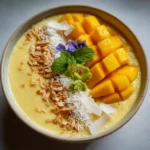
Ingredients
Here is the simple list of ingredients you’ll need to create this bowl of tropical paradise. Each component plays a crucial role in achieving the perfect balance of flavor and that signature thick, creamy texture.
- Frozen Mango Chunks: 2 ½ cups. This is the star of the show. Using frozen mango is non-negotiable for achieving that thick, sorbet-like consistency. The coldness of the frozen fruit helps to create a firm texture that can hold toppings without them immediately sinking. You can use store-bought frozen mango for convenience or freeze your own ripe mangoes for maximum flavor.
- Frozen Banana: 1 large, sliced. The frozen banana is the secret to an ultra-creamy, naturally sweet smoothie bowl. It lends a smooth, ice-cream-like texture that is difficult to achieve with other ingredients. Make sure your banana is ripe (with a few brown spots) before you peel, slice, and freeze it, as this ensures the best natural sweetness.
- Full-Fat Canned Coconut Milk: ½ to ¾ cup. This is what brings the “coconut” to the party and adds a luxurious richness. Use full-fat coconut milk from a can, not the thinner coconut beverage from a carton. The higher fat content is essential for creaminess and a decadent mouthfeel. Start with ½ cup and add more only if your blender is struggling.
- Coconut Yogurt: 2 tablespoons (optional). While optional, a dollop of coconut yogurt (or another thick, dairy-free yogurt) can add a pleasant tang that complements the sweetness of the fruit. It also introduces beneficial probiotics and contributes to an even creamier final product.
- Fresh Lime Juice: 1 tablespoon. This is the secret weapon that elevates the entire bowl. A small squeeze of fresh lime juice cuts through the richness of the coconut and the sweetness of the mango and banana, brightening all the flavors and adding a zesty, tropical finish. Do not substitute with bottled lime juice if you can help it; the fresh flavor makes a world of difference.
- Pure Maple Syrup or Agave Nectar: 1-2 teaspoons (optional). This is entirely dependent on the sweetness of your fruit and your personal preference. If your mango and banana are perfectly ripe, you may not need any extra sweetener at all. Taste the smoothie base before adding any, and then only add a little at a time if needed.
Instructions
Creating this smoothie bowl is a simple and quick process, but the order of operations and a few key techniques can make all the difference between a runny smoothie and a perfectly thick, scoopable bowl. Follow these steps carefully for the best results.
- Prepare Your Blender: Before you begin, ensure your blender is clean and ready to go. If you have a high-powered blender (like a Vitamix or Blendtec), you will have the easiest time with this recipe. If you are using a standard blender, you may need to stop and scrape down the sides more frequently.
- Layer the Ingredients Correctly: This is a crucial step for efficient blending. Pour the liquid ingredients into the blender jar first. Start with ½ cup of the full-fat coconut milk and the 1 tablespoon of fresh lime juice. Adding the liquids first helps the blender blades to move freely at the start and prevents the frozen fruit from getting stuck.
- Add the Softer and Optional Ingredients: Next, add the optional 2 tablespoons of coconut yogurt and the optional 1-2 teaspoons of maple syrup or agave, if you are using them.
- Add the Frozen Fruit: Now, add the frozen ingredients on top of the liquids. Place the 1 large sliced frozen banana and the 2 ½ cups of frozen mango chunks into the blender. Having the heavier, frozen ingredients on top helps to push everything down toward the blades once you start blending.
- Blend to Perfection: Secure the lid on your blender. Begin blending on the lowest speed to get things moving, then gradually increase the speed to high. If you have a high-powered blender with a tamper, this is the time to use it. Use the tamper to continuously push the frozen fruit down into the blades, ensuring everything is constantly circulating. This is the key to a smooth blend without adding too much extra liquid.
- Troubleshoot Consistency: The mixture should start to churn and create a vortex in the center. If the blades are spinning freely and not catching the fruit, your mixture might be too thick or have an air pocket. Stop the blender, use a spatula to scrape down the sides and move the ingredients around, and then try again. If it is absolutely necessary, add the remaining coconut milk one tablespoon at a time until the mixture just begins to blend smoothly. The goal is to use the least amount of liquid possible to maintain that thick, spoonable consistency.
- Check for Smoothness: Continue blending on high for about 30-60 seconds, or until the mixture is completely smooth, thick, and creamy, with no remaining chunks of fruit. It should resemble the texture of a thick soft-serve ice cream.
- Serve Immediately: Smoothie bowls are best enjoyed the moment they are made. The frozen fruit will begin to melt quickly. Immediately pour or scoop the thick smoothie mixture into two chilled bowls, using a spatula to get every last bit out of the blender jar. Smooth the top with the back of a spoon and get ready to decorate.
Nutrition
- Serving Size: one normal portion
- Calories: 400