
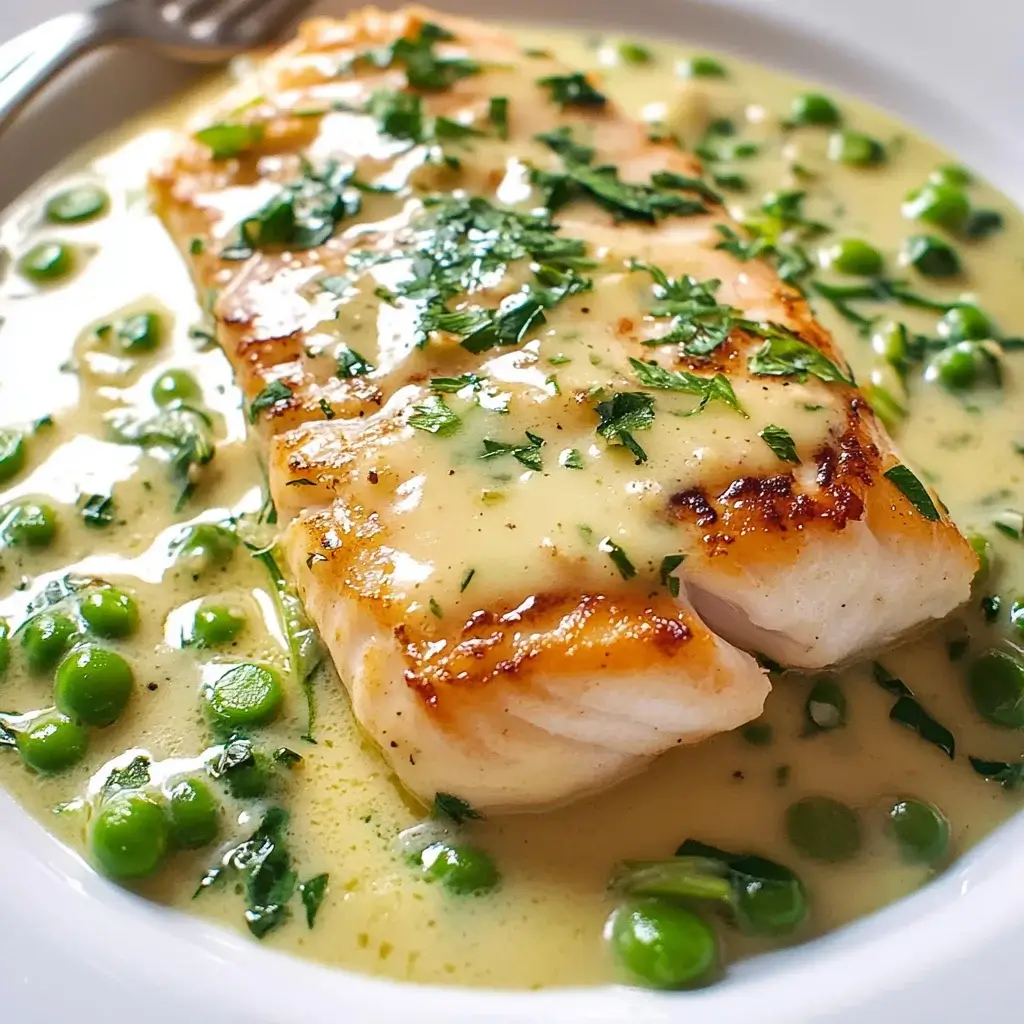

There’s something truly magical about a dish that’s both incredibly simple to make and utterly delicious. Creamy Garlic Fish with Spring Peas is exactly that kind of recipe. In my own kitchen, this has become a weeknight staple, often requested by both the kids and my partner. The flaky white fish, bathed in a luscious, garlicky cream sauce, brightened by the sweetness of spring peas, is a symphony of flavors and textures. Even the pickiest eaters in my family devour it, and honestly, I can’t blame them. It’s a dish that feels both comforting and elegant, perfect for a quick family dinner or even a casual get-together with friends. The best part? It comes together in under 30 minutes, making it a lifesaver on busy evenings. If you’re looking for a recipe that’s guaranteed to be a crowd-pleaser, look no further. This Creamy Garlic Fish with Spring Peas is about to become your new go-to.
Ingredients
- 500g White Fish Fillets (Cod, Haddock, or Halibut): Choose firm, white fish fillets. Cod and haddock are excellent budget-friendly options, while halibut offers a richer flavor. Ensure they are skinless and boneless for easy cooking and eating.
- 2 tablespoons Olive Oil: Used for searing the fish and adding a healthy fat base to the dish. Extra virgin olive oil is recommended for its flavor and health benefits.
- 4 cloves Garlic, minced: Fresh garlic is crucial for the characteristic garlicky flavor. Mince it finely to release its aroma and ensure it cooks evenly.
- 1 cup Heavy Cream: Provides the rich and creamy texture of the sauce. Heavy cream is ideal for its high fat content, which prevents curdling and creates a luxurious sauce.
- ½ cup Chicken Broth (or Fish Broth): Adds depth of flavor and thins out the cream sauce to the perfect consistency. Low-sodium broth is preferred to control the saltiness.
- 1 cup Frozen Spring Peas: Adds sweetness, vibrant green color, and a touch of spring freshness. Frozen peas are convenient and readily available, and they cook quickly.
- ¼ cup Fresh Parsley, chopped: Fresh parsley brings a bright, herbaceous note and visual appeal to the dish. Flat-leaf parsley is recommended for its stronger flavor.
- 2 tablespoons Lemon Juice: Fresh lemon juice adds acidity that balances the richness of the cream sauce and brightens the overall flavor profile.
- 1 tablespoon Butter: Adds richness and a silky texture to the sauce. Unsalted butter is recommended to control the saltiness.
- Salt and Black Pepper, to taste: Essential seasonings to enhance the flavors of all the ingredients. Freshly ground black pepper is preferred for its aroma.
Instructions
- Prepare the Fish: Pat the fish fillets dry with paper towels. This will help them sear properly and achieve a nice golden crust. Season both sides generously with salt and black pepper.
- Sear the Fish: Heat olive oil in a large skillet over medium-high heat. Once the oil is hot and shimmering, carefully place the fish fillets in the skillet, ensuring not to overcrowd the pan. Cook for 3-4 minutes per side, or until golden brown and cooked through. The fish should flake easily with a fork when done. Remove the fish from the skillet and set aside on a plate.
- Sauté the Garlic: In the same skillet, reduce the heat to medium. Add the minced garlic and butter to the skillet. Sauté for 1-2 minutes, or until fragrant and lightly golden, being careful not to burn it. Burnt garlic can become bitter.
- Make the Cream Sauce: Pour in the heavy cream and chicken broth into the skillet with the sautéed garlic. Stir well to combine and scrape up any browned bits from the bottom of the pan – these bits add extra flavor to the sauce.
- Simmer and Thicken: Bring the sauce to a gentle simmer and let it cook for 5-7 minutes, or until it has slightly thickened and reduced. Stir occasionally to prevent sticking. Simmering allows the flavors to meld together and the sauce to reach the desired consistency.
- Add Peas and Lemon Juice: Stir in the frozen spring peas and lemon juice into the cream sauce. Cook for another 2-3 minutes, or until the peas are heated through and bright green. The lemon juice will brighten the sauce and balance the richness.
- Combine and Serve: Gently return the seared fish fillets to the skillet, nestling them into the creamy garlic sauce with peas. Spoon the sauce over the fish to coat it evenly. Cook for another minute or two to heat the fish through and allow it to absorb the flavors of the sauce.
- Garnish and Serve: Sprinkle the chopped fresh parsley over the Creamy Garlic Fish with Spring Peas. Serve immediately while hot and flavorful.
Nutrition Facts
(Per Serving, approximate values, may vary based on specific ingredients and fish used)
- Serving Size: 1 fillet with sauce (approximately 150g-200g)
- Calories: Approximately 450-550 kcal – A moderate calorie count, depending on the fat content of the fish and cream.
- Protein: 35-45g – Fish is an excellent source of lean protein, essential for muscle building and satiety.
- Vitamin D: Fish, especially fatty fish, is a good source of Vitamin D, important for bone health and immune function. The amount will vary depending on the type of fish used.
Preparation Time
- Prep Time: 10 minutes – This includes prepping the fish, mincing garlic, and chopping parsley. The recipe is designed for quick and efficient preparation.
- Cook Time: 20 minutes – From searing the fish to simmering the sauce and finishing the dish, it’s a fast cooking process, perfect for busy weeknights.
- Total Time: 30 minutes – From start to finish, this Creamy Garlic Fish with Spring Peas is ready in just half an hour, making it an ideal quick and delicious meal option.
How to Serve
This Creamy Garlic Fish with Spring Peas is incredibly versatile and pairs well with a variety of sides. Here are some serving suggestions:
- Over Rice:
- Steamed White Rice: Classic and simple, rice soaks up the creamy garlic sauce beautifully.
- Brown Rice: For a healthier option, brown rice adds a nutty flavor and extra fiber.
- Quinoa: A protein-rich grain that complements the dish and adds a different texture.
- With Vegetables:
- Roasted Asparagus: Asparagus pairs wonderfully with peas and fish, adding a fresh, green element.
- Steamed Broccoli: Simple and healthy, broccoli provides a good contrast in texture and flavor.
- Sautéed Spinach: Wilted spinach adds a leafy green element and extra nutrients.
- Green Beans: Steamed or sautéed green beans offer a crisp texture and mild flavor that complements the dish.
- With Bread:
- Crusty Bread: Perfect for soaking up every last bit of the delicious creamy garlic sauce.
- Garlic Bread: Enhance the garlic flavor with a side of warm garlic bread.
- Dinner Rolls: Soft dinner rolls are a comforting and classic accompaniment.
- Other Serving Ideas:
- Pasta: Toss the Creamy Garlic Fish and Peas with cooked pasta like linguine or fettuccine for a heartier meal.
- Polenta: Creamy polenta provides a comforting and flavorful base for the fish and sauce.
- Mashed Potatoes: Classic and comforting, mashed potatoes are a great way to enjoy the creamy sauce.
Additional Tips for Perfect Creamy Garlic Fish with Spring Peas
Choose the Right Fish
Selecting the right fish is paramount for achieving a delicious and successful dish. Firm white fish varieties such as cod, haddock, halibut, and sea bass are ideal candidates because of their meaty texture and ability to hold up during cooking. These fish have a mild flavor that pairs beautifully with various sauces and seasonings, allowing them to absorb and enhance the overall dish.
When choosing fish, consider whether you prefer fresh or frozen options. Both can yield excellent results, provided they are handled properly. Fresh fish should have a clean, ocean-like smell, firm flesh, and clear, bright eyes. If you opt for frozen fish, ensure that it is properly thawed before cooking; this can be achieved by placing it in the refrigerator overnight or using the defrost setting on your microwave. Avoid delicate fish, such as flounder or sole, in this preparation, as they tend to fall apart easily and may not provide the desired texture in the final dish.
Don’t Overcook the Fish
One of the most critical aspects of cooking fish is timing. Fish cooks remarkably quickly, and overcooking can lead to a dry, rubbery texture that detracts from its natural flavor. The key to perfectly cooked fish lies in observing its appearance: cook the fish just until it flakes easily with a fork and is opaque throughout. To ensure precision, consider using a meat thermometer; the ideal internal temperature for cooked fish is 145°F (63°C). This temperature guarantees that the fish is safe to eat while retaining its moisture and delicate texture.
For those who prefer a visual cue, keep in mind that the fish will change from a translucent to an opaque state as it cooks. Additionally, resting the fish for a few minutes after cooking allows the residual heat to finish the cooking process gently, further preventing overcooking.
Fresh Garlic is Key
Garlic is a vital ingredient that adds depth and complexity to your dish. While garlic powder can serve as a substitute in a pinch, it lacks the robust, aromatic qualities of fresh garlic. Fresh minced garlic infuses the dish with a vibrant flavor that is essential for an authentic taste experience. When preparing fresh garlic, be sure to crush or mince it just before using it to maximize its flavor and aroma. The allicin compound released when garlic is chopped or minced is responsible for its characteristic pungency and health benefits.
For optimal results, sauté the minced garlic in a bit of oil or butter until fragrant, but avoid browning it too much, as burnt garlic can introduce a bitter flavor that can overwhelm the dish.
Adjust the Sauce Consistency
The sauce is often the heart of a dish, and its consistency can make a significant difference in the overall dining experience. If you prefer a thicker sauce, allow it to simmer for a bit longer to reduce and concentrate the flavors. This slow cooking process helps deepen the sauce’s richness while enhancing the fish’s flavor profile.
On the other hand, if your sauce becomes too thick, simply add a splash more chicken broth or milk to achieve your desired consistency. This adjustment not only helps balance the flavor but also ensures that the sauce remains cohesive and complements the fish rather than overpowering it.
Add a Pinch of Red Pepper Flakes
For those who enjoy a hint of spice, incorporating a pinch of red pepper flakes can elevate the dish without overwhelming it. The heat from the flakes adds a subtle kick that enhances the overall flavor profile, creating a balance between richness and warmth. Red pepper flakes can be added along with the garlic early in the cooking process, allowing their flavors to meld together.
For those who are sensitive to spice, adjust the quantity based on personal preference. Remember, it’s easier to add more spice than to take it away, so start small and taste as you go.
Fresh Herbs Enhance Flavor
While parsley is a classic choice for garnishing and flavoring fish dishes, don’t hesitate to experiment with a variety of fresh herbs. Herbs like dill, chives, or tarragon can add a unique twist to your dish, enhancing its freshness and complexity. Adding these herbs at the end of cooking preserves their vibrant flavors and bright colors, making your dish visually appealing as well as delicious.
Chopping fresh herbs just before use maximizes their aromatic profile, and tossing them in right before serving ensures that their delicate flavors shine through. Consider creating a herb blend that complements the fish and sauce, or simply use whatever you have on hand for a delightful surprise.
Lemon Zest for Extra Zest
Lemon is a quintessential ingredient in many fish dishes, providing a bright acidity that balances the richness of the fish and sauce. To amplify this citrus flavor, add a teaspoon of lemon zest along with the lemon juice. Zesting the lemon involves using a microplane or zester to remove only the yellow outer layer of the peel, which is packed with essential oils that contribute a robust lemon flavor. Avoid incorporating the bitter white pith, as it can detract from the overall taste.
The addition of lemon zest not only enhances the dish’s flavor but also adds a pleasing aroma that elevates the dining experience. A well-balanced dish will harmoniously marry the zest’s brightness with the other flavors, creating a truly memorable meal.
Make it Dairy-Free (Almost)
For those seeking a lighter or dairy-free version of your dish, consider substituting the heavy cream with alternatives like full-fat coconut milk or cashew cream. These substitutes will impart a creamy texture while slightly altering the flavor profile, introducing a hint of nuttiness from the cashew cream or a tropical essence from the coconut milk.
If you prefer to avoid dairy altogether, olive oil can be used in place of butter, providing a rich mouthfeel without the lactose. Keep in mind that while these substitutions can create a delicious alternative, they may lead to a different taste experience. Don’t hesitate to experiment with the proportions to find the balance that works best for your palate.
By thoughtfully choosing your fish and taking care in preparation, you can create a dish that not only highlights the beauty of the fish but also showcases the harmonious interplay of flavors that will impress any diner.
Frequently Asked Questions (FAQ)
Q1: Can I use different vegetables instead of peas?
A: Absolutely! You can easily substitute spring peas with other vegetables like edamame, green beans, asparagus tips, or even chopped broccoli florets. Just adjust the cooking time accordingly, ensuring they are cooked through but still slightly crisp.
Q2: Can I use milk instead of heavy cream?
A: While you can use milk, the sauce will be significantly thinner and less creamy. For a richer sauce, heavy cream is highly recommended. If you use milk, consider adding a tablespoon of cornstarch slurry (cornstarch mixed with cold water) towards the end to help thicken the sauce slightly.
Q3: Can I make this recipe ahead of time?
A: It’s best to serve this dish fresh for the best texture and flavor. However, you can prepare the creamy garlic sauce ahead of time and store it in the refrigerator for up to 2 days. When ready to serve, gently reheat the sauce and then cook the fish and add the peas as instructed.
Q4: How do I store leftovers?
A: Store leftover Creamy Garlic Fish with Spring Peas in an airtight container in the refrigerator for up to 2 days. Reheat gently in a skillet over low heat or in the microwave until heated through. Be mindful that the sauce may thicken upon cooling and the fish texture might slightly change upon reheating.
Q5: Can I use frozen fish fillets?
A: Yes, frozen fish fillets are perfectly fine to use. Just make sure to thaw them completely before cooking. Pat them dry thoroughly after thawing to remove excess moisture for better searing.
Q6: What if I don’t have chicken broth?
A: You can substitute chicken broth with fish broth, vegetable broth, or even just water in a pinch. However, broth adds more flavor depth. If using water, consider adding a little extra salt and pepper to compensate for the lack of broth flavor.
Q7: Can I bake the fish instead of searing it?
A: Yes, you can bake the fish. Preheat your oven to 400°F (200°C). Place the seasoned fish fillets on a baking sheet lined with parchment paper and bake for 10-15 minutes, or until cooked through. Then, prepare the creamy garlic pea sauce in a skillet and pour it over the baked fish before serving.
Q8: Is this recipe gluten-free?
A: Yes, this recipe is naturally gluten-free as long as you ensure your chicken broth is gluten-free. Serve it with gluten-free sides like rice, quinoa, or gluten-free vegetables to keep the entire meal gluten-free.
Creamy Garlic Fish with Spring Peas
Ingredients
- 500g White Fish Fillets (Cod, Haddock, or Halibut): Choose firm, white fish fillets. Cod and haddock are excellent budget-friendly options, while halibut offers a richer flavor. Ensure they are skinless and boneless for easy cooking and eating.
- 2 tablespoons Olive Oil: Used for searing the fish and adding a healthy fat base to the dish. Extra virgin olive oil is recommended for its flavor and health benefits.
- 4 cloves Garlic, minced: Fresh garlic is crucial for the characteristic garlicky flavor. Mince it finely to release its aroma and ensure it cooks evenly.
- 1 cup Heavy Cream: Provides the rich and creamy texture of the sauce. Heavy cream is ideal for its high fat content, which prevents curdling and creates a luxurious sauce.
- ½ cup Chicken Broth (or Fish Broth): Adds depth of flavor and thins out the cream sauce to the perfect consistency. Low-sodium broth is preferred to control the saltiness.
- 1 cup Frozen Spring Peas: Adds sweetness, vibrant green color, and a touch of spring freshness. Frozen peas are convenient and readily available, and they cook quickly.
- ¼ cup Fresh Parsley, chopped: Fresh parsley brings a bright, herbaceous note and visual appeal to the dish. Flat-leaf parsley is recommended for its stronger flavor.
- 2 tablespoons Lemon Juice: Fresh lemon juice adds acidity that balances the richness of the cream sauce and brightens the overall flavor profile.
- 1 tablespoon Butter: Adds richness and a silky texture to the sauce. Unsalted butter is recommended to control the saltiness.
- Salt and Black Pepper, to taste: Essential seasonings to enhance the flavors of all the ingredients. Freshly ground black pepper is preferred for its aroma.
Instructions
- Prepare the Fish: Pat the fish fillets dry with paper towels. This will help them sear properly and achieve a nice golden crust. Season both sides generously with salt and black pepper.
- Sear the Fish: Heat olive oil in a large skillet over medium-high heat. Once the oil is hot and shimmering, carefully place the fish fillets in the skillet, ensuring not to overcrowd the pan. Cook for 3-4 minutes per side, or until golden brown and cooked through. The fish should flake easily with a fork when done. Remove the fish from the skillet and set aside on a plate.
- Sauté the Garlic: In the same skillet, reduce the heat to medium. Add the minced garlic and butter to the skillet. Sauté for 1-2 minutes, or until fragrant and lightly golden, being careful not to burn it. Burnt garlic can become bitter.
- Make the Cream Sauce: Pour in the heavy cream and chicken broth into the skillet with the sautéed garlic. Stir well to combine and scrape up any browned bits from the bottom of the pan – these bits add extra flavor to the sauce.
- Simmer and Thicken: Bring the sauce to a gentle simmer and let it cook for 5-7 minutes, or until it has slightly thickened and reduced. Stir occasionally to prevent sticking. Simmering allows the flavors to meld together and the sauce to reach the desired consistency.
- Add Peas and Lemon Juice: Stir in the frozen spring peas and lemon juice into the cream sauce. Cook for another 2-3 minutes, or until the peas are heated through and bright green. The lemon juice will brighten the sauce and balance the richness.
- Combine and Serve: Gently return the seared fish fillets to the skillet, nestling them into the creamy garlic sauce with peas. Spoon the sauce over the fish to coat it evenly. Cook for another minute or two to heat the fish through and allow it to absorb the flavors of the sauce.
- Garnish and Serve: Sprinkle the chopped fresh parsley over the Creamy Garlic Fish with Spring Peas. Serve immediately while hot and flavorful.
Nutrition
- Serving Size: one normal portion
- Calories: 550
- Protein: 45g