Ingredients
Scale
This recipe is built on simple, wholesome ingredients. The magic lies in the technique and the quality of what you choose. For the polenta rounds themselves, you will need the following:
- 1 cup coarse-grind cornmeal: Using a coarse grind is key to achieving a polenta with a satisfying, slightly rustic texture that holds up well when fried. It provides a better structure than fine or instant varieties.
- 4 cups liquid (vegetable broth, chicken broth, or water): Using broth instead of water is a simple trick to infuse the polenta with a deep, savory flavor from the very beginning. Vegetable broth keeps it vegetarian, while chicken or beef broth adds a richer dimension.
- 1 teaspoon salt (or to taste): Essential for bringing out the natural sweetness of the corn. Adjust based on the saltiness of your broth.
- ½ teaspoon black pepper: For a touch of gentle warmth and spice.
- ½ cup grated Parmesan cheese: This adds a wonderful nutty, salty (umami) flavor and helps the polenta become even creamier. For a dairy-free version, you can substitute with nutritional yeast or omit it entirely.
- 2 tablespoons unsalted butter or olive oil: Stirred in at the end, this adds richness, flavor, and a silky-smooth finish to the polenta.
- ¼ cup olive oil, for frying: A good quality olive oil is perfect for pan-frying the rounds, giving them a golden crust and delicious flavor. You can also use another high-smoke-point oil like avocado or canola oil.
For our suggested Mediterranean-style topping, you will need:
- 1 cup cherry tomatoes, halved or quartered: Their sweetness and acidity cut through the richness of the polenta beautifully.
- ½ cup Kalamata olives, pitted and roughly chopped: They provide a briny, salty punch that complements the other flavors.
- ½ cup crumbled feta cheese: For a creamy texture and a tangy, salty bite.
- ¼ cup fresh basil leaves, chiffonade (thinly sliced): Adds a fresh, aromatic, and slightly sweet herbal note.
- Balsamic glaze, for drizzling: This concentrated, syrupy vinegar adds a touch of sweet and tangy complexity that ties everything together.
Instructions
Follow these detailed steps to achieve perfectly creamy polenta and flawlessly crispy rounds every time. The process is broken into two main stages: making and chilling the polenta, then frying and topping the rounds.
Stage 1: Preparing and Chilling the Polenta (Can be done a day ahead)
- Prepare Your Chilling Pan: Lightly grease an 8×8 inch baking pan or a similar-sized loaf pan with olive oil or butter. This will prevent the polenta from sticking and make it easy to remove once set. Set it aside.
- Boil the Liquid: In a medium to large saucepan or Dutch oven, bring your 4 cups of liquid (broth or water) and 1 teaspoon of salt to a rolling boil over medium-high heat.
- Whisk in the Cornmeal: This is the most crucial step for avoiding lumps. Turn the heat down to low. While whisking the boiling liquid constantly with one hand, slowly and steadily pour the cornmeal into the pot with the other hand. Continue whisking vigorously for about 1-2 minutes until the mixture is smooth and free of lumps.
- Cook the Polenta: Switch from a whisk to a wooden spoon or spatula. Continue cooking on low heat, stirring frequently to prevent it from sticking to the bottom of the pot. The polenta will thicken considerably. Cook for 20-25 minutes. You’ll know it’s ready when the texture is thick and creamy, and the polenta starts to pull away from the sides of the pan as you stir.
- Finish with Flavor: Remove the saucepan from the heat. Stir in the Parmesan cheese, black pepper, and the 2 tablespoons of butter or olive oil. Keep stirring until the cheese and butter are completely melted and incorporated. Taste the polenta and adjust the seasoning with more salt or pepper if needed.
- Chill the Polenta: Immediately pour the hot polenta into your prepared baking pan. Use a spatula to spread it into an even layer. The thickness should be about ½ to ¾ of an inch. Let it cool on the counter for about 30 minutes, then cover the pan with plastic wrap (press it directly onto the surface of the polenta to prevent a skin from forming) and refrigerate. For the best results, chill for at least 2 hours, or ideally overnight. The polenta must be completely cold and firm to be cut cleanly.
Stage 2: Frying and Assembling the Rounds
- Cut the Rounds: Once the polenta is thoroughly chilled and firm, carefully turn the slab out onto a clean cutting board. Use a 2-inch or 3-inch round cookie cutter or the rim of a drinking glass to cut out discs. You can re-form the scraps to cut out a few more rounds if you wish, or simply cut the entire slab into squares or rectangles with a knife.
- Heat the Frying Pan: Place a large skillet (cast iron works wonderfully here) over medium-high heat. Add the ¼ cup of olive oil. You’ll know the oil is hot enough when it shimmers slightly.
- Fry the Polenta Rounds: Carefully place the polenta rounds in the hot oil in a single layer. Be sure not to overcrowd the pan; fry in batches if necessary. This is essential for achieving a crispy, even crust. Fry for 4-6 minutes per side, without moving them too much. The rounds should be a deep golden brown and very crispy on the outside.
- Drain the Rounds: Use a spatula or tongs to transfer the fried rounds to a plate or wire rack lined with paper towels. This will absorb any excess oil and help them stay crisp.
- Prepare the Topping: While the rounds are frying or cooling slightly, prepare your topping. In a small bowl, gently toss together the halved cherry tomatoes, chopped olives, crumbled feta, and sliced basil.
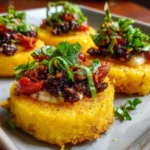
- Assemble and Serve: Arrange the warm, crispy polenta rounds on a serving platter. Top each round with a small spoonful of the tomato and feta mixture. Finish with a generous drizzle of balsamic glaze over all the rounds. Serve immediately for the best texture and temperature contrast.
Nutrition
- Serving Size: one normal portion
- Calories: 280