
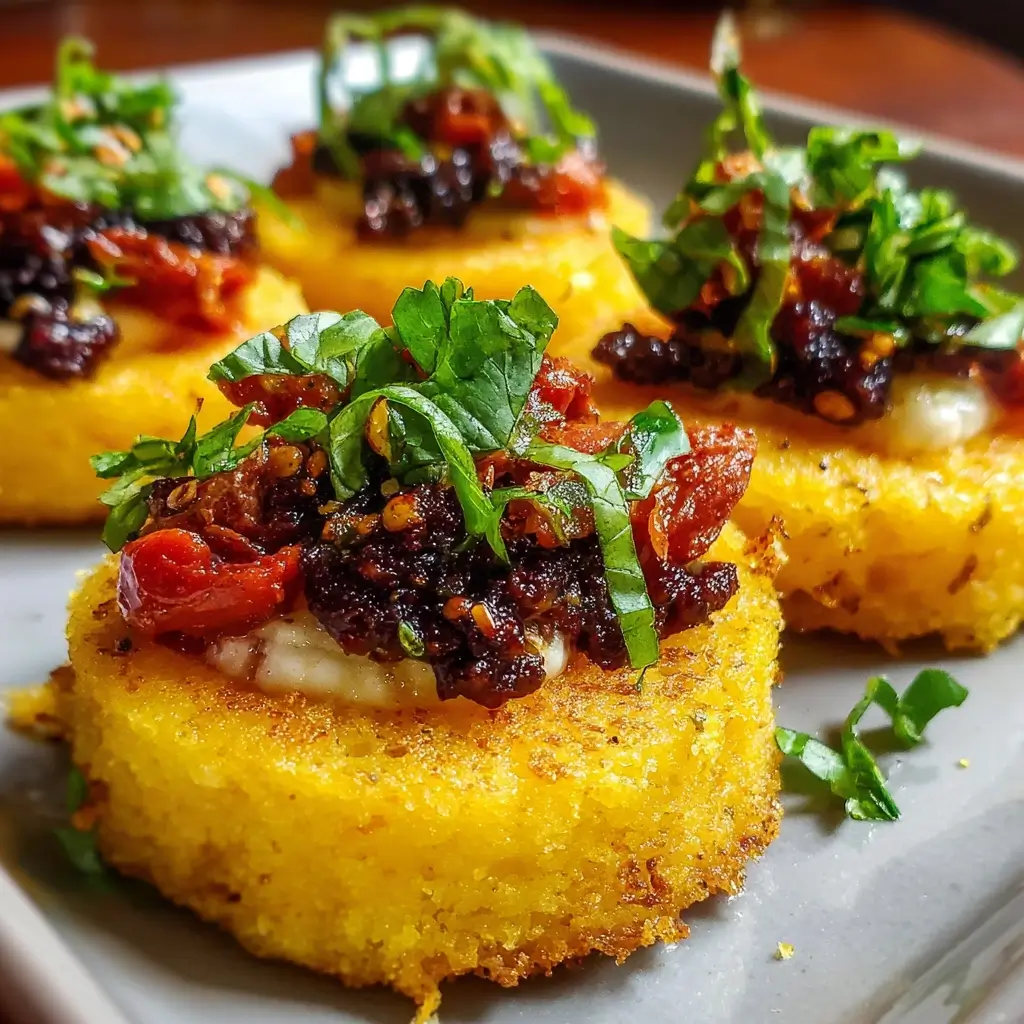
Of all the dishes in my culinary arsenal, few bring the same level of surprise and delight as these Crispy Polenta Rounds. I first made them on a whim for a family get-together, searching for an appetizer that was elegant yet simple, and something that could cater to a few gluten-free guests. I’ll be honest, I wasn’t sure how they would be received. Polenta can sometimes be seen as humble, rustic fare. But the moment I brought out the platter, something magical happened. The sight of these golden, sun-like discs, perfectly pan-fried to a shatteringly crisp exterior and topped with a vibrant medley of fresh ingredients, silenced the room for a second before a chorus of “Oohs” and “Aahs” took over. They were gone in minutes. My nephew, usually a picky eater, declared them “crunchy pizza coins” and has requested them for every birthday since. My sister, the gluten-free guest of honor, was thrilled to have such a delicious and substantial option. For me, that’s the true beauty of this recipe: its incredible versatility and universal appeal. It’s a blank canvas that transforms from a simple corn porridge into a sophisticated appetizer, a satisfying side dish, or even a light main course. The contrast between the crunchy, savory crust and the soft, creamy interior is an addictive texture combination that keeps everyone coming back for more. This recipe is now a staple in our home, a testament to how the simplest ingredients can create the most memorable moments.
Crispy Polenta Rounds: The Ultimate Guide to a Versatile Delight
Get ready to discover your new favorite recipe. These crispy polenta rounds are incredibly easy to make, wonderfully versatile, and guaranteed to impress. Whether you’re hosting a dinner party, looking for a unique side dish, or simply craving a delicious and satisfying snack, this guide will walk you through every step, from cooking the perfect polenta to exploring a world of delicious toppings.
Ingredients
This recipe is built on simple, wholesome ingredients. The magic lies in the technique and the quality of what you choose. For the polenta rounds themselves, you will need the following:
- 1 cup coarse-grind cornmeal: Using a coarse grind is key to achieving a polenta with a satisfying, slightly rustic texture that holds up well when fried. It provides a better structure than fine or instant varieties.
- 4 cups liquid (vegetable broth, chicken broth, or water): Using broth instead of water is a simple trick to infuse the polenta with a deep, savory flavor from the very beginning. Vegetable broth keeps it vegetarian, while chicken or beef broth adds a richer dimension.
- 1 teaspoon salt (or to taste): Essential for bringing out the natural sweetness of the corn. Adjust based on the saltiness of your broth.
- ½ teaspoon black pepper: For a touch of gentle warmth and spice.
- ½ cup grated Parmesan cheese: This adds a wonderful nutty, salty (umami) flavor and helps the polenta become even creamier. For a dairy-free version, you can substitute with nutritional yeast or omit it entirely.
- 2 tablespoons unsalted butter or olive oil: Stirred in at the end, this adds richness, flavor, and a silky-smooth finish to the polenta.
- ¼ cup olive oil, for frying: A good quality olive oil is perfect for pan-frying the rounds, giving them a golden crust and delicious flavor. You can also use another high-smoke-point oil like avocado or canola oil.
For our suggested Mediterranean-style topping, you will need:
- 1 cup cherry tomatoes, halved or quartered: Their sweetness and acidity cut through the richness of the polenta beautifully.
- ½ cup Kalamata olives, pitted and roughly chopped: They provide a briny, salty punch that complements the other flavors.
- ½ cup crumbled feta cheese: For a creamy texture and a tangy, salty bite.
- ¼ cup fresh basil leaves, chiffonade (thinly sliced): Adds a fresh, aromatic, and slightly sweet herbal note.
- Balsamic glaze, for drizzling: This concentrated, syrupy vinegar adds a touch of sweet and tangy complexity that ties everything together.
Instructions
Follow these detailed steps to achieve perfectly creamy polenta and flawlessly crispy rounds every time. The process is broken into two main stages: making and chilling the polenta, then frying and topping the rounds.
Stage 1: Preparing and Chilling the Polenta (Can be done a day ahead)
- Prepare Your Chilling Pan: Lightly grease an 8×8 inch baking pan or a similar-sized loaf pan with olive oil or butter. This will prevent the polenta from sticking and make it easy to remove once set. Set it aside.
- Boil the Liquid: In a medium to large saucepan or Dutch oven, bring your 4 cups of liquid (broth or water) and 1 teaspoon of salt to a rolling boil over medium-high heat.
- Whisk in the Cornmeal: This is the most crucial step for avoiding lumps. Turn the heat down to low. While whisking the boiling liquid constantly with one hand, slowly and steadily pour the cornmeal into the pot with the other hand. Continue whisking vigorously for about 1-2 minutes until the mixture is smooth and free of lumps.
- Cook the Polenta: Switch from a whisk to a wooden spoon or spatula. Continue cooking on low heat, stirring frequently to prevent it from sticking to the bottom of the pot. The polenta will thicken considerably. Cook for 20-25 minutes. You’ll know it’s ready when the texture is thick and creamy, and the polenta starts to pull away from the sides of the pan as you stir.
- Finish with Flavor: Remove the saucepan from the heat. Stir in the Parmesan cheese, black pepper, and the 2 tablespoons of butter or olive oil. Keep stirring until the cheese and butter are completely melted and incorporated. Taste the polenta and adjust the seasoning with more salt or pepper if needed.
- Chill the Polenta: Immediately pour the hot polenta into your prepared baking pan. Use a spatula to spread it into an even layer. The thickness should be about ½ to ¾ of an inch. Let it cool on the counter for about 30 minutes, then cover the pan with plastic wrap (press it directly onto the surface of the polenta to prevent a skin from forming) and refrigerate. For the best results, chill for at least 2 hours, or ideally overnight. The polenta must be completely cold and firm to be cut cleanly.
Stage 2: Frying and Assembling the Rounds
- Cut the Rounds: Once the polenta is thoroughly chilled and firm, carefully turn the slab out onto a clean cutting board. Use a 2-inch or 3-inch round cookie cutter or the rim of a drinking glass to cut out discs. You can re-form the scraps to cut out a few more rounds if you wish, or simply cut the entire slab into squares or rectangles with a knife.
- Heat the Frying Pan: Place a large skillet (cast iron works wonderfully here) over medium-high heat. Add the ¼ cup of olive oil. You’ll know the oil is hot enough when it shimmers slightly.
- Fry the Polenta Rounds: Carefully place the polenta rounds in the hot oil in a single layer. Be sure not to overcrowd the pan; fry in batches if necessary. This is essential for achieving a crispy, even crust. Fry for 4-6 minutes per side, without moving them too much. The rounds should be a deep golden brown and very crispy on the outside.
- Drain the Rounds: Use a spatula or tongs to transfer the fried rounds to a plate or wire rack lined with paper towels. This will absorb any excess oil and help them stay crisp.
- Prepare the Topping: While the rounds are frying or cooling slightly, prepare your topping. In a small bowl, gently toss together the halved cherry tomatoes, chopped olives, crumbled feta, and sliced basil.
- Assemble and Serve: Arrange the warm, crispy polenta rounds on a serving platter. Top each round with a small spoonful of the tomato and feta mixture. Finish with a generous drizzle of balsamic glaze over all the rounds. Serve immediately for the best texture and temperature contrast.
Nutrition Facts
This nutritional information is an estimate based on the recipe making approximately 16 rounds and serving 8 people (2 rounds per serving).
- Servings: 8
- Calories per Serving: Approximately 280 kcal
- Carbohydrates: As a corn-based dish, polenta is a great source of complex carbohydrates, providing sustained energy.
- Fat: The majority of the fat content comes from the heart-healthy olive oil used for frying and the cheese.
- Protein: The Parmesan and feta cheese contribute a modest but valuable amount of protein to this dish.
- Fiber: Cornmeal contains dietary fiber, which is beneficial for digestive health and satiety.
- Gluten-Free: When using certified gluten-free cornmeal and broth, this recipe is an excellent option for those with celiac disease or gluten sensitivity.
Preparation Time
Proper planning makes this recipe a breeze.
- Active Time: Approximately 45 minutes (25 minutes to cook the polenta, 20 minutes to fry and assemble the rounds).
- Inactive Time (Chilling): Minimum of 2 hours, but overnight is highly recommended for the firmest texture, making it a perfect make-ahead component for any meal or party.
How to Serve
The true magic of crispy polenta rounds lies in their incredible versatility. Here are just a few ways to serve them, moving from a simple snack to a full-blown meal.
- As an Elegant Appetizer:
- Arrange them on a large wooden board or ceramic platter.
- Use a variety of toppings for visual appeal and different flavor profiles.
- Garnish the platter with fresh herbs like parsley or rosemary sprigs.
- Serve alongside a crisp white wine like Sauvignon Blanc or Pinot Grigio.
- As a Hearty Main Course:
- Make larger polenta rounds (use a 4-inch cutter).
- Top with a more substantial topping, such as:
- Sautéed wild mushrooms with garlic and thyme.
- A slow-cooked beef ragu or bolognese sauce.
- Ratatouille or a hearty vegetable stew.
- Shredded rotisserie chicken tossed in pesto.
- As a Unique Side Dish:
- Serve the rounds plain, seasoned simply with salt and pepper.
- Use them as a gluten-free alternative to bread for soaking up sauces from stews or braises.
- They are a fantastic replacement for potatoes or rice alongside grilled steak, roasted chicken, or pan-seared fish.
- On a Brunch Buffet:
- Top a warm polenta round with a perfectly poached egg and a sprinkle of smoked paprika.
- Serve with sautéed spinach and a dollop of hollandaise sauce.
- Offer them alongside slices of savory ham and fresh fruit.
- Create a “DIY” Polenta Topping Bar:
- This is a fun, interactive idea for parties.
- Place the hot, crispy polenta rounds on a central platter.
- Arrange a variety of toppings in small bowls for guests to create their own combinations. Ideas include:
- Cheeses: Goat cheese, blue cheese, shredded mozzarella.
- Meats: Prosciutto, crumbled Italian sausage, shredded beef.
- Vegetables: Caramelized onions, roasted red peppers, artichoke hearts, sun-dried tomatoes.
- Sauces: Pesto, marinara, olive tapenade, hot honey.
Additional Tips
Elevate your polenta game with these eight expert tips for guaranteed success and endless creativity.
- Flavor-Infuse Your Polenta from the Start: Don’t just rely on water and salt. Using a flavorful broth (vegetable, chicken, beef) as your base liquid is the single easiest way to make your polenta taste amazing. You can also toss a bay leaf, a few sprigs of thyme, or a smashed garlic clove into the liquid as it comes to a boil (just remember to remove them before chilling).
- The Secret to Lump-Free Polenta: The trick is a slow, steady stream and constant whisking. Pouring the cornmeal in all at once is a recipe for a lumpy disaster. If you do end up with a few stubborn lumps, you can often whisk them out with a bit of extra effort, or for a perfectly smooth finish, pass the cooked polenta through a fine-mesh sieve before chilling.
- Achieving the Ultimate Crispy Crust: There are three keys to a perfect fry: hot oil, enough space, and patience. Make sure your oil is shimmering before adding the rounds. Don’t overcrowd the pan, as this will lower the oil temperature and cause the rounds to steam rather than fry. Finally, resist the urge to move them around. Let them sit and develop that deep, golden-brown crust before flipping.
- Make-Ahead Magic for Stress-Free Entertaining: This is the perfect make-ahead appetizer. You can cook and chill the polenta up to three days in advance. Keep it tightly covered in the refrigerator. When you’re ready to serve, simply slice and fry. You can even cut the rounds ahead of time and store them in an airtight container in the fridge, separated by layers of parchment paper.
- Explore Alternative Cooking Methods: Pan-frying yields the crispiest result, but it’s not the only way!
- For Baking: Preheat your oven to 425°F (220°C). Place the cut rounds on a baking sheet lined with parchment paper. Brush both sides of the rounds with olive oil. Bake for 20-25 minutes, flipping halfway through, until golden and crisp at the edges.
- For Air Frying: Preheat your air fryer to 400°F (200°C). Lightly spray the polenta rounds with cooking spray or brush with oil. Place them in the air fryer basket in a single layer. Cook for 15-20 minutes, flipping halfway, until crispy and golden.
- Don’t Skip the Chill Time: It might be tempting to rush this step, but chilling is non-negotiable. When polenta is hot, it’s a soft porridge. The chilling process allows the starches to set completely, transforming it into a firm, solid block that can be sliced cleanly. If it’s not cold enough, it will fall apart when you try to cut or fry it.
- Get Creative with Shapes: A round cutter is classic, but don’t be afraid to have fun! Use holiday-themed cookie cutters (stars, hearts, trees) for festive occasions. You can also simply use a sharp knife to cut the polenta into squares, rectangles, or triangles for a more rustic look. This also minimizes waste from the scraps.
- Storing and Reheating Leftovers: Store leftover fried rounds in an airtight container in the refrigerator for up to 3 days. They will lose their crispness upon chilling. To bring them back to life, reheat them in a hot oven (400°F/200°C) or an air fryer for 5-7 minutes until hot and re-crisped. Avoid the microwave, as it will make them soft and soggy.
Frequently Asked Questions (FAQ)
Here are answers to some of the most common questions about making crispy polenta rounds.
1. What is polenta, exactly?
Polenta is both a dish and an ingredient. It refers to a porridge-like dish made from boiled cornmeal, originating in Northern Italy. It can be served soft and creamy, like mashed potatoes, or it can be allowed to cool and set into a solid loaf that can be baked, grilled, or fried, as we do in this recipe. The ingredient itself is simply cornmeal, usually a medium or coarse grind from yellow corn.
2. Is polenta gluten-free?
Yes, pure cornmeal is naturally gluten-free. This makes polenta an excellent carbohydrate choice for individuals with celiac disease or non-celiac gluten sensitivity. However, it’s important to check the packaging to ensure your cornmeal is processed in a facility that is free from cross-contamination with wheat. Always choose brands that are certified gluten-free if this is a serious concern.
3. Can I use instant polenta for this recipe?
While instant polenta is great for making a quick, creamy side dish, it is not recommended for this recipe. Instant polenta has been pre-cooked and dehydrated, which changes its starch structure. It often doesn’t set up as firmly as traditional polenta, making it difficult to cut and fry without it falling apart. For the best crispy rounds, stick with traditional coarse or medium-grind cornmeal.
4. My polenta rounds didn’t get crispy. What did I do wrong?
There are a few likely culprits. First, your oil might not have been hot enough when you added the rounds. Second, you may have overcrowded the pan, which causes the polenta to steam instead of fry. Fry in batches to ensure each round has plenty of space. Third, the polenta itself might have been too wet. Ensure you cook it long enough to become very thick before chilling. Finally, make sure the polenta is thoroughly chilled and firm before frying.
5. What is the difference between polenta and grits?
This is a common question! Both are ground corn porridges, but they have key differences. Polenta is typically made from yellow corn and has a coarser grind, originating from Italy. Grits are a staple of the American South, are traditionally made from white corn (hominy), and are usually more finely ground, resulting in a smoother texture. While they can sometimes be used interchangeably, polenta’s robust texture is generally better for making fried rounds.
6. How far in advance can I fully prepare these?
For the best results (maximum crispiness), it’s best to fry the polenta rounds just before serving. However, you can do almost all the prep work well in advance. The polenta can be cooked and chilled in its pan for up to 3 days. You can also prepare most toppings (like a mushroom mixture or a ragu) ahead of time. This way, on the day of serving, your only task is to slice, fry, and assemble, which takes less than 30 minutes.
7. Can I freeze polenta rounds?
Yes, you can freeze them for longer-term storage. You can freeze the solid, uncut block of polenta, or you can freeze the already-cut, uncooked rounds. To freeze cut rounds, place them on a baking sheet in a single layer and freeze until solid. Then, transfer them to a freezer-safe bag or container, separating layers with parchment paper. They can be frozen for up to 3 months. Fry them directly from frozen, adding a few extra minutes to the cooking time.
8. What are some other great topping ideas for polenta rounds?
The possibilities are truly endless! Here are a few combinations to inspire you:
- Mushroom & Thyme: Sautéed mixed mushrooms with garlic, fresh thyme, and a splash of white wine.
- Gorgonzola & Walnut: A crumble of sharp gorgonzola cheese, a toasted walnut half, and a drizzle of honey.
- Pesto & Sun-Dried Tomato: A dollop of basil pesto topped with a sliver of oil-packed sun-dried tomato.
- Fig & Prosciutto: A slice of fresh fig (or a dab of fig jam), a small piece of prosciutto, and a balsamic drizzle.
- Spicy Sausage & Peppers: Crumbled, cooked spicy Italian sausage with sautéed bell peppers and onions.
- Smoked Salmon & Dill: A dollop of crème fraîche or cream cheese, a small piece of smoked salmon, and a sprig of fresh dill.
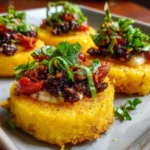
Crispy Polenta Rounds with Toppings
Ingredients
This recipe is built on simple, wholesome ingredients. The magic lies in the technique and the quality of what you choose. For the polenta rounds themselves, you will need the following:
- 1 cup coarse-grind cornmeal: Using a coarse grind is key to achieving a polenta with a satisfying, slightly rustic texture that holds up well when fried. It provides a better structure than fine or instant varieties.
- 4 cups liquid (vegetable broth, chicken broth, or water): Using broth instead of water is a simple trick to infuse the polenta with a deep, savory flavor from the very beginning. Vegetable broth keeps it vegetarian, while chicken or beef broth adds a richer dimension.
- 1 teaspoon salt (or to taste): Essential for bringing out the natural sweetness of the corn. Adjust based on the saltiness of your broth.
- ½ teaspoon black pepper: For a touch of gentle warmth and spice.
- ½ cup grated Parmesan cheese: This adds a wonderful nutty, salty (umami) flavor and helps the polenta become even creamier. For a dairy-free version, you can substitute with nutritional yeast or omit it entirely.
- 2 tablespoons unsalted butter or olive oil: Stirred in at the end, this adds richness, flavor, and a silky-smooth finish to the polenta.
- ¼ cup olive oil, for frying: A good quality olive oil is perfect for pan-frying the rounds, giving them a golden crust and delicious flavor. You can also use another high-smoke-point oil like avocado or canola oil.
For our suggested Mediterranean-style topping, you will need:
- 1 cup cherry tomatoes, halved or quartered: Their sweetness and acidity cut through the richness of the polenta beautifully.
- ½ cup Kalamata olives, pitted and roughly chopped: They provide a briny, salty punch that complements the other flavors.
- ½ cup crumbled feta cheese: For a creamy texture and a tangy, salty bite.
- ¼ cup fresh basil leaves, chiffonade (thinly sliced): Adds a fresh, aromatic, and slightly sweet herbal note.
- Balsamic glaze, for drizzling: This concentrated, syrupy vinegar adds a touch of sweet and tangy complexity that ties everything together.
Instructions
Follow these detailed steps to achieve perfectly creamy polenta and flawlessly crispy rounds every time. The process is broken into two main stages: making and chilling the polenta, then frying and topping the rounds.
Stage 1: Preparing and Chilling the Polenta (Can be done a day ahead)
- Prepare Your Chilling Pan: Lightly grease an 8×8 inch baking pan or a similar-sized loaf pan with olive oil or butter. This will prevent the polenta from sticking and make it easy to remove once set. Set it aside.
- Boil the Liquid: In a medium to large saucepan or Dutch oven, bring your 4 cups of liquid (broth or water) and 1 teaspoon of salt to a rolling boil over medium-high heat.
- Whisk in the Cornmeal: This is the most crucial step for avoiding lumps. Turn the heat down to low. While whisking the boiling liquid constantly with one hand, slowly and steadily pour the cornmeal into the pot with the other hand. Continue whisking vigorously for about 1-2 minutes until the mixture is smooth and free of lumps.
- Cook the Polenta: Switch from a whisk to a wooden spoon or spatula. Continue cooking on low heat, stirring frequently to prevent it from sticking to the bottom of the pot. The polenta will thicken considerably. Cook for 20-25 minutes. You’ll know it’s ready when the texture is thick and creamy, and the polenta starts to pull away from the sides of the pan as you stir.
- Finish with Flavor: Remove the saucepan from the heat. Stir in the Parmesan cheese, black pepper, and the 2 tablespoons of butter or olive oil. Keep stirring until the cheese and butter are completely melted and incorporated. Taste the polenta and adjust the seasoning with more salt or pepper if needed.
- Chill the Polenta: Immediately pour the hot polenta into your prepared baking pan. Use a spatula to spread it into an even layer. The thickness should be about ½ to ¾ of an inch. Let it cool on the counter for about 30 minutes, then cover the pan with plastic wrap (press it directly onto the surface of the polenta to prevent a skin from forming) and refrigerate. For the best results, chill for at least 2 hours, or ideally overnight. The polenta must be completely cold and firm to be cut cleanly.
Stage 2: Frying and Assembling the Rounds
- Cut the Rounds: Once the polenta is thoroughly chilled and firm, carefully turn the slab out onto a clean cutting board. Use a 2-inch or 3-inch round cookie cutter or the rim of a drinking glass to cut out discs. You can re-form the scraps to cut out a few more rounds if you wish, or simply cut the entire slab into squares or rectangles with a knife.
- Heat the Frying Pan: Place a large skillet (cast iron works wonderfully here) over medium-high heat. Add the ¼ cup of olive oil. You’ll know the oil is hot enough when it shimmers slightly.
- Fry the Polenta Rounds: Carefully place the polenta rounds in the hot oil in a single layer. Be sure not to overcrowd the pan; fry in batches if necessary. This is essential for achieving a crispy, even crust. Fry for 4-6 minutes per side, without moving them too much. The rounds should be a deep golden brown and very crispy on the outside.
- Drain the Rounds: Use a spatula or tongs to transfer the fried rounds to a plate or wire rack lined with paper towels. This will absorb any excess oil and help them stay crisp.
- Prepare the Topping: While the rounds are frying or cooling slightly, prepare your topping. In a small bowl, gently toss together the halved cherry tomatoes, chopped olives, crumbled feta, and sliced basil.
- Assemble and Serve: Arrange the warm, crispy polenta rounds on a serving platter. Top each round with a small spoonful of the tomato and feta mixture. Finish with a generous drizzle of balsamic glaze over all the rounds. Serve immediately for the best texture and temperature contrast.
Nutrition
- Serving Size: one normal portion
- Calories: 280