


There’s something irresistibly comforting about the creamy, fragrant warmth of a Thai Coconut Vegetable Curry simmering gently on the stove. After a week of fast-food fatigue, I craved a meal that was vibrant, fresh, and bursting with flavor—but also easy enough to whip up on a busy weeknight. This curry checks all those boxes. It’s a colorful medley of crisp vegetables bathed in a luscious coconut sauce, spiced just right to awaken your taste buds without overwhelming them. Whether you’re a seasoned chef or someone who simply loves wholesome homemade food, this recipe is a versatile crowd-pleaser that promises both simplicity and satisfaction in every bite.
Why choose Thai Coconut Vegetable Curry?
Bold flavors: This recipe bursts with the perfect blend of creamy coconut and vibrant Thai spices. Simple preparation: You don’t need advanced skills—just fresh ingredients and a few easy steps. Versatile and colorful: A medley of vegetables makes it adaptable to what you have on hand and visually appealing. Comfort food upgrade: It’s a wholesome, satisfying alternative to fast food that warms body and soul. Crowd-pleaser: Ideal for family dinners or entertaining, pleasing both veggies lovers and spice enthusiasts alike.
Essential Thai Coconut Vegetable Curry Ingredients
For the Curry Base
- Coconut milk – The creamy heart of your Thai Coconut Vegetable Curry, it adds richness and balances spices beautifully.
- Red curry paste – Brings authentic Thai heat and aroma; adjust to taste for your perfect spice level.
- Garlic cloves – Minced for a fragrant, flavorful foundation that enhances every bite.
- Fresh ginger – Adds a zesty warmth that complements the curry paste’s spices.
- Vegetable broth – Helps thin the sauce to your desired consistency while deepening flavor.
For the Vegetables
- Carrots – Slice them thin for a slight crunch and natural sweetness.
- Bell peppers – Use a mix of colors for vibrancy and a sweet, crisp bite.
- Zucchini – Adds softness and soaks up the coconut goodness perfectly.
- Snow peas – Provide a pop of green and fresh snap.
- Onion – Sautéed until translucent to build a mellow base flavor.
For Garnish & Serving
- Fresh basil leaves – Sprinkle generously to add bright, aromatic notes.
- Lime wedges – A squeeze before serving brightens and balances the creamy sauce.
- Cooked jasmine rice – The perfect fluffy bed to soak up every drop of this Thai Coconut Vegetable Curry.
How to Make Thai Coconut Vegetable Curry
- Warm Coconut Milk: Pour creamy coconut milk into a large saucepan over medium heat, stirring gently until it shimmers and releases fragrant aromas, about 3 minutes.
- Stir Curry Paste: Add red curry paste to the warmed coconut milk, whisking vigorously until paste dissolves and sauce turns a vibrant red, letting spices bloom for about 1 minute.
- Pour Broth: Stir in vegetable broth to thin the sauce; bring mixture to a gentle simmer (small bubbles), creating a smooth, fragrant curry base in 2 minutes.
For the Vegetables:
- Sauté Carrots & Onion: Add sliced carrots and onions to the curry base; cook 4 minutes, stirring occasionally until onions turn translucent and carrots begin to soften.
- Add Peppers & Zucchini: Stir in bell peppers and zucchini; sauté 3 minutes more until vegetables are tender-crisp and maintain their bright, appealing colors.
- Fold in Snow Peas: Add snow peas to the curry; stir just until they turn vibrant green and tender-crisp, about 2 minutes, preserving their fresh, delightful snap.
- Simmer Curry: Lower heat, cover pot, and simmer 5 minutes more, letting flavors meld into a creamy sauce with balanced spice and aromatic depth.
- Serve & Garnish: Spoon curry over jasmine rice, then top with fresh basil leaves and a lime wedge, adding bright color and zesty flavor.
Optional: Sprinkle with extra chili flakes for a spicy kick.
Exact quantities are listed in the recipe card below.
Make Ahead Options
These Thai Coconut Vegetable Curry preparations are a lifesaver for busy weeknights! You can chop your vegetables (carrots, bell peppers, zucchini, and onions) and store them in an airtight container in the refrigerator for up to 3 days. Additionally, you can prepare the curry base—combining coconut milk, red curry paste, and vegetable broth—in advance and refrigerate it for up to 24 hours. To maintain the freshest flavor, assemble everything just before serving; simply warm the curry base in a pot, add your prepped vegetables, and simmer until heated through and tender. This way, you’ll enjoy a delicious, home-cooked meal with minimal effort—all while saving precious time!
How to Store and Freeze Thai Coconut Vegetable Curry
Fridge: Store any leftover Thai Coconut Vegetable Curry in an airtight container for up to 3 days. Let it cool completely before refrigerating to maintain freshness.
Freezer: This curry can be frozen for up to 2 months. Portion it into freezer-safe containers, leaving space for expansion as it freezes.
Reheating: Thaw overnight in the fridge before reheating gently on the stove, adding a splash of vegetable broth if needed to restore creaminess.
Airtight Storage: Ensure your containers are well-sealed to prevent freezer burn, preserving the delicious flavors of your homemade curry.
Expert Tips for Thai Coconut Vegetable Curry
- Balance the Spice: Start with less red curry paste and gradually add more; it’s easier to spice up than tone down this Thai Coconut Vegetable Curry.
- Prep Veggies Uniformly: Slice vegetables evenly to ensure they cook at the same rate, keeping the curry’s texture perfectly tender-crisp.
- Simmer Gently: Keep the curry at a gentle simmer to meld flavors without breaking the coconut milk or overcooking the veggies.
- Use Fresh Herbs: Add basil leaves just before serving for the freshest aroma and bright flavor that elevate the dish beautifully.
- Adjust Thickness: Thin the sauce with vegetable broth or water if too thick, and let it reduce slowly if too thin, balancing texture effortlessly.
What to Serve with Thai Coconut Vegetable Curry?
The warmth of a satisfying curry calls for delightful companions that enhance its vibrant flavors and creamy texture.
-
Fluffy Jasmine Rice:
Perfectly cooked jasmine rice captures the rich curry sauce, balancing the spices with its subtle sweetness. -
Crispy Spring Rolls:
These crunchy, savory bites provide a delightful contrast to the creamy curry, making for a satisfying appetizer or side. -
Fresh Cucumber Salad:
A refreshing cucumber salad with a tangy dressing lightens up the meal, adding a cool crunch that cuts through the richness. -
Naan Bread:
Soft, pillowy naan is ideal for scooping up the curry, offering an extra layer of comfort that’s hard to resist. -
Mango Sticky Rice:
Finish off your meal with this sweet, indulgent dessert—its warmth and sweetness payoff beautifully with the spices of the curry. -
Thai Iced Tea:
A sweet and creamy beverage that refreshes your palate while harmonizing with the curry’s flavors, making each bite a joy. -
Sautéed Greens:
Lightly sautéed bok choy or Swiss chard adds vibrant color and a healthy crunch, complementing the dish’s rich creaminess. -
Spicy Chili Flakes:
For those who crave heat, a sprinkle of chili flakes elevates each bite and allows everyone to customize their spice level.
Variations & Substitutions for Thai Coconut Vegetable Curry
Feel free to experiment and customize this beloved curry to suit your taste buds and dietary needs!
-
Coconut Cream: Substitute coconut milk with coconut cream for a richer, even creamier sauce that’ll stand out on the palate.
For those who love decadence, this swap will elevate your dish to a whole new level. -
Protein Boost: Add tofu, chickpeas, or shredded rotisserie chicken for a heartier version.
These additions not only enhance texture but also offer a punch of protein that makes each serving satisfying. -
Vegetable Swap: Swap out any vegetables for what you have on hand, like broccoli or butternut squash.
This provides a fun way to use up leftover veggies while keeping the dish vibrant and colorful. -
Spicy Kick: If you crave heat, toss in sliced jalapeños or a spoon of chili paste to amp up the spice factor.
This simple addition can transform the flavor profile and make your taste buds dance! -
Herb Variations: Experiment with different herbs, like cilantro or mint, to bring unique aromas.
These fresh herbs can completely shift the dish’s profile, adding an unexpected but delightful twist to every bite. -
Low-Fat Version: Use light coconut milk instead of regular for a lighter take that doesn’t sacrifice flavor.
Enjoy the same creamy texture while making it a bit healthier—a win-win! -
Nutty Flavor: Stir in a tablespoon of peanut or almond butter for added depth and richness.
This small change introduces a delightful nuttiness that pairs beautifully with the coconut. -
Curry Variations: Explore different curry pastes, such as green or yellow, for a distinct flavor journey.
Each type of paste offers a unique spice blend and experience—mixing it up can open a world of new tastes!
Easy Thai Coconut Vegetable Curry That Bursts with Flavor Recipe FAQs
What kind of coconut milk should I use for the best flavor?
I recommend using full-fat canned coconut milk because it provides the richest, creamiest texture and authentic Thai flavor. Avoid the light versions—they can make the curry watery and less satisfying.
How fresh should the vegetables be for this curry?
Freshness is key! Choose firm vegetables without soft spots or discoloration. For example, bell peppers should be vibrant with tight skin, and carrots crisp without dark spots. Fresh veggies ensure your curry bursts with both flavor and beautiful color.
Can I store leftover Thai Coconut Vegetable Curry in the fridge, and for how long?
Absolutely! Store leftovers in an airtight container once the curry has cooled to room temperature. It stays fresh for 3 to 4 days in the fridge. When reheating, warm gently on the stove to keep the creamy texture intact.
Is it possible to freeze this curry, and what’s the best way to do it?
Very! Freezing is a great way to enjoy it later. Let the curry cool completely, then portion it into freezer-safe, airtight containers or heavy-duty freezer bags. Leave some space for expansion, seal tightly, and freeze for up to 2 months. To reheat, thaw overnight in the fridge and warm gently, stirring in a splash of vegetable broth if the sauce appears thick.
My curry turned out too spicy—how can I fix that?
No worries! To tone down heat, add a bit more coconut milk or a splash of vegetable broth to dilute the spice without losing creaminess. A squeeze of lime juice or a pinch of sugar can also help balance the flavors beautifully. Remember, adjusting little by little is the trick!
Is this curry safe for pets if they sneak a taste?
This recipe contains ingredients like garlic, onion, and spices that can be harmful to pets, especially dogs and cats. It’s best to keep the curry away from your furry friends to keep them safe and healthy. If you’d like to share, offer plain cooked vegetables without seasoning instead!
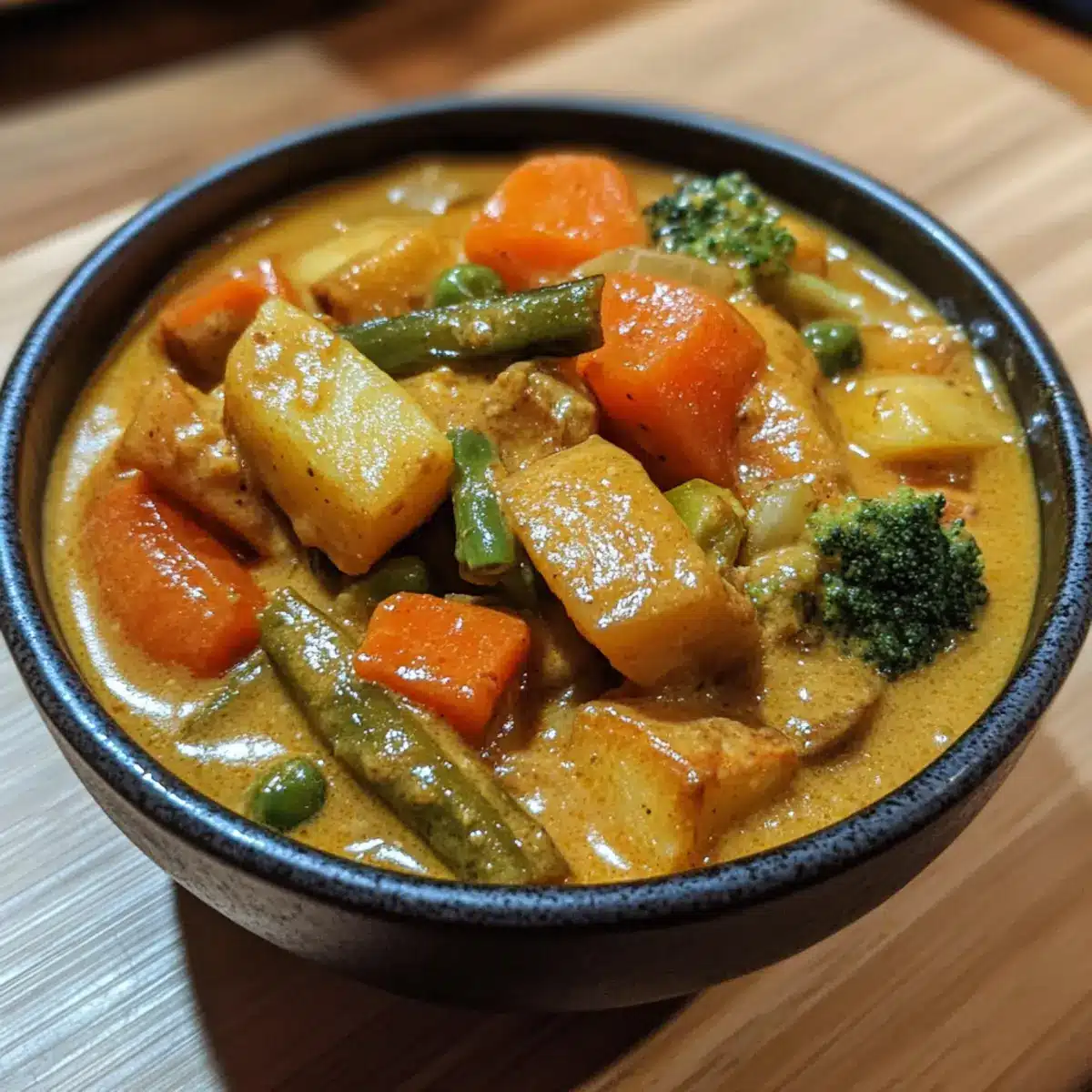
Easy Thai Coconut Vegetable Curry That Bursts with Flavor
Ingredients
Equipment
Method
- Pour creamy coconut milk into a large saucepan over medium heat, stirring gently until it shimmers, about 3 minutes.
- Add red curry paste to the warmed coconut milk, whisking until dissolved and sauce turns vibrant red, about 1 minute.
- Stir in vegetable broth to thin the sauce; bring to a gentle simmer, about 2 minutes.
- Add sliced carrots and onions to the curry base; cook 4 minutes until onions are translucent.
- Stir in bell peppers and zucchini; sauté 3 minutes until tender-crisp.
- Add snow peas; stir until they turn vibrant green, about 2 minutes.
- Lower heat, cover pot, and simmer 5 minutes to meld flavors.
- Spoon curry over jasmine rice, then top with fresh basil leaves and a lime wedge.