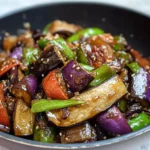
Ingredients
Scale
Here’s what you’ll need to create this incredibly speedy and satisfying eggplant stir fry. Each ingredient plays a crucial role in building layers of flavor and achieving that perfect texture.
- 2 medium Chinese or Japanese Eggplants (about 1 lb / 450g): These long, slender varieties are preferred for stir-frying as they have thinner skin, fewer seeds, and a more tender flesh that cooks quickly and absorbs sauce beautifully without becoming overly mushy compared to the larger globe eggplants. Look for firm eggplants with smooth, glossy skin and bright green caps.
- 3 tablespoons Neutral Cooking Oil (like Canola, Grapeseed, or Peanut Oil): A high smoke point oil is essential for stir-frying to prevent burning and ensure the eggplant cooks quickly and evenly at high heat. Neutral flavor ensures it doesn’t overpower the other ingredients.
- 3 cloves Garlic (minced): A foundational aromatic that provides a pungent, savory base. Freshly minced garlic offers the best flavor, but good quality pre-minced garlic in oil can work in a pinch.
- 1 tablespoon Ginger (minced or finely grated): Adds a warm, zesty, and slightly spicy counterpoint to the garlic. Use fresh ginger root for the most vibrant flavor; grate it finely using a microplane or mince it finely with a sharp knife.
- Optional: 1/2 Red Bell Pepper (thinly sliced): Adds a pop of color, sweetness, and a slight crunch. You can substitute with other colors of bell pepper or other quick-cooking vegetables like snow peas or sliced onions.
- Optional: 1 small Red Chili (thinly sliced) or 1/2 teaspoon Red Pepper Flakes: For those who enjoy a bit of heat. Adjust the amount according to your preference. Deseeding the chili will reduce the spiciness.
For the Stir-Fry Sauce:
- 3 tablespoons Soy Sauce (or Tamari for Gluten-Free): The primary source of salty, umami flavor. Use low-sodium soy sauce if you’re watching your salt intake. Tamari is a great gluten-free alternative with a slightly richer flavor.
- 1 tablespoon Rice Vinegar: Adds a crucial element of acidity and tang, balancing the saltiness of the soy sauce and the sweetness. Unseasoned rice vinegar is preferred.
- 1 tablespoon Granulated Sugar (or Brown Sugar/Maple Syrup): Provides balance to the savory and tangy elements. Brown sugar adds a slight molasses note, while maple syrup can offer a different kind of sweetness (adjust quantity slightly if using liquid sweetener).
- 1 teaspoon Sesame Oil: Toasted sesame oil adds a distinct nutty aroma and flavor. It’s typically added towards the end of cooking or in the sauce, as its lower smoke point isn’t ideal for high-heat frying.
- 1 teaspoon Cornstarch: The thickening agent for the sauce. It creates that glossy coating typical of good stir-fries and helps the sauce cling to the eggplant. Mix it well with the liquid ingredients to avoid lumps.
- 2 tablespoons Water or Vegetable Broth: Helps dissolve the cornstarch and sugar, creating the right consistency for the sauce. Broth adds a little extra depth of flavor compared to water.
For Garnish (Optional but Recommended):
- 1 tablespoon Toasted Sesame Seeds: Adds a nutty flavor and visual appeal. Toast raw sesame seeds lightly in a dry pan until fragrant and lightly golden.
- 2 Scallions (Green parts only, thinly sliced): Provide a fresh, mild oniony bite and a vibrant green color. Slice them thinly on the diagonal for a professional look.
Instructions
Follow these steps carefully for a perfectly cooked Fast Eggplant Stir Fry every time. The key is preparation (mise en place) and high heat!
- Prepare the Eggplant: Wash the eggplants thoroughly under cold running water. Pat them completely dry with paper towels – removing surface moisture helps them sear rather than steam. Trim off the stem ends. Cut the eggplants lengthwise into quarters, then slice them crosswise into bite-sized pieces, about 1-inch thick. Optional Salting Step: If you have time and are concerned about bitterness or sogginess (especially if using slightly older eggplant), place the cut eggplant in a colander, sprinkle generously with about 1 teaspoon of salt, and toss to coat. Let it sit over the sink or a bowl for 20-30 minutes. The salt will draw out excess moisture and some potentially bitter compounds. Rinse the eggplant thoroughly under cold water to remove the salt, then pat it extremely dry with paper towels or a clean kitchen towel. This drying step is critical; wet eggplant will splatter in hot oil and won’t brown properly. If skipping the salting, ensure the eggplant is very dry after washing.
- Prepare Aromatics and Vegetables: While the eggplant might be salting (or if skipping that step, proceed directly), prepare the rest of your ingredients. Mince the garlic and ginger finely. If using, thinly slice the red bell pepper and chili. Slice the green parts of the scallions for garnish. Having everything prepped and ready near the stove (mise en place) is crucial for stir-frying, as the cooking process is very fast.
- Mix the Stir-Fry Sauce: In a small bowl, whisk together the soy sauce (or tamari), rice vinegar, sugar, sesame oil, cornstarch, and water (or vegetable broth). Stir well until the cornstarch and sugar are fully dissolved and no lumps remain. Set the sauce aside near the stove.
- Heat the Wok or Skillet: Place a large wok or a heavy-bottomed skillet (at least 12 inches wide) over high heat. Let it get properly hot – you should feel intense heat radiating from the surface when you hold your hand a few inches above it. A properly heated pan is essential for searing the eggplant quickly.
- Add Oil and Aromatics: Once the wok/skillet is smoking hot, add the neutral cooking oil. Swirl to coat the bottom. Immediately add the minced garlic and ginger (and sliced chili, if using). Stir-fry constantly for about 15-30 seconds until fragrant. Be careful not to burn the garlic, which can happen quickly over high heat.
- Stir-Fry the Eggplant: Add the prepared (and thoroughly dried!) eggplant pieces to the hot wok/skillet. Spread them in a single layer as much as possible. If your pan isn’t large enough, it’s better to cook the eggplant in two batches to avoid overcrowding. Overcrowding lowers the pan temperature, causing the eggplant to steam and become soggy instead of searing. Stir-fry over high heat, tossing or stirring frequently, for about 5-7 minutes. The eggplant should start to soften, shrink slightly, and develop some golden-brown, caramelized edges.
- Add Optional Vegetables: If using red bell pepper (or other quick-cooking vegetables), add them to the wok now. Continue to stir-fry for another 1-2 minutes until the bell pepper is tender-crisp.
- Add the Sauce: Give the prepared stir-fry sauce a quick whisk again (the cornstarch may have settled). Pour the sauce evenly over the eggplant and vegetables in the wok.
- Thicken the Sauce: Stir constantly and quickly as the sauce hits the hot pan. Cook for about 30-60 seconds, or until the sauce bubbles, thickens to a glossy consistency, and coats the eggplant beautifully. The heat cooks the cornstarch, activating its thickening properties.
- Finish and Serve: Remove the wok/skillet from the heat immediately once the sauce has thickened to prevent overcooking. Taste and adjust seasoning if necessary (though usually the sauce provides enough flavor). Stir in the toasted sesame oil if you didn’t add it to the sauce mixture earlier (some prefer adding it right at the end for maximum aroma). Transfer the Fast Eggplant Stir Fry to a serving dish. Garnish generously with toasted sesame seeds and sliced scallions. Serve immediately for the best texture and flavor.
Nutrition
- Serving Size: one normal portion
- Calories: 350
- Fat: 25g
- Carbohydrates: 30g
- Fiber: 8g