
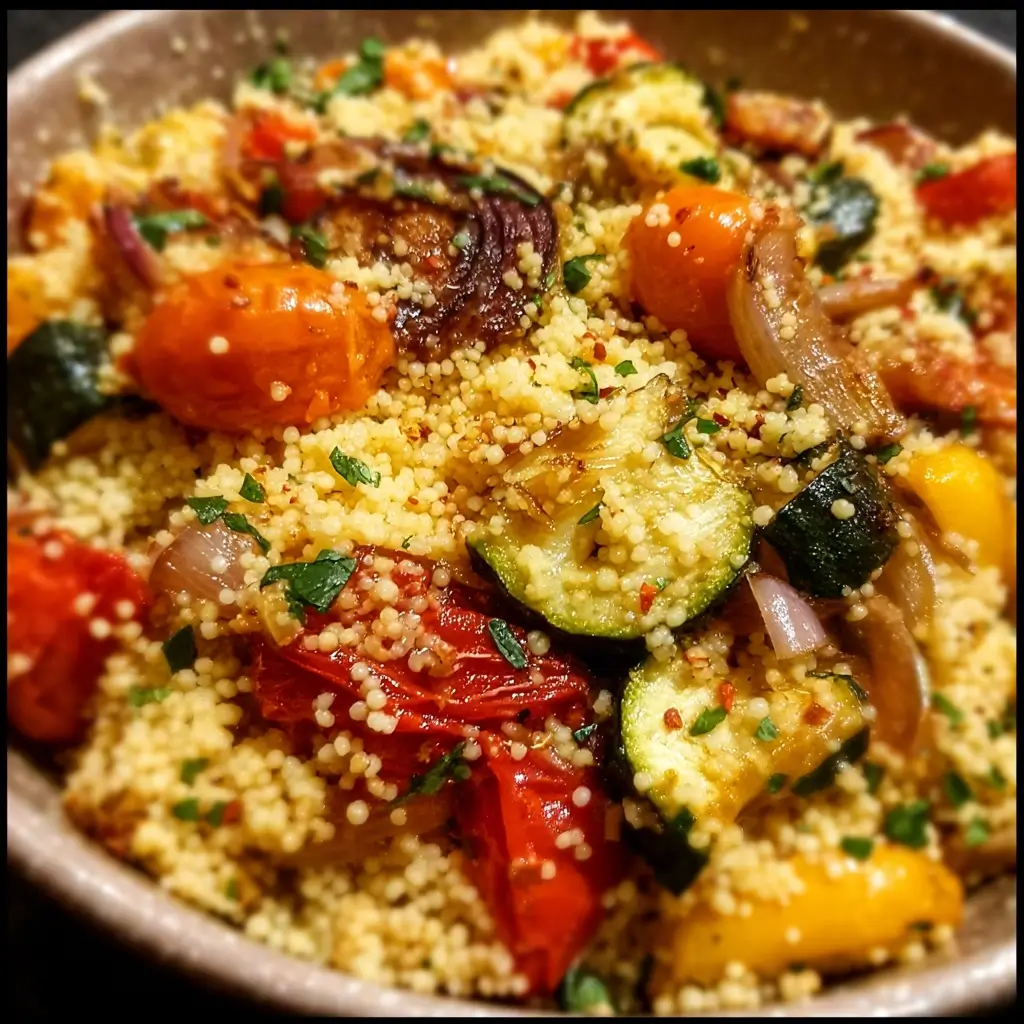

Of all the recipes that have become a staple in my kitchen, this Fast Roasted Veggie Couscous is hands-down the one I turn to most often. It was born out of a classic weeknight dilemma: the need for something incredibly fast, undeniably healthy, and delicious enough to satisfy a hungry family without spending hours over a hot stove. The first time I made it, the aroma of the caramelizing vegetables—the sweet peppers, the earthy zucchini, the tender onions—filled the house, and I knew I was onto something special. When I tossed the vibrant, jewel-toned roasted veggies with the fluffy, steaming couscous and a zesty lemon dressing, it was a feast for the eyes before it even hit the plate. My kids, who can sometimes be wary of a dish loaded with vegetables, devoured it without a second thought, asking for more. My husband declared it a “restaurant-quality” meal. For me, the magic lies in its simplicity and its versatility. It’s a complete, satisfying meal on its own, but it also plays beautifully as a side dish. It’s the perfect recipe for clearing out the vegetable drawer at the end of the week, and the fact that most of the cooking time is completely hands-off while the oven does its work feels like a culinary superpower. It has saved countless busy evenings, becoming our go-to for a nutritious meal that feels like a treat every single time. This isn’t just a recipe; it’s a solution—a vibrant, flavorful, and incredibly easy way to get a wonderful meal on the table.
Ingredients
This recipe is designed for flexibility, using common vegetables and pantry staples. The key is the combination of textures and flavors from the roasted vegetables, fluffy couscous, and bright dressing.
For the Roasted Vegetables:
- 1 Red Bell Pepper: Chopped into 1-inch pieces. It provides a sweet, slightly smoky flavor and a beautiful splash of color.
- 1 Yellow or Orange Bell Pepper: Chopped into 1-inch pieces. Complements the red pepper with its own mild sweetness and adds to the visual appeal.
- 1 Medium Zucchini: Chopped into 1-inch half-moons. Becomes wonderfully tender when roasted, with a delicate, earthy taste.
- 1 Medium Red Onion: Cut into 1-inch wedges. Roasting mellows its sharp flavor into a deep, savory sweetness.
- 1 cup Cherry Tomatoes: Left whole. These burst during roasting, releasing their sweet, concentrated juices and creating little pockets of flavor.
- 1 (15-ounce) can Chickpeas (Garbanzo Beans): Drained, rinsed, and patted very dry. They add a fantastic source of plant-based protein and become slightly crispy on the outside when roasted.
- 3 tablespoons Olive Oil: A good quality extra-virgin olive oil for coating the vegetables, which helps them caramelize and prevents sticking.
- 1 teaspoon Dried Oregano: A classic Mediterranean herb that pairs perfectly with these vegetables.
- 1/2 teaspoon Smoked Paprika: Adds a subtle, smoky depth that elevates the entire dish.
- 1/2 teaspoon Garlic Powder: Provides a savory, aromatic base without the risk of burning fresh garlic.
- Salt and Freshly Ground Black Pepper: To taste, for seasoning the vegetables properly.
For the Couscous:
- 1 ½ cups Pearl (Israeli) or Moroccan Couscous: Moroccan couscous is smaller and cooks faster, while pearl couscous has a chewier, pasta-like texture. Both work wonderfully.
- 1 ½ cups Vegetable Broth or Water: Using vegetable broth instead of water infuses the couscous with an extra layer of savory flavor from the start.
- 1 tablespoon Olive Oil or Butter: Adds richness and helps to separate the grains for a perfectly fluffy texture.
- A pinch of Salt: To season the couscous as it cooks.
For the Lemon-Herb Dressing & Garnish:
- ¼ cup Extra-Virgin Olive Oil: The base of our simple, fresh vinaigrette.
- Juice of 1 large Lemon (about 3 tablespoons): Freshly squeezed lemon juice is essential for a bright, zesty kick that cuts through the richness of the roasted vegetables.
- 1 teaspoon Dijon Mustard: Acts as an emulsifier to bind the oil and lemon juice, adding a tangy complexity.
- 1 Clove Garlic: Minced very finely or grated. Adds a pungent, savory note to the dressing.
- Salt and Freshly Ground Black Pepper: To taste.
- ½ cup Fresh Parsley: Finely chopped. Adds a clean, fresh, and slightly peppery finish.
- ¼ cup Fresh Mint or Dill (optional): Finely chopped. Mint adds a cool freshness, while dill provides a slightly anise-like flavor that is fantastic with lemon.
- ¼ cup Crumbled Feta Cheese (optional): For a salty, creamy element that beautifully complements the other ingredients.
- ¼ cup Toasted Pine Nuts or Slivered Almonds (optional): For a delightful crunch and nutty flavor.
Instructions
Follow these step-by-step instructions for a flawless and delicious roasted vegetable couscous. The process is straightforward, with most of the work happening in the initial preparation, followed by hands-off roasting time.
Step 1: Preheat the Oven and Prepare the Baking Sheet
Begin by preheating your oven to 400°F (200°C). A hot oven is crucial for achieving that perfect roast, creating vegetables that are tender on the inside with beautifully caramelized, slightly crispy edges. Line a large, rimmed baking sheet with parchment paper for easy cleanup and to prevent the vegetables from sticking. If you don’t have a large enough baking sheet, use two smaller ones to avoid overcrowding.
Step 2: Prepare and Season the Vegetables
In a large mixing bowl, combine the chopped red bell pepper, yellow bell pepper, zucchini, red onion wedges, and whole cherry tomatoes. Add the drained, rinsed, and thoroughly dried chickpeas to the bowl. It’s very important that the chickpeas are dry, as this helps them get crispy in the oven rather than steaming.
Step 3: Dress the Vegetables for Roasting
Drizzle the 3 tablespoons of olive oil over the vegetable and chickpea mixture. Sprinkle with the dried oregano, smoked paprika, garlic powder, salt, and freshly ground black pepper. Use your hands or a large spoon to toss everything together until every piece is evenly coated with the oil and spices. This ensures that every bite will be packed with flavor.
Step 4: Roast the Vegetables to Perfection
Spread the seasoned vegetables and chickpeas in a single, even layer on the prepared baking sheet. It is critical not to overcrowd the pan. If the vegetables are piled on top of each other, they will steam instead of roast, resulting in a soft, mushy texture. If necessary, use two baking sheets. Place the baking sheet in the preheated oven and roast for 25-30 minutes. About halfway through the cooking time (around the 15-minute mark), remove the pan and give the vegetables a good stir to ensure even cooking and browning on all sides. The vegetables are done when they are tender, and you can see browned, caramelized edges. The cherry tomatoes should be blistered and slightly burst.
Step 5: Cook the Couscous
While the vegetables are roasting, prepare the couscous. In a medium saucepan, bring the 1 ½ cups of vegetable broth (or water) to a rolling boil. Once boiling, stir in the 1 ½ cups of couscous, the tablespoon of olive oil or butter, and a pinch of salt. Immediately cover the saucepan with a tight-fitting lid and remove it from the heat. Let it stand, covered, for 5-10 minutes (check your package directions, as cooking times can vary slightly, especially between Moroccan and pearl couscous). Do not lift the lid during this time. The couscous will absorb the liquid and become tender. After the resting time, remove the lid and use a fork to gently fluff the couscous, separating the grains.
Step 6: Prepare the Lemon-Herb Dressing
While the couscous is steaming, whip up the simple and vibrant dressing. In a small bowl or a glass jar with a lid, combine the ¼ cup of extra-virgin olive oil, the juice of one large lemon, the Dijon mustard, and the finely minced garlic. Whisk vigorously (or shake the jar) until the dressing is emulsified and creamy. Season with salt and pepper to your liking.
Step 7: Combine and Serve
In a large serving bowl, combine the fluffed couscous and the hot roasted vegetables directly from the oven. Pour about three-quarters of the lemon-herb dressing over the mixture and toss gently to combine everything thoroughly. The warm couscous and vegetables will absorb the dressing beautifully. Stir in the finely chopped fresh parsley (and mint or dill, if using).
Step 8: Garnish and Enjoy
Taste the couscous and add more dressing, salt, or pepper if needed. To finish, sprinkle the crumbled feta cheese and toasted pine nuts or almonds over the top, if you’re using them. Serve the dish warm as a hearty main course or a delicious side.
Nutrition Facts
This recipe is as nutritious as it is delicious, packed with vitamins, fiber, and healthy fats. The nutritional information is an estimate and can vary based on specific ingredients and portion sizes.
- Servings: 4-6 main course servings
- Calories per Serving: Approximately 450-550 kcal (based on 4 servings, including optional feta and nuts)
- Rich in Dietary Fiber: Thanks to the abundance of vegetables and chickpeas, this dish is an excellent source of fiber, which is crucial for digestive health, helps maintain stable blood sugar levels, and promotes a feeling of fullness.
- Excellent Source of Vitamins A and C: The colorful bell peppers, tomatoes, and zucchini are packed with powerful antioxidants, particularly vitamins A and C, which support a healthy immune system, promote good vision, and contribute to skin health.
- Good Source of Plant-Based Protein: The inclusion of chickpeas significantly boosts the protein content of this vegetarian dish. Protein is essential for building and repairing tissues, muscle function, and keeping you satiated for longer.
- Contains Healthy Fats: The primary fat source in this recipe is extra-virgin olive oil, a monounsaturated fat that is known for its heart-health benefits, including helping to reduce bad cholesterol levels.
- Naturally Low in Saturated Fat: As a plant-based meal, this recipe is naturally low in saturated fats and free from cholesterol, making it a heart-healthy choice for a regular meal rotation.
Preparation time
This recipe is specifically designed for efficiency, making it an ideal choice for busy weeknights or when you need a wholesome meal without a lot of fuss.
- Prep Time: 15 minutes. This includes washing and chopping the vegetables, measuring out the spices, and getting everything ready for the oven.
- Cook Time: 25-30 minutes. This is the time the vegetables spend in the oven. The best part is that this time is almost entirely hands-off, freeing you up to prepare the couscous, make the dressing, or simply relax.
- Total Time: Approximately 40-45 minutes. From starting your prep to serving the final dish, you can have a complete, gourmet-tasting meal on the table in under an hour.
How to Serve
This Fast Roasted Veggie Couscous is incredibly versatile. While it’s a stunning standalone meal, it can be served in many different ways to suit any occasion or dietary preference.
- As a Hearty Main Course:
- Serve it warm in a large bowl for a satisfying and complete vegetarian or vegan (omit the feta) dinner.
- A dollop of hummus or a creamy plain yogurt/tahini sauce on top adds another layer of flavor and texture.
- As a Vibrant Side Dish:
- This couscous makes an excellent companion to grilled or roasted proteins. It pairs wonderfully with:
- Grilled Chicken Breast or Thighs
- Pan-Seared Salmon or Halibut
- Grilled Halloumi Cheese
- Beef or Lamb Kebabs
- Roasted Tofu Steaks
- This couscous makes an excellent companion to grilled or roasted proteins. It pairs wonderfully with:
- For Meal Prep Lunches:
- This recipe is a meal-prep dream. Portion the cooled couscous into individual airtight containers.
- It’s delicious eaten cold, straight from the fridge, or can be gently reheated in the microwave. The flavors often meld and taste even better the next day.
- Keep the dressing separate if you prefer to add it just before serving to maintain maximum freshness.
- As a Base for a “Power Bowl”:
- Start with a scoop of the veggie couscous at the bottom of a bowl.
- Top with additional greens like arugula or spinach, a sliced avocado, extra protein, and a sprinkle of seeds like pumpkin or sunflower seeds for added nutrition and crunch.
- Creative Serving Ideas:
- Stuffed Vegetables: Use the couscous mixture as a delicious stuffing for hollowed-out bell peppers or zucchini boats. Top with a little extra cheese and bake until the vegetable is tender.
- On a Bed of Greens: Serve the warm couscous over a bed of fresh spinach or arugula. The heat from the couscous will gently wilt the greens, creating a delightful warm salad.
- As a Potluck or Party Dish: This recipe is perfect for sharing. It travels well, can be served at room temperature, and its vibrant colors make it a beautiful addition to any buffet table.
Additional tips
Take your roasted veggie couscous from great to absolutely spectacular with these eight professional tips and tricks.
- Don’t Crowd the Pan: This is the golden rule of roasting. When vegetables are too close together on the baking sheet, they trap steam and will become soggy instead of browning and caramelizing. If your vegetables look crowded, divide them between two baking sheets. The extra space allows hot air to circulate, ensuring a perfect roast.
- Uniform Cuts for Even Cooking: Try to chop all your hardier vegetables (peppers, zucchini, onion) to a roughly uniform size (about 1-inch pieces). This ensures that everything cooks at the same rate and you don’t end up with some mushy pieces and some undercooked ones. Cherry tomatoes can be left whole.
- Boost the Flavor of Your Couscous: While water works fine, cooking your couscous in vegetable or chicken broth is a simple hack that infuses it with a deep, savory flavor from the inside out. You can also add a bay leaf or a sprig of thyme to the liquid as it comes to a boil for extra aromatic notes.
- The Art of Fluffing: The key to perfectly light and separated couscous grains is the fluffing technique. After it has steamed, use a fork (not a spoon) to gently rake through the grains, breaking up any clumps. A spoon can mash the delicate grains together, making them pasty.
- Add a Protein Punch: To make this dish even more substantial, consider adding more protein. Besides the chickpeas, you could toss in some canned lentils (drained and rinsed), or top the finished dish with crumbled feta, goat cheese, or grilled halloumi.
- Don’t Be Shy with Fresh Herbs: The fresh parsley, mint, or dill are not just a garnish; they are a critical flavor component. They add a burst of freshness that cuts through the richness of the roasted vegetables and olive oil. Add them right at the end, just before serving, to preserve their bright color and flavor.
- Make a Double Batch of the Dressing: This lemon-herb vinaigrette is liquid gold. It’s fantastic on green salads, as a marinade for chicken or fish, or drizzled over other roasted vegetables. Since you’re already making it, double the quantities and store the extra in an airtight jar in the refrigerator for up to a week.
- Vary Your Veggies by Season: This recipe is a fantastic template. Feel free to swap out the vegetables based on what’s in season for the best flavor and value. In the fall, try butternut squash, broccoli, and Brussels sprouts. In the spring, asparagus, radishes, and snap peas would be wonderful additions (note that spring vegetables may need less roasting time).
FAQ section
Here are answers to some of the most frequently asked questions about making this Fast Roasted Veggie Couscous recipe.
1. Can I use different vegetables in this recipe?
Absolutely! This recipe is incredibly adaptable. The best vegetables for roasting are those that hold their shape and caramelize well. Great alternatives or additions include broccoli florets, cauliflower florets, chunks of sweet potato or butternut squash (they may need a slightly longer roasting time), asparagus spears (add them in the last 10-15 minutes of roasting), or sliced mushrooms.
2. How do I store and reheat leftovers?
Leftovers can be stored in an airtight container in the refrigerator for up to 4 days. You can enjoy the leftovers cold, as a salad, or reheat them. To reheat, sprinkle a tablespoon of water over the couscous to add a little moisture, then microwave in 60-second intervals until warmed through. You can also gently reheat it in a skillet over medium-low heat.
3. Can I make this recipe gluten-free?
Yes, you can easily make this dish gluten-free. Couscous is a pasta made from semolina wheat, so it is not gluten-free. Simply substitute the couscous with an equal amount of a gluten-free grain like quinoa, brown rice, or millet. Cook the substitute grain according to its package directions while the vegetables roast.
4. My couscous turned out clumpy and mushy. What did I do wrong?
Clumpy couscous is usually caused by one of two things: an incorrect liquid-to-couscous ratio or over-stirring. For Moroccan couscous, the ratio is typically 1:1. Using too much liquid will make it waterlogged. Also, be sure to remove it from the heat immediately after adding the couscous to the boiling liquid and let it steam, covered and undisturbed. Finally, always use a fork to fluff the grains, as a spoon can compress them.
5. Is this recipe suitable for meal prep?
This recipe is one of the best for meal prep! It holds up beautifully in the refrigerator for several days. For best results, you can either store the fully assembled dish in portions or keep the roasted vegetables, couscous, and dressing in separate containers. This allows you to assemble it just before eating, keeping every component at its freshest.
6. Can I use frozen vegetables instead of fresh?
While fresh vegetables will give you the best texture, you can use frozen vegetables in a pinch. Do not thaw them first. Toss the frozen vegetables directly with the oil and spices and spread them on the baking sheet. They may release more water, so be extra careful not to overcrowd the pan. You might also need to increase the roasting time by 5-10 minutes to ensure they are cooked through and have a chance to brown.
7. I don’t have fresh lemons. Can I use bottled lemon juice?
Freshly squeezed lemon juice will always provide the brightest, most vibrant flavor for the dressing. However, if you only have bottled lemon juice, you can use it. You may need to use a little less, as it can sometimes be more acidic or have a slightly different flavor profile. Taste the dressing as you go and adjust as needed.
8. How can I make this dish more filling without adding meat?
There are several great ways to boost the satiety of this dish. In addition to the chickpeas, you can increase the plant-based protein and healthy fats by:
- Adding a handful of toasted nuts like walnuts, pecans, or pistachios.
- Sprinkling in some seeds like pumpkin or sunflower seeds.
- Serving it with a large dollop of protein-rich hummus.
- Adding a scoop of cooked lentils to the mix.
- Topping it with sliced avocado for creamy, healthy fats.
Fast Roasted Veggie Couscous Recipe
Ingredients
This recipe is designed for flexibility, using common vegetables and pantry staples. The key is the combination of textures and flavors from the roasted vegetables, fluffy couscous, and bright dressing.
For the Roasted Vegetables:
- 1 Red Bell Pepper: Chopped into 1-inch pieces. It provides a sweet, slightly smoky flavor and a beautiful splash of color.
- 1 Yellow or Orange Bell Pepper: Chopped into 1-inch pieces. Complements the red pepper with its own mild sweetness and adds to the visual appeal.
- 1 Medium Zucchini: Chopped into 1-inch half-moons. Becomes wonderfully tender when roasted, with a delicate, earthy taste.
- 1 Medium Red Onion: Cut into 1-inch wedges. Roasting mellows its sharp flavor into a deep, savory sweetness.
- 1 cup Cherry Tomatoes: Left whole. These burst during roasting, releasing their sweet, concentrated juices and creating little pockets of flavor.
- 1 (15-ounce) can Chickpeas (Garbanzo Beans): Drained, rinsed, and patted very dry. They add a fantastic source of plant-based protein and become slightly crispy on the outside when roasted.
- 3 tablespoons Olive Oil: A good quality extra-virgin olive oil for coating the vegetables, which helps them caramelize and prevents sticking.
- 1 teaspoon Dried Oregano: A classic Mediterranean herb that pairs perfectly with these vegetables.
- 1/2 teaspoon Smoked Paprika: Adds a subtle, smoky depth that elevates the entire dish.
- 1/2 teaspoon Garlic Powder: Provides a savory, aromatic base without the risk of burning fresh garlic.
- Salt and Freshly Ground Black Pepper: To taste, for seasoning the vegetables properly.
For the Couscous:
- 1 ½ cups Pearl (Israeli) or Moroccan Couscous: Moroccan couscous is smaller and cooks faster, while pearl couscous has a chewier, pasta-like texture. Both work wonderfully.
- 1 ½ cups Vegetable Broth or Water: Using vegetable broth instead of water infuses the couscous with an extra layer of savory flavor from the start.
- 1 tablespoon Olive Oil or Butter: Adds richness and helps to separate the grains for a perfectly fluffy texture.
- A pinch of Salt: To season the couscous as it cooks.
For the Lemon-Herb Dressing & Garnish:
- ¼ cup Extra-Virgin Olive Oil: The base of our simple, fresh vinaigrette.
- Juice of 1 large Lemon (about 3 tablespoons): Freshly squeezed lemon juice is essential for a bright, zesty kick that cuts through the richness of the roasted vegetables.
- 1 teaspoon Dijon Mustard: Acts as an emulsifier to bind the oil and lemon juice, adding a tangy complexity.
- 1 Clove Garlic: Minced very finely or grated. Adds a pungent, savory note to the dressing.
- Salt and Freshly Ground Black Pepper: To taste.
- ½ cup Fresh Parsley: Finely chopped. Adds a clean, fresh, and slightly peppery finish.
- ¼ cup Fresh Mint or Dill (optional): Finely chopped. Mint adds a cool freshness, while dill provides a slightly anise-like flavor that is fantastic with lemon.
- ¼ cup Crumbled Feta Cheese (optional): For a salty, creamy element that beautifully complements the other ingredients.
- ¼ cup Toasted Pine Nuts or Slivered Almonds (optional): For a delightful crunch and nutty flavor.
Instructions
Follow these step-by-step instructions for a flawless and delicious roasted vegetable couscous. The process is straightforward, with most of the work happening in the initial preparation, followed by hands-off roasting time.
Step 1: Preheat the Oven and Prepare the Baking Sheet
Begin by preheating your oven to 400°F (200°C). A hot oven is crucial for achieving that perfect roast, creating vegetables that are tender on the inside with beautifully caramelized, slightly crispy edges. Line a large, rimmed baking sheet with parchment paper for easy cleanup and to prevent the vegetables from sticking. If you don’t have a large enough baking sheet, use two smaller ones to avoid overcrowding.
Step 2: Prepare and Season the Vegetables
In a large mixing bowl, combine the chopped red bell pepper, yellow bell pepper, zucchini, red onion wedges, and whole cherry tomatoes. Add the drained, rinsed, and thoroughly dried chickpeas to the bowl. It’s very important that the chickpeas are dry, as this helps them get crispy in the oven rather than steaming.
Step 3: Dress the Vegetables for Roasting
Drizzle the 3 tablespoons of olive oil over the vegetable and chickpea mixture. Sprinkle with the dried oregano, smoked paprika, garlic powder, salt, and freshly ground black pepper. Use your hands or a large spoon to toss everything together until every piece is evenly coated with the oil and spices. This ensures that every bite will be packed with flavor.
Step 4: Roast the Vegetables to Perfection
Spread the seasoned vegetables and chickpeas in a single, even layer on the prepared baking sheet. It is critical not to overcrowd the pan. If the vegetables are piled on top of each other, they will steam instead of roast, resulting in a soft, mushy texture. If necessary, use two baking sheets. Place the baking sheet in the preheated oven and roast for 25-30 minutes. About halfway through the cooking time (around the 15-minute mark), remove the pan and give the vegetables a good stir to ensure even cooking and browning on all sides. The vegetables are done when they are tender, and you can see browned, caramelized edges. The cherry tomatoes should be blistered and slightly burst.
Step 5: Cook the Couscous
While the vegetables are roasting, prepare the couscous. In a medium saucepan, bring the 1 ½ cups of vegetable broth (or water) to a rolling boil. Once boiling, stir in the 1 ½ cups of couscous, the tablespoon of olive oil or butter, and a pinch of salt. Immediately cover the saucepan with a tight-fitting lid and remove it from the heat. Let it stand, covered, for 5-10 minutes (check your package directions, as cooking times can vary slightly, especially between Moroccan and pearl couscous). Do not lift the lid during this time. The couscous will absorb the liquid and become tender. After the resting time, remove the lid and use a fork to gently fluff the couscous, separating the grains.
Step 6: Prepare the Lemon-Herb Dressing
While the couscous is steaming, whip up the simple and vibrant dressing. In a small bowl or a glass jar with a lid, combine the ¼ cup of extra-virgin olive oil, the juice of one large lemon, the Dijon mustard, and the finely minced garlic. Whisk vigorously (or shake the jar) until the dressing is emulsified and creamy. Season with salt and pepper to your liking.
Step 7: Combine and Serve
In a large serving bowl, combine the fluffed couscous and the hot roasted vegetables directly from the oven. Pour about three-quarters of the lemon-herb dressing over the mixture and toss gently to combine everything thoroughly. The warm couscous and vegetables will absorb the dressing beautifully. Stir in the finely chopped fresh parsley (and mint or dill, if using).
Step 8: Garnish and Enjoy
Taste the couscous and add more dressing, salt, or pepper if needed. To finish, sprinkle the crumbled feta cheese and toasted pine nuts or almonds over the top, if you’re using them. Serve the dish warm as a hearty main course or a delicious side.
Nutrition
- Serving Size: one normal portion
- Calories: 550