
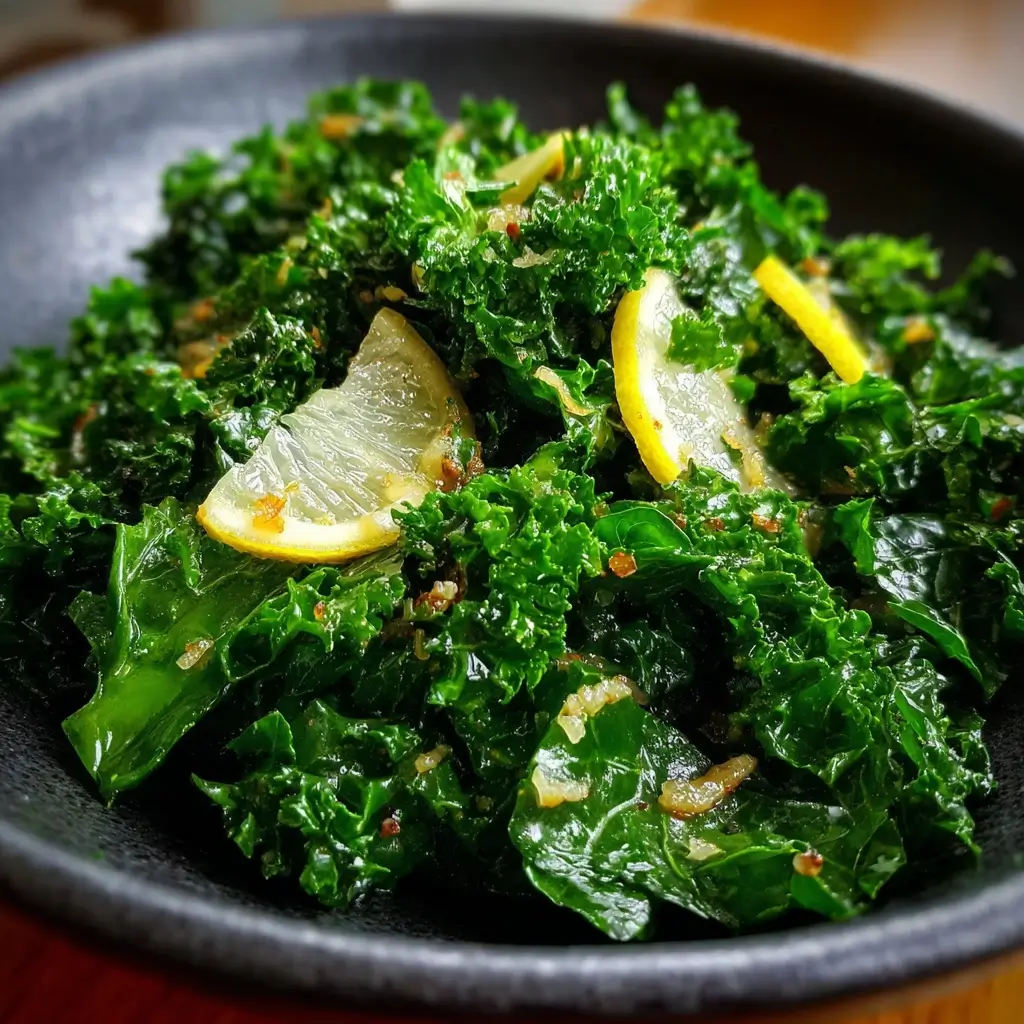

Of all the green vegetables, kale has a certain reputation, doesn’t it? For years, I viewed it as the obligatory, tough, and often bitter green that health gurus swore by, but that my family politely pushed to the side of their plates. I tried steaming it, roasting it, and even hiding it in smoothies, but it never quite clicked. It was the culinary challenge I had almost given up on. That all changed with this Garlic Lemon Kale Sauté. The first time I made it, the aroma alone was a revelation—the pungent, sweet smell of garlic softening in olive oil, followed by the bright, zesty perfume of fresh lemon. My kitchen smelled like a high-end Mediterranean restaurant. When I served it, the reaction was not one of polite tolerance, but genuine enthusiasm. My husband, a notorious skeptic of “leafy greens,” took a second helping. The kids, who usually inspect any green food with forensic suspicion, declared it “lemony and good!” It was a triumph. The kale was no longer tough or bitter; it was silky, tender, and infused with a perfectly balanced symphony of savory garlic and vibrant citrus. This recipe didn’t just teach me how to cook kale; it taught me how to love it. It has become our go-to side dish, the quick and easy answer to “what vegetable should we have tonight?” It’s proof that with the right technique and a few simple, high-quality ingredients, even the most stubborn vegetable can become a showstopper.
Ingredients
- 1 large bunch of Lacinato Kale (approx. 1 pound): Also known as Dinosaur or Tuscan kale, its flatter, more tender leaves cook more evenly and have a slightly sweeter, less bitter flavor than curly kale.
- 2 tablespoons Extra Virgin Olive Oil: Use a good quality olive oil, as its fruity, peppery flavor is a key component of the dish’s foundation.
- 6-8 cloves Garlic, thinly sliced: Don’t skimp on the garlic! Slicing it thinly (rather than mincing) allows it to cook more gently, infusing the oil with a sweet, aromatic flavor without burning.
- 1/4 cup Vegetable Broth or Water: This is the secret to tenderizing the kale. It helps to steam the leaves, ensuring they become silky and not tough.
- 1 large Lemon: We will use both the zest and the juice. The zest provides aromatic oils and a deep citrus flavor, while the juice adds a bright, acidic finish.
- 1/2 teaspoon Sea Salt (or to taste): Essential for bringing out all the other flavors. Start with a half teaspoon and adjust as needed.
- 1/4 teaspoon Black Pepper, freshly ground: Freshly ground pepper offers a more potent and complex flavor than pre-ground varieties.
- Pinch of Red Pepper Flakes (optional): For those who enjoy a little warmth, a small pinch adds a subtle background heat that beautifully complements the garlic and lemon.
Instructions
- Prepare the Kale: Thoroughly wash the kale leaves under cold running water to remove any grit. Pat them completely dry with a clean kitchen towel or use a salad spinner. A dry leaf is crucial for a good sauté. Lay a leaf flat on your cutting board and, using a sharp knife, slice along each side of the tough, woody center stem to remove it. Discard the stems (or save them for stocks or smoothies). Stack the de-stemmed leaves and roughly chop them into bite-sized, ribbon-like pieces, about 1-2 inches wide.
- Warm the Oil and Infuse with Garlic: In a large, wide skillet or Dutch oven, heat the extra virgin olive oil over medium heat. You want a pan with a large surface area to avoid overcrowding. Once the oil shimmers slightly, add the thinly sliced garlic. Sauté for about 60-90 seconds, stirring constantly. The goal is to soften the garlic and infuse the oil with its flavor, not to brown it. It should be incredibly fragrant and just beginning to turn a pale golden color.
- Wilt the Kale: Add the entire pile of chopped kale to the skillet. It will seem like a huge amount, but it will cook down significantly. Using tongs, toss the kale continuously to coat every leaf with the fragrant garlic oil. Continue tossing for about 2-3 minutes, until the kale begins to visibly wilt and turns a vibrant, deep green color.
- Steam for Tenderness: Pour the vegetable broth or water into the hot pan. It will sizzle and create a burst of steam. Immediately cover the skillet with a tight-fitting lid and reduce the heat to low. Let the kale steam for 4-6 minutes. This step is what transforms the kale from tough to tender. The exact time will depend on the maturity of your kale and your desired tenderness.
- Finish with Flavor: Uncover the skillet. Most of the liquid should have evaporated. If there’s excess liquid, turn the heat up to medium-high for a minute to cook it off. Turn off the heat. Add the lemon zest, fresh lemon juice, sea salt, black pepper, and the optional red pepper flakes.
- Serve Immediately: Use your tongs to give everything one final, thorough toss to combine all the finishing flavors. Taste and adjust the seasoning if necessary—it might need another pinch of salt or a squeeze of lemon. Transfer to a serving dish and enjoy immediately while warm.
Nutrition Facts
This recipe is not only delicious but also a powerhouse of nutrients. The information below is an approximation for one serving, assuming the recipe yields 4 servings.
- Servings: 4
- Calories per serving: Approximately 110 kcal
- Vitamin K: Kale is one of the world’s best sources of Vitamin K, an essential nutrient for blood clotting and building strong bones. A single serving of this dish provides well over the daily recommended intake.
- Vitamin C: The combination of kale and fresh lemon juice makes this dish incredibly rich in Vitamin C, a powerful antioxidant that supports the immune system and promotes healthy skin.
- Dietary Fiber: With a generous amount of fiber, this sauté helps support digestive health, promotes a feeling of fullness, and can aid in maintaining stable blood sugar levels.
- Antioxidants: Kale is loaded with antioxidants like beta-carotene and flavonoids. These compounds help protect your cells from damage caused by free radicals, contributing to overall long-term health.
- Low in Carbohydrates: This is a fantastic low-carb, keto-friendly side dish that is packed with flavor and micronutrients without adding significant carbs to your meal.
Preparation time
This recipe is designed to be quick and efficient, making it perfect for a busy weeknight.
- Active Preparation Time: Approximately 10 minutes. This includes washing and chopping the kale, slicing the garlic, and zesting/juicing the lemon.
- Cooking Time: Approximately 10 minutes.
- Total Time: Approximately 20 minutes from start to finish. It’s a fast, high-impact side dish that delivers incredible flavor in a very short amount of time.
How to Serve
This Garlic Lemon Kale Sauté is incredibly versatile. While it’s fantastic on its own, it can be served in numerous ways to complement or enhance a meal. Here are some of our favorite ways to enjoy it:
- As a Classic Side Dish:
- Pair it with grilled or roasted chicken for a lean and healthy meal.
- Serve alongside a perfectly seared salmon or cod fillet; the lemon in the kale beautifully complements the fish.
- It’s a wonderful green component to serve with a hearty steak or beef roast, cutting through the richness with its bright acidity.
- Serve with pan-seared scallops or shrimp for an elegant and quick dinner.
- As the Base for a Healthy Bowl:
- Grain Bowl: Use the sautéed kale as a warm base. Top with cooked quinoa, farro, or brown rice, roasted chickpeas, and a drizzle of tahini dressing.
- Protein Bowl: Top a generous serving of the kale with a sliced hard-boiled egg, grilled tofu, or leftover shredded chicken for a complete, low-carb lunch.
- Incorporated into Main Meals:
- Pasta: Toss the sautéed kale with your favorite pasta, a little extra olive oil, and a generous sprinkle of Parmesan cheese for a simple and delicious vegetarian main course.
- Eggs: Stir it into scrambled eggs just before they finish cooking, or use it as a filling for a nutrient-packed omelet or frittata.
- Tacos & Quesadillas: Use it as a green filling for tacos (especially fish tacos) or fold it into a cheese quesadilla for an extra boost of flavor and nutrition.
- As a Simple, Elegant Topping:
- On Toast: Pile it onto a slice of toasted sourdough bread, perhaps with a smear of ricotta cheese or a poached egg on top, for a fantastic breakfast or light lunch.
- With Potatoes: Serve it over a baked sweet potato or alongside crispy roasted potatoes for a satisfying and complete side dish.
Additional tips
To take your sautéed kale from great to absolutely perfect, here are eight additional tips to keep in mind.
- Massage Your Kale (If Using Curly Kale): If you can’t find Lacinato kale and opt for the more common curly variety, give it a quick massage. After chopping, place it in a large bowl, drizzle with a tiny bit of olive oil and a pinch of salt, and use your hands to massage the leaves for 1-2 minutes until they soften slightly and darken in color. This helps to break down the tough cellulose structure, resulting in a more tender final product.
- Ensure Your Kale is Bone Dry: This cannot be overstated. Water on the leaves will cause the kale to steam rather than sauté when it first hits the pan. This prevents it from getting that initial flavorful sear with the garlic oil. A salad spinner is your best friend here, but thorough patting with kitchen towels also works well.
- Don’t Overcrowd the Pan: Use the largest skillet you own. If the kale is packed in too tightly, it will trap steam and become soggy and drab instead of vibrant and silky. If you need to cook a very large amount, it’s better to do it in two separate batches than to crowd one pan.
- Deglaze with White Wine: For a more complex, restaurant-quality flavor, substitute the vegetable broth with a dry white wine like a Sauvignon Blanc or Pinot Grigio. Use it to deglaze the pan after wilting the kale, scraping up any flavorful browned bits from the bottom of the pan before covering to steam.
- Finish with a Savory Boost: After turning off the heat, consider adding a teaspoon of soy sauce or tamari along with the lemon juice. This adds a deep umami flavor that beautifully complements the other ingredients. A sprinkle of nutritional yeast can also add a cheesy, savory note.
- Don’t Add the Lemon Juice Too Early: Acid can affect the chlorophyll in green vegetables, causing them to turn a less appealing olive-drab color if cooked for too long. Always add the fresh lemon juice at the very end, after the heat is turned off, to preserve the kale’s vibrant green color and the juice’s fresh, bright flavor.
- Use the Stems! Don’t throw away those nutritious stems. Finely chop them and add them to the skillet a couple of minutes before you add the garlic. This gives them a head start on cooking, allowing them to become tender and adding a nice, slightly crunchy texture to the final dish.
- Vary Your Greens: This exact technique works wonders for other hearty greens. Try it with Swiss chard (use the stems, too!), collard greens, or mustard greens. You may need to adjust the steaming time slightly, but the garlic-lemon flavor profile is universally delicious.
FAQ section
1. Why is my sautéed kale bitter?
Bitterness in kale can come from two main sources: the variety of kale itself (curly kale tends to be more bitter than Lacinato) and overcooking the garlic. If your garlic browns or burns, it will impart a harsh, bitter flavor to the entire dish. To avoid this, sauté the garlic gently over medium heat and for only about a minute, just until it’s fragrant. Also, ensure you’re using a generous amount of lemon juice and a pinch of salt at the end, as both acid and salt are excellent at balancing and counteracting bitterness.
2. Can I use frozen kale for this recipe?
Yes, you can use frozen kale, which is a convenient option. You do not need to thaw it first. Simply add the frozen kale directly to the skillet after the garlic has become fragrant. You will likely need to skip the step of adding broth or water, as the frozen kale will release plenty of moisture as it thaws and cooks. Sauté until it’s heated through and tender, which may take a few minutes longer than fresh kale.
3. How do I store and reheat leftovers?
Leftover Garlic Lemon Kale Sauté can be stored in an airtight container in the refrigerator for up to 4 days. The flavors will continue to meld and it’s delicious cold or reheated. To reheat, simply add it to a skillet over medium-low heat with a splash of water or broth to re-moisturize it, and heat until warmed through. You can also reheat it in the microwave in 30-second intervals.
4. Can I make this recipe ahead of time?
While this dish is best served fresh to preserve its vibrant color and texture, you can certainly make it a few hours ahead of time. If you do, it’s best to slightly undercook it and then reheat it gently just before serving. To prep ahead, you can wash, de-stem, and chop the kale and store it in the fridge for a day or two, which makes the final cooking process incredibly fast.
5. Is it necessary to remove the kale stems?
For the most tender and pleasant texture, it is highly recommended to remove the thick, woody main stem from each leaf. These stems are very fibrous and will not become tender in the same amount of time as the leaves, resulting in an unpleasantly tough and chewy texture in the final dish. However, you can save the stems, chop them finely, and sauté them for a few minutes before adding the rest of the ingredients.
6. Can I use bottled lemon juice instead of fresh?
For the best possible flavor, fresh lemon juice is strongly recommended. Bottled lemon juice lacks the bright, vibrant zing of fresh juice and can sometimes have a muted or slightly chemical aftertaste. Furthermore, this recipe uses lemon zest, which provides aromatic oils and a deep citrus flavor that you cannot get from a bottle. A single fresh lemon will elevate the entire dish.
7. My kale turned out soggy. What did I do wrong?
Soggy kale is usually the result of too much moisture and not enough heat. This can happen if you don’t dry the leaves properly after washing, if you overcrowd the pan, or if you add too much liquid and don’t cook it off at the end. To ensure a silky, not soggy, result, use a wide pan, make sure your leaves are very dry, and if there’s liquid left after steaming, turn up the heat for a minute to let it evaporate before adding the final seasonings.
8. What other spices or herbs would work well in this recipe?
This recipe is a wonderful canvas for other flavors. For a Mediterranean twist, add a pinch of dried oregano with the garlic. For a touch of smoky flavor, add 1/4 teaspoon of smoked paprika. Finely chopped fresh herbs like parsley, dill, or mint, stirred in at the very end with the lemon juice, would also add another layer of freshness and complexity.
Garlic Lemon Kale Sauté Recipe
Ingredients
- 1 large bunch of Lacinato Kale (approx. 1 pound): Also known as Dinosaur or Tuscan kale, its flatter, more tender leaves cook more evenly and have a slightly sweeter, less bitter flavor than curly kale.
- 2 tablespoons Extra Virgin Olive Oil: Use a good quality olive oil, as its fruity, peppery flavor is a key component of the dish’s foundation.
- 6–8 cloves Garlic, thinly sliced: Don’t skimp on the garlic! Slicing it thinly (rather than mincing) allows it to cook more gently, infusing the oil with a sweet, aromatic flavor without burning.
- 1/4 cup Vegetable Broth or Water: This is the secret to tenderizing the kale. It helps to steam the leaves, ensuring they become silky and not tough.
- 1 large Lemon: We will use both the zest and the juice. The zest provides aromatic oils and a deep citrus flavor, while the juice adds a bright, acidic finish.
- 1/2 teaspoon Sea Salt (or to taste): Essential for bringing out all the other flavors. Start with a half teaspoon and adjust as needed.
- 1/4 teaspoon Black Pepper, freshly ground: Freshly ground pepper offers a more potent and complex flavor than pre-ground varieties.
- Pinch of Red Pepper Flakes (optional): For those who enjoy a little warmth, a small pinch adds a subtle background heat that beautifully complements the garlic and lemon.
Instructions
- Prepare the Kale: Thoroughly wash the kale leaves under cold running water to remove any grit. Pat them completely dry with a clean kitchen towel or use a salad spinner. A dry leaf is crucial for a good sauté. Lay a leaf flat on your cutting board and, using a sharp knife, slice along each side of the tough, woody center stem to remove it. Discard the stems (or save them for stocks or smoothies). Stack the de-stemmed leaves and roughly chop them into bite-sized, ribbon-like pieces, about 1-2 inches wide.
- Warm the Oil and Infuse with Garlic: In a large, wide skillet or Dutch oven, heat the extra virgin olive oil over medium heat. You want a pan with a large surface area to avoid overcrowding. Once the oil shimmers slightly, add the thinly sliced garlic. Sauté for about 60-90 seconds, stirring constantly. The goal is to soften the garlic and infuse the oil with its flavor, not to brown it. It should be incredibly fragrant and just beginning to turn a pale golden color.
- Wilt the Kale: Add the entire pile of chopped kale to the skillet. It will seem like a huge amount, but it will cook down significantly. Using tongs, toss the kale continuously to coat every leaf with the fragrant garlic oil. Continue tossing for about 2-3 minutes, until the kale begins to visibly wilt and turns a vibrant, deep green color.
- Steam for Tenderness: Pour the vegetable broth or water into the hot pan. It will sizzle and create a burst of steam. Immediately cover the skillet with a tight-fitting lid and reduce the heat to low. Let the kale steam for 4-6 minutes. This step is what transforms the kale from tough to tender. The exact time will depend on the maturity of your kale and your desired tenderness.
- Finish with Flavor: Uncover the skillet. Most of the liquid should have evaporated. If there’s excess liquid, turn the heat up to medium-high for a minute to cook it off. Turn off the heat. Add the lemon zest, fresh lemon juice, sea salt, black pepper, and the optional red pepper flakes.
- Serve Immediately: Use your tongs to give everything one final, thorough toss to combine all the finishing flavors. Taste and adjust the seasoning if necessary—it might need another pinch of salt or a squeeze of lemon. Transfer to a serving dish and enjoy immediately while warm.
Nutrition
- Serving Size: one normal portion
- Calories: 110