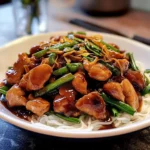
Ingredients
Scale
Here’s what you’ll need to create this vibrant and flavorful Ginger Soy Chicken Stir Fry:
For the Chicken & Marinade:
- 1.5 lbs (about 680g) Boneless, Skinless Chicken: Thighs are recommended for extra flavor and moisture, but breasts work well too. Slice thinly against the grain.
- 1 Tablespoon Low-Sodium Soy Sauce: Forms the salty, umami base of the marinade. Use low-sodium to better control the final dish’s saltiness.
- 1 Tablespoon Cornstarch: Helps to create a velvety texture on the chicken and protects it from overcooking, ensuring tenderness.
- 1 Teaspoon Sesame Oil: Adds a hint of nutty aroma to the chicken itself.
For the Ginger Soy Stir-Fry Sauce:
- 1/2 Cup (120ml) Low-Sodium Soy Sauce: The primary flavor driver, providing savory depth.
- 1/4 Cup (60ml) Water or Low-Sodium Chicken Broth: Adds volume to the sauce without overpowering other flavors; broth adds a little more richness.
- 2 Tablespoons Honey or Maple Syrup: Provides balance to the savory soy sauce with a touch of sweetness. Adjust to your preference. Brown sugar can also be substituted.
- 2 Tablespoons Rice Vinegar: Adds a necessary tang and brightness to cut through the richness. Apple cider vinegar can work in a pinch.
- 1 Tablespoon Cornstarch: The thickening agent for the sauce, creating that perfect glossy coating.
- 1 Tablespoon Freshly Grated Ginger: Absolutely essential for the signature flavor. Use a microplane or fine grater for best results (about a 1-inch piece).
- 3–4 Cloves Garlic, Minced: Provides aromatic depth and pungency. Don’t skimp here!
- 1 Teaspoon Toasted Sesame Oil: Added at the end for its distinct nutty fragrance and flavor; toasting enhances this.
For the Stir-Fry:
- 2 Tablespoons High-Heat Cooking Oil: Such as avocado, grapeseed, canola, or peanut oil, divided. Needed for sautéing without burning.
- 1 Large Onion (Yellow or Red): Sliced or cut into wedges, providing a foundational aromatic flavor.
- 1 Red Bell Pepper: Seeded and sliced, adding sweetness and vibrant color.
- 1 Green Bell Pepper: Seeded and sliced, offering a slightly more vegetal flavor and contrasting color.
- 1 Large Carrot: Peeled and thinly sliced on the diagonal (or julienned), for sweetness and crunch.
- 1 Head of Broccoli: Cut into small florets (about 2 cups), adding essential greens and texture.
- 4 Ounces (about 115g) Snow Peas or Sugar Snap Peas: Trimmed, providing a lovely crispness and fresh flavor.
Optional Garnishes:
- Sliced Green Onions: For a fresh, pungent finish.
- Toasted Sesame Seeds: For texture and nutty flavor.
- Red Pepper Flakes: For those who like a little heat.
Instructions
Follow these steps carefully for a perfectly executed Ginger Soy Chicken Stir Fry:
- Marinate the Chicken: In a medium bowl, combine the thinly sliced chicken, 1 tablespoon of low-sodium soy sauce, 1 tablespoon of cornstarch, and 1 teaspoon of sesame oil. Toss well to ensure every piece of chicken is coated. Set aside to marinate for at least 15 minutes at room temperature (or up to 30 minutes in the refrigerator). This step, known as velveting, helps keep the chicken tender and flavorful.
- Prepare the Stir-Fry Sauce: In a separate small bowl or liquid measuring cup, whisk together all the sauce ingredients: 1/2 cup low-sodium soy sauce, 1/4 cup water or broth, 2 tablespoons honey/maple syrup, 2 tablespoons rice vinegar, 1 tablespoon cornstarch, 1 tablespoon grated ginger, minced garlic, and 1 teaspoon toasted sesame oil. Ensure the cornstarch is fully dissolved to prevent lumps. Set aside.
- Prepare the Vegetables (Mise en Place): Wash, chop, and slice all your vegetables as described in the ingredients list. Stir-frying happens quickly, so having everything prepped and ready near your stovetop is crucial. Group vegetables by cooking time – harder vegetables like carrots and broccoli florets will go in first, followed by quicker-cooking ones like bell peppers, onions, and snow peas.
- Heat the Wok or Pan: Place a large wok or heavy-bottomed skillet over high heat. Allow it to get smoking hot – this is key for achieving the characteristic stir-fry char and preventing sticking. Add 1 tablespoon of your high-heat cooking oil and swirl to coat the bottom.
- Cook the Chicken: Once the oil shimmers, carefully add the marinated chicken in a single layer. You may need to do this in two batches to avoid overcrowding the pan, which lowers the temperature and causes the chicken to steam rather than sear. Stir-fry for 3-5 minutes per batch, tossing occasionally, until the chicken is golden brown and cooked through. Remove the cooked chicken from the pan with a slotted spoon and set aside on a clean plate.
- Stir-Fry Aromatics and Harder Vegetables: Add the remaining 1 tablespoon of oil to the hot wok/skillet. Add the sliced onion and stir-fry for 1-2 minutes until it starts to soften and become fragrant. Add the carrots and broccoli florets. Stir-fry for 3-4 minutes, tossing frequently, until they are vibrant and begin to become tender-crisp. You can add a tablespoon or two of water if the pan seems too dry or if you prefer softer vegetables, covering briefly to steam.
- Add Softer Vegetables: Add the sliced bell peppers and snow peas (or sugar snap peas) to the wok. Continue to stir-fry for another 2-3 minutes. You want the vegetables to retain some bite and their bright color.
- Combine and Sauce: Return the cooked chicken to the wok with the vegetables. Give the prepared stir-fry sauce a quick whisk (as the cornstarch may have settled) and pour it evenly over the chicken and vegetables.
- Thicken the Sauce: Bring the mixture to a simmer, stirring constantly. The sauce will begin to bubble and thicken quite quickly due to the cornstarch, usually within 1-2 minutes. Cook until the sauce coats the chicken and vegetables nicely and has reached your desired consistency (it should be glossy and thick enough to cling).
- Finish and Serve: Remove the wok from the heat. If desired, stir in a final drizzle of toasted sesame oil for extra aroma. Taste and adjust seasoning if necessary, although it should be well-balanced. Serve immediately over your choice of base. Garnish generously with sliced green onions and toasted sesame seeds, adding red pepper flakes if you like heat.
Nutrition
- Serving Size: one normal portion
- Calories: 550
- Sugar: 15g
- Sodium: 1200mg
- Fat: 25g
- Fiber: 8g
- Protein: 45g