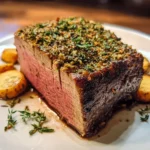
Ingredients
- Beef Roast (3-4 lbs Chuck Roast, Ribeye Roast, or Sirloin Roast): The star of the show, choose a well-marbled cut for optimal tenderness and flavor. Chuck roast is budget-friendly and becomes incredibly tender when roasted low and slow, while ribeye and sirloin roasts offer a more luxurious and leaner option.
- Fresh Rosemary (2 tablespoons, chopped): Lends a piney, aromatic fragrance that is classic with beef, adding a robust and earthy note to the herb crust. Fresh rosemary is preferred for its vibrant flavor, but dried can be used in a smaller quantity.
- Fresh Thyme (2 tablespoons, chopped): Provides a delicate, slightly lemony and minty flavor that complements rosemary beautifully, adding layers of complexity to the herb crust. Fresh thyme is recommended for its bright and nuanced taste.
- Fresh Parsley (1/4 cup, chopped): Offers a fresh, clean, and slightly peppery counterpoint to the richer herbs, balancing the flavors and adding a vibrant green color to the crust. Flat-leaf parsley (Italian parsley) is preferred for its stronger flavor.
- Garlic (4-5 cloves, minced): Essential for savory depth, minced garlic infuses the herb crust with its pungent and aromatic essence, creating a flavorful foundation for the roast. Fresh garlic cloves are key for the best flavor.
- Olive Oil (1/4 cup): Acts as a binder for the herb mixture, helping it adhere to the beef and promoting even browning and crisping during roasting. Extra virgin olive oil adds a fruity richness, but regular olive oil works well too.
- Dijon Mustard (2 tablespoons): Optional, but highly recommended. Dijon mustard adds a tangy, subtle heat and helps the herb crust stick to the beef even better. It also contributes a layer of complexity to the overall flavor profile.
- Kosher Salt (2 teaspoons): Enhances the natural flavors of the beef and herbs, drawing out moisture and contributing to a beautifully seasoned roast. Kosher salt is preferred for its coarser texture and cleaner taste.
- Black Pepper (1.5 teaspoons, freshly ground): Provides a sharp, aromatic spice that complements the herbs and beef, adding a final layer of seasoning and depth. Freshly ground black pepper is crucial for the best flavor.
Instructions
- Prepare the Beef: Begin by removing your beef roast from the refrigerator at least 30 minutes to an hour before you plan to cook it. This allows the roast to come closer to room temperature, which promotes more even cooking throughout. Pat the roast thoroughly dry with paper towels. This is a crucial step, as a dry surface will brown much better in the oven, leading to a more flavorful and visually appealing crust. Trim any large, excessive pieces of fat from the roast, but leave a thin layer as it will render during cooking and contribute to the juiciness and flavor of the beef. If using a chuck roast, which often has a thicker fat cap, you can score the fat in a crosshatch pattern to help it render and crisp up.
- Make the Herb Crust: In a medium-sized bowl, combine the chopped fresh rosemary, thyme, and parsley. Ensure the herbs are finely chopped to release their aromatic oils and distribute evenly in the crust. Add the minced garlic to the bowl. Freshly minced garlic is essential for the best flavor; avoid using pre-minced garlic from a jar as it lacks the same potency. Pour in the olive oil, ensuring it coats all the herbs and garlic. Add the Dijon mustard (if using) to the mixture. Season generously with kosher salt and freshly ground black pepper. Don’t be shy with the seasoning at this stage; it will flavor the entire roast. Mix all the ingredients together thoroughly with a spoon or your hands until a fragrant and slightly coarse herb paste forms.
- Coat the Beef: Place the prepared beef roast on a roasting rack set inside a roasting pan. The roasting rack allows for air circulation around the roast, promoting even cooking and browning. Using your hands, generously spread the herb crust mixture evenly over the entire surface of the beef roast. Ensure you press the herb crust firmly onto the beef so it adheres well during roasting. Don’t forget to coat the sides and ends of the roast as well. The goal is to create a complete and flavorful herb coating that will infuse the beef as it cooks.
- Sear the Beef (Optional but Highly Recommended): For an extra layer of flavor and a beautiful, caramelized crust, searing the beef before roasting is highly recommended. Heat a large, oven-safe skillet (cast iron is ideal) over medium-high heat until it is very hot. Add a tablespoon of olive oil or beef tallow to the skillet. Once the oil is shimmering, carefully place the herb-crusted roast beef in the hot skillet. Sear the roast on all sides, including the ends, for about 2-3 minutes per side, or until a rich, brown crust forms. This searing step creates the Maillard reaction, which develops complex flavors and adds depth to the roast. If your skillet is not oven-safe, transfer the seared roast to the roasting rack in the roasting pan after searing.
- Roast in the Oven: Preheat your oven to 325°F (160°C). This lower temperature is ideal for roasting beef slowly and evenly, resulting in a tender and juicy roast. Place the roasting pan with the herb-crusted roast beef in the preheated oven. Roast for approximately 15-20 minutes per pound for medium-rare, 20-25 minutes per pound for medium, or 25-30 minutes per pound for medium-well. However, the most accurate way to determine doneness is to use a meat thermometer. Insert the meat thermometer into the thickest part of the roast, avoiding bone.
- For Rare: 125-130°F (52-54°C)
- For Medium-Rare: 130-135°F (54-57°C)
- For Medium: 135-140°F (57-60°C)
- For Medium-Well: 140-145°F (60-63°C)
- For Well-Done: 145°F+ (63°C+) (Not recommended for roast beef as it can become dry)
Start checking the temperature about halfway through the estimated roasting time. Remember that the internal temperature of the roast will continue to rise slightly (carryover cooking) after you remove it from the oven, so it’s best to take it out a few degrees before your desired final temperature.
- Rest the Beef: Once the roast reaches your desired internal temperature, remove it from the oven and carefully transfer it to a cutting board. Tent it loosely with aluminum foil. Resting the roast is absolutely crucial for achieving maximum tenderness and juiciness. During roasting, the juices in the meat are pushed towards the center. Resting allows these juices to redistribute evenly throughout the roast, resulting in a more tender and flavorful final product. Let the roast rest for at least 15-20 minutes, or even up to 30 minutes for larger roasts. Do not skip this step!
- Make Gravy (Optional): While the roast is resting, you can make a delicious gravy from the pan drippings. Place the roasting pan on the stovetop over medium heat. Skim off any excess fat from the pan drippings, leaving behind the flavorful browned bits (fond) at the bottom of the pan. Pour in about 1 cup of red wine or beef broth to deglaze the pan, scraping up all the flavorful browned bits from the bottom with a wooden spoon. Bring the liquid to a simmer and let it reduce slightly, concentrating the flavors. For a thicker gravy, you can whisk together 1 tablespoon of cornstarch or all-purpose flour with 2 tablespoons of cold water to create a slurry. Gradually whisk the slurry into the simmering pan drippings and cook, stirring constantly, until the gravy thickens to your desired consistency. Season the gravy with salt and pepper to taste. Strain the gravy through a fine-mesh sieve for a smoother texture, if desired.
- Slice and Serve: After the roast has rested, remove the foil and carve it against the grain. “Against the grain” means slicing perpendicular to the direction of the muscle fibers. This shortens the muscle fibers, making the roast significantly more tender and easier to chew. For chuck roast, which has more pronounced muscle fibers, identifying the grain is especially important. Slice the roast into desired thickness and arrange the slices on a serving platter. Spoon any pan juices or gravy over the sliced roast. Garnish with fresh parsley or rosemary sprigs, if desired, and serve immediately.
Nutrition
- Serving Size: one normal portion
- Calories: 450
- Protein: 45g