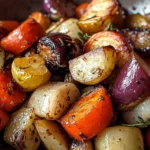
Ingredients
- Broccoli Florets: (1 large head) – Provides a hearty, slightly bitter base that beautifully soaks up the glaze.
- Carrots: (3-4 medium, peeled and chopped) – Adds sweetness and vibrant color, becoming tender and caramelized when roasted.
- Bell Peppers: (2, any color, seeded and chopped) – Contributes a sweet and slightly smoky flavor, and a satisfyingly soft texture.
- Red Onion: (1 large, quartered or sliced) – Offers a pungent, savory note that mellows and sweetens as it roasts.
- Zucchini or Yellow Squash: (2 medium, chopped) – Brings a mild, slightly sweet flavor and a tender texture to the mix.
- Olive Oil: (3 tablespoons) – Essential for roasting, it helps the vegetables caramelize and prevents them from drying out.
- Balsamic Vinegar: (3 tablespoons) – Provides a rich, tangy, and slightly sweet base for the glaze, adding depth of flavor.
- Honey: (2 tablespoons) – Sweetens the glaze and helps create a beautiful, sticky caramelization on the vegetables.
- Garlic Powder: (1 teaspoon) – Enhances the savory flavors and adds a subtle aromatic touch.
- Dried Thyme: (1 teaspoon) – Lends an earthy, slightly minty aroma that complements the balsamic and honey.
- Dried Rosemary: (½ teaspoon) – Offers a piney, fragrant note that pairs wonderfully with roasted vegetables.
- Salt: (to taste) – Essential for seasoning and enhancing the natural flavors of the vegetables.
- Black Pepper: (to taste) – Adds a touch of spice and depth to the overall flavor profile.
- Optional: Red Pepper Flakes: (¼ teaspoon or to taste) – For a hint of heat and added complexity.
- Fresh Parsley: (for garnish, optional) – Adds a fresh, vibrant touch and visual appeal.
Instructions
- Preheat Your Oven and Prepare Vegetables: Preheat your oven to 400°F (200°C). This high temperature is crucial for achieving perfectly roasted, slightly caramelized vegetables. While the oven is preheating, wash and chop all your vegetables into roughly equal sizes. Aim for pieces that are about 1-2 inches in size. This ensures even cooking and prevents some vegetables from becoming overcooked while others remain undercooked. Larger pieces will take longer to cook and will be softer, while smaller pieces will cook faster and be crisper.
- Combine Vegetables and Olive Oil: In a large bowl, toss all the chopped vegetables together. Drizzle with olive oil, ensuring all the vegetables are lightly coated. Olive oil is essential for roasting as it helps the vegetables caramelize, adds flavor, and prevents them from drying out in the oven’s heat. Toss thoroughly with your hands or a large spoon to distribute the oil evenly.
- Prepare the Honey Balsamic Glaze: In a small bowl, whisk together the balsamic vinegar, honey, garlic powder, dried thyme, dried rosemary, salt, and black pepper (and red pepper flakes, if using). Whisk until the honey is fully incorporated and the glaze is smooth. The balsamic vinegar provides tanginess, the honey adds sweetness and helps with caramelization, and the spices enhance the overall flavor profile. Taste the glaze and adjust seasoning if needed, adding a bit more salt or pepper to your preference.
- Pour Glaze Over Vegetables and Toss: Pour the honey balsamic glaze over the vegetables in the bowl. Toss everything together again, making sure every piece of vegetable is nicely coated with the glaze. This step is vital for infusing the vegetables with the delicious honey balsamic flavor and ensuring they roast beautifully. Even coating is key for consistent flavor in every bite.
- Arrange Vegetables on a Baking Sheet: Spread the glazed vegetables in a single layer on a large baking sheet. Using a large baking sheet is important to avoid overcrowding. Overcrowding will steam the vegetables instead of roasting them, resulting in soggy, not caramelized, vegetables. If necessary, use two baking sheets to ensure a single layer. If you have parchment paper or foil, you can line the baking sheet for easier cleanup, but it’s not essential.
- Roast the Vegetables: Place the baking sheet in the preheated oven and roast for 25-35 minutes, or until the vegetables are tender-crisp and slightly caramelized. The roasting time will depend on the size of your vegetable pieces and your oven. Start checking for doneness around 25 minutes. Stir the vegetables halfway through the roasting time (around 15-20 minutes) to ensure even cooking and caramelization on all sides. This also prevents any sticking to the baking sheet.
- Check for Doneness: To check if the vegetables are done, pierce a carrot or broccoli floret with a fork. It should be tender but still have a slight bite – tender-crisp is the ideal texture for roasted vegetables. You also want to see some nice caramelization and slight browning around the edges of the vegetables. If they are not tender enough, return them to the oven for another 5-10 minutes, checking again for doneness.
- Garnish and Serve: Once the vegetables are perfectly roasted, remove the baking sheet from the oven. If desired, garnish with fresh parsley for a pop of color and fresh flavor. Serve immediately while they are warm and flavorful. Roasted vegetables are best enjoyed fresh out of the oven, but they can also be served at room temperature.
Nutrition
- Serving Size: one normal portion
- Calories: 180
- Fat: 10g
- Saturated Fat: 1.5g