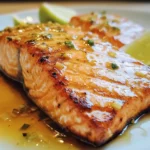
Ingredients
- Salmon Fillets: (About 1.5-2 pounds) Fresh or frozen (thawed), skin on or off, depending on your preference. Salmon is the star of the show, providing rich flavor and healthy fats.
- Dijon Mustard: (1/4 cup) Adds a tangy and robust mustard flavor that forms the base of the glaze. Dijon mustard is preferred for its smooth texture and sharp taste.
- Honey: (1/4 cup) Sweetens the glaze and creates a beautiful caramelized crust. Use a good quality honey for the best flavor.
- Soy Sauce (Low Sodium): (2 tablespoons) Provides umami and saltiness to balance the sweetness of the honey and tanginess of the mustard. Low sodium soy sauce is recommended to control the salt level.
- Lemon Juice (Freshly Squeezed): (1 tablespoon) Brightens the flavors and adds a touch of acidity. Fresh lemon juice is crucial for the best taste.
- Garlic (Minced): (2 cloves) Infuses the glaze with a savory and aromatic depth. Freshly minced garlic is always recommended over pre-minced for optimal flavor.
- Olive Oil: (1 tablespoon) Used for cooking the salmon, preventing sticking and adding a touch of richness. Extra virgin olive oil is a healthy and flavorful choice.
- Fresh Parsley (Chopped, for garnish): (Optional) Adds a fresh, herbaceous touch and visual appeal.
Instructions
- Prepare the Salmon: If using frozen salmon, ensure it is fully thawed. Pat the salmon fillets dry with paper towels. This step is crucial for achieving a good sear and allowing the glaze to adhere properly. Drying the salmon removes excess moisture, which can hinder browning and create steam instead of searing in the pan or baking in the oven. If you have skin-on salmon, you can choose to leave the skin on for cooking and remove it later, or remove it before cooking, depending on your preference. Skin-on salmon can be slightly more forgiving during cooking and retains moisture well.
- Make the Honey Mustard Glaze: In a small bowl, whisk together the Dijon mustard, honey, low sodium soy sauce, fresh lemon juice, and minced garlic. Ensure all ingredients are well combined until you have a smooth and emulsified glaze. Taste the glaze and adjust seasonings if necessary. You might want to add a pinch of salt or pepper if you prefer a stronger flavor profile. The balance of sweet, tangy, and savory is key to a perfect honey mustard glaze. This glaze is what will transform the salmon into a flavorful and delectable dish.
- Marinate the Salmon (Optional but Recommended): Place the salmon fillets in a shallow dish or a resealable plastic bag. Pour the honey mustard glaze evenly over the salmon, ensuring each fillet is well coated. If using a plastic bag, you can gently massage the glaze into the salmon. Marinating the salmon for at least 15-30 minutes, or even up to an hour in the refrigerator, will allow the flavors to penetrate the fish, resulting in a more flavorful and moist final product. While marinating is optional, it significantly enhances the taste and is highly recommended for a deeper flavor infusion. If you are short on time, even a quick 10-minute marinade will make a noticeable difference.
- Choose Your Cooking Method: You have several options for cooking your Honey Mustard Glazed Salmon, each offering slightly different results:
- Baking: Preheat your oven to 400°F (200°C). Line a baking sheet with parchment paper or foil for easy cleanup. Place the marinated salmon fillets on the prepared baking sheet, skin-side down if applicable. Bake for 12-15 minutes, or until the salmon is cooked through and flakes easily with a fork. Baking is a hands-off method that results in tender and moist salmon. The parchment paper or foil prevents sticking and makes cleaning up a breeze. The cooking time may vary slightly depending on the thickness of your salmon fillets. It’s best to check for doneness around the 12-minute mark and adjust accordingly.
- Pan-Searing: Heat olive oil in a large, oven-safe skillet over medium-high heat. Once the oil is hot and shimmering, carefully place the salmon fillets skin-side down (if applicable) in the skillet. Sear for 3-4 minutes per side, or until nicely browned. Pan-searing creates a beautiful crispy exterior on the salmon while keeping the inside moist. If you are using skin-on salmon, searing skin-side down first will render the fat and create a wonderfully crispy skin. After searing on both sides, you can finish cooking the salmon in the oven if needed, especially for thicker fillets. Transfer the skillet to the preheated 400°F (200°C) oven and bake for an additional 5-7 minutes, or until cooked through. This combination of pan-searing and baking ensures both a crispy exterior and perfectly cooked interior.
- Grilling: Preheat your grill to medium heat. Lightly oil the grill grates to prevent sticking. Place the marinated salmon fillets on the grill, skin-side down if applicable. Grill for 4-6 minutes per side, or until cooked through and grill marks appear. Grilling imparts a smoky flavor to the salmon, which complements the honey mustard glaze beautifully. Be careful not to overcook the salmon on the grill, as it can dry out quickly. Keep an eye on the salmon and use a spatula to gently flip it when it’s ready.
- Air Frying: Preheat your air fryer to 400°F (200°C). Place the marinated salmon fillets in the air fryer basket in a single layer, ensuring they are not overcrowded. Air fry for 8-10 minutes, or until the salmon is cooked through and slightly browned. Air frying is a quick and efficient method that results in crispy edges and tender, flaky salmon. It’s a great option for a fast weeknight meal. Make sure to check your air fryer manual for specific cooking times as they can vary slightly between models.
- Glaze During Cooking (Optional but Enhances Flavor): During the last few minutes of cooking, whether baking, pan-searing, grilling, or air frying, you can brush the salmon with any remaining honey mustard glaze. This step is optional but highly recommended as it intensifies the glaze flavor and creates a beautiful, glossy finish. Be careful not to add too much glaze too early, as the honey can burn if exposed to high heat for too long. Brushing the glaze during the final minutes allows it to caramelize slightly without burning, resulting in a richer and more pronounced honey mustard flavor.
- Check for Doneness: Salmon is cooked through when it flakes easily with a fork and is no longer translucent in the center. Avoid overcooking salmon, as it can become dry and rubbery. The internal temperature of cooked salmon should reach 145°F (63°C). Using a food thermometer is the most accurate way to ensure the salmon is cooked to the perfect temperature.
- Garnish and Serve: Once cooked, remove the salmon from the oven, skillet, grill, or air fryer. Let it rest for a minute or two before serving. This allows the juices to redistribute, resulting in more tender and flavorful salmon. Garnish with fresh chopped parsley, if desired, for a pop of color and freshness. Serve immediately and enjoy!
Nutrition
- Serving Size: one normal portion
- Calories: 450
- Protein: 40g