
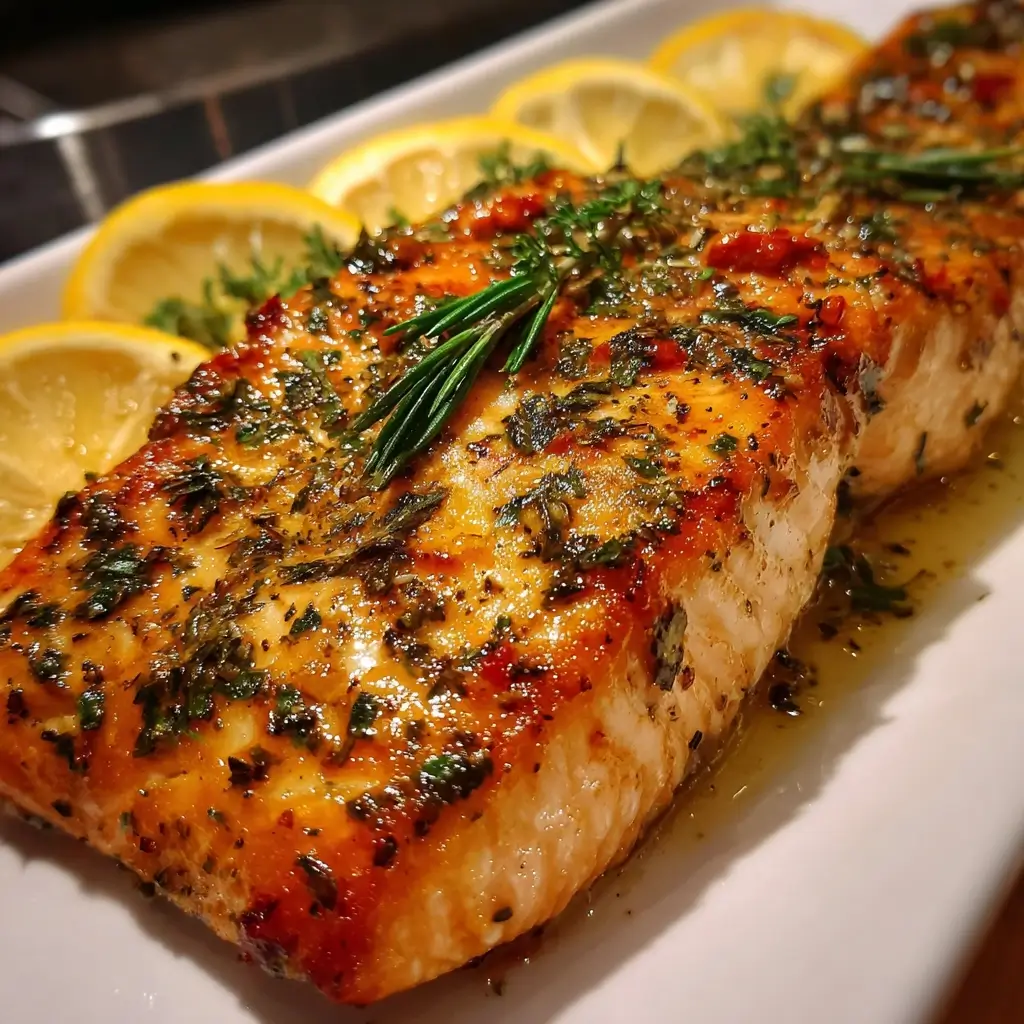

There’s a certain magic that happens when simple, fresh ingredients come together to create a meal that feels both elegant and effortlessly comforting. For my family, this Lemon Herb Baked Salmon is that meal. I still remember the first time I made it on a whim for a busy weeknight dinner. The irresistible aroma of zesty lemon, fragrant garlic, and fresh herbs wafted from the oven, and suddenly, everyone migrated to the kitchen, drawn in by the promise of something special. When I pulled the glistening, perfectly flaky salmon from the oven, the kids, who can sometimes be picky about fish, were completely captivated. That first bite—tender, moist, and bursting with bright, clean flavors—sealed the deal. It wasn’t just dinner; it was an experience. Now, it’s our go-to recipe for everything from quick family meals to special occasions when we want to impress guests without spending hours in the kitchen. It’s a dish that proves that sophisticated flavor doesn’t have to be complicated, and it consistently brings smiles to the faces around my dinner table.
Ingredients
Here is the curated list of simple, yet powerful ingredients that come together to create this spectacular dish. Each one plays a crucial role in building layers of flavor and ensuring the salmon is perfectly moist and tender.
- Salmon Fillet (2 lbs, about 1-inch thick): The star of the show. Opt for a large, center-cut fillet for even cooking. Fresh, high-quality salmon will have a vibrant color and a mild, oceanic scent. You can use Coho, Sockeye, or Atlantic salmon, depending on your preference for flavor and fat content.
- Extra Virgin Olive Oil (3 tablespoons): This acts as a binder for the herbs and spices, helps to crisp the salmon’s exterior, and adds a rich, fruity undertone while keeping the fish moist.
- Freshly Squeezed Lemon Juice (3 tablespoons): The essential acidic component that cuts through the richness of the salmon. Freshly squeezed juice provides a much brighter and more authentic flavor than bottled alternatives.
- Lemon Zest (1 tablespoon): Where the lemon’s aromatic oils reside, zest provides an intense, pure lemon flavor without adding extra liquid. It’s the secret to a truly vibrant citrus taste.
- Minced Garlic (4 cloves): A foundational aromatic that infuses the entire dish with a savory, pungent depth. Freshly minced garlic is always superior to pre-minced jarred varieties.
- Fresh Dill (2 tablespoons, chopped): Dill and salmon are a classic pairing for a reason. Its slightly sweet, anise-like flavor is the perfect herbaceous complement to the fish.
- Fresh Parsley (2 tablespoons, chopped): Adds a clean, peppery, and bright note that balances the other flavors and brings a touch of freshness and color.
- Sea Salt (1 teaspoon): Essential for enhancing all the other flavors in the dish. Use a coarse or flaky sea salt for a better texture and taste.
- Freshly Ground Black Pepper (½ teaspoon): Provides a mild, woody spiciness that contrasts beautifully with the bright lemon and rich salmon.
- Lemon Slices (1 medium lemon): Used for garnishing and baking on top of the salmon, these slices infuse the fish with even more lemon flavor as it cooks and create a beautiful presentation.
Instructions
Follow these detailed steps to achieve perfectly baked, flaky, and flavorful salmon every single time. The process is straightforward, making it ideal for cooks of all skill levels.
- Preheat and Prepare: Begin by preheating your oven to 400°F (200°C). This ensures the oven is at the perfect temperature to cook the salmon quickly and evenly, searing the outside while keeping the inside tender. Line a large baking sheet with parchment paper or aluminum foil for easy cleanup. If using foil, lightly grease it with a bit of olive oil or cooking spray to prevent the salmon skin from sticking.
- Prepare the Salmon: Remove the salmon fillet from its packaging and pat it completely dry with paper towels. This step is crucial. Removing excess moisture from the surface allows the skin to get slightly crispy and helps the olive oil and herb mixture adhere properly, rather than sliding off. Place the salmon fillet, skin-side down, in the center of your prepared baking sheet.
- Create the Flavor Marinade: In a small bowl, combine the 3 tablespoons of extra virgin olive oil, 3 tablespoons of freshly squeezed lemon juice, 1 tablespoon of lemon zest, 4 cloves of minced garlic, 2 tablespoons of chopped fresh dill, and 2 tablespoons of chopped fresh parsley. Whisk these ingredients together until they are well combined into a fragrant, emulsified mixture.
- Season the Salmon: Sprinkle the salmon fillet evenly with 1 teaspoon of sea salt and ½ teaspoon of freshly ground black pepper. Don’t be shy with the seasoning; a 2-pound fillet needs it to be flavorful throughout.
- Apply the Marinade: Pour the lemon-herb mixture evenly over the top of the salmon fillet. Using a spoon or a pastry brush, spread the mixture so that it coats the entire surface of the fish. Ensure the minced garlic and herbs are distributed evenly for consistent flavor in every bite.
- Garnish with Lemon Slices: Arrange the thin lemon slices in a single layer over the top of the herb-coated salmon. These will not only look beautiful but will also release more citrusy steam and flavor into the fish as it bakes.
- Bake to Perfection: Place the baking sheet in the preheated oven on the center rack. Bake for 12-15 minutes. The exact cooking time will depend on the thickness of your salmon fillet. The salmon is done when it flakes easily with a fork at its thickest part, or when a meat thermometer inserted into the thickest part reads 135-140°F (57-60°C) for medium. Be careful not to overcook it, as it will continue to cook slightly from residual heat after being removed from the oven.
- Rest and Serve: Once cooked, carefully remove the baking sheet from the oven. For an extra touch of color and flavor, you can switch the oven to the broil setting and broil for 1-2 minutes, watching it closely to get a beautiful golden-brown color on top. Let the salmon rest on the baking sheet for 3-5 minutes before serving. This allows the juices to redistribute throughout the fillet, resulting in a more moist and flavorful piece of fish. Garnish with additional fresh dill or parsley if desired, and serve immediately.
Nutrition Facts
This recipe is as nutritious as it is delicious, offering a wealth of health benefits in every serving.
- Servings: 6
- Calories Per Serving: Approximately 380 kcal
- High in Protein (Approx. 40g per serving): Salmon is an excellent source of high-quality protein, which is vital for muscle repair, immune function, and maintaining a healthy metabolism. A single serving provides a significant portion of your daily protein needs.
- Rich in Omega-3 Fatty Acids (Approx. 2500mg per serving): This is one of salmon’s most celebrated benefits. Omega-3s are essential fats that support brain health, reduce inflammation, and are known to decrease the risk of heart disease by lowering blood pressure and triglycerides.
- Excellent Source of Vitamin D: Salmon is one of the few natural food sources of Vitamin D, a crucial nutrient for bone health, immune system regulation, and mood enhancement. A serving can provide a substantial amount of your daily requirement.
- Packed with B Vitamins: This dish is rich in a range of B vitamins, including B12, B6, niacin, and riboflavin. These vitamins are essential for energy production, creating and repairing DNA, and reducing inflammation.
- Good Source of Potassium (Approx. 700mg per serving): Often overlooked, potassium is a vital mineral that helps control blood pressure and maintain proper fluid balance in the body. A serving of this salmon provides more potassium than a medium banana.
Preparation Time
This dish is a testament to efficient, flavorful cooking, perfect for any night of the week.
- Active Preparation Time: 10 minutes. This includes gathering and measuring your ingredients, patting the salmon dry, mixing the marinade, and assembling everything on the baking sheet.
- Cooking Time: 12-15 minutes. The high-heat baking method ensures the salmon cooks through quickly, locking in moisture and flavor.
- Total Time: Approximately 25 minutes. From start to finish, you can have a gourmet-quality, healthy, and satisfying meal on the table in under half an hour.
How to Serve
This Lemon Herb Baked Salmon is incredibly versatile and can be the centerpiece of many different meal styles. Here are some of our favorite ways to serve it:
Classic and Hearty Pairings
For a traditional, satisfying dinner, pair the salmon with a starch and a green vegetable.
- Roasted Asparagus: The quintessential salmon pairing. Toss asparagus spears with olive oil, salt, and pepper and roast them alongside the salmon for a one-pan meal.
- Creamy Mashed Potatoes: The rich, buttery flavor of mashed potatoes provides a comforting base for the flaky, citrusy salmon.
- Quinoa or Brown Rice: A healthy and wholesome grain that soaks up the delicious juices from the fish. A lemon-herb quinoa would be especially complementary.
- Garlic Roasted Potatoes: Crispy, golden-brown potatoes seasoned with garlic and rosemary offer a wonderful textural contrast.
Light and Fresh Presentations
If you’re looking for a lighter meal, especially for lunch or a warm evening, consider these options.
- On a Bed of Greens: Flake the warm salmon over a large salad of arugula, spinach, cherry tomatoes, cucumber, and a light vinaigrette for a nutrient-packed meal.
- With a Side of Steamed Vegetables: Simple steamed green beans, broccoli, or snow peas tossed with a little butter and lemon juice keep the focus on the salmon’s pure flavor.
- Mediterranean-Style Bowl: Serve the flaked salmon in a bowl with couscous, Kalamata olives, feta cheese, chopped red onion, and a drizzle of olive oil.
Creative and Modern Ideas
Think outside the box and use the flavorful salmon in new and exciting ways.
- Salmon Tacos: Flake the cooked salmon into warm corn tortillas and top with a fresh mango salsa, avocado slices, and a dollop of chipotle crema.
- Pasta Toss: Break the salmon into large chunks and gently toss it with cooked linguine, olive oil, capers, garlic, and a splash of white wine.
- Salmon Sandwiches: Use leftover chilled salmon to make a delicious salmon salad with mayonnaise, celery, and fresh dill. Serve on toasted sourdough or in a croissant.
Additional Tips
Unlock the full potential of this recipe and ensure flawless results with these eight expert tips.
- Don’t Skip Patting the Salmon Dry: It might seem like a small step, but moisture is the enemy of a good sear and proper seasoning adherence. A dry surface ensures the olive oil and herb mixture sticks to the fish and helps the top of the salmon develop a lovely texture in the oven.
- Invest in a Meat Thermometer: The single biggest mistake people make with salmon is overcooking it. A reliable instant-read meat thermometer takes all the guesswork out of the equation. For perfectly moist, tender salmon, pull it from the oven when the thickest part reaches 135-140°F (57-60°C).
- Bring Salmon to Room Temperature: Let the salmon sit on the counter for 15-20 minutes before baking. Placing a cold fillet directly into a hot oven can lead to uneven cooking. Allowing it to come closer to room temperature promotes a more even cook from edge to center.
- Embrace Herb and Citrus Variations: This recipe is a fantastic template. Feel free to swap out the herbs and citrus. Try using rosemary and orange slices for a wintery feel, or cilantro and lime for a zesty, Southwestern twist.
- Skin-On for Maximum Flavor and Moisture: Whenever possible, buy and cook your salmon with the skin on. The skin provides a protective barrier that helps prevent the delicate flesh from drying out. Plus, when cooked properly, salmon skin becomes wonderfully crispy and is a delicacy in its own right.
- Don’t Crowd the Pan: If you’re cooking individual salmon fillets instead of one large piece, make sure to leave ample space between them on the baking sheet. Overcrowding the pan will cause the fish to steam rather than bake, resulting in a softer, less appealing texture.
- Create a Foil “Boat”: For extra-moist salmon, you can create a loose foil packet or “boat” around the fillet on the baking sheet. Crimp the edges of the foil up to create a wall. This traps the steam and infuses the fish with even more flavor, though you may sacrifice a bit of the roasted texture on top.
- Leverage the Power of Broiling: For a restaurant-quality finish, use your oven’s broiler for the last 1-2 minutes of cooking. This will give the top of the salmon and the lemon slices a beautiful, slightly charred and caramelized finish. Watch it like a hawk, as the broiler can burn things very quickly.
Frequently Asked Questions (FAQ)
Here are answers to some of the most common questions about baking this Lemon Herb Salmon, helping you troubleshoot and customize the recipe with confidence.
1. Can I use frozen salmon for this recipe?
Yes, you absolutely can. For the best results, you should thaw the salmon completely before using it. The safest way to do this is to place it in the refrigerator overnight. If you’re short on time, you can place the vacuum-sealed salmon in a bowl of cold water for about an hour. Once thawed, proceed with the recipe as written, making sure to pat it very dry.
2. How do I know for sure when my salmon is cooked through?
The most reliable method is using an instant-read thermometer (aiming for 135-140°F). If you don’t have one, use the “fork test.” Gently insert a fork into the thickest part of the fillet and twist it slightly. The salmon should be opaque and flake apart easily. If it’s still translucent and resistant to flaking, it needs another minute or two in the oven.
3. Can I use dried herbs instead of fresh?
Fresh herbs are highly recommended for their bright, vibrant flavor. However, if you only have dried herbs on hand, you can substitute them. The general rule is to use one-third the amount of dried herbs as you would fresh. For this recipe, that would be about 2 teaspoons of dried dill and 2 teaspoons of dried parsley.
4. What is the white stuff that sometimes comes out of salmon when it bakes?
That white, protein-like substance is called albumin. It’s a harmless protein that is liquid at raw temperatures but coagulates and turns white when the salmon is cooked. It’s a sign that the muscle fibers in the fish are contracting and pushing the albumin to the surface. While perfectly safe to eat, you can reduce its appearance by not overcooking the salmon and by bringing the fish to room temperature before baking.
5. How should I store and reheat leftovers?
Store leftover salmon in an airtight container in the refrigerator for up to 3 days. To reheat, it’s best to use a gentle method to avoid drying it out. Place it in a covered, oven-safe dish and heat in a 275°F (135°C) oven for about 10-15 minutes, or until warmed through. You can also flake the cold leftovers into salads or pasta without reheating.
6. Why did my salmon stick to the foil/parchment paper?
Sticking usually occurs for two reasons. First, the surface might not have been greased enough. A light coating of oil on the foil is essential. Second, and more commonly, the skin hasn’t had enough time to cook and release naturally. If you try to move it and it sticks, give it another minute or two to cook. A properly cooked piece of salmon should lift off the parchment or greased foil with ease.
7. Can I make this recipe on the grill?
Yes, this recipe adapts beautifully to the grill. Prepare the salmon as directed and place it on a large piece of heavy-duty foil. Crimp the edges of the foil up to create a tray. Place the foil directly on the preheated grill grates (medium-high heat) and cook for 10-14 minutes with the lid closed, until the salmon is cooked through. This method also imparts a wonderful, subtle smokiness.
8. What is the difference between wild-caught and farm-raised salmon, and which should I use?
Wild-caught salmon (like Sockeye or Coho) is caught in its natural environment. It tends to be leaner, have a deeper red color, and a more robust, complex flavor. Farm-raised salmon (often Atlantic) is raised in enclosures. It typically has a higher fat content, a milder flavor, and a lighter pink-orange color. The higher fat content makes it more forgiving and less prone to drying out. Both work wonderfully in this recipe, so the choice comes down to personal preference on taste, texture, and budget.
Print
Lemon Herb Baked Salmon
Ingredients
Here is the curated list of simple, yet powerful ingredients that come together to create this spectacular dish. Each one plays a crucial role in building layers of flavor and ensuring the salmon is perfectly moist and tender.
- Salmon Fillet (2 lbs, about 1-inch thick): The star of the show. Opt for a large, center-cut fillet for even cooking. Fresh, high-quality salmon will have a vibrant color and a mild, oceanic scent. You can use Coho, Sockeye, or Atlantic salmon, depending on your preference for flavor and fat content.
- Extra Virgin Olive Oil (3 tablespoons): This acts as a binder for the herbs and spices, helps to crisp the salmon’s exterior, and adds a rich, fruity undertone while keeping the fish moist.
- Freshly Squeezed Lemon Juice (3 tablespoons): The essential acidic component that cuts through the richness of the salmon. Freshly squeezed juice provides a much brighter and more authentic flavor than bottled alternatives.
- Lemon Zest (1 tablespoon): Where the lemon’s aromatic oils reside, zest provides an intense, pure lemon flavor without adding extra liquid. It’s the secret to a truly vibrant citrus taste.
- Minced Garlic (4 cloves): A foundational aromatic that infuses the entire dish with a savory, pungent depth. Freshly minced garlic is always superior to pre-minced jarred varieties.
- Fresh Dill (2 tablespoons, chopped): Dill and salmon are a classic pairing for a reason. Its slightly sweet, anise-like flavor is the perfect herbaceous complement to the fish.
- Fresh Parsley (2 tablespoons, chopped): Adds a clean, peppery, and bright note that balances the other flavors and brings a touch of freshness and color.
- Sea Salt (1 teaspoon): Essential for enhancing all the other flavors in the dish. Use a coarse or flaky sea salt for a better texture and taste.
- Freshly Ground Black Pepper (½ teaspoon): Provides a mild, woody spiciness that contrasts beautifully with the bright lemon and rich salmon.
- Lemon Slices (1 medium lemon): Used for garnishing and baking on top of the salmon, these slices infuse the fish with even more lemon flavor as it cooks and create a beautiful presentation.
Instructions
Follow these detailed steps to achieve perfectly baked, flaky, and flavorful salmon every single time. The process is straightforward, making it ideal for cooks of all skill levels.
- Preheat and Prepare: Begin by preheating your oven to 400°F (200°C). This ensures the oven is at the perfect temperature to cook the salmon quickly and evenly, searing the outside while keeping the inside tender. Line a large baking sheet with parchment paper or aluminum foil for easy cleanup. If using foil, lightly grease it with a bit of olive oil or cooking spray to prevent the salmon skin from sticking.
- Prepare the Salmon: Remove the salmon fillet from its packaging and pat it completely dry with paper towels. This step is crucial. Removing excess moisture from the surface allows the skin to get slightly crispy and helps the olive oil and herb mixture adhere properly, rather than sliding off. Place the salmon fillet, skin-side down, in the center of your prepared baking sheet.
- Create the Flavor Marinade: In a small bowl, combine the 3 tablespoons of extra virgin olive oil, 3 tablespoons of freshly squeezed lemon juice, 1 tablespoon of lemon zest, 4 cloves of minced garlic, 2 tablespoons of chopped fresh dill, and 2 tablespoons of chopped fresh parsley. Whisk these ingredients together until they are well combined into a fragrant, emulsified mixture.
- Season the Salmon: Sprinkle the salmon fillet evenly with 1 teaspoon of sea salt and ½ teaspoon of freshly ground black pepper. Don’t be shy with the seasoning; a 2-pound fillet needs it to be flavorful throughout.
- Apply the Marinade: Pour the lemon-herb mixture evenly over the top of the salmon fillet. Using a spoon or a pastry brush, spread the mixture so that it coats the entire surface of the fish. Ensure the minced garlic and herbs are distributed evenly for consistent flavor in every bite.
- Garnish with Lemon Slices: Arrange the thin lemon slices in a single layer over the top of the herb-coated salmon. These will not only look beautiful but will also release more citrusy steam and flavor into the fish as it bakes.
- Bake to Perfection: Place the baking sheet in the preheated oven on the center rack. Bake for 12-15 minutes. The exact cooking time will depend on the thickness of your salmon fillet. The salmon is done when it flakes easily with a fork at its thickest part, or when a meat thermometer inserted into the thickest part reads 135-140°F (57-60°C) for medium. Be careful not to overcook it, as it will continue to cook slightly from residual heat after being removed from the oven.
- Rest and Serve: Once cooked, carefully remove the baking sheet from the oven. For an extra touch of color and flavor, you can switch the oven to the broil setting and broil for 1-2 minutes, watching it closely to get a beautiful golden-brown color on top. Let the salmon rest on the baking sheet for 3-5 minutes before serving. This allows the juices to redistribute throughout the fillet, resulting in a more moist and flavorful piece of fish. Garnish with additional fresh dill or parsley if desired, and serve immediately.
Nutrition
- Serving Size: one normal portion
- Calories: 380
- Protein: 40g