
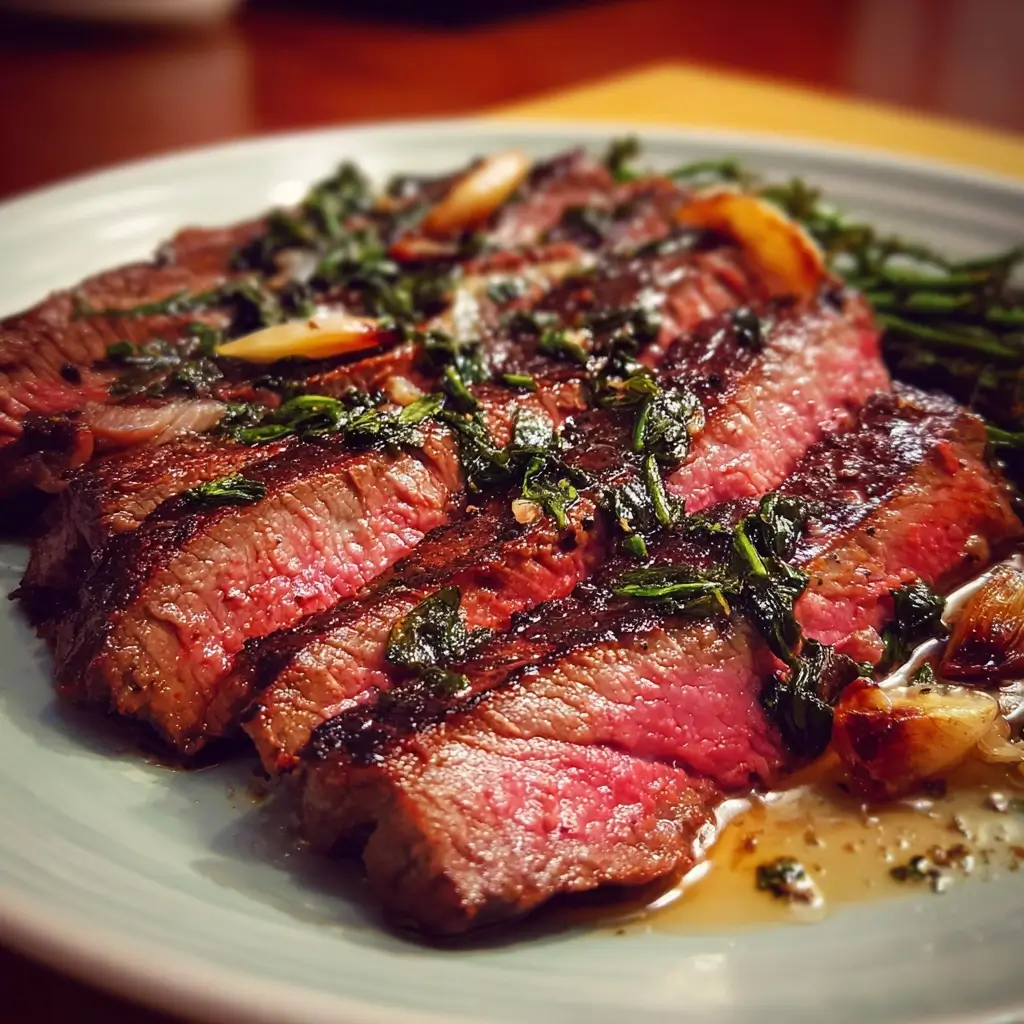

Of all the weeknight dinners that feel like a weekend indulgence, this Pan-Seared Flank Steak with Garlic holds a special place in my heart and my family’s recipe rotation. I remember the first time I made it; the house filled with the intoxicating aroma of sizzling beef and fragrant, melting garlic. The sound alone was enough to bring everyone to the kitchen, peering over my shoulder in anticipation. When I finally placed the platter on the table—perfectly seared steak, sliced thin to reveal a juicy pink center, all drenched in that glistening garlic butter—the silence that followed the first bites was the highest compliment I could receive. It’s a dish that transforms a simple, affordable cut of beef into something truly spectacular. It’s the recipe I turn to when I want to impress guests without spending hours in the kitchen, or when I simply want to treat my family to a meal that feels like a five-star steakhouse experience, right at our own dining table. This isn’t just a recipe; it’s a memory-maker, a surefire hit that proves incredible flavor doesn’t have to be complicated.
Ingredients
- Flank Steak: You will need one 1.5 to 2-pound flank steak, about 1 to 1.5 inches thick. This lean, flavorful cut is ideal for high-heat searing.
- Avocado Oil (or other high-smoke point oil): 2 tablespoons. This is crucial for achieving a perfect sear without burning the oil and creating smoke.
- Kosher Salt: 1 ½ teaspoons. A coarse salt like Kosher is best for drawing out moisture and creating a flavorful crust.
- Coarsely Ground Black Pepper: 1 ½ teaspoons. Freshly ground pepper provides a pungent, spicy counterpoint to the rich beef.
- Unsalted Butter: 4 tablespoons. Using unsalted butter allows you to control the final sodium content of the sauce while adding incredible richness.
- Garlic: 5-6 cloves, thinly sliced or roughly minced. This is the star of the sauce, providing a sweet, aromatic flavor that infuses the butter.
- Fresh Parsley: 2 tablespoons, finely chopped. This adds a pop of color and a fresh, herbaceous note to cut through the richness of the butter and steak.
Instructions
- Prepare the Steak: About 30-40 minutes before you plan to cook, remove the flank steak from the refrigerator. Place it on a plate or cutting board and pat it completely dry with paper towels. This step is critical; a dry surface is essential for creating a deep, brown crust. Moisture will steam the steak instead of searing it. Season both sides generously with Kosher salt and coarsely ground black pepper, pressing the seasoning into the meat. Let the steak sit at room temperature. This allows the chill to come off the meat, promoting more even cooking.
- Heat the Pan: Place a large, heavy-bottomed skillet, preferably cast iron, over medium-high heat. A cast-iron skillet retains heat exceptionally well, which is key for a consistent, powerful sear. Let the pan get screaming hot. You’ll know it’s ready when you see a faint wisp of smoke or when a drop of water flicked into the pan sizzles and evaporates instantly.
- Sear the First Side: Add the avocado oil to the hot pan. It should shimmer immediately. Carefully place the seasoned flank steak in the center of the skillet. You should hear a loud, satisfying sizzle. Do not touch or move the steak. Let it sear undisturbed for 4-6 minutes, depending on its thickness. This allows the Maillard reaction to work its magic, developing that coveted deep-brown, flavorful crust.
- Flip and Sear the Second Side: Using tongs, flip the steak over. It should release easily from the pan and have a beautiful, dark crust. Immediately reduce the heat to medium.
- Create the Garlic Butter Sauce: Add the 4 tablespoons of butter and the sliced garlic to the skillet, placing them in the empty space next to the steak. As the butter melts, it will begin to foam and bubble, and the garlic will become incredibly fragrant.
- Baste the Steak: Tilt the pan slightly towards you so the melted butter and garlic pool at the bottom. Using a large spoon, continuously scoop up the fragrant garlic butter and pour it over the top of the steak. Baste repeatedly for about 1-2 minutes. This not only adds immense flavor but also helps to cook the steak gently while keeping it moist. Be careful not to let the garlic burn; it should be golden and fragrant, not dark brown and bitter.
- Check for Doneness: This is where a meat thermometer is your best friend for guaranteed results. Insert the thermometer into the thickest part of the steak.
- For Rare: 125°F (52°C)
- For Medium-Rare: 135°F (57°C)
- For Medium: 145°F (63°C)
Flank steak is best enjoyed medium-rare to medium, as cooking it further can result in a tough texture. The total cooking time for the second side will be about 3-5 minutes.
- Rest the Steak: Immediately transfer the cooked steak to a clean cutting board. Do not tent it with foil, as this can steam the crust you worked so hard to create. Let the steak rest for a non-negotiable 10 minutes. During this time, the muscle fibers will relax and reabsorb the juices, ensuring every slice is tender and moist. If you slice into it too soon, all those delicious juices will run out onto your cutting board.
- Slice and Serve: While the steak rests, you can spoon some of the remaining garlic butter from the pan over the top. Once rested, identify the direction of the muscle fibers (the grain). Position your knife perpendicular to these lines and slice the steak thinly against the grain. This is the single most important step for tender flank steak. Slicing with the grain results in long, chewy muscle fibers. Arrange the slices on a platter, pour over any remaining pan juices and garlic, sprinkle with fresh parsley, and serve immediately.
Nutrition Facts
This recipe makes approximately 4 servings. The nutritional information is an estimate and can vary based on the exact size of your steak and ingredients used.
- Calories: Approximately 480 kcal per serving. This is a protein-packed meal, with most calories coming from the protein and healthy fats.
- Protein: Around 38g per serving. Beef is an excellent source of high-quality protein, which is essential for muscle repair, immune function, and overall body maintenance.
- Fat: Approximately 35g per serving. This includes fats from both the beef and the butter. Flank steak itself is a leaner cut, and much of the added fat is from the delicious garlic butter sauce.
- Iron: This dish is a powerhouse of heme iron, the most easily absorbed type of iron. Iron is crucial for preventing anemia and carrying oxygen throughout the body.
- Carbohydrates: Less than 2g per serving. This recipe is naturally very low-carb and keto-friendly, with the minimal carbs coming from the garlic and parsley.
Preparation time
The beauty of this dish lies in its efficiency. From start to finish, you can have a restaurant-quality meal on the table in under an hour, with most of that time being hands-off.
- Prep Time: 10 minutes (patting dry, seasoning, slicing garlic).
- Cook Time: 10-12 minutes (searing and basting).
- Resting Time: 10 minutes (essential for a juicy result).
- Total Time: Approximately 30-35 minutes.
How to Serve
Pan-seared flank steak is incredibly versatile and pairs beautifully with a wide range of side dishes. Here are some ideas to create a complete and satisfying meal:
- Classic Steakhouse Dinner:
- Creamy Mashed Potatoes: The perfect vehicle for soaking up any extra garlic butter from the platter.
- Roasted Asparagus or Broccoli: Toss with a little olive oil, salt, and pepper and roast at 400°F (200°C) until tender-crisp.
- A Simple Wedge Salad: A crisp iceberg lettuce wedge with blue cheese dressing, and cherry tomatoes offers a cool, crunchy contrast.
- Lighter, Fresher Options:
- Arugula Salad: A peppery arugula salad with shaved Parmesan, lemon vinaigrette, and toasted pine nuts cuts through the richness of the beef.
- Quinoa or Farro Salad: A grain salad with chopped vegetables, herbs, and a light dressing makes for a wholesome and balanced meal.
- Grilled Corn on the Cob: A summertime favorite that adds a sweet, smoky flavor.
- For a Casual or Creative Meal:
- Steak Tacos: Slice the steak and serve in warm corn or flour tortillas with pico de gallo, avocado or guacamole, and cotija cheese.
- Steak Sandwiches: Pile the sliced steak onto a crusty baguette with caramelized onions, provolone cheese, and a horseradish cream sauce.
- Steak and Fries (Steak Frites): Serve alongside a generous portion of crispy, golden French fries for a classic bistro experience.
- Steak Bowls: Create a bowl with a base of rice or greens, and top with sliced steak, roasted vegetables, and a drizzle of your favorite sauce.
Additional tips
To ensure your pan-seared flank steak is perfect every single time, keep these expert tips in mind.
- Choose Your Steak Wisely: Look for a flank steak that has a relatively uniform thickness across the entire cut. This ensures it cooks evenly. A piece that is very thin on one end and thick on the other will result in some parts being overcooked while others are undercooked. A deep red color with minimal gristle is a good sign of quality.
- Room Temperature is Key: We mentioned it in the instructions, but it bears repeating. Allowing your steak to sit at room temperature for at least 30 minutes (and up to an hour) makes a massive difference. A cold steak hitting a hot pan will cook unevenly, often resulting in a grey, overcooked exterior by the time the center reaches your desired temperature.
- The “Dry Is Good” Philosophy: Moisture is the number one enemy of a good sear. Use multiple paper towels to pat your steak until it is bone-dry before seasoning. The drier the surface, the faster and more effectively the Maillard reaction can occur, which is the chemical process that creates hundreds of flavor compounds and that beautiful brown crust.
- Don’t Fear the Heat (Initially): A screaming hot pan is non-negotiable for the initial sear. Use an oil with a high smoke point like avocado, grapeseed, or canola oil. Olive oil has a lower smoke point and is more likely to burn and impart a bitter taste. Once you get that first great sear, you can reduce the heat to medium when you add the butter to prevent it and the garlic from burning.
- Invest in a Meat Thermometer: This is the single most important tool for cooking any protein to perfection. The color and feel method can be unreliable. An instant-read digital thermometer removes all guesswork and guarantees you pull the steak at the exact moment it reaches your preferred doneness, preventing the tragedy of an overcooked, tough piece of meat.
- The Art of the Baste: When you’re basting the steak with the garlic butter, don’t just pour it on top. Actively and continuously spoon it over the entire surface. This does two things: it infuses the top of the steak with incredible flavor, and the hot butter helps to gently cook the steak from the top down, contributing to more even cooking.
- Master Slicing Against the Grain: Flank steak is a long, fibrous muscle. The “grain” refers to the direction in which these muscle fibers run. Look closely at your cooked steak before slicing, and you’ll see these parallel lines. To ensure maximum tenderness, you must slice across (perpendicular to) these lines. This shortens the muscle fibers, making them easy to chew. Even a perfectly cooked flank steak will be tough and chewy if sliced with the grain.
- Make-Ahead Garlic Butter: If you’re hosting or just want to streamline the cooking process, you can make the garlic butter ahead of time. Simply melt the butter with the garlic and parsley over low heat, let it cool, and store it in an airtight container in the fridge. When you’re ready to cook, add a scoop of this compound butter to the pan after flipping the steak.
FAQ section
Here are answers to some of the most common questions about cooking pan-seared flank steak.
1. Can I use a different cut of beef for this recipe?
Absolutely. While flank steak is fantastic, this pan-searing method with garlic butter works wonderfully with other cuts. Skirt steak is a great alternative; it’s even more flavorful but can be a bit tougher, so slicing thinly against the grain is crucial. Hanger steak is another excellent, tender choice. You could also use sirloin or New York strip steaks, though you may need to adjust the cooking time based on their thickness.
2. Can I marinate the flank steak before cooking?
Yes, you can. Flank steak takes beautifully to marinades. A simple marinade of soy sauce, Worcestershire sauce, olive oil, and garlic can add another layer of flavor and help tenderize the meat. If you do marinate it, make sure to pat the steak extremely dry after removing it from the marinade and before seasoning with salt and pepper. Any residual marinade on the surface will prevent you from getting a good sear.
3. My flank steak came out tough. What did I do wrong?
There are three main culprits for tough flank steak. First, you may have overcooked it. Flank steak is a lean cut and is best served medium-rare to medium (135°F-145°F). Anything more well-done will be inherently tougher. Second, you may have sliced it with the grain instead of against it. This is the most common mistake. Always identify the grain and slice perpendicularly to it. Third, you might have skipped the resting period. Resting for 10 minutes allows the juices to redistribute throughout the meat, keeping it moist and tender.
4. How do I store and reheat leftover flank steak?
Store any leftovers in an airtight container in the refrigerator for up to 3-4 days. The key to reheating is to do it gently to avoid overcooking it. The best method is to place the slices in a skillet over low heat with a splash of beef broth or water and cover the pan until warmed through. You can also eat it cold on a salad or in a sandwich, which is often the most delicious way to enjoy leftovers. Avoid the microwave if possible, as it tends to make the steak rubbery.
5. Can I cook this on a grill instead of in a pan?
Yes, this recipe is easily adapted for the grill. Prepare and season the steak as directed. Preheat your grill to high heat. Grill for 4-6 minutes per side for medium-rare. While the steak is grilling, you can melt the butter and garlic in a small, grill-safe pan on the side of the grill or on the stovetop. Once the steak is cooked, let it rest, then slice it and pour the garlic butter over the top before serving.
6. What is the best type of oil for searing a steak?
The best oil for searing is one with a high smoke point. This means it can be heated to high temperatures without breaking down and smoking excessively. Avocado oil is an excellent choice, with a smoke point over 500°F. Other great options include grapeseed oil, canola oil, sunflower oil, or clarified butter (ghee). Extra virgin olive oil has a lower smoke point and is not ideal for high-heat searing, as it can burn and create a bitter flavor.
7. Why did my garlic burn in the pan?
Garlic burns very quickly, especially when minced finely. The trick is to add the butter and garlic to the pan after you’ve already seared the first side and reduced the heat to medium. Adding it to a screaming-hot pan at the beginning is a recipe for bitter, burnt garlic. Slicing the garlic thinly instead of mincing it also gives it a bit more resilience against the heat. Keep the garlic moving in the butter and baste continuously to prevent it from sitting in one hot spot for too long.
8. Is flank steak a healthy choice?
Yes, flank steak can be a very healthy part of a balanced diet. It is a relatively lean cut of beef, packed with high-quality protein, which is vital for muscle growth and satiety. It’s also one of the best dietary sources of heme iron, which is essential for energy levels and preventing anemia. Furthermore, it’s a great source of B vitamins, particularly B12, zinc, and selenium. While this recipe includes butter, the meal as a whole provides significant nutritional benefits.
Pan-Seared Flank Steak with Garlic
Ingredients
- Flank Steak: You will need one 1.5 to 2-pound flank steak, about 1 to 1.5 inches thick. This lean, flavorful cut is ideal for high-heat searing.
- Avocado Oil (or other high-smoke point oil): 2 tablespoons. This is crucial for achieving a perfect sear without burning the oil and creating smoke.
- Kosher Salt: 1 ½ teaspoons. A coarse salt like Kosher is best for drawing out moisture and creating a flavorful crust.
- Coarsely Ground Black Pepper: 1 ½ teaspoons. Freshly ground pepper provides a pungent, spicy counterpoint to the rich beef.
- Unsalted Butter: 4 tablespoons. Using unsalted butter allows you to control the final sodium content of the sauce while adding incredible richness.
- Garlic: 5-6 cloves, thinly sliced or roughly minced. This is the star of the sauce, providing a sweet, aromatic flavor that infuses the butter.
- Fresh Parsley: 2 tablespoons, finely chopped. This adds a pop of color and a fresh, herbaceous note to cut through the richness of the butter and steak.
Instructions
- Prepare the Steak: About 30-40 minutes before you plan to cook, remove the flank steak from the refrigerator. Place it on a plate or cutting board and pat it completely dry with paper towels. This step is critical; a dry surface is essential for creating a deep, brown crust. Moisture will steam the steak instead of searing it. Season both sides generously with Kosher salt and coarsely ground black pepper, pressing the seasoning into the meat. Let the steak sit at room temperature. This allows the chill to come off the meat, promoting more even cooking.
- Heat the Pan: Place a large, heavy-bottomed skillet, preferably cast iron, over medium-high heat. A cast-iron skillet retains heat exceptionally well, which is key for a consistent, powerful sear. Let the pan get screaming hot. You’ll know it’s ready when you see a faint wisp of smoke or when a drop of water flicked into the pan sizzles and evaporates instantly.
- Sear the First Side: Add the avocado oil to the hot pan. It should shimmer immediately. Carefully place the seasoned flank steak in the center of the skillet. You should hear a loud, satisfying sizzle. Do not touch or move the steak. Let it sear undisturbed for 4-6 minutes, depending on its thickness. This allows the Maillard reaction to work its magic, developing that coveted deep-brown, flavorful crust.
- Flip and Sear the Second Side: Using tongs, flip the steak over. It should release easily from the pan and have a beautiful, dark crust. Immediately reduce the heat to medium.
- Create the Garlic Butter Sauce: Add the 4 tablespoons of butter and the sliced garlic to the skillet, placing them in the empty space next to the steak. As the butter melts, it will begin to foam and bubble, and the garlic will become incredibly fragrant.
- Baste the Steak: Tilt the pan slightly towards you so the melted butter and garlic pool at the bottom. Using a large spoon, continuously scoop up the fragrant garlic butter and pour it over the top of the steak. Baste repeatedly for about 1-2 minutes. This not only adds immense flavor but also helps to cook the steak gently while keeping it moist. Be careful not to let the garlic burn; it should be golden and fragrant, not dark brown and bitter.
- Check for Doneness: This is where a meat thermometer is your best friend for guaranteed results. Insert the thermometer into the thickest part of the steak.
- For Rare: 125°F (52°C)
- For Medium-Rare: 135°F (57°C)
- For Medium: 145°F (63°C)
Flank steak is best enjoyed medium-rare to medium, as cooking it further can result in a tough texture. The total cooking time for the second side will be about 3-5 minutes.
- Rest the Steak: Immediately transfer the cooked steak to a clean cutting board. Do not tent it with foil, as this can steam the crust you worked so hard to create. Let the steak rest for a non-negotiable 10 minutes. During this time, the muscle fibers will relax and reabsorb the juices, ensuring every slice is tender and moist. If you slice into it too soon, all those delicious juices will run out onto your cutting board.
- Slice and Serve: While the steak rests, you can spoon some of the remaining garlic butter from the pan over the top. Once rested, identify the direction of the muscle fibers (the grain). Position your knife perpendicular to these lines and slice the steak thinly against the grain. This is the single most important step for tender flank steak. Slicing with the grain results in long, chewy muscle fibers. Arrange the slices on a platter, pour over any remaining pan juices and garlic, sprinkle with fresh parsley, and serve immediately.
Nutrition
- Serving Size: one normal portion
- Calories: 480
- Fat: 35g
- Carbohydrates: 2g
- Protein: 38g