
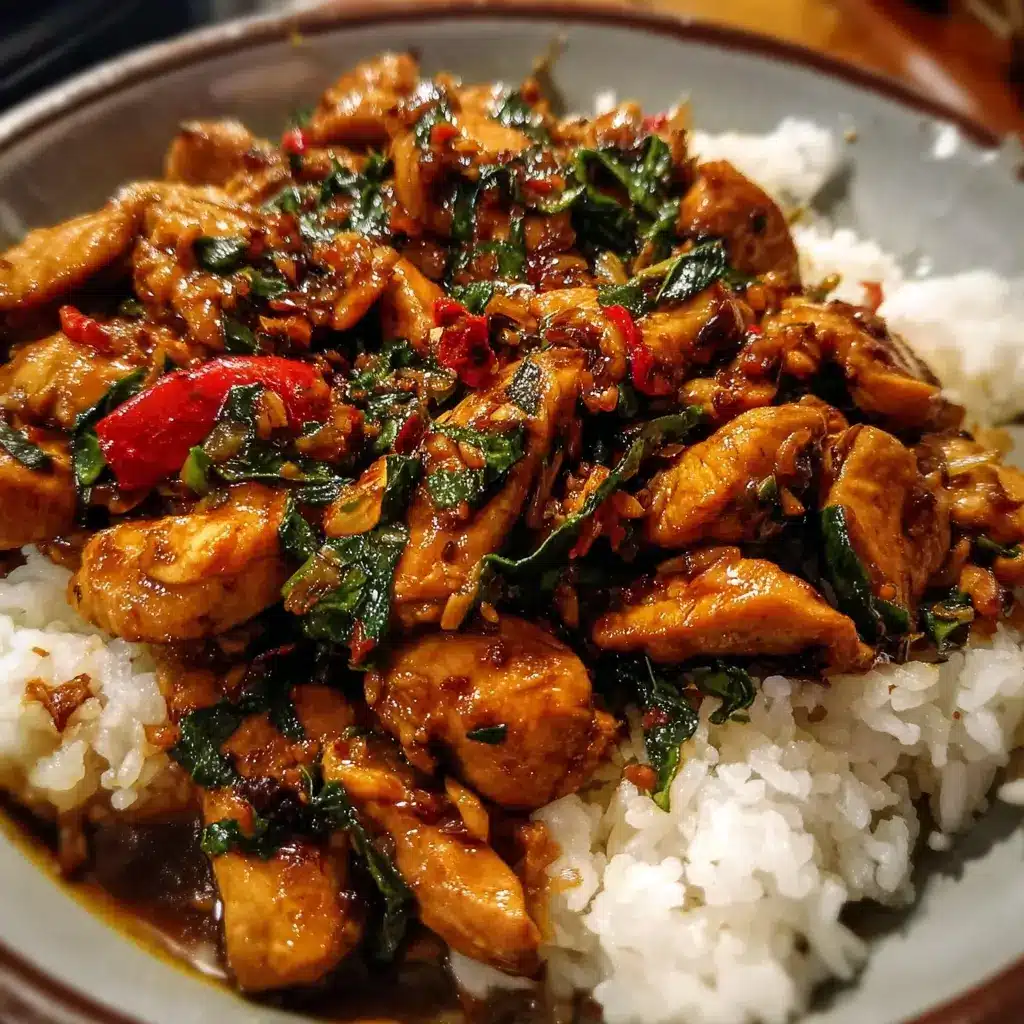

Of all the dishes that have graced my family’s dinner table, few have received the same universal, wide-eyed approval as this Quick Thai Basil Chicken. I remember the first time I made it, a frantic attempt at a weeknight meal that I hoped would be better than takeout. The moment the garlic and chilies hit the hot oil, the entire house was filled with an intoxicating aroma that had everyone migrating to the kitchen. “What is that amazing smell?” was the chorus. The real magic happened when the fresh basil was tossed in at the end, its peppery, anise-like fragrance blooming in the heat. We served it spooned over steaming jasmine rice with a hastily fried egg on top, the runny yolk mingling with the savory, spicy sauce. It was a revelation. That night, a simple recipe transformed our kitchen into a bustling Bangkok street stall, and it has been a cherished, go-to meal ever since. It’s the kind of dish that feels incredibly special and complex in flavor, yet comes together so quickly you’ll be sitting down to eat before you know it.
Ingredients
Here is everything you will need to create this flavor-packed dish. The key is to have everything prepped and ready to go, as the cooking process is very fast.
- For the Stir-Fry Sauce:
- 2 tablespoons oyster sauce: This is the backbone of the sauce, providing a deep, savory, and slightly sweet umami flavor.
- 1 tablespoon soy sauce: Use a low-sodium version if you are watching your salt intake. It adds a foundational salty and savory note.
- 1 tablespoon fish sauce: This is a non-negotiable for authentic Thai flavor. It adds a complex, pungent saltiness that is signature to the cuisine.
- 1 teaspoon dark soy sauce: This is primarily for color, giving the dish a rich, dark brown hue. It also adds a touch of molasses-like sweetness.
- 1-2 teaspoons sugar: Palm sugar is traditional, but brown sugar or even white sugar works perfectly to balance the saltiness and heat.
- For the Chicken:
- 1 tablespoon vegetable oil: Or any neutral oil with a high smoke point, like canola, grapeseed, or avocado oil.
- 4-6 cloves garlic, finely minced: Don’t be shy with the garlic; its pungent aroma is the base layer of flavor.
- 2-10 Thai bird’s eye chilies, thinly sliced: This is where you control the heat. Use two for a mild kick and up to ten or more if you love intense spice.
- 1 lb (450g) ground chicken: A mix of thigh and breast meat provides the best flavor and texture. You can also finely mince chicken breasts or thighs yourself.
- For the Finish:
- 2 cups fresh holy basil leaves, loosely packed: This is the star ingredient. Its unique peppery, clove-like flavor is distinct from Thai sweet basil or Italian basil. If you can’t find it, Thai sweet basil is the next best substitute.
- Optional for serving: Steamed jasmine rice and crispy fried eggs.
Instructions
Follow these steps carefully for a perfect result every time. The process is quick, so read through everything before turning on the stove.
- Prepare the Sauce: In a small bowl, whisk together the oyster sauce, soy sauce, fish sauce, dark soy sauce, and sugar. This step is crucial because the cooking process is too fast to measure and add ingredients individually. Set the prepared sauce aside.
- Heat the Pan: Place a large wok or a heavy-bottomed skillet over high heat. Add the vegetable oil and swirl to coat the bottom of the pan. Let the oil get very hot until it begins to shimmer.
- Sauté the Aromatics: Add the minced garlic and sliced Thai chilies to the hot oil. Stir-fry constantly for about 20-30 seconds until they become incredibly fragrant. Be careful not to burn the garlic, which can happen quickly on high heat. The goal is to infuse the oil with their potent flavors.
- Cook the Chicken: Add the ground chicken to the wok. Immediately start breaking it up with your spatula or a wooden spoon. Spread it across the surface of the pan and let it cook, stirring occasionally, for about 3-5 minutes. You want the chicken to be cooked through and slightly browned in spots. This browning adds another layer of flavor.
- Add the Sauce: Pour the prepared stir-fry sauce over the cooked chicken. Stir everything together to ensure the chicken is evenly coated. Let the sauce bubble and simmer for about 1-2 minutes, allowing it to thicken slightly and glaze the chicken beautifully.
- Wilt the Basil: Turn off the heat completely. Add the fresh holy basil leaves to the wok. Gently toss everything together for about 30 seconds, just until the basil leaves are wilted but still vibrant green. The residual heat from the pan is enough to cook them perfectly without losing their distinct aroma. Overcooking the basil will diminish its flavor.
- Serve Immediately: Spoon the Thai Basil Chicken over a bed of hot jasmine rice and top with a crispy fried egg for the most authentic and delicious experience.
Nutrition Facts
This recipe makes approximately 4 servings. The nutritional information is an estimate and can vary based on specific ingredients used.
- Servings: 4
- Calories per serving: Approximately 350-400 kcal (excluding rice and egg).
- Protein: Around 30g per serving. The chicken provides a substantial amount of high-quality protein, which is vital for muscle maintenance and keeps you feeling full and satisfied.
- Sodium: This dish is high in sodium due to the sauces. You can reduce this by using low-sodium soy sauce and slightly less fish sauce, balancing the flavor with a bit more sugar or a squeeze of lime juice.
- Fat: Approximately 20g per serving. The fat content comes from the oil and the chicken itself. Using leaner chicken breast can lower this amount.
Preparation Time
This recipe lives up to its “quick” name, making it an ideal choice for a busy weeknight.
The total time from start to finish is approximately 20-25 minutes. This is broken down into about 10-15 minutes of preparation (mincing garlic, slicing chilies, measuring sauces, washing basil) and 10 minutes of active cooking time. The key to its speed is having all your ingredients prepped and ready next to the stove before you begin cooking—a technique known in the culinary world as mise en place.
How to Serve
Thai Basil Chicken is wonderfully versatile, but there are a few classic and creative ways to serve it that elevate the meal from great to unforgettable.
- The Classic Way (Pad Krapow Gai Rad Khao):
- Spoon a generous amount of the basil chicken and its sauce over a mound of fluffy, steaming jasmine rice. The fragrant rice is the perfect neutral canvas for the bold flavors of the stir-fry.
- Top it with a crispy Thai-style fried egg (Khai Dao). To make this, fry an egg in a good amount of hot oil until the edges are brown and crispy while the yolk remains perfectly runny. The rich yolk acts as a secondary sauce, balancing the spice and saltiness of the dish.
- Serve with a side of Prik Nam Pla, a simple condiment made of fish sauce, sliced chilies, and a squeeze of lime juice, for those who want an extra kick of flavor.
- Low-Carb and Fresh Options:
- Lettuce Wraps: Serve the Thai Basil Chicken in crisp, cool lettuce cups (iceberg, butter, or romaine work well). The contrast between the hot, savory filling and the cool, crunchy lettuce is incredibly refreshing.
- Cauliflower Rice: For a keto-friendly or low-carb meal, serve the chicken over a bed of cauliflower rice.
- With Cucumber Salad: A simple, cooling cucumber salad on the side, dressed with a bit of rice vinegar and sugar, provides a refreshing counterpoint to the heat of the dish.
- Creative and Modern Twists:
- Thai Basil Noodles: Toss the finished stir-fry with cooked rice noodles or even egg noodles for a hearty, one-bowl meal.
- Thai “Sloppy Joe”: Pile the basil chicken onto a toasted brioche bun for a fun, fusion-style sandwich.
- Stuffed Bell Peppers: Fill hollowed-out bell peppers with the Thai Basil Chicken mixture, top with a little cheese if you’re feeling adventurous, and bake until the peppers are tender.
Additional Tips
To help you perfect this recipe and customize it to your liking, here are eight essential tips.
- Master the Heat: The secret to a great stir-fry is high, consistent heat. Use a wok if you have one, as its shape allows for quick, even cooking. If using a skillet, make sure it’s a heavy-bottomed one that retains heat well. Don’t be afraid to let the pan get screaming hot before you add your ingredients. This high heat creates the signature “wok hei” or “breath of the wok,” a smoky flavor that’s impossible to replicate at lower temperatures.
- Don’t Crowd the Pan: If you are doubling the recipe, it’s better to cook the chicken in two separate batches. Overcrowding the pan will lower the temperature, causing the chicken to steam rather than sear. This results in a watery, grey-looking dish instead of one with beautifully browned, flavorful chicken.
- The Basil is the Star: The choice of basil truly makes a difference. Holy basil (Krapow) has a peppery, almost clove-like flavor that is the authentic choice. If you absolutely cannot find it at your local Asian market, Thai sweet basil is the next best thing, offering a more anise-forward flavor. In a real pinch, you can use Italian basil, but be aware that it will significantly change the flavor profile of the final dish. Always add the basil at the very end, with the heat turned off, to preserve its delicate aroma.
- Control Your Spice Level: Thai bird’s eye chilies are potent. The recipe calls for 2-10, which is a wide range. If you are new to them, start with one or two, and you can even remove the seeds to tame the heat further. If you’re a spice lover, use more. You can also serve fresh or dried chili flakes on the side for each person to customize their own heat level.
- Mise en Place is Not Optional: This term means “everything in its place,” and for a fast-cooking stir-fry, it’s the golden rule. The entire cooking process takes less than 10 minutes. You won’t have time to mince garlic or measure sauce while the chicken is cooking. Have everything chopped, measured, and ready to go before you even turn on the stove.
- Achieve the Perfect Sauce Consistency: The sauce should be a glaze, not a soup. If your sauce seems too thin, let it simmer for an extra minute to reduce and thicken. If it becomes too thick or salty, you can add a tablespoon or two of water or chicken broth to thin it out to your desired consistency.
- Meal Prep and Storage: Thai Basil Chicken is excellent for meal prep. You can cook a large batch and portion it into containers with rice for easy lunches throughout the week. It will keep in an airtight container in the refrigerator for up to 4 days. When reheating, it’s best to do so in a skillet over medium heat to revive the textures, though a microwave works in a pinch. The basil flavor will mellow slightly upon reheating.
- The Ground Chicken Secret: While store-bought ground chicken is convenient, you can elevate the dish by making your own. Simply take boneless, skinless chicken thighs (for more flavor and moisture) or breasts and pulse them in a food processor until coarsely ground. Alternatively, you can use a sharp knife to finely mince the chicken by hand. This gives you superior texture and control over the leanness of the meat.
Frequently Asked Questions (FAQ)
1. What is the authentic Thai name for this dish?
The authentic Thai name is Pad Krapow Gai. “Pad” means stir-fried, “Krapow” refers to holy basil, and “Gai” means chicken. So, the name literally translates to “Stir-fried Holy Basil Chicken.” It’s one of the most popular and beloved street food dishes in all of Thailand.
2. I can’t find holy basil. Can I really use Thai sweet basil or Italian basil?
Yes, you can, but it’s important to understand the flavor difference. Holy basil has a unique peppery, spicy, and slightly clove-like flavor that is central to the authentic dish. Thai sweet basil has a more pronounced anise or licorice flavor and is sweeter. Italian basil is much milder, sweeter, and lacks the spicy notes. While Thai sweet basil is the best substitute, using Italian basil will still result in a delicious stir-fry—it just won’t be traditional Pad Krapow.
3. My dish came out too salty. How can I fix it?
This is a common issue, as fish sauce and soy sauce are very salty. The best way to balance excess saltiness is by adding acidity and a little sweetness. Squeeze a generous amount of fresh lime juice over the dish. You can also add a pinch more sugar. If it’s still too salty, the best fix is dilution—serve it with extra plain jasmine rice, which will absorb the sauce and temper the saltiness with each bite.
4. Can I make this recipe with other proteins like beef, shrimp, or tofu?
Absolutely! This recipe is incredibly versatile.
- For Beef (Pad Krapow Neua): Use ground beef and cook it until browned and crispy. Beef has a stronger flavor, so it stands up well to the bold sauce.
- For Shrimp (Pad Krapow Goong): Add the shrimp after the aromatics and cook for just 1-2 minutes until they turn pink. Be careful not to overcook them. Add the sauce and basil and toss quickly.
- For Tofu (Pad Krapow Tahu): Use firm or extra-firm tofu. Press it well to remove excess water, then crumble or cube it. For the best texture, pan-fry the tofu separately until golden brown and crispy before adding it to the wok with the sauce.
5. Where can I find ingredients like fish sauce, oyster sauce, and holy basil?
These ingredients are staples in most Asian grocery stores. Look for fish sauce from brands like Red Boat, Three Crabs, or Tiparos. You can find holy basil in the fresh produce section, often packaged in clear plastic bags or clamshells. If you don’t have an Asian market nearby, many larger supermarkets now have extensive international food aisles where you can find high-quality sauces. Holy basil can sometimes be found at farmers’ markets in the summer or you can even grow it yourself.
6. Is Thai Basil Chicken considered a healthy dish?
It can be a very balanced and healthy meal. It’s high in protein from the chicken and full of flavor from fresh herbs and spices like garlic, chili, and basil. The main areas to watch are the sodium from the sauces and the amount of oil used. To make it healthier, you can:
- Use low-sodium soy sauce.
- Use lean ground chicken breast.
- Reduce the amount of oil used for stir-frying.
- Load it up with extra vegetables like sliced bell peppers or green beans, adding them with the chicken.
- Serve it with brown rice or quinoa instead of white rice for extra fiber.
7. What makes this recipe “quick” compared to other recipes?
The speed comes from the high-heat, fast-paced nature of stir-frying. The ingredients have minimal prep time (mincing and slicing), and the active cooking time is under 10 minutes. Because everything is cooked in one pan over high heat, the chicken and sauce come together in a flash. The key, as mentioned in the tips, is having all your components ready before you start, which eliminates any downtime during the cooking process.
8. How do I get that perfect crispy-edged, runny-yolk fried egg?
The Thai-style fried egg, or Khai Dao, is all about hot oil. Heat about a quarter-inch of neutral oil in a small skillet or wok over medium-high heat. The oil must be hot enough that when you crack the egg into it, the whites immediately bubble and puff up. Gently crack the egg into the oil. The edges will get lacy and brown almost instantly. Spoon some of the hot oil over the egg white to help it set, being careful not to get it on the yolk. Cook for about 45-60 seconds, until the whites are set and the edges are crispy, but the yolk is still liquid. Use a spatula to carefully remove it from the oil and let it drain briefly on a paper towel before serving.

Quick Thai Basil Chicken
Ingredients
Here is everything you will need to create this flavor-packed dish. The key is to have everything prepped and ready to go, as the cooking process is very fast.
- For the Stir-Fry Sauce:
- 2 tablespoons oyster sauce: This is the backbone of the sauce, providing a deep, savory, and slightly sweet umami flavor.
- 1 tablespoon soy sauce: Use a low-sodium version if you are watching your salt intake. It adds a foundational salty and savory note.
- 1 tablespoon fish sauce: This is a non-negotiable for authentic Thai flavor. It adds a complex, pungent saltiness that is signature to the cuisine.
- 1 teaspoon dark soy sauce: This is primarily for color, giving the dish a rich, dark brown hue. It also adds a touch of molasses-like sweetness.
- 1–2 teaspoons sugar: Palm sugar is traditional, but brown sugar or even white sugar works perfectly to balance the saltiness and heat.
- For the Chicken:
- 1 tablespoon vegetable oil: Or any neutral oil with a high smoke point, like canola, grapeseed, or avocado oil.
- 4–6 cloves garlic, finely minced: Don’t be shy with the garlic; its pungent aroma is the base layer of flavor.
- 2–10 Thai bird’s eye chilies, thinly sliced: This is where you control the heat. Use two for a mild kick and up to ten or more if you love intense spice.
- 1 lb (450g) ground chicken: A mix of thigh and breast meat provides the best flavor and texture. You can also finely mince chicken breasts or thighs yourself.
- For the Finish:
- 2 cups fresh holy basil leaves, loosely packed: This is the star ingredient. Its unique peppery, clove-like flavor is distinct from Thai sweet basil or Italian basil. If you can’t find it, Thai sweet basil is the next best substitute.
- Optional for serving: Steamed jasmine rice and crispy fried eggs.
Instructions
Follow these steps carefully for a perfect result every time. The process is quick, so read through everything before turning on the stove.
- Prepare the Sauce: In a small bowl, whisk together the oyster sauce, soy sauce, fish sauce, dark soy sauce, and sugar. This step is crucial because the cooking process is too fast to measure and add ingredients individually. Set the prepared sauce aside.
- Heat the Pan: Place a large wok or a heavy-bottomed skillet over high heat. Add the vegetable oil and swirl to coat the bottom of the pan. Let the oil get very hot until it begins to shimmer.
- Sauté the Aromatics: Add the minced garlic and sliced Thai chilies to the hot oil. Stir-fry constantly for about 20-30 seconds until they become incredibly fragrant. Be careful not to burn the garlic, which can happen quickly on high heat. The goal is to infuse the oil with their potent flavors.
- Cook the Chicken: Add the ground chicken to the wok. Immediately start breaking it up with your spatula or a wooden spoon. Spread it across the surface of the pan and let it cook, stirring occasionally, for about 3-5 minutes. You want the chicken to be cooked through and slightly browned in spots. This browning adds another layer of flavor.
- Add the Sauce: Pour the prepared stir-fry sauce over the cooked chicken. Stir everything together to ensure the chicken is evenly coated. Let the sauce bubble and simmer for about 1-2 minutes, allowing it to thicken slightly and glaze the chicken beautifully.
- Wilt the Basil: Turn off the heat completely. Add the fresh holy basil leaves to the wok. Gently toss everything together for about 30 seconds, just until the basil leaves are wilted but still vibrant green. The residual heat from the pan is enough to cook them perfectly without losing their distinct aroma. Overcooking the basil will diminish its flavor.
- Serve Immediately: Spoon the Thai Basil Chicken over a bed of hot jasmine rice and top with a crispy fried egg for the most authentic and delicious experience.
Nutrition
- Serving Size: one normal portion
- Calories: 400
- Fat: 20g
- Protein: 30g