

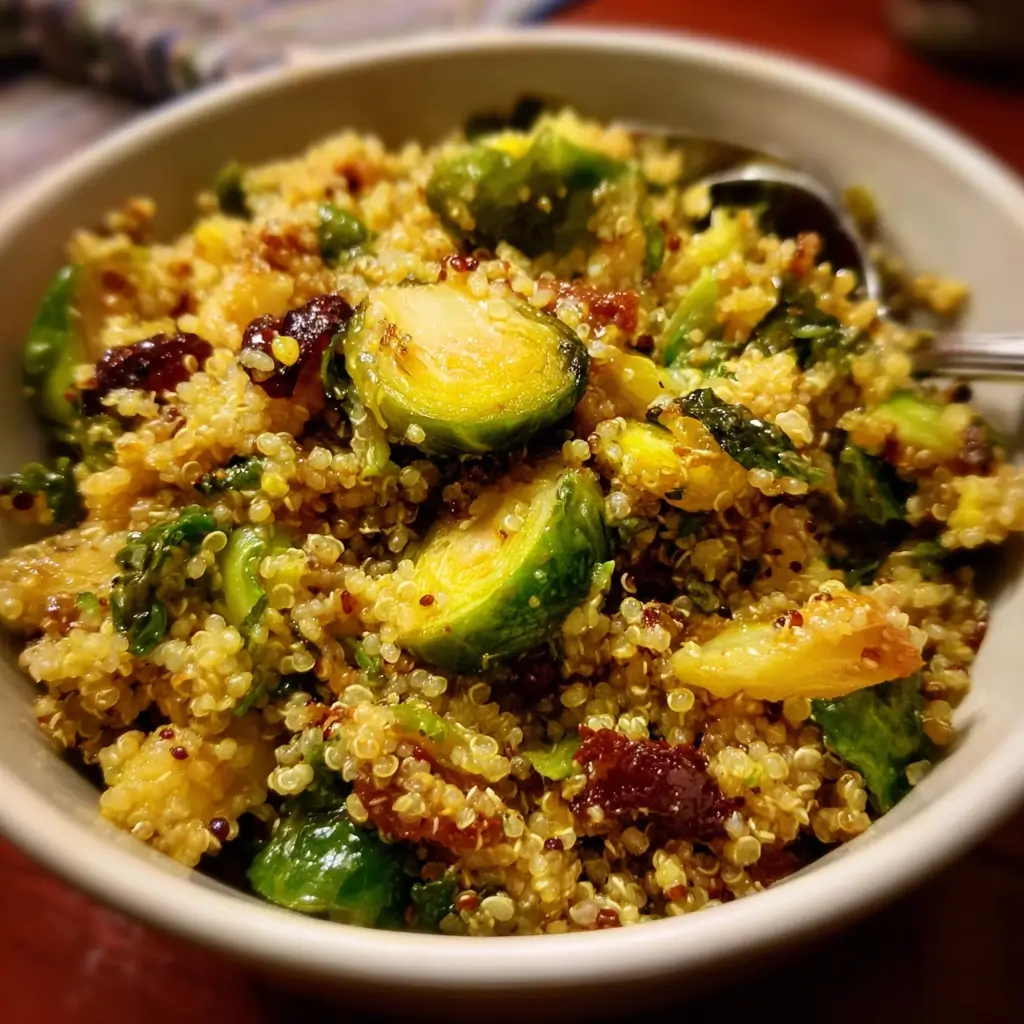
I’ll be the first to admit, getting my family excited about a vegetarian meal, especially one featuring Brussels sprouts, used to be an uphill battle. I’d announce the dinner plan and be met with skeptical sighs and memories of bland, boiled sprouts from their childhoods. But this recipe, this glorious plate of Quinoa with Vegetarian Brussels Sprouts, changed everything. It wasn’t just a meal; it was a revelation. The first time I served it, the silence at the dinner table was a good sign, broken only by the sound of forks scraping plates. My husband, a self-proclaimed carnivore, looked up and said, “Wow, you can make this again. Anytime.” The kids, who usually push anything green to the side, were fascinated by the combination of textures and flavors. The Brussels sprouts weren’t bitter or mushy; they were caramelized, sweet, and nutty from roasting. The quinoa was fluffy and light, a perfect canvas for the savory vegetables. The toasted pecans added a buttery crunch, and a hint of sweetness from dried cranberries tied it all together. This dish has become our go-to for a healthy, satisfying weeknight dinner. It’s a testament to the fact that plant-based eating can be incredibly delicious, hearty, and something the whole family can genuinely look forward to.
Ingredients
- 1 cup uncooked quinoa (any color): This ancient grain is the base of our dish, providing a fluffy texture and a complete protein source. Rinsing it before cooking is key to removing its natural bitter coating.
- 2 cups vegetable broth or water: Used for cooking the quinoa, vegetable broth infuses the grains with a savory depth of flavor that water alone cannot provide.
- 1 ½ pounds Brussels sprouts: The star vegetable. Look for bright green, tightly packed heads. We’ll be trimming and halving them for optimal roasting.
- 3 tablespoons extra virgin olive oil, divided: A high-quality olive oil is essential for roasting the sprouts to crispy perfection and for adding a rich, fruity note to the final dish.
- 1 teaspoon garlic powder: Provides a mellow, sweet garlic flavor that permeates the Brussels sprouts without the risk of burning fresh garlic.
- ½ teaspoon fine sea salt, plus more to taste: Enhances all the flavors in the dish. Fine sea salt dissolves and distributes more evenly than coarser varieties.
- ½ teaspoon black pepper, freshly ground: Adds a touch of gentle heat and complexity. Freshly ground pepper offers a much more potent and aromatic flavor.
- ½ cup raw pecan halves: These will be toasted to bring out their natural oils, adding a deep, buttery crunch and nutty flavor that complements the earthy sprouts.
- ⅓ cup dried cranberries: These little gems provide a chewy texture and a burst of sweet-tart flavor that beautifully contrasts the savory elements of the dish.
- 2 tablespoons balsamic glaze: This thick, syrupy reduction of balsamic vinegar adds a final touch of sophisticated sweetness and tang, tying all the components together.
Instructions
Step 1: Prepare and Roast the Brussels Sprouts
First, preheat your oven to 400°F (200°C). Proper heat is crucial for achieving that desirable caramelization instead of steaming the sprouts. While the oven heats, prepare your Brussels sprouts. Wash them thoroughly and pat them completely dry—moisture is the enemy of crispiness. Trim off the tough, woody stem at the bottom and remove any yellowed or loose outer leaves. Slice each sprout in half from top to bottom. For any particularly large sprouts, you can quarter them to ensure they cook evenly alongside the smaller halves.
Place the trimmed and halved Brussels sprouts onto a large, rimmed baking sheet. It’s important not to overcrowd the pan. The sprouts need space for the hot air to circulate around them. If they are too close together, they will steam and become soft rather than roasting and getting crispy. Use two baking sheets if necessary. Drizzle the sprouts with 2 tablespoons of the olive oil, then sprinkle evenly with the garlic powder, ½ teaspoon of sea salt, and ½ teaspoon of black pepper. Use your hands to toss everything together right on the baking sheet, ensuring each sprout is lightly coated. Spread them into a single, even layer.
Roast in the preheated oven for 20-25 minutes. About halfway through the cooking time, give the pan a good shake or use a spatula to toss the sprouts to promote even browning. They are done when they are tender, deeply golden brown, and some of the outer leaves have become dark and wonderfully crispy.
Step 2: Cook the Quinoa
While the Brussels sprouts are roasting, you can cook the quinoa. This is the most important step for achieving a fluffy, perfect result. Place the 1 cup of uncooked quinoa into a fine-mesh sieve and rinse it thoroughly under cold running water for at least 30-60 seconds, swishing it around with your hand. This process removes the saponin, a natural coating on the quinoa that can give it a bitter or soapy taste.
In a medium saucepan, combine the rinsed quinoa and the 2 cups of vegetable broth (or water). Bring the mixture to a rolling boil over medium-high heat. Once it’s boiling, immediately reduce the heat to the lowest possible setting, cover the saucepan with a tight-fitting lid, and let it simmer for 15 minutes. It’s important not to lift the lid during this time, as that releases the steam needed for the quinoa to cook properly. After 15 minutes, remove the saucepan from the heat but keep the lid on. Let it stand, covered and undisturbed, for another 5-10 minutes. This allows the quinoa to absorb any remaining moisture and finish steaming, which is the secret to separating the grains. After it has rested, remove the lid and gently fluff the quinoa with a fork.
Step 3: Toast the Pecans
Toasting the pecans is a small step that makes a huge difference in flavor and texture. While the quinoa is resting, you can do this. You can either toast them in a dry skillet over medium-low heat for 3-5 minutes, shaking the pan frequently until they are fragrant and slightly browned, or you can spread them on a small baking sheet and pop them in the oven with the Brussels sprouts for the last 5-7 minutes of roasting. Watch them carefully, as nuts can burn very quickly. Once toasted, roughly chop them.
Step 4: Assemble the Dish
Now for the final, rewarding step of bringing it all together. In a large serving bowl, combine the fluffed, warm quinoa, the beautifully roasted Brussels sprouts, the toasted and chopped pecans, and the dried cranberries. Drizzle the remaining 1 tablespoon of olive oil and the 2 tablespoons of balsamic glaze over the entire mixture. Gently toss everything together until all the ingredients are well-distributed. Have a taste and adjust the seasoning if necessary, adding another pinch of salt or a crack of black pepper to suit your preference. Your delicious Quinoa with Vegetarian Brussels Sprouts is now ready to be served.
Nutrition Facts
(Based on 4 servings)
- Calories per serving: Approximately 480 kcal. This dish provides a substantial and energizing calorie count, making it a perfectly balanced and satisfying main course for lunch or dinner.
- Protein: Approximately 12g. A fantastic plant-based source of protein, thanks to the quinoa being a complete protein (containing all nine essential amino acids) and the supplemental protein from pecans. This helps with muscle repair, satiety, and overall body function.
- Fiber: Approximately 11g. This meal is exceptionally rich in dietary fiber from the Brussels sprouts, quinoa, and pecans. Fiber is crucial for digestive health, helps regulate blood sugar levels, and contributes to a lasting feeling of fullness, aiding in weight management.
- Vitamin K: Over 200% of the Daily Value. Brussels sprouts are a powerhouse of Vitamin K, an essential nutrient that plays a vital role in blood clotting and building strong, healthy bones.
- Vitamin C: Over 150% of the Daily Value. Another benefit from the incredible Brussels sprouts, Vitamin C is a powerful antioxidant that supports a healthy immune system, promotes skin health by aiding collagen production, and helps protect your cells from damage.
Preparation Time
This recipe is designed to be efficient and is perfect for a busy weeknight. The total time from start to finish is approximately 40-45 minutes. The active preparation time, which includes washing and trimming the sprouts and rinsing the quinoa, is only about 15 minutes. The remaining 25-30 minutes is passive cooking time while the sprouts roast in the oven and the quinoa simmers on the stovetop, giving you a chance to set the table or relax.
How to Serve
This Quinoa with Vegetarian Brussels Sprouts is incredibly versatile. Here are a few ways to serve and enjoy it:
- As a Hearty Standalone Main Course:
- Serve it warm in a large bowl for a complete and satisfying vegetarian or vegan meal.
- The combination of protein, fiber, and healthy fats makes it a balanced dish that requires no accompaniment.
- Garnish with a sprinkle of fresh parsley or a few extra toasted pecans on top for presentation.
- As an Elegant Side Dish:
- This recipe makes a fantastic and impressive side dish for a larger meal.
- It pairs beautifully with roasted chicken, baked salmon, or a simple pan-seared steak.
- Its vibrant colors and sophisticated flavors make it a standout addition to a holiday table, perfect for Thanksgiving or Christmas gatherings.
- For Meal Prep Lunches:
- This dish is a meal-prepper’s dream. It holds up wonderfully in the refrigerator.
- Portion the finished dish into individual airtight containers.
- Enjoy it cold, straight from the fridge like a grain salad, or gently reheat it in the microwave for a warm and comforting lunch. To keep the pecans crunchy, you can store them separately and add them just before eating.
- As a Base for a Power Bowl:
- Use this recipe as the foundation for a customizable “power bowl.”
- Top a serving with a scoop of hummus, a few slices of avocado, a soft-boiled egg, or some crumbled feta cheese for extra protein and creaminess.
Additional Tips
- Don’t Skip Rinsing the Quinoa: This is non-negotiable for the best flavor. The natural coating on quinoa, called saponin, can taste bitter or soapy. A thorough rinse in a fine-mesh strainer under cold water removes it completely, ensuring a clean, nutty flavor.
- Achieve Perfectly Crispy Sprouts: The secret to crispy, caramelized Brussels sprouts is high heat and low moisture. Make sure your oven is fully preheated to 400°F (200°C) and that you pat the sprouts completely dry after washing. Most importantly, give them space on the baking sheet. If they’re crowded, they will steam instead of roast.
- Vary Your Nuts and Seeds: While pecans are a classic pairing, feel free to experiment! Toasted walnuts, slivered almonds, or even pumpkin seeds (pepitas) would be delicious additions. Toasting is key to unlocking their flavor, no matter which you choose.
- Experiment with Dried Fruits: If you don’t have dried cranberries, this recipe works wonderfully with other dried fruits. Try using chopped dried apricots for a sunnier sweetness, golden raisins, or chopped dried figs for a more complex, jammy flavor.
- Boost the Protein: To make this an even more protein-rich meal, consider adding a can of rinsed and drained chickpeas (garbanzo beans). You can toss them with the Brussels sprouts during the last 10 minutes of roasting to make them slightly crispy.
- Cheese Please: For a non-vegan version, a sprinkle of cheese can elevate this dish even further. Salty, crumbly feta or creamy goat cheese tossed in at the end adds a wonderful tang. A shave of sharp Parmesan cheese also works beautifully.
- Play with Your Acids: The balsamic glaze provides a sweet-tart finish, but you can change it up. A squeeze of fresh lemon juice at the end would brighten the flavors considerably. Alternatively, a high-quality apple cider vinaigrette could be used in place of the olive oil and glaze for a different flavor profile.
- Storage and Reheating: Leftovers can be stored in an airtight container in the refrigerator for up to 4 days. You can enjoy it cold as a salad or reheat it. The best way to reheat is in a skillet over medium-low heat with a splash of water or broth to prevent it from drying out. You can also microwave it, but the sprouts may lose some of their crispiness.
FAQ Section
1. Can I make this recipe vegan?
Absolutely! This recipe is naturally vegetarian, and making it fully vegan is incredibly simple. The only ingredient you need to double-check is the balsamic glaze. Most are vegan, but some can contain honey or other non-vegan thickeners. Ensure you choose a 100% plant-based balsamic glaze, and the entire dish will be perfectly vegan.
2. My quinoa turned out mushy. What did I do wrong?
Mushy quinoa is usually caused by two things: too much liquid or overcooking. First, ensure you are using a precise 1:2 ratio of quinoa to liquid (1 cup of quinoa to 2 cups of broth/water). Second, after bringing it to a boil, immediately turn the heat to the absolute lowest setting to maintain a gentle simmer. Finally, the resting step is critical. Letting the quinoa stand off the heat, covered, for 5-10 minutes allows it to absorb the final bits of steam and results in separate, fluffy grains.
3. Can I use frozen Brussels sprouts for this recipe?
You can, but the texture will be different. Frozen Brussels sprouts contain more water, so they won’t get as crispy and caramelized as fresh ones. If using frozen, do not thaw them first. Roast them directly from frozen, but you may need to increase the roasting time by 10-15 minutes. Spread them on the baking sheet and allow any ice crystals to melt and evaporate for a few minutes in the hot oven before adding the oil and seasonings.
4. How can I make my Brussels sprouts less bitter?
Modern Brussels sprouts are bred to be much milder than they used to be. However, the best way to combat any lingering bitterness is through the cooking method. Roasting at a high temperature brings out their natural sugars and caramelizes them, creating a deep, sweet, and nutty flavor that completely overshadows any bitterness. The addition of the sweet balsamic glaze at the end also helps to balance the flavors perfectly.
5. Is this recipe gluten-free?
Yes, this recipe is naturally gluten-free. Quinoa is a gluten-free seed, and all other ingredients—vegetables, nuts, olive oil, and pure balsamic glaze—do not contain gluten. It’s a safe and delicious option for anyone with celiac disease or gluten sensitivity.
6. Can I use a different grain instead of quinoa?
Certainly. While quinoa is fantastic for its protein content and fluffy texture, this dish is also delicious with other grains. You could substitute it with farro (which is chewy and nutty but not gluten-free), barley, or even a whole-wheat couscous. Simply cook your chosen grain according to its package directions and then combine it with the other ingredients as instructed.
7. How do I store leftovers and for how long?
Leftovers store beautifully. Place the cooled dish in an airtight container and keep it in the refrigerator. It will stay fresh and delicious for up to 4 days, making it perfect for meal planning. The flavors may even meld and become richer overnight.
8. What main course would this pair well with if served as a side?
This dish is a versatile sidekick. Its earthy, sweet, and savory profile pairs wonderfully with simply prepared proteins. It’s an excellent accompaniment to a lemon-herb roasted chicken, pan-seared salmon or cod, grilled shrimp skewers, or a perfectly cooked beef fillet. Its complexity allows the main protein to be simple yet creates an overall elegant and complete meal.

Quinoa with Vegetarian Brussels Sprouts
Ingredients
- 1 cup uncooked quinoa (any color): This ancient grain is the base of our dish, providing a fluffy texture and a complete protein source. Rinsing it before cooking is key to removing its natural bitter coating.
- 2 cups vegetable broth or water: Used for cooking the quinoa, vegetable broth infuses the grains with a savory depth of flavor that water alone cannot provide.
- 1 ½ pounds Brussels sprouts: The star vegetable. Look for bright green, tightly packed heads. We’ll be trimming and halving them for optimal roasting.
- 3 tablespoons extra virgin olive oil, divided: A high-quality olive oil is essential for roasting the sprouts to crispy perfection and for adding a rich, fruity note to the final dish.
- 1 teaspoon garlic powder: Provides a mellow, sweet garlic flavor that permeates the Brussels sprouts without the risk of burning fresh garlic.
- ½ teaspoon fine sea salt, plus more to taste: Enhances all the flavors in the dish. Fine sea salt dissolves and distributes more evenly than coarser varieties.
- ½ teaspoon black pepper, freshly ground: Adds a touch of gentle heat and complexity. Freshly ground pepper offers a much more potent and aromatic flavor.
- ½ cup raw pecan halves: These will be toasted to bring out their natural oils, adding a deep, buttery crunch and nutty flavor that complements the earthy sprouts.
- ⅓ cup dried cranberries: These little gems provide a chewy texture and a burst of sweet-tart flavor that beautifully contrasts the savory elements of the dish.
- 2 tablespoons balsamic glaze: This thick, syrupy reduction of balsamic vinegar adds a final touch of sophisticated sweetness and tang, tying all the components together.
Instructions
Step 1: Prepare and Roast the Brussels Sprouts
First, preheat your oven to 400°F (200°C). Proper heat is crucial for achieving that desirable caramelization instead of steaming the sprouts. While the oven heats, prepare your Brussels sprouts. Wash them thoroughly and pat them completely dry—moisture is the enemy of crispiness. Trim off the tough, woody stem at the bottom and remove any yellowed or loose outer leaves. Slice each sprout in half from top to bottom. For any particularly large sprouts, you can quarter them to ensure they cook evenly alongside the smaller halves.
Place the trimmed and halved Brussels sprouts onto a large, rimmed baking sheet. It’s important not to overcrowd the pan. The sprouts need space for the hot air to circulate around them. If they are too close together, they will steam and become soft rather than roasting and getting crispy. Use two baking sheets if necessary. Drizzle the sprouts with 2 tablespoons of the olive oil, then sprinkle evenly with the garlic powder, ½ teaspoon of sea salt, and ½ teaspoon of black pepper. Use your hands to toss everything together right on the baking sheet, ensuring each sprout is lightly coated. Spread them into a single, even layer.
Roast in the preheated oven for 20-25 minutes. About halfway through the cooking time, give the pan a good shake or use a spatula to toss the sprouts to promote even browning. They are done when they are tender, deeply golden brown, and some of the outer leaves have become dark and wonderfully crispy.
Step 2: Cook the Quinoa
While the Brussels sprouts are roasting, you can cook the quinoa. This is the most important step for achieving a fluffy, perfect result. Place the 1 cup of uncooked quinoa into a fine-mesh sieve and rinse it thoroughly under cold running water for at least 30-60 seconds, swishing it around with your hand. This process removes the saponin, a natural coating on the quinoa that can give it a bitter or soapy taste.
In a medium saucepan, combine the rinsed quinoa and the 2 cups of vegetable broth (or water). Bring the mixture to a rolling boil over medium-high heat. Once it’s boiling, immediately reduce the heat to the lowest possible setting, cover the saucepan with a tight-fitting lid, and let it simmer for 15 minutes. It’s important not to lift the lid during this time, as that releases the steam needed for the quinoa to cook properly. After 15 minutes, remove the saucepan from the heat but keep the lid on. Let it stand, covered and undisturbed, for another 5-10 minutes. This allows the quinoa to absorb any remaining moisture and finish steaming, which is the secret to separating the grains. After it has rested, remove the lid and gently fluff the quinoa with a fork.
Step 3: Toast the Pecans
Toasting the pecans is a small step that makes a huge difference in flavor and texture. While the quinoa is resting, you can do this. You can either toast them in a dry skillet over medium-low heat for 3-5 minutes, shaking the pan frequently until they are fragrant and slightly browned, or you can spread them on a small baking sheet and pop them in the oven with the Brussels sprouts for the last 5-7 minutes of roasting. Watch them carefully, as nuts can burn very quickly. Once toasted, roughly chop them.
Step 4: Assemble the Dish
Now for the final, rewarding step of bringing it all together. In a large serving bowl, combine the fluffed, warm quinoa, the beautifully roasted Brussels sprouts, the toasted and chopped pecans, and the dried cranberries. Drizzle the remaining 1 tablespoon of olive oil and the 2 tablespoons of balsamic glaze over the entire mixture. Gently toss everything together until all the ingredients are well-distributed. Have a taste and adjust the seasoning if necessary, adding another pinch of salt or a crack of black pepper to suit your preference. Your delicious Quinoa with Vegetarian Brussels Sprouts is now ready to be served.
Nutrition
- Serving Size: one normal portion
- Calories: 480
- Fiber: 11g
- Protein: 12g