
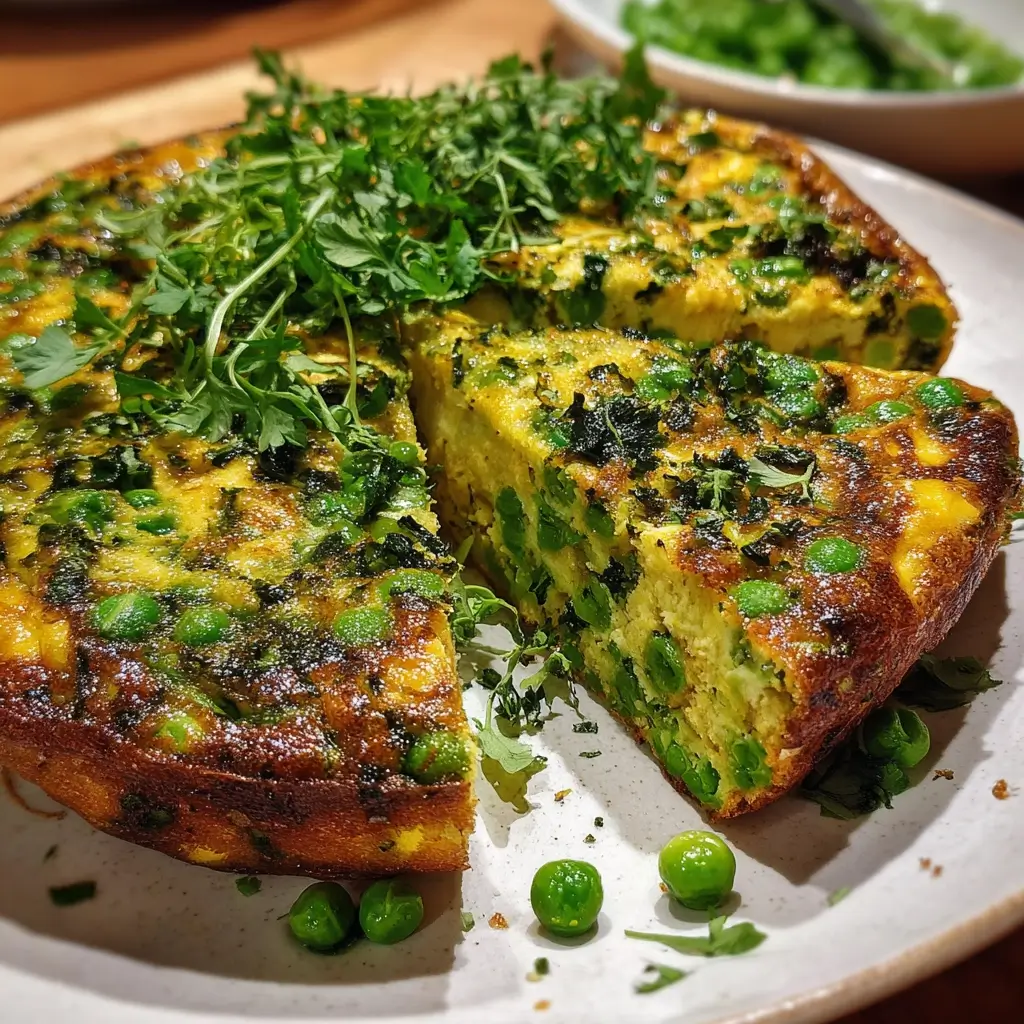
Of all the recipes that have become staples in my kitchen, this Savory Vegetarian Pea Frittata holds a special place. It was born out of necessity on a frantic Tuesday evening when I stared into a refrigerator that seemed to hold nothing but condiments and a few stray eggs. But a quick rummage in the freezer unearthed a bag of sweet peas, and a wedge of Parmesan cheese in the drawer sparked an idea. What followed was nothing short of a culinary revelation. This frittata isn’t just a “make-do” meal; it has become a celebrated dish in our home. The first time I served it, my family was skeptical—peas and eggs? But the moment they took a bite of the fluffy, golden, custard-like wedge, punctuated by sweet bursts of pea and the salty, nutty flavor of the cheese, their expressions changed to pure delight. It’s now our go-to for lazy Sunday brunches, a quick and satisfying lunch, and even a light dinner served with a simple salad. It’s the kind of recipe that makes you feel like a kitchen hero, transforming humble ingredients into something elegant, delicious, and incredibly nourishing with minimal effort. It’s a testament to the fact that the best meals are often the simplest, relying on good ingredients and a little bit of love.
Ingredients
- 10 large eggs: The foundation of our frittata. Using large, high-quality eggs will yield a richer flavor and a more tender, custardy texture.
- 1 ½ cups frozen sweet peas: No need to thaw! These add a delightful burst of sweetness and vibrant color that perfectly complements the savory elements.
- 1 cup freshly grated Parmesan or Pecorino Romano cheese: Freshly grating your cheese is non-negotiable for the best melt and flavor. It provides a sharp, salty, and nutty depth.
- 1 medium yellow onion, finely chopped: This aromatic base builds a foundational layer of sweet, savory flavor when sautéed.
- 2 cloves garlic, minced: Adds a pungent, aromatic kick that elevates the overall taste profile.
- ⅓ cup whole milk or heavy cream: This is the secret to a tender, less-eggy frittata. It adds richness and creates a smoother, more luxurious texture.
- ¼ cup fresh parsley or mint, chopped: Fresh herbs are crucial for adding a bright, clean finish. Parsley is classic and earthy, while mint offers a surprisingly refreshing and vibrant contrast to the sweet peas.
- 2 tablespoons extra virgin olive oil: A good quality olive oil is used for sautéing the aromatics and greasing the pan, adding its own subtle, fruity notes.
- 1 teaspoon salt: Essential for bringing out all the other flavors. Adjust to your personal taste.
- ½ teaspoon freshly ground black pepper: Provides a mild, woody spice that balances the richness of the eggs and cheese.
Instructions
- Preheat and Prepare: Begin by positioning a rack in the center of your oven and preheating it to 400°F (200°C). This ensures that the frittata cooks evenly and develops a beautiful golden top.
- Sauté the Aromatics: Place a 10-inch, well-seasoned cast-iron skillet or another oven-safe, non-stick skillet over medium heat. Add the 2 tablespoons of extra virgin olive oil. Once the oil shimmers, add the finely chopped yellow onion. Sauté for about 5-7 minutes, stirring occasionally, until the onion is soft, translucent, and slightly sweet. This step is crucial for building a deep flavor base. Add the minced garlic and cook for another minute until fragrant, being careful not to let it burn.
- Whisk the Egg Mixture: While the onions are cooking, grab a large mixing bowl. Crack all 10 eggs into the bowl. Pour in the milk or cream. Add the salt and freshly ground black pepper. Whisk vigorously for about a full minute. You want the mixture to be homogenous, pale yellow, and slightly frothy. Incorporating air is key to a light and fluffy frittata rather than a dense, heavy one.
- Combine the Ingredients: Once the eggs are well-whisked, gently fold in the grated Parmesan or Pecorino cheese, the chopped fresh parsley or mint, and the 1 ½ cups of frozen peas. Stir until just combined.
- Incorporate the Aromatics: By now, your onions and garlic should be perfectly sautéed. Carefully add the cooked aromatics from the skillet directly into the egg mixture in the bowl. Stir everything together one last time to ensure all ingredients are evenly distributed.
- Begin Cooking on the Stovetop: Make sure the skillet is still over medium heat. If it has cooled, allow it to heat up again for a moment. Pour the entire egg mixture into the hot skillet. Let it cook undisturbed for about 2-4 minutes. You will notice the edges beginning to set and pull away slightly from the sides of the pan. This initial stovetop cooking helps create a stable base and prevents the bottom from becoming soggy.
- Finish in the Oven: Carefully transfer the hot skillet from the stovetop directly into the preheated oven. Bake for 15-20 minutes. The frittata is done when it is puffed up, golden brown on top, and the center is just set. To check for doneness, gently shake the pan; there should be no liquid wobble in the middle (a very slight jiggle is okay). You can also insert a knife into the center—it should come out clean.
- Rest and Serve: Using oven mitts, carefully remove the skillet from the oven. Be extremely cautious as the handle will be very hot. Let the frittata rest in the skillet for at least 5-10 minutes before slicing. It will deflate slightly; this is completely normal. The resting period allows the frittata to finish cooking from residual heat and set up properly, which makes for much cleaner, more stable slices. Slice into wedges and serve warm.
Nutrition Facts
- Servings: 6-8
- Calories per serving: Approximately 250-300 kcal (based on 6 servings)
- Protein: This dish is a protein powerhouse, packing around 18-20 grams per serving. The combination of eggs and cheese provides high-quality protein, which is essential for muscle repair, immune function, and keeping you feeling full and satisfied for hours.
- Vitamin A: Thanks to the eggs and milk, this frittata is a good source of Vitamin A, a crucial nutrient for maintaining healthy vision, supporting the immune system, and promoting cell growth.
- Calcium: The generous amount of Parmesan or Pecorino cheese, along with the milk, provides a significant dose of calcium. Calcium is vital for building and maintaining strong bones and teeth, as well as for proper nerve and muscle function.
- Fiber: The sweet peas are the star provider of dietary fiber in this recipe. Fiber is essential for digestive health, helping to regulate bowel movements and feed beneficial gut bacteria. It also helps in managing blood sugar levels and promoting a feeling of fullness.
- Healthy Fats: While there is saturated fat from the cheese and eggs, the use of extra virgin olive oil contributes monounsaturated fats, which are known to be heart-healthy. These fats can help reduce bad cholesterol levels and provide essential fatty acids the body needs.
Preparation Time
This Savory Vegetarian Pea Frittata is a marvel of efficiency, making it perfect for both leisurely brunches and hectic weeknights. The total time from start to finish is approximately 35 minutes. This includes about 15 minutes of active preparation time for chopping the aromatics and whisking the ingredients, followed by about 20 minutes of mostly hands-off cooking time in the skillet and oven.
How to Serve
A frittata’s versatility is one of its greatest strengths. It can be dressed up or down and served hot, warm, or even at room temperature. Here are some wonderful ways to serve your Savory Vegetarian Pea Frittata:
- Classic Brunch Centerpiece:
- Serve a warm, generous wedge alongside a simple, crisp green salad dressed with a lemon-dijon vinaigrette. The acidity of the dressing cuts through the richness of the frittata perfectly.
- Pair it with a side of roasted asparagus or cherry tomatoes for extra color and nutrition.
- Complete the brunch spread with a fresh fruit salad and a basket of crusty bread or warm croissants.
- A Light and Satisfying Lunch:
- Enjoy a slice at room temperature, which allows the flavors to meld and deepen.
- Tuck a slice between two pieces of toasted sourdough bread or ciabatta with a smear of pesto or mayonnaise and some fresh arugula for a fantastic frittata sandwich.
- Serve it alongside a cup of creamy tomato soup or a hearty vegetable minestrone for a comforting and complete meal.
- As an Elegant Appetizer:
- Allow the frittata to cool completely, then cut it into small, one-inch cubes.
- Arrange the cubes on a platter and insert a toothpick into each for easy grabbing.
- Serve with a variety of dipping sauces, such as a zesty lemon-dill yogurt sauce, a spicy aioli, or a simple marinara.
- For a Simple Weeknight Dinner:
- Make the frittata the star of the plate and serve it with a more substantial side dish.
- Roasted potatoes with rosemary and garlic are a fantastic accompaniment.
- A side of sautéed spinach, kale, or Swiss chard adds a healthy and flavorful green component.
Additional Tips
- The Pan is Paramount: The best results come from using a 10-inch well-seasoned cast-iron skillet. It distributes heat evenly and can go directly from the stovetop to the oven. If you don’t have one, any oven-safe, non-stick skillet of a similar size will work. Using the correct size ensures the frittata has the perfect thickness—not too thin (which dries out) and not too thick (which won’t cook through).
- Don’t Dare Overcook: The biggest enemy of a frittata is overcooking, which results in a dry, rubbery texture. Bake it only until the center is just set, meaning it has a very slight jiggle when you shake the pan. The residual heat will finish the cooking process as it rests.
- Room Temperature is Your Friend: For the fluffiest, most uniform frittata, use eggs and milk (or cream) that are at room temperature. Cold ingredients don’t combine as easily and can result in a denser final product. Simply take them out of the fridge about 30 minutes before you start cooking.
- Embrace Customization: This recipe is a fantastic template. Feel free to swap or add ingredients based on what you have. Some great additions include sautéed mushrooms, wilted spinach (be sure to squeeze out all excess water!), roasted red peppers, crumbled feta cheese, or goat cheese. Just make sure any vegetables are pre-cooked to remove excess moisture.
- Let It Rest, Seriously: The 5-10 minute resting period after the frittata comes out of the oven is crucial. It allows the internal temperature to equalize and the structure to set. Slicing into it immediately will cause it to fall apart and release steam, making it watery. Patience will be rewarded with perfect, clean slices.
- Fresh Herbs Make a Difference: While dried herbs can be used in a pinch, the vibrant, clean flavor of fresh parsley or mint truly elevates this dish. The bright notes of fresh herbs cut through the richness of the eggs and cheese, providing essential balance.
- Dairy-Free and Delicious: You can easily make this recipe dairy-free. Substitute the milk or cream with an unsweetened, unflavored plant-based milk like almond or soy milk. For the cheese, use a high-quality vegan Parmesan alternative or replace it with 1/4 cup of nutritional yeast for a cheesy, savory flavor.
- Whisk for Fluffiness: Don’t be shy with the whisk. Vigorously whisking the eggs for a solid minute incorporates air into the mixture, which helps the frittata puff up beautifully in the oven. This simple technique is the difference between a flat frittata and a light, airy one.
FAQ Section
1. Can I make this frittata ahead of time?
Absolutely! This frittata is an excellent make-ahead meal. You can bake it completely, let it cool, and then store it in an airtight container in the refrigerator for up to 4 days. It’s delicious served cold or at room temperature. To reheat, you can warm individual slices in the microwave for 30-60 seconds or place the entire frittata (or slices) in a 325°F (160°C) oven for 10-15 minutes until warmed through.
2. My frittata came out watery. What went wrong?
A watery frittata is usually caused by excess moisture from the add-ins. In this recipe, frozen peas work well because they don’t release much water. However, if you add other vegetables like spinach, zucchini, or mushrooms, it’s crucial to cook them first and squeeze out as much liquid as possible before adding them to the egg mixture. Another culprit could be using too much milk or cream, so stick to the recommended ratio.
3. Why did my beautiful, puffy frittata deflate after I took it out of the oven?
This is completely normal and expected! When you whisk the eggs and bake them, air and steam get trapped, causing the frittata to puff up like a soufflé. As it cools, that steam escapes and the structure settles, causing it to deflate. While you can’t prevent it entirely, a good rest before slicing helps it set up nicely even after it settles.
4. What is the difference between a frittata, a quiche, and an omelet?
This is a great question! An omelet is cooked quickly on the stovetop, and the fillings are folded into the center. A quiche has a pastry crust and typically contains a higher ratio of cream or milk to eggs, resulting in a richer, more set custard that is baked slowly. A frittata, like this one, is crustless, its ingredients are mixed directly into the eggs, it’s started on the stovetop and finished in the oven, and it has a firmer texture than a quiche.
5. Can I bake this in a regular baking dish instead of a skillet?
Yes, you can. If you don’t have an oven-safe skillet, you can use a greased 9-inch round pie plate or an 8×8 inch square baking dish. Simply sauté the onions and garlic in a separate pan, then mix all the ingredients together as instructed and pour into the prepared baking dish. The baking time will be similar, around 20-25 minutes at 400°F (200°C), but keep a close eye on it as different dishes conduct heat differently.
6. How do I store leftovers?
Leftover frittata is a gift! Once it has cooled completely, cover the skillet with plastic wrap or transfer the slices to an airtight container. It will keep well in the refrigerator for up to 4 days, making it perfect for meal prep.
7. Can I freeze this pea frittata?
Yes, you can freeze it, but be aware that the texture may change slightly upon thawing, becoming a bit more watery or spongy. To freeze, let the frittata cool completely. You can freeze it whole or in individual slices. Wrap each slice tightly in plastic wrap, then place them in a freezer-safe bag or container. It can be frozen for up to 3 months. Thaw overnight in the refrigerator and reheat gently in the oven or microwave.
8. How can I add even more flavor or spice to this recipe?
There are many ways to kick it up a notch! For a touch of heat, add 1/4 to 1/2 teaspoon of red pepper flakes along with the garlic. For a smoky flavor, a pinch of smoked paprika would be delicious. You could also crumble in some different cheeses, like sharp cheddar for a bolder taste or creamy goat cheese for a tangy finish. Finally, serving it with a drizzle of high-quality balsamic glaze or a dollop of spicy chili crisp can add a fantastic final layer of flavor.

Savory Vegetarian Pea Frittata
Ingredients
- 10 large eggs: The foundation of our frittata. Using large, high-quality eggs will yield a richer flavor and a more tender, custardy texture.
- 1 ½ cups frozen sweet peas: No need to thaw! These add a delightful burst of sweetness and vibrant color that perfectly complements the savory elements.
- 1 cup freshly grated Parmesan or Pecorino Romano cheese: Freshly grating your cheese is non-negotiable for the best melt and flavor. It provides a sharp, salty, and nutty depth.
- 1 medium yellow onion, finely chopped: This aromatic base builds a foundational layer of sweet, savory flavor when sautéed.
- 2 cloves garlic, minced: Adds a pungent, aromatic kick that elevates the overall taste profile.
- ⅓ cup whole milk or heavy cream: This is the secret to a tender, less-eggy frittata. It adds richness and creates a smoother, more luxurious texture.
- ¼ cup fresh parsley or mint, chopped: Fresh herbs are crucial for adding a bright, clean finish. Parsley is classic and earthy, while mint offers a surprisingly refreshing and vibrant contrast to the sweet peas.
- 2 tablespoons extra virgin olive oil: A good quality olive oil is used for sautéing the aromatics and greasing the pan, adding its own subtle, fruity notes.
- 1 teaspoon salt: Essential for bringing out all the other flavors. Adjust to your personal taste.
- ½ teaspoon freshly ground black pepper: Provides a mild, woody spice that balances the richness of the eggs and cheese.
Instructions
- Preheat and Prepare: Begin by positioning a rack in the center of your oven and preheating it to 400°F (200°C). This ensures that the frittata cooks evenly and develops a beautiful golden top.
- Sauté the Aromatics: Place a 10-inch, well-seasoned cast-iron skillet or another oven-safe, non-stick skillet over medium heat. Add the 2 tablespoons of extra virgin olive oil. Once the oil shimmers, add the finely chopped yellow onion. Sauté for about 5-7 minutes, stirring occasionally, until the onion is soft, translucent, and slightly sweet. This step is crucial for building a deep flavor base. Add the minced garlic and cook for another minute until fragrant, being careful not to let it burn.
- Whisk the Egg Mixture: While the onions are cooking, grab a large mixing bowl. Crack all 10 eggs into the bowl. Pour in the milk or cream. Add the salt and freshly ground black pepper. Whisk vigorously for about a full minute. You want the mixture to be homogenous, pale yellow, and slightly frothy. Incorporating air is key to a light and fluffy frittata rather than a dense, heavy one.
- Combine the Ingredients: Once the eggs are well-whisked, gently fold in the grated Parmesan or Pecorino cheese, the chopped fresh parsley or mint, and the 1 ½ cups of frozen peas. Stir until just combined.
- Incorporate the Aromatics: By now, your onions and garlic should be perfectly sautéed. Carefully add the cooked aromatics from the skillet directly into the egg mixture in the bowl. Stir everything together one last time to ensure all ingredients are evenly distributed.
- Begin Cooking on the Stovetop: Make sure the skillet is still over medium heat. If it has cooled, allow it to heat up again for a moment. Pour the entire egg mixture into the hot skillet. Let it cook undisturbed for about 2-4 minutes. You will notice the edges beginning to set and pull away slightly from the sides of the pan. This initial stovetop cooking helps create a stable base and prevents the bottom from becoming soggy.
- Finish in the Oven: Carefully transfer the hot skillet from the stovetop directly into the preheated oven. Bake for 15-20 minutes. The frittata is done when it is puffed up, golden brown on top, and the center is just set. To check for doneness, gently shake the pan; there should be no liquid wobble in the middle (a very slight jiggle is okay). You can also insert a knife into the center—it should come out clean.
- Rest and Serve: Using oven mitts, carefully remove the skillet from the oven. Be extremely cautious as the handle will be very hot. Let the frittata rest in the skillet for at least 5-10 minutes before slicing. It will deflate slightly; this is completely normal. The resting period allows the frittata to finish cooking from residual heat and set up properly, which makes for much cleaner, more stable slices. Slice into wedges and serve warm.
Nutrition
- Serving Size: one normal portion
- Calories: 300
- Protein: 20 grams