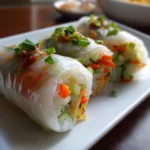
Ingredients
This recipe is broken down into three essential components: the delicate rice roll batter, the savory vegetable filling, and the indispensable dipping sauce that brings it all together.
For the Rice Roll Batter:
- Rice Flour (1 cup / 150g): The primary flour that gives the rolls their structure and classic rice flavor. Ensure you are using regular white rice flour, not glutinous or sweet rice flour.
- Tapioca Starch (¾ cup / 90g): This is the secret ingredient for achieving that signature soft, chewy, and slightly translucent texture. It provides an elasticity that rice flour alone cannot.
- Salt (½ teaspoon): Crucial for enhancing the overall flavor of the batter and balancing the taste.
- Neutral Oil (1 tablespoon): A flavorless oil like canola, vegetable, or avocado oil helps to create a smoother, more pliable roll that is less likely to stick.
- Water (2 ½ cups / 600ml): Use room temperature water. The water-to-flour ratio is critical for the batter’s consistency, so precise measurement is key.
For the Vegetable Filling:
- Shiitake Mushrooms (1 cup, finely diced): Fresh or rehydrated dried shiitake mushrooms provide a deep, umami-rich, and “meaty” flavor that serves as the heart of the filling.
- Carrot (1 medium, finely grated or minced): Adds a touch of sweetness, a vibrant orange color that pops through the translucent wrapper, and a pleasant texture.
- Scallions (3 stalks, thinly sliced): Provides a mild, fresh onion flavor that brightens the entire filling. Separate the white and green parts if you wish to sauté the whites and use the greens for garnish.
- Garlic (2 cloves, minced): A foundational aromatic that adds depth and a savory punch.
- Ginger (1-inch piece, grated): Offers a warm, zesty spice that cuts through the richness of the mushrooms and complements the other vegetables perfectly.
- Soy Sauce (1 tablespoon): For seasoning the vegetables with a salty, savory, umami flavor. Use tamari for a strictly gluten-free option.
- Sesame Oil (1 teaspoon): Adds a nutty, aromatic finish to the filling. A little goes a long way.
- Cooking Oil (1 tablespoon): For sautéing the aromatics and vegetables.
For the Savory Dipping Sauce:
- Light Soy Sauce (¼ cup / 60ml): The salty and savory base of the sauce.
- Water (¼ cup / 60ml): Dilutes the soy sauce slightly to create the perfect dipping consistency without it being overwhelmingly salty.
- Sugar (1 tablespoon): Balances the saltiness of the soy sauce with a touch of sweetness. You can use brown sugar or maple syrup as an alternative.
- Rice Vinegar (1 teaspoon): Adds a subtle tang and acidity that brightens up the sauce.
- Sesame Oil (½ teaspoon): For that signature nutty aroma and flavor.
- Chili Oil or finely sliced red chili (optional): For those who enjoy a bit of heat to contrast the mildness of the rolls.
Instructions
Creating these steamed rolls is a process of three main stages: preparing the filling, mixing the batter, and the final steaming and rolling. Patience during the steaming process is key to success.
Step 1: Prepare the Savory Vegetable Filling
- Heat the Pan: Place a skillet or wok over medium-high heat and add 1 tablespoon of cooking oil.
- Sauté Aromatics: Once the oil is shimmering, add the minced garlic and grated ginger. Sauté for about 30 seconds until fragrant, being careful not to burn them.
- Cook the Vegetables: Add the finely diced shiitake mushrooms and grated carrot to the skillet. Cook for 4-5 minutes, stirring frequently, until the mushrooms have released their moisture and have softened, and the carrots are tender. Pre-cooking the filling is essential to prevent the final rolls from becoming watery.
- Season the Filling: Pour in the soy sauce and cook for another minute, allowing the vegetables to absorb the flavor.
- Finish and Set Aside: Remove the skillet from the heat. Stir in the thinly sliced scallions and the teaspoon of sesame oil. The residual heat will wilt the scallions perfectly. Transfer the filling to a bowl and set it aside to cool down while you prepare the batter.
Step 2: Make the Perfect Rice Roll Batter
- Combine Dry Ingredients: In a large mixing bowl, whisk together the rice flour, tapioca starch, and salt. Sifting the flours first is highly recommended to prevent any lumps and ensure a silky-smooth batter.
- Gradually Add Water: Slowly pour in the 2 ½ cups of room temperature water while continuously whisking. Keep whisking until the batter is completely smooth and there are no dry pockets of flour.
- Incorporate Oil: Whisk in the 1 tablespoon of neutral oil. This will help with the final texture and prevent sticking.
- Rest the Batter: This is a crucial, non-negotiable step. Let the batter rest for at least 30 minutes at room temperature. This allows the flour and starch to fully hydrate, which results in a smoother, more pliable roll. The batter should have the consistency of thin cream or crepe batter. Give it a good stir again just before you start steaming, as the solids will have settled at the bottom.
Step 3: The Steaming and Rolling Process
- Set Up Your Steamer: Fill a large pot or wok with a few inches of water and bring it to a rolling boil over high heat. Place a steaming rack inside. Your setup needs to be stable and the water level should be below the rack.
- Prepare Your Steaming Plate: You will need a flat, heatproof plate or a square cake pan that fits inside your steamer with a little room around the edges for steam to circulate. Lightly brush the inside surface of the plate with a thin layer of neutral oil. This is vital to prevent the roll from sticking.
- Steam the First Layer: Give your rested batter a final, thorough stir. Ladle a thin, even layer of batter onto the greased plate—just enough to cover the bottom. It should be very thin, like a crepe.
- First Steam: Carefully place the plate onto the steaming rack, cover the pot with a lid, and steam on high heat for about 2-3 minutes. The roll is done when the batter turns from opaque white to translucent and slightly bubbly. You should be able to see through it.
- Add Filling and Roll: Using tongs or heat-proof gloves, carefully remove the hot plate from the steamer. Let it cool for just a moment. Spoon a line of the prepared vegetable filling onto one-third of the steamed sheet. Using a flexible, oiled silicone spatula, gently lift the edge of the rice sheet and roll it over the filling, continuing to roll it into a neat log.
- Transfer and Repeat: Gently slide the finished roll onto a serving platter. Re-grease the steaming plate, stir the batter again, and repeat the process of ladling, steaming, filling, and rolling until all the batter and filling are used up. This process gets much faster as you get into a rhythm.
Step 4: Prepare the Dipping Sauce and Serve
- Mix the Sauce: In a small bowl, whisk together the light soy sauce, water, sugar, and rice vinegar until the sugar has completely dissolved.
- Finish and Garnish: Stir in the sesame oil. If you like heat, add chili oil or fresh chilies to your liking.
- Serve Immediately: Serve the warm vegetable rice rolls on a platter, perhaps garnished with extra scallions, fresh cilantro, or toasted sesame seeds. Pour the dipping sauce into small individual bowls for easy dipping.
Nutrition
- Serving Size: one normal portion
- Calories: 320