
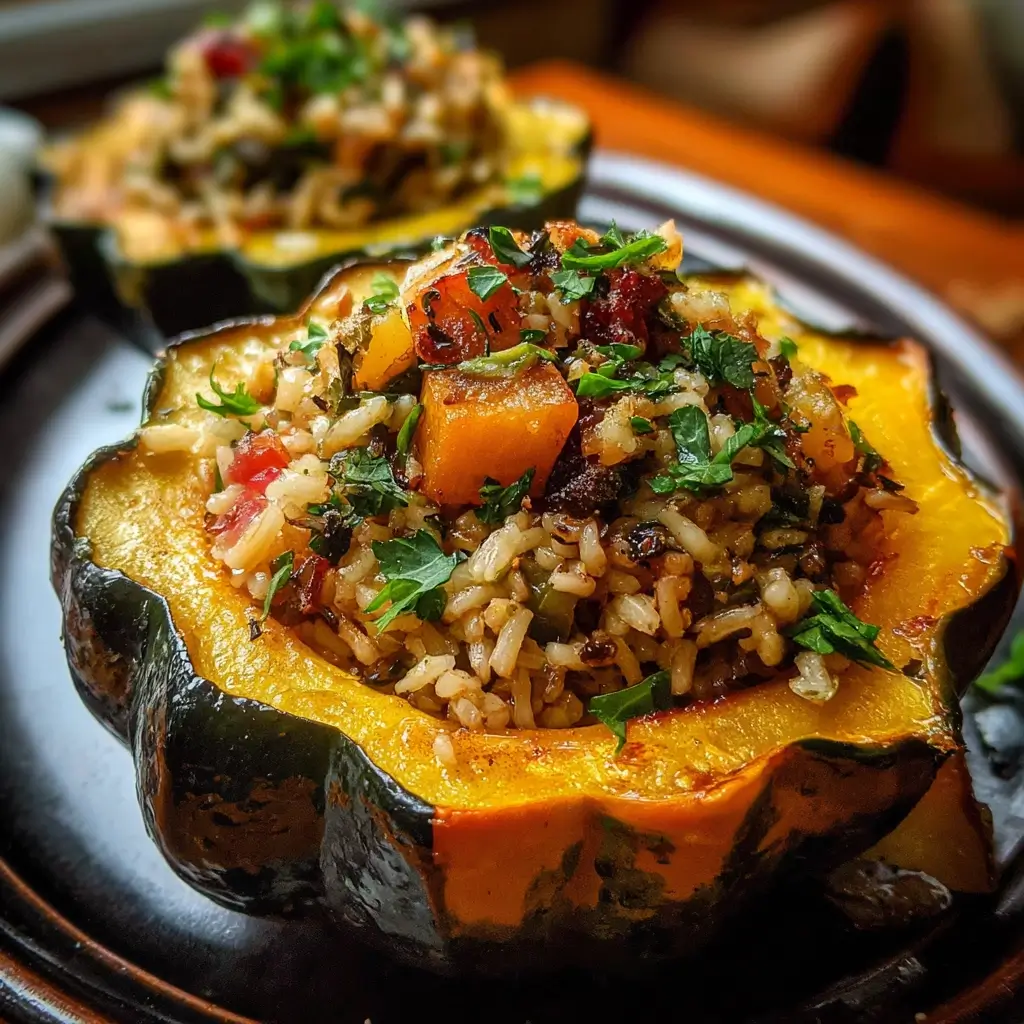

I remember the first time I decided to make Stuffed Acorn Squash. It was a crisp autumn evening, the kind where the air smells of woodsmoke and fallen leaves. My family, usually staunch advocates for meat-and-potatoes meals, eyed the vibrant orange squash on the counter with a healthy dose of skepticism. I promised them a dish that was as hearty and satisfying as any of our usual fare, a vegetarian centerpiece that would surprise and delight them. As the squash roasted, the kitchen filled with a sweet, nutty aroma, mingling with the savory scent of sautéed vegetables and fragrant herbs from the rice filling. When I finally brought the finished dish to the table—two perfect, glistening squash halves, overflowing with a jewel-toned mixture of rice, cranberries, and pecans—the skepticism melted away, replaced by curiosity. The first bite was a revelation. The tender, slightly sweet squash was the perfect vessel for the complex, savory-sweet filling. The nutty crunch of the pecans, the tart burst of cranberries, the earthy notes of sage and thyme, all bound together by the wholesome brown rice. It was a symphony of fall flavors and textures. Not only did everyone love it, but they asked for seconds. It has since become a staple in our home, perfect for a cozy weeknight dinner, a healthy lunch, or even as a show-stopping main course for holiday gatherings. This recipe isn’t just about feeding your family; it’s about creating an experience—a warm, comforting, and incredibly delicious memory.
Ingredients for Stuffed Acorn Squash with Vegetarian Rice
- 2 medium Acorn Squash: Look for squash that are heavy for their size with smooth, dull skin, free of blemishes or soft spots. These will serve as the edible, sweet, and nutty bowls for our filling.
- 2 tablespoons Olive Oil: A quality extra-virgin olive oil, divided for roasting the squash and sautéing the vegetables. It adds a subtle, fruity richness.
- 1 cup Long-Grain Brown Rice: Uncooked. Brown rice provides a wonderfully chewy texture and a nutty flavor that complements the squash, not to mention a healthy dose of fiber.
- 2 cups Vegetable Broth: Used for cooking the rice, this infuses the grain with a deep, savory flavor right from the start. Water can be used, but broth is highly recommended.
- 1 medium Yellow Onion: Finely diced. This forms the aromatic base of our stuffing, providing a foundational sweet and savory flavor when sautéed.
- 2 large Carrots: Peeled and finely diced. Carrots add a natural sweetness, a vibrant color, and a tender bite to the rice mixture.
- 2 stalks Celery: Finely diced. Celery brings a crucial savory, slightly peppery note that balances the sweetness of the other ingredients.
- 8 ounces Cremini Mushrooms: Cleaned and chopped. These offer a deep, umami-rich, and “meaty” texture that makes the vegetarian filling incredibly satisfying.
- 4 cloves Garlic: Minced. No savory dish is complete without it. Garlic adds that pungent, aromatic kick that elevates the entire filling.
- 1 teaspoon Dried Sage: This quintessential fall herb provides a pine-like, slightly peppery, and earthy flavor that pairs beautifully with squash.
- 1 teaspoon Dried Thyme: Thyme contributes a gentle, earthy, and slightly minty flavor that complements the sage and other vegetables.
- ½ cup Toasted Pecans: Roughly chopped. Toasting the pecans brings out their natural oils and deepens their nutty flavor, adding an essential crunchy texture.
- ½ cup Dried Cranberries: These little gems provide a burst of tartness and a chewy texture, cutting through the richness and balancing the savory notes.
- 2 tablespoons Fresh Parsley: Chopped, plus more for garnish. Parsley adds a fresh, clean, and slightly peppery brightness at the end.
- Salt and Black Pepper: To taste. Essential for seasoning every layer of the dish, from the squash itself to the final filling.
Step-by-Step Instructions
This recipe is best approached in three main stages: preparing the squash, cooking the rice and filling, and finally, combining and baking everything to perfection. Following these steps will ensure a flawless and delicious result.
Part 1: Preparing and Roasting the Acorn Squash
- Preheat and Prepare: Begin by preheating your oven to 400°F (200°C). Line a large baking sheet with parchment paper for easy cleanup.
- Cut the Squash: This can be the most challenging part. Use a large, sharp chef’s knife. Carefully insert the tip of the knife into the squash near the stem and press down firmly, cutting it in half from stem to tip. If it’s very tough, you can microwave the whole squash for 2-3 minutes to soften the skin slightly.
- Scoop the Seeds: Use a sturdy spoon to scoop out the seeds and stringy pulp from the center of each squash half. You can discard these or save the seeds to roast separately for a tasty snack.
- Season the Squash: Place the squash halves cut-side up on the prepared baking sheet. Drizzle 1 tablespoon of the olive oil evenly over the four halves. Use your fingers or a pastry brush to rub the oil all over the cut surfaces and inside the cavity. Season generously with salt and black pepper.
- Initial Roast: Flip the squash halves so they are cut-side down on the baking sheet. This method helps to steam the flesh as it roasts, making it exceptionally tender. Roast in the preheated oven for 30-40 minutes, or until the flesh is soft and can be easily pierced with a fork.
Part 2: Cooking the Rice and Preparing the Filling
- Cook the Rice: While the squash is roasting, prepare the rice. In a medium saucepan, bring the 2 cups of vegetable broth to a boil. Add the 1 cup of brown rice, stir once, then reduce the heat to a low simmer. Cover the saucepan and let it cook for about 40-45 minutes, or until the liquid is absorbed and the rice is tender. Once cooked, fluff it with a fork and set it aside.
- Sauté the Aromatics: In a large skillet or Dutch oven, heat the remaining 1 tablespoon of olive oil over medium heat. Add the diced yellow onion, carrots, and celery (this trio is known as a mirepoix). Sauté for 7-10 minutes, stirring occasionally, until the vegetables have softened and the onion is translucent.
- Add Mushrooms and Garlic: Add the chopped cremini mushrooms to the skillet. Cook for another 5-7 minutes, until the mushrooms have released their liquid and started to brown. This browning process is key to developing a deep umami flavor. Stir in the minced garlic, dried sage, and dried thyme. Cook for another minute until the garlic is fragrant, being careful not to burn it.
- Combine the Filling: Turn off the heat. Add the cooked brown rice to the skillet with the sautéed vegetables. Add the toasted pecans, dried cranberries, and chopped fresh parsley. Stir everything together until it’s well combined.
- Taste and Season: This is a crucial step. Taste the rice filling and season it generously with salt and pepper. The filling should be boldly flavored on its own, as the squash is only lightly seasoned. Don’t be shy with the seasoning.
Part 3: Stuffing and Final Bake
- Flip and Stuff: Once the acorn squash is tender, carefully remove the baking sheet from the oven. Use tongs to flip the squash halves so they are cut-side up.
- Fill the Squash: Generously mound the prepared vegetarian rice filling into the cavity of each roasted squash half. It’s okay to pile it high; the filling is fully cooked and just needs to be heated through.
- Final Bake: Place the stuffed squash back into the 400°F (200°C) oven. Bake for an additional 15-20 minutes, or until the filling is heated all the way through and the top is slightly golden brown.
- Rest and Garnish: Remove the stuffed squash from the oven and let it rest for a few minutes before serving. This allows the flavors to meld. Garnish with a sprinkle of fresh parsley and a few extra toasted pecans before bringing it to the table.
Nutrition Facts
This dish is not only delicious but also packed with nutrients.
- Servings: 4 (one half-squash per person)
- Calories per serving: Approximately 450-500 kcal
- High in Vitamin A: Acorn squash is an excellent source of Vitamin A (in the form of beta-carotene), which is crucial for vision health, immune function, and cell growth. A single serving provides a significant portion of your daily requirement.
- Excellent Source of Fiber: With both brown rice and a plethora of vegetables, this meal is rich in dietary fiber. Fiber is essential for maintaining a healthy digestive system, regulating blood sugar levels, and promoting a feeling of fullness.
- Heart-Healthy Fats: The olive oil and pecans contribute monounsaturated and polyunsaturated fats. These healthy fats are beneficial for cardiovascular health, helping to lower bad cholesterol levels and reduce inflammation.
- Plant-Based Protein: This recipe provides a solid amount of plant-based protein from the brown rice, pecans, and vegetables, making it a satisfying and muscle-supporting meal for vegetarians and meat-eaters alike.
- Rich in Antioxidants: From the colorful squash and vegetables to the pecans and herbs, this dish is loaded with various antioxidants. These compounds help protect your body’s cells from damage caused by free radicals, contributing to overall long-term health.
Preparation Time
This recipe requires some roasting and cooking time, but much of it is hands-off, allowing you to multitask.
- Preparation Time: 20 minutes (chopping vegetables, measuring ingredients)
- Cooking Time: 60 minutes (roasting squash and cooking filling concurrently, plus final bake)
- Total Time: 1 hour and 20 minutes
The process is streamlined by roasting the squash at the same time you prepare the filling on the stovetop, making efficient use of your time in the kitchen.
How to Serve Your Masterpiece
Presentation elevates this humble dish into a centerpiece-worthy meal. Here are several ways to serve your Stuffed Acorn Squash:
- As a Hearty Vegetarian Main Course:
- Place one stuffed squash half on each dinner plate.
- Serve alongside a simple side, such as a crisp green salad with a lemon vinaigrette or steamed green beans with a touch of butter.
- A dollop of plain Greek yogurt or a drizzle of tahini-lemon dressing on top of the filling can add a creamy, tangy contrast.
- As an Impressive Holiday Side Dish:
- For occasions like Thanksgiving or Christmas, this dish adds vibrant color and a fantastic vegetarian option to the table.
- You can cut each stuffed half in two (creating quarters) to allow guests to take a smaller portion alongside other holiday fare.
- Arrange all four stuffed halves on a large platter, garnished beautifully with fresh parsley and scattered cranberries for a festive look.
- For Meal Prep Lunches:
- This recipe is fantastic for meal prep.
- Portion individual stuffed squash halves into airtight containers.
- To reheat, simply microwave for 2-3 minutes or, for best results, heat in an oven or toaster oven at 350°F (175°C) for 15-20 minutes until warmed through.
- Garnish Options for Extra Flair:
- Herbs: A sprinkle of fresh sage or thyme leaves in addition to the parsley.
- Nuts: Extra toasted pecans or even toasted walnuts or pumpkin seeds.
- Cheese: For a non-vegetarian or dairy-friendly option, a sprinkle of crumbled feta or goat cheese on top before the final bake adds a salty, creamy element.
- Sweet Drizzle: A very light drizzle of maple syrup over the squash before serving can enhance its natural sweetness.
Additional Tips for Perfect Stuffed Acorn Squash
- Choosing the Right Squash: Select two squash that are similar in size to ensure they cook evenly. A flat bottom is a bonus, as it will help the squash sit upright on the baking sheet and on the plate. If your squash wobbles, you can slice a tiny bit off the rounded bottom to create a stable base.
- Make-Ahead Strategy: You can be incredibly efficient by preparing components in advance. The entire rice filling can be made up to 2 days ahead and stored in an airtight container in the refrigerator. You can also roast the squash a day ahead. When ready to serve, simply stuff the cold squash, and you may need to add 5-10 minutes to the final baking time.
- Ingredient Swaps and Variations: This recipe is very forgiving. Feel free to substitute the brown rice with quinoa, farro, or wild rice. Swap pecans for walnuts or toasted pumpkin seeds. Don’t have cranberries? Chopped dried apricots or cherries work beautifully.
- Don’t Discard the Seeds: Acorn squash seeds are delicious when roasted. After scooping them out, rinse them well, pat them dry, toss with a little olive oil and salt, and roast on a separate small baking sheet until golden and crispy (about 10-15 minutes at 400°F).
- How to Easily Cut Acorn Squash: If you struggle with cutting hard winter squash, pop the whole squash in the microwave for 2-4 minutes. This softens the skin just enough to make it significantly easier to slice through safely. Always use a sharp, heavy knife and a stable cutting board.
- Avoid Watery Filling: Ensure you cook the mushrooms until they release all their moisture and begin to brown. This prevents the final filling from becoming watery and concentrates their delicious, savory flavor.
- Making it Vegan: This recipe is easily made fully vegan. The only potential non-vegan ingredient is vegetable broth, so simply ensure you are using a certified vegan brand. If you were to add a creamy element, use a plant-based yogurt or a vegan feta alternative.
- Storing and Reheating Leftovers: Store any leftover stuffed squash in an airtight container in the refrigerator for up to 4 days. The best way to reheat is in the oven at 350°F (175°C) for 20-25 minutes, or until heated through. This helps the squash and filling retain their original textures, whereas a microwave can sometimes make the rice mushy.
Frequently Asked Questions (FAQ)
1. Can I use a different type of squash for this recipe?
Absolutely! This recipe works wonderfully with other winter squashes. Butternut squash is a great alternative; you would just need to roast it a bit longer until tender. Delicata squash is smaller and has edible skin, making for a lovely presentation. Kabocha or “Japanese pumpkin” is also a fantastic choice with its sweet, fluffy texture. Adjust roasting times accordingly based on the size and density of the squash you choose.
2. Is this recipe gluten-free?
Yes, this recipe is naturally gluten-free. All the ingredients, including brown rice, vegetables, nuts, and herbs, do not contain gluten. As always, if you have a severe allergy, double-check the labels on your vegetable broth and any other packaged ingredients to ensure they are certified gluten-free and processed in a gluten-free facility.
3. Can I add cheese to the filling?
Of course! Cheese would be a delicious addition. For a salty and tangy flavor, crumble about ½ cup of feta or goat cheese into the rice filling before stuffing the squash. For a meltier, nuttier option, you could stir in ½ cup of grated Gruyère or Parmesan cheese. Sprinkle extra on top before the final bake for a golden, cheesy crust.
4. How do I know when the acorn squash is fully cooked?
The squash is perfectly cooked when you can easily pierce the flesh with the tines of a fork with little to no resistance. The flesh should be soft and tender all the way through. During the initial roast (cut-side down), the edges will begin to caramelize and turn a light golden brown.
5. Can I prepare the filling in advance to save time?
Yes, this is a great time-saver, especially for holiday cooking. You can prepare the entire vegetarian rice filling up to two days in advance. Let it cool completely before storing it in an airtight container in the refrigerator. When you’re ready to eat, simply roast the squash as directed, stuff with the cold filling, and bake. You may need to add 5-10 minutes to the final baking time to ensure the filling is heated all the way through.
6. Can I freeze stuffed acorn squash?
While you can, the texture of the squash may change slightly upon thawing. For best results, it’s better to freeze the components separately. You can freeze the cooked rice filling in a freezer-safe bag or container for up to 3 months. You can also roast, scoop, and mash the acorn squash flesh and freeze that separately. However, if you want to freeze the finished dish, wrap the cooked and cooled stuffed squash halves tightly in plastic wrap and then foil. To reheat, thaw in the refrigerator overnight and bake at 350°F (175°C) until hot.
7. I don’t have fresh herbs. Can I use all dried herbs?
Yes, you can. The recipe already calls for dried sage and thyme. If you don’t have fresh parsley, you can substitute it with 2 teaspoons of dried parsley, adding it to the skillet along with the other dried herbs to allow its flavor to bloom. However, the fresh parsley at the end adds a brightness that is hard to replicate, so use it if you can.
8. My rice filling seems a bit dry. What can I do?
If your cooked rice or the final filling seems a little dry, you can easily fix it. Simply stir in a few tablespoons of warm vegetable broth or even just a bit of water until it reaches your desired consistency. You want the filling to be moist but not wet. Also, remember that the moisture from the squash itself will contribute to the overall texture during the final bake.

Stuffed Acorn Squash with Vegetarian Rice
Ingredients
- 2 medium Acorn Squash: Look for squash that are heavy for their size with smooth, dull skin, free of blemishes or soft spots. These will serve as the edible, sweet, and nutty bowls for our filling.
- 2 tablespoons Olive Oil: A quality extra-virgin olive oil, divided for roasting the squash and sautéing the vegetables. It adds a subtle, fruity richness.
- 1 cup Long-Grain Brown Rice: Uncooked. Brown rice provides a wonderfully chewy texture and a nutty flavor that complements the squash, not to mention a healthy dose of fiber.
- 2 cups Vegetable Broth: Used for cooking the rice, this infuses the grain with a deep, savory flavor right from the start. Water can be used, but broth is highly recommended.
- 1 medium Yellow Onion: Finely diced. This forms the aromatic base of our stuffing, providing a foundational sweet and savory flavor when sautéed.
- 2 large Carrots: Peeled and finely diced. Carrots add a natural sweetness, a vibrant color, and a tender bite to the rice mixture.
- 2 stalks Celery: Finely diced. Celery brings a crucial savory, slightly peppery note that balances the sweetness of the other ingredients.
- 8 ounces Cremini Mushrooms: Cleaned and chopped. These offer a deep, umami-rich, and “meaty” texture that makes the vegetarian filling incredibly satisfying.
- 4 cloves Garlic: Minced. No savory dish is complete without it. Garlic adds that pungent, aromatic kick that elevates the entire filling.
- 1 teaspoon Dried Sage: This quintessential fall herb provides a pine-like, slightly peppery, and earthy flavor that pairs beautifully with squash.
- 1 teaspoon Dried Thyme: Thyme contributes a gentle, earthy, and slightly minty flavor that complements the sage and other vegetables.
- ½ cup Toasted Pecans: Roughly chopped. Toasting the pecans brings out their natural oils and deepens their nutty flavor, adding an essential crunchy texture.
- ½ cup Dried Cranberries: These little gems provide a burst of tartness and a chewy texture, cutting through the richness and balancing the savory notes.
- 2 tablespoons Fresh Parsley: Chopped, plus more for garnish. Parsley adds a fresh, clean, and slightly peppery brightness at the end.
- Salt and Black Pepper: To taste. Essential for seasoning every layer of the dish, from the squash itself to the final filling.
Instructions
This recipe is best approached in three main stages: preparing the squash, cooking the rice and filling, and finally, combining and baking everything to perfection. Following these steps will ensure a flawless and delicious result.
Part 1: Preparing and Roasting the Acorn Squash
- Preheat and Prepare: Begin by preheating your oven to 400°F (200°C). Line a large baking sheet with parchment paper for easy cleanup.
- Cut the Squash: This can be the most challenging part. Use a large, sharp chef’s knife. Carefully insert the tip of the knife into the squash near the stem and press down firmly, cutting it in half from stem to tip. If it’s very tough, you can microwave the whole squash for 2-3 minutes to soften the skin slightly.
- Scoop the Seeds: Use a sturdy spoon to scoop out the seeds and stringy pulp from the center of each squash half. You can discard these or save the seeds to roast separately for a tasty snack.
- Season the Squash: Place the squash halves cut-side up on the prepared baking sheet. Drizzle 1 tablespoon of the olive oil evenly over the four halves. Use your fingers or a pastry brush to rub the oil all over the cut surfaces and inside the cavity. Season generously with salt and black pepper.
- Initial Roast: Flip the squash halves so they are cut-side down on the baking sheet. This method helps to steam the flesh as it roasts, making it exceptionally tender. Roast in the preheated oven for 30-40 minutes, or until the flesh is soft and can be easily pierced with a fork.
Part 2: Cooking the Rice and Preparing the Filling
- Cook the Rice: While the squash is roasting, prepare the rice. In a medium saucepan, bring the 2 cups of vegetable broth to a boil. Add the 1 cup of brown rice, stir once, then reduce the heat to a low simmer. Cover the saucepan and let it cook for about 40-45 minutes, or until the liquid is absorbed and the rice is tender. Once cooked, fluff it with a fork and set it aside.
- Sauté the Aromatics: In a large skillet or Dutch oven, heat the remaining 1 tablespoon of olive oil over medium heat. Add the diced yellow onion, carrots, and celery (this trio is known as a mirepoix). Sauté for 7-10 minutes, stirring occasionally, until the vegetables have softened and the onion is translucent.
- Add Mushrooms and Garlic: Add the chopped cremini mushrooms to the skillet. Cook for another 5-7 minutes, until the mushrooms have released their liquid and started to brown. This browning process is key to developing a deep umami flavor. Stir in the minced garlic, dried sage, and dried thyme. Cook for another minute until the garlic is fragrant, being careful not to burn it.
- Combine the Filling: Turn off the heat. Add the cooked brown rice to the skillet with the sautéed vegetables. Add the toasted pecans, dried cranberries, and chopped fresh parsley. Stir everything together until it’s well combined.
- Taste and Season: This is a crucial step. Taste the rice filling and season it generously with salt and pepper. The filling should be boldly flavored on its own, as the squash is only lightly seasoned. Don’t be shy with the seasoning.
Part 3: Stuffing and Final Bake
- Flip and Stuff: Once the acorn squash is tender, carefully remove the baking sheet from the oven. Use tongs to flip the squash halves so they are cut-side up.
- Fill the Squash: Generously mound the prepared vegetarian rice filling into the cavity of each roasted squash half. It’s okay to pile it high; the filling is fully cooked and just needs to be heated through.
- Final Bake: Place the stuffed squash back into the 400°F (200°C) oven. Bake for an additional 15-20 minutes, or until the filling is heated all the way through and the top is slightly golden brown.
- Rest and Garnish: Remove the stuffed squash from the oven and let it rest for a few minutes before serving. This allows the flavors to meld. Garnish with a sprinkle of fresh parsley and a few extra toasted pecans before bringing it to the table.
Nutrition
- Serving Size: one normal portion
- Calories: 500