
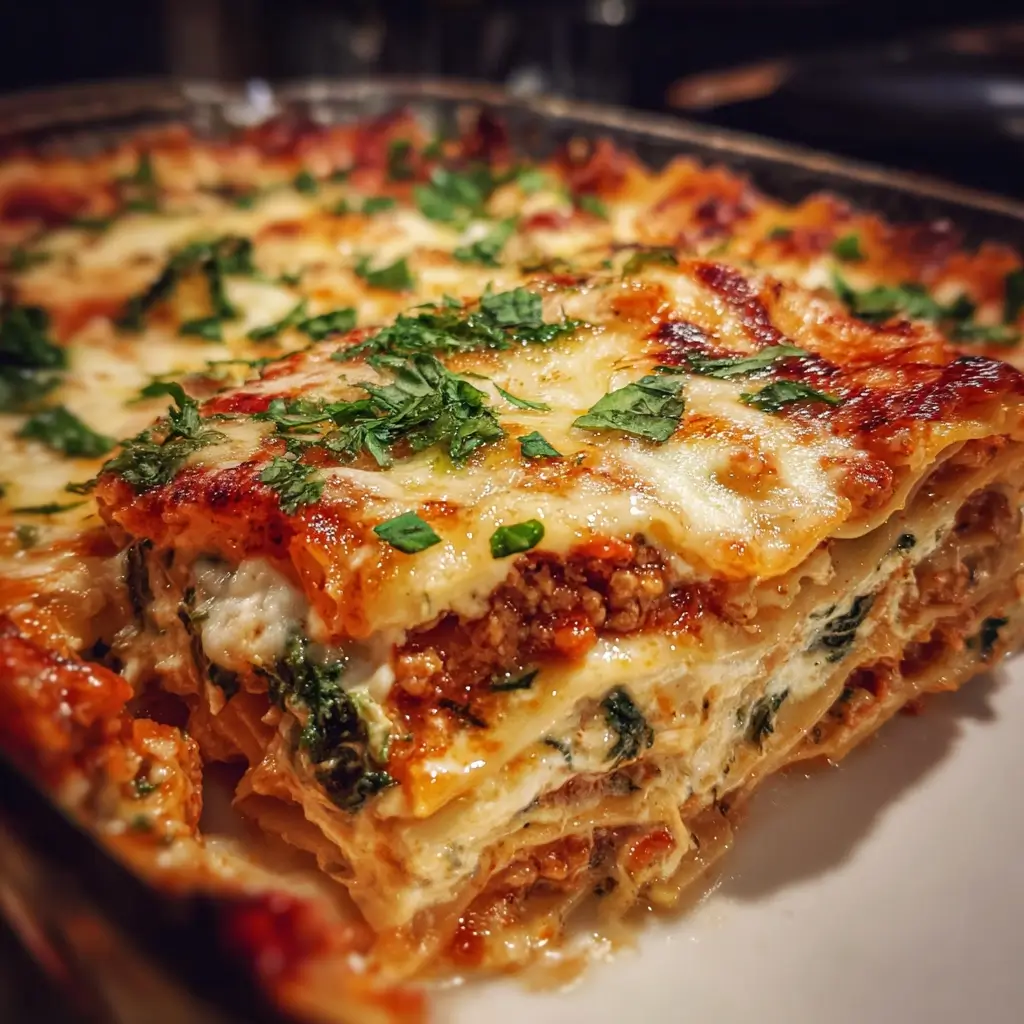
There are certain meals that feel like a warm hug on a plate, and for the longest time, I believed that true, soul-satisfying lasagna had to be the classic, heavy-hitter loaded with rich, dense sauces and traditional meats. It was my go-to for family gatherings and chilly evenings. So, when I first decided to develop a Turkey and Spinach Lasagna, I’ll admit, a part of me was skeptical. I worried it might be a “healthier” but ultimately less satisfying version of the dish we all loved. My family eyed the ingredients on the counter with a similar, unspoken apprehension. Could ground turkey and spinach really deliver that same level of comforting bliss? The first time I pulled it from the oven, bubbling and golden with a beautifully browned cheese crust, the aroma alone began to change our minds. It was rich, savory, and undeniably inviting. We sliced into it, revealing perfect layers of creamy béchamel, a hearty turkey and tomato sauce, tender pasta, and vibrant green spinach. The first bite was a revelation. It was lighter, yes, but it lacked nothing in flavor or richness. The turkey was savory and perfectly seasoned, the creamy white sauce added a luxurious texture, and the spinach provided a wonderful, earthy balance that cut through the richness of the cheese. That night, the entire pan disappeared. My kids asked for seconds, and my husband declared it the “new official lasagna” of the house. This recipe isn’t a compromise; it’s an upgrade. It delivers all the comforting, cheesy, saucy goodness you crave from a classic lasagna but in a brighter, more vibrant way that leaves you feeling satisfied, not weighed down. It has become our most requested family meal, proving that sometimes, a little change can lead to the most delicious discoveries.
Ingredients
Here is everything you will need to create this incredibly flavorful and satisfying Turkey and Spinach Lasagna. Each component is chosen to build layers of flavor and create the perfect texture.
- For the Turkey and Spinach Sauce:
- 2 tablespoons Olive Oil: A quality extra virgin olive oil for sautéing the aromatics, forming a flavorful base.
- 1 large Yellow Onion, finely chopped: Provides a sweet, aromatic foundation for the sauce.
- 4 cloves Garlic, minced: Adds that essential, pungent kick. Don’t be shy with the garlic!
- 2 lbs Lean Ground Turkey (93/7): A fantastic, leaner protein that becomes incredibly tender and flavorful when simmered in the sauce.
- 1 teaspoon Salt: Essential for seasoning the turkey and bringing out all the other flavors.
- ½ teaspoon Black Pepper: For a touch of warmth and spice.
- 1 teaspoon Dried Oregano: A classic Italian herb that is a must-have in any good tomato sauce.
- ½ teaspoon Dried Basil: Adds a layer of sweet, herbaceous aroma.
- ¼ teaspoon Red Pepper Flakes (optional): For a very subtle background heat that brightens the dish. Adjust to your preference.
- 28 oz can Crushed Tomatoes: The heart of our red sauce, providing a thick, rich tomato base.
- 10 oz Fresh Spinach: Wilts down beautifully into the sauce, adding nutrients, color, and a delicious earthy flavor. You can also use frozen, see tips below.
- For the Creamy Béchamel Sauce (White Sauce):
- 6 tablespoons Unsalted Butter: The foundation of the roux, adding richness and flavor.
- 6 tablespoons All-Purpose Flour: This is the thickener for our sauce.
- 4 cups Whole Milk, warmed: Using whole milk creates an exceptionally creamy and luxurious sauce. Warming it first helps prevent lumps.
- ½ teaspoon Salt: To season the béchamel.
- ¼ teaspoon White Pepper: Provides a milder heat than black pepper and won’t leave dark flecks in your white sauce.
- Pinch of Nutmeg: The secret ingredient in any great béchamel! It enhances the dairy flavor and adds a warm, professional touch.
- For Assembly:
- 16 oz box Lasagna Noodles: You can use either traditional boil-first noodles or no-boil noodles for convenience.
- 16 oz Whole Milk Mozzarella Cheese, freshly grated: Freshly grated mozzarella melts far better than the pre-shredded kind, which contains anti-caking agents.
- 1 cup Parmesan Cheese, freshly grated: Adds a sharp, nutty, salty flavor that cuts through the richness and helps create that perfect golden-brown crust.
- Fresh Basil or Parsley, for garnish: A final touch of freshness and color before serving.
Instructions
Follow these detailed steps to assemble a perfect Turkey and Spinach Lasagna. The process is broken down into making the sauces, assembling the layers, and baking to golden perfection. Taking your time with each stage is the key to an unforgettable result.
Step 1: Prepare the Turkey and Spinach Sauce
- Sauté Aromatics: Heat the olive oil in a large Dutch oven or heavy-bottomed pot over medium heat. Add the finely chopped yellow onion and cook, stirring occasionally, for 5-7 minutes, or until it becomes soft and translucent. Add the minced garlic and cook for another minute until fragrant, being careful not to let it burn.
- Brown the Turkey: Add the ground turkey to the pot. Break it up with a wooden spoon and cook until it is no longer pink. Drain any excess fat if necessary.
- Season the Sauce: Season the cooked turkey with 1 teaspoon of salt, ½ teaspoon of black pepper, dried oregano, dried basil, and optional red pepper flakes. Stir well to ensure the meat is evenly coated with the spices.
- Simmer: Pour in the can of crushed tomatoes. Stir everything together, scraping up any browned bits from the bottom of the pot. Bring the sauce to a gentle simmer, then reduce the heat to low, cover, and let it cook for at least 20 minutes to allow the flavors to meld together. A longer simmer (up to an hour) will result in an even richer sauce.
- Wilt the Spinach: During the last 5 minutes of simmering, add the fresh spinach to the pot in batches, stirring it into the sauce until it wilts down completely. Once all the spinach is incorporated, turn off the heat and set the sauce aside.
Step 2: Create the Béchamel Sauce
- Warm the Milk: Gently warm the milk in a separate saucepan or in the microwave. It should be warm to the touch, not boiling. This step is crucial for a smooth sauce.
- Make the Roux: In a medium saucepan, melt the unsalted butter over medium heat. Once melted, whisk in the all-purpose flour. Cook this mixture (the roux), whisking constantly, for about 2 minutes. This cooks out the raw flour taste and is the foundation for your sauce.
- Incorporate the Milk: Slowly begin to pour the warm milk into the roux, about a half-cup at a time, while whisking vigorously and constantly. Do not add the next batch of milk until the previous one is fully incorporated and the sauce is smooth. Continue this process until all the milk has been added.
- Thicken and Season: Continue to cook the sauce, stirring frequently, for about 5-8 minutes, or until it has thickened enough to coat the back of a spoon. Remove from the heat and stir in the salt, white pepper, and a pinch of nutmeg. Set aside.
Step 3: Assemble the Lasagna
- Preheat and Prepare: Preheat your oven to 375°F (190°C). If you are using lasagna noodles that require boiling, cook them now according to package directions until al dente. Drain and lay them flat on a baking sheet lined with parchment paper to prevent sticking. Lightly grease a 9×13 inch baking dish.
- First Layer: Spread a thin layer of the turkey and spinach sauce on the bottom of the prepared baking dish. This prevents the first layer of noodles from sticking and burning.
- Second Layer: Arrange a single layer of lasagna noodles over the sauce.
- Third Layer: Spread about one-third of the remaining turkey and spinach sauce over the noodles.
- Fourth Layer: Drizzle about one-quarter of the béchamel sauce over the turkey sauce.
- Fifth Layer: Sprinkle with a generous layer of grated mozzarella cheese and a light dusting of Parmesan cheese.
- Repeat: Repeat the layering process (Noodles -> Turkey Sauce -> Béchamel -> Cheeses) two more times, creating three full layers of filling.
- Final Layer: Top with the final layer of noodles. Spread the remaining béchamel sauce over the top, making sure to cover the noodles all the way to the edges. This protects the noodles from drying out and creates a creamy top. Sprinkle generously with the remaining mozzarella and Parmesan cheese.
Step 4: Bake and Rest
- Bake Covered: Lightly spray a piece of aluminum foil with cooking spray (to prevent the cheese from sticking) and cover the baking dish. Bake in the preheated oven for 30 minutes.
- Bake Uncovered: Remove the foil and bake for another 20-25 minutes, or until the sauce is bubbly and the cheese on top is melted, golden brown, and slightly crispy in spots.
- Rest the Lasagna: This is a critical step! Remove the lasagna from the oven and let it rest on a wire rack for at least 15-20 minutes before slicing and serving. This allows the layers to set, ensuring clean, beautiful slices instead of a soupy mess.
- Garnish and Serve: Garnish with fresh chopped basil or parsley before slicing and serving.
Nutrition Facts
This recipe yields approximately 10 servings. The nutritional information is an estimate and can vary based on the specific ingredients used.
- Servings: 10
- Calories per serving: Approximately 580 kcal
- Protein (38g): The lean ground turkey makes this a protein-packed meal, essential for muscle repair, growth, and keeping you feeling full and satisfied for longer.
- Fiber (5g): The spinach and tomatoes provide a good source of dietary fiber, which is crucial for digestive health and maintaining stable blood sugar levels.
- Lower in Saturated Fat: By using lean turkey instead of traditional beef and opting for whole milk mozzarella, this version is significantly lower in saturated fat compared to many classic lasagna recipes, making it a more heart-conscious choice.
- Calcium (450mg): Thanks to the generous amounts of milk, mozzarella, and Parmesan cheese, each serving is an excellent source of calcium, which is vital for strong bones and teeth.
- Vitamin K: Spinach is a powerhouse of Vitamin K, an important nutrient that plays a key role in blood clotting and bone health.
Preparation time
Crafting a beautiful lasagna takes time, but the process is straightforward and the results are well worth the effort.
- Prep Time: 45 minutes. This includes chopping the vegetables, browning the turkey, simmering the sauce, and preparing the béchamel.
- Cook Time: 55 minutes. This is the active baking time in the oven, first covered to cook through, then uncovered to achieve that perfect golden crust.
- Resting Time: 15-20 minutes. This non-negotiable time allows the lasagna to set, making it much easier to slice and serve neatly.
- Total Time: Approximately 1 hour and 55 minutes.
How to Serve
Letting the lasagna be the star of the show is easy, but the right accompaniments can elevate it from a simple meal to a memorable feast. Here are some ideas on how to serve your Turkey and Spinach Lasagna:
- Let It Rest: Before anything else, remember the golden rule of lasagna. Let it rest for 15-20 minutes after it comes out of the oven. This allows the molten cheese and sauces to firm up slightly, so you can cut clean, beautiful squares that hold their shape.
- Classic Side Salad: A simple, crisp salad is the perfect counterpoint to the rich lasagna.
- Greens: Use a mix of romaine lettuce, arugula, and radicchio for a variety of textures and flavors.
- Dressing: A simple lemon vinaigrette made with olive oil, fresh lemon juice, a dab of Dijon mustard, salt, and pepper will cut through the richness of the lasagna perfectly.
- Garlic Bread: No lasagna experience is complete without something to sop up the extra sauce on the plate.
- Homemade: Slice a baguette, brush it with a mixture of melted butter, minced garlic, and fresh parsley, and bake until golden and toasty.
- Cheesy Garlic Bread: Sprinkle some Parmesan or mozzarella on top before baking for an extra-indulgent treat.
- Roasted or Steamed Vegetables: If you want to add more greens to the meal, simple vegetable sides are a fantastic choice.
- Roasted Broccoli or Asparagus: Toss with olive oil, salt, and pepper and roast at 400°F (200°C) until tender-crisp. A squeeze of lemon at the end brightens them up.
- Sautéed Green Beans: Quickly sauté fresh green beans with a little garlic and almond slivers.
- Wine Pairing: A well-chosen wine can enhance the flavors of the dish.
- Red Wine: A medium-bodied Italian red like a Chianti Classico or a Barbera works wonderfully. Their acidity and earthy notes complement the tomato sauce and turkey.
- White Wine: For a white wine option, choose something crisp and acidic like a Sauvignon Blanc or an Italian Pinot Grigio to cut through the creamy béchamel and cheese.
Additional tips
Here are eight extra tips to help you master this recipe and customize it to your liking, ensuring perfect results every time.
- Fresh vs. Frozen Spinach: While the recipe calls for fresh spinach, you can easily substitute a 10-ounce package of frozen chopped spinach. Thaw it completely and, most importantly, squeeze out as much water as possible before adding it to the sauce. Use your hands or a cheesecloth to wring it dry. Excess water is the number one cause of a soupy lasagna.
- The No-Boil Noodle Secret: For a major time-saver, use no-boil (oven-ready) lasagna noodles. They work perfectly in this recipe because there is ample sauce to hydrate them. Just make sure your sauces (both the turkey and the béchamel) are a little looser than you might normally make them, and ensure the noodles are fully covered in sauce on all sides to cook properly.
- Achieve a Lump-Free Béchamel: The key to a silky smooth béchamel is temperature control and constant whisking. Having your milk warmed before adding it to the hot roux prevents the sauce from seizing up. Add the milk slowly, whisking vigorously the entire time, and your sauce will be perfect.
- Make-Ahead Magic: This lasagna is a fantastic make-ahead meal. You can assemble the entire dish (without baking), cover it tightly with plastic wrap and then foil, and refrigerate it for up to 48 hours. When you’re ready to bake, remove it from the fridge for 30-45 minutes to come to room temperature, then bake as directed, adding 10-15 minutes to the initial covered baking time.
- Perfect for Freezing: Lasagna freezes beautifully. For best results, freeze it unbaked. Assemble the lasagna in a freezer-safe dish, cover tightly with a double layer of plastic wrap and a layer of aluminum foil. It can be frozen for up to 3 months. To bake, you can either thaw it overnight in the refrigerator and bake as directed (adding extra time) or bake directly from frozen at 375°F (190°C), covered, for about 60-75 minutes, then uncovered for 20-25 minutes.
- Experiment with Cheeses: While mozzarella and Parmesan are classic, feel free to get creative. Mixing in some provolone with the mozzarella can add a slightly sharper, smokier flavor. A small amount of fontina cheese in the béchamel sauce will make it even more luxurious and nutty.
- Boost the Veggies: Don’t be afraid to add more vegetables to the turkey sauce for extra nutrients and flavor. Finely chopped carrots and celery can be sautéed with the onion (a classic soffritto). Sliced mushrooms or finely diced zucchini can be added and cooked with the turkey.
- The Key to a Golden Top: For that irresistibly bubbly and browned cheesy crust, make sure your final uncovered baking time is long enough. If the top isn’t browning to your liking but the lasagna is cooked through, you can switch the oven to the broil setting for 1-3 minutes at the very end. Watch it like a hawk, as it can go from golden to burnt in seconds!
FAQ section
Here are answers to some of the most frequently asked questions about making Turkey and Spinach Lasagna.
1. Why did my lasagna turn out watery?
A watery lasagna is usually caused by excess moisture from its ingredients. The most common culprits are: not draining the meat sauce of excess fat/liquid, using watery tomatoes, or, most frequently, not squeezing all the moisture out of thawed frozen spinach. To prevent this, simmer your sauce until it’s thick, and if using frozen spinach, ensure it is completely dry before adding it. Also, letting the lasagna rest after baking is crucial, as this allows the layers to absorb liquid and set properly.
2. Can I use ground chicken or another protein instead of turkey?
Absolutely! This recipe is very adaptable. Lean ground chicken is a perfect 1:1 substitute for ground turkey. You could also use a mixture of ground veal for a richer flavor or even a plant-based ground “meat” for a vegetarian version. Just be sure to cook the protein thoroughly before adding the sauce.
3. Can I make this recipe gluten-free?
Yes, you can easily make this lasagna gluten-free. Use your favorite brand of gluten-free lasagna noodles (both boil and no-boil varieties are available). For the béchamel sauce, substitute the all-purpose flour with a gluten-free all-purpose flour blend (one that contains xanthan gum works best as a thickener).
4. What’s the best pan to use for lasagna?
A 9×13 inch baking dish is the standard and ideal size. Ceramic or glass (like Pyrex) dishes are excellent choices because they conduct heat evenly and retain it well, keeping the lasagna warm on the table. A metal baking pan will also work, but it can sometimes react with the acid in the tomato sauce, leaving a slight metallic taste.
5. How do I know for sure when the lasagna is done baking?
There are a few key signs. The sauce should be bubbling gently around the edges of the pan. The cheese on top should be fully melted, golden brown in color, and slightly crispy in some spots. The most accurate way to check is to insert a knife or a skewer into the center of the lasagna; it should be very hot when you remove it, indicating the internal layers are heated through.
6. Can I use ricotta cheese instead of the béchamel sauce?
You can, but it will create a different style of lasagna. Traditional American-style lasagna often uses a mixture of ricotta, egg, and Parmesan cheese. Béchamel sauce (a staple in authentic Italian lasagna) creates a creamier, smoother, and more luxurious texture throughout the layers. If you prefer the texture of ricotta, you can substitute it for the béchamel layers, but we highly recommend trying the béchamel for its rich and comforting quality.
7. How long will leftover lasagna last in the refrigerator?
Properly stored in an airtight container, your leftover Turkey and Spinach Lasagna will stay fresh and delicious in the refrigerator for 3 to 5 days. It reheats wonderfully in the microwave or in the oven. To reheat in the oven, place a slice in an oven-safe dish, cover with foil, and heat at 350°F (175°C) for 15-20 minutes, or until heated through.
8. Is it really necessary to use both a red sauce and a white sauce?
While you could make a lasagna with just one sauce, using both is what makes this recipe truly special. The hearty, savory Turkey and Spinach tomato sauce provides the main flavor base and body. The creamy, rich béchamel sauce adds moisture, a luxurious texture, and a delicate flavor that balances the acidity of the tomatoes and complements the cheese perfectly. The combination of the two is a hallmark of a truly decadent and well-balanced lasagna.

Turkey and Spinach Lasagna
Ingredients
Here is everything you will need to create this incredibly flavorful and satisfying Turkey and Spinach Lasagna. Each component is chosen to build layers of flavor and create the perfect texture.
- For the Turkey and Spinach Sauce:
- 2 tablespoons Olive Oil: A quality extra virgin olive oil for sautéing the aromatics, forming a flavorful base.
- 1 large Yellow Onion, finely chopped: Provides a sweet, aromatic foundation for the sauce.
- 4 cloves Garlic, minced: Adds that essential, pungent kick. Don’t be shy with the garlic!
- 2 lbs Lean Ground Turkey (93/7): A fantastic, leaner protein that becomes incredibly tender and flavorful when simmered in the sauce.
- 1 teaspoon Salt: Essential for seasoning the turkey and bringing out all the other flavors.
- ½ teaspoon Black Pepper: For a touch of warmth and spice.
- 1 teaspoon Dried Oregano: A classic Italian herb that is a must-have in any good tomato sauce.
- ½ teaspoon Dried Basil: Adds a layer of sweet, herbaceous aroma.
- ¼ teaspoon Red Pepper Flakes (optional): For a very subtle background heat that brightens the dish. Adjust to your preference.
- 28 oz can Crushed Tomatoes: The heart of our red sauce, providing a thick, rich tomato base.
- 10 oz Fresh Spinach: Wilts down beautifully into the sauce, adding nutrients, color, and a delicious earthy flavor. You can also use frozen, see tips below.
- For the Creamy Béchamel Sauce (White Sauce):
- 6 tablespoons Unsalted Butter: The foundation of the roux, adding richness and flavor.
- 6 tablespoons All-Purpose Flour: This is the thickener for our sauce.
- 4 cups Whole Milk, warmed: Using whole milk creates an exceptionally creamy and luxurious sauce. Warming it first helps prevent lumps.
- ½ teaspoon Salt: To season the béchamel.
- ¼ teaspoon White Pepper: Provides a milder heat than black pepper and won’t leave dark flecks in your white sauce.
- Pinch of Nutmeg: The secret ingredient in any great béchamel! It enhances the dairy flavor and adds a warm, professional touch.
- For Assembly:
- 16 oz box Lasagna Noodles: You can use either traditional boil-first noodles or no-boil noodles for convenience.
- 16 oz Whole Milk Mozzarella Cheese, freshly grated: Freshly grated mozzarella melts far better than the pre-shredded kind, which contains anti-caking agents.
- 1 cup Parmesan Cheese, freshly grated: Adds a sharp, nutty, salty flavor that cuts through the richness and helps create that perfect golden-brown crust.
- Fresh Basil or Parsley, for garnish: A final touch of freshness and color before serving.
Instructions
Follow these detailed steps to assemble a perfect Turkey and Spinach Lasagna. The process is broken down into making the sauces, assembling the layers, and baking to golden perfection. Taking your time with each stage is the key to an unforgettable result.
Step 1: Prepare the Turkey and Spinach Sauce
- Sauté Aromatics: Heat the olive oil in a large Dutch oven or heavy-bottomed pot over medium heat. Add the finely chopped yellow onion and cook, stirring occasionally, for 5-7 minutes, or until it becomes soft and translucent. Add the minced garlic and cook for another minute until fragrant, being careful not to let it burn.
- Brown the Turkey: Add the ground turkey to the pot. Break it up with a wooden spoon and cook until it is no longer pink. Drain any excess fat if necessary.
- Season the Sauce: Season the cooked turkey with 1 teaspoon of salt, ½ teaspoon of black pepper, dried oregano, dried basil, and optional red pepper flakes. Stir well to ensure the meat is evenly coated with the spices.
- Simmer: Pour in the can of crushed tomatoes. Stir everything together, scraping up any browned bits from the bottom of the pot. Bring the sauce to a gentle simmer, then reduce the heat to low, cover, and let it cook for at least 20 minutes to allow the flavors to meld together. A longer simmer (up to an hour) will result in an even richer sauce.
- Wilt the Spinach: During the last 5 minutes of simmering, add the fresh spinach to the pot in batches, stirring it into the sauce until it wilts down completely. Once all the spinach is incorporated, turn off the heat and set the sauce aside.
Step 2: Create the Béchamel Sauce
- Warm the Milk: Gently warm the milk in a separate saucepan or in the microwave. It should be warm to the touch, not boiling. This step is crucial for a smooth sauce.
- Make the Roux: In a medium saucepan, melt the unsalted butter over medium heat. Once melted, whisk in the all-purpose flour. Cook this mixture (the roux), whisking constantly, for about 2 minutes. This cooks out the raw flour taste and is the foundation for your sauce.
- Incorporate the Milk: Slowly begin to pour the warm milk into the roux, about a half-cup at a time, while whisking vigorously and constantly. Do not add the next batch of milk until the previous one is fully incorporated and the sauce is smooth. Continue this process until all the milk has been added.
- Thicken and Season: Continue to cook the sauce, stirring frequently, for about 5-8 minutes, or until it has thickened enough to coat the back of a spoon. Remove from the heat and stir in the salt, white pepper, and a pinch of nutmeg. Set aside.
Step 3: Assemble the Lasagna
- Preheat and Prepare: Preheat your oven to 375°F (190°C). If you are using lasagna noodles that require boiling, cook them now according to package directions until al dente. Drain and lay them flat on a baking sheet lined with parchment paper to prevent sticking. Lightly grease a 9×13 inch baking dish.
- First Layer: Spread a thin layer of the turkey and spinach sauce on the bottom of the prepared baking dish. This prevents the first layer of noodles from sticking and burning.
- Second Layer: Arrange a single layer of lasagna noodles over the sauce.
- Third Layer: Spread about one-third of the remaining turkey and spinach sauce over the noodles.
- Fourth Layer: Drizzle about one-quarter of the béchamel sauce over the turkey sauce.
- Fifth Layer: Sprinkle with a generous layer of grated mozzarella cheese and a light dusting of Parmesan cheese.
- Repeat: Repeat the layering process (Noodles -> Turkey Sauce -> Béchamel -> Cheeses) two more times, creating three full layers of filling.
- Final Layer: Top with the final layer of noodles. Spread the remaining béchamel sauce over the top, making sure to cover the noodles all the way to the edges. This protects the noodles from drying out and creates a creamy top. Sprinkle generously with the remaining mozzarella and Parmesan cheese.
Step 4: Bake and Rest
- Bake Covered: Lightly spray a piece of aluminum foil with cooking spray (to prevent the cheese from sticking) and cover the baking dish. Bake in the preheated oven for 30 minutes.
- Bake Uncovered: Remove the foil and bake for another 20-25 minutes, or until the sauce is bubbly and the cheese on top is melted, golden brown, and slightly crispy in spots.
- Rest the Lasagna: This is a critical step! Remove the lasagna from the oven and let it rest on a wire rack for at least 15-20 minutes before slicing and serving. This allows the layers to set, ensuring clean, beautiful slices instead of a soupy mess.
- Garnish and Serve: Garnish with fresh chopped basil or parsley before slicing and serving.
Nutrition
- Serving Size: one normal portion
- Calories: 580
- Fiber: 5g
- Protein: 38g