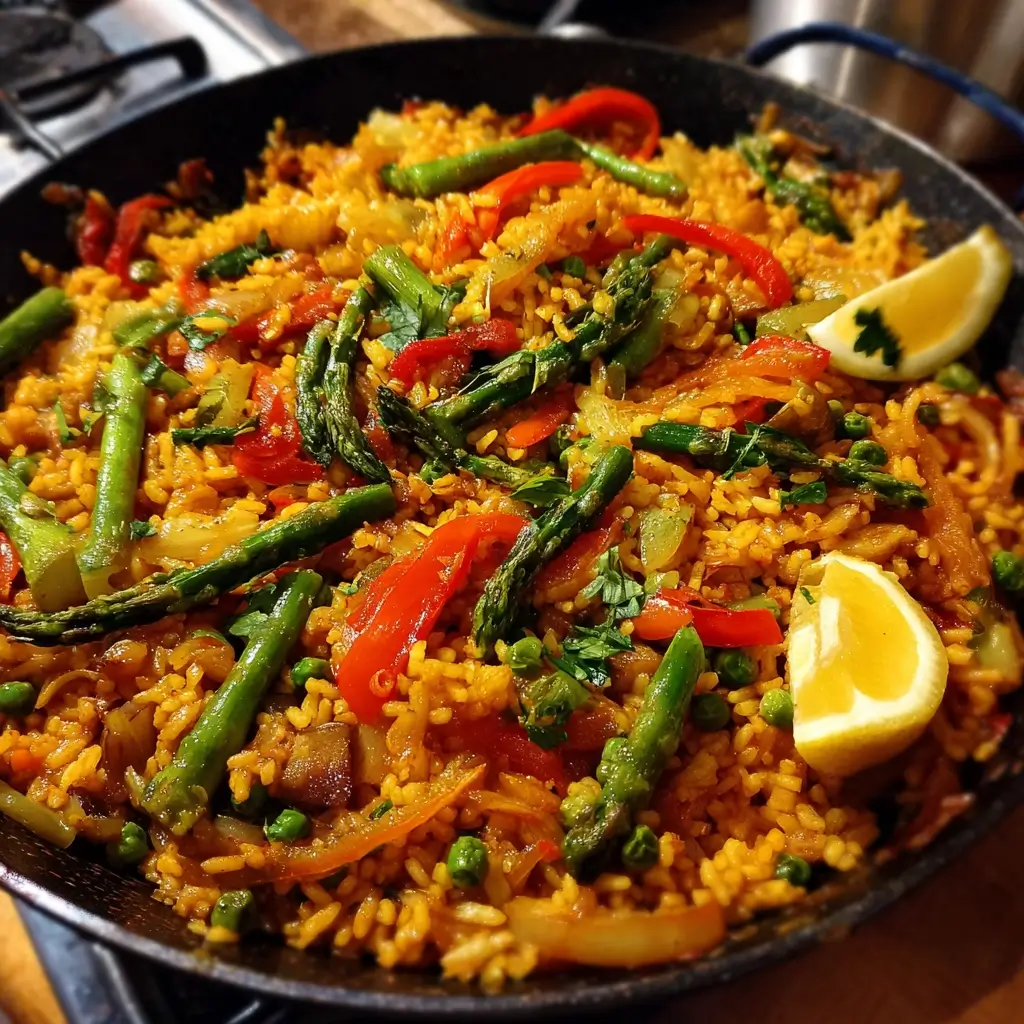
The moment the pan came to the table, the conversation stopped. All eyes were on the vibrant masterpiece, a kaleidoscope of sunny yellows, deep reds, and brilliant greens, all nestled in a bed of perfectly cooked, saffron-infused rice. The aroma was the first thing that truly captivated everyone—a warm, earthy, and slightly floral scent that promised something special. This Vegetarian Saffron Veggie Paella has become my go-to showstopper for family gatherings and special dinners. I remember the first time I made it, I was nervous. Paella felt like one of those legendary dishes, steeped in tradition and technique, that could easily go wrong. But as I followed the steps, watching the vegetables soften in the golden olive oil and the rice absorb the fragrant saffron broth, my confidence grew. The final result was better than I could have imagined. My kids, who can be notoriously picky about vegetables, were picking out their favorite bits of tender-crisp bell peppers and sweet green peas. My husband, a lover of hearty meals, was amazed at how satisfying and flavorful a vegetarian dish could be. The best part, however, was the coveted socarrat at the bottom—that crispy, toasty layer of rice that everyone fought over. This recipe isn’t just about food; it’s about creating an experience. It’s a communal, celebratory dish that brings everyone together around the table, sharing stories and scraping the last delicious grains from the pan. It has transformed our regular dinner nights into mini-Spanish fiestas, proving that a meat-free meal can be the most exciting and memorable one on the menu.
Ingredients
- Extra Virgin Olive Oil (1/4 cup): The foundation of any good paella, this provides a rich, fruity base for sautéing the vegetables and toasting the rice. Choose a quality Spanish olive oil for the most authentic flavor.
- Yellow Onion (1 large, finely chopped): This aromatic provides a sweet and savory backbone to the sofrito, the essential flavor base of the paella.
- Garlic (4 cloves, minced): Adds a pungent, aromatic depth that complements the other savory ingredients. Don’t be shy with the garlic!
- Red Bell Pepper (1, chopped): Lends a sweet, slightly fruity flavor and a brilliant splash of color to the final dish.
- Green Bell Pepper (1, chopped): Offers a slightly more grassy, fresh flavor than its red counterpart, providing a nice balance and visual contrast.
- Canned Diced Tomatoes (1 can, 15-ounce, drained): Forms a crucial part of the sofrito, adding acidity, sweetness, and moisture. Draining them helps control the liquid content of the paella.
- Smoked Paprika (2 teaspoons): This is a non-negotiable ingredient for authentic Spanish flavor. It imparts a deep, smoky essence that mimics the traditional wood-fire cooking method.
- Saffron Threads (1 teaspoon, generous pinch): The star of the show. Saffron provides the iconic golden hue and a unique, luxurious flavor that is earthy, floral, and unforgettable.
- Dry White Wine (1/2 cup, optional): Used to deglaze the pan, it adds a layer of acidity and complexity that brightens the overall flavor profile. A Pinot Grigio or Sauvignon Blanc works well.
- Vegetable Broth (6 cups, warm): This is the lifeblood of the paella. Using a high-quality, flavorful vegetable broth is key. Keeping it warm ensures the cooking process isn’t interrupted.
- Bomba or Calasparra Rice (3 cups): This is the traditional short-grain rice for paella. Its unique ability to absorb three times its volume in liquid without becoming mushy is essential for the perfect texture.
- Artichoke Hearts (1 can, 14-ounce, drained and quartered): Adds a tender texture and a slightly tangy, nutty flavor that pairs wonderfully with the other vegetables.
- Green Peas (1 cup, frozen): Thrown in near the end of cooking, these add a pop of sweetness, color, and a classic paella texture.
- Green Beans (1 cup, trimmed and cut into 1-inch pieces): Provide a delightful crunch and fresh, green flavor.
- Salt and Freshly Ground Black Pepper (to taste): Essential for seasoning and bringing all the flavors together.
- Fresh Parsley (for garnish, chopped): Adds a final touch of fresh, herbaceous brightness.
- Lemon Wedges (for serving): A squeeze of fresh lemon juice just before eating cuts through the richness and elevates all the flavors.
Instructions
- Prepare the Saffron Broth: In a medium saucepan, gently warm the 6 cups of vegetable broth over low heat. Do not let it boil. Crumble the saffron threads into the warm broth. Stir gently and let the saffron “bloom” for at least 15 minutes, infusing the broth with its magnificent color and aroma. Keep the broth warm on the lowest heat setting.
- Start the Sofrito: Heat the olive oil in a large paella pan or a wide, flat-bottomed skillet over medium heat. Once the oil is shimmering, add the chopped yellow onion and a pinch of salt. Sauté for 5-7 minutes, until the onion becomes soft and translucent.
- Build the Flavor Base: Add the minced garlic and chopped red and green bell peppers to the pan. Continue to cook, stirring occasionally, for another 5 minutes, until the peppers have softened slightly.
- Incorporate Spices and Tomatoes: Stir in the smoked paprika, cooking for about 30 seconds until fragrant. This toasting step is crucial for releasing the spice’s full flavor. Add the drained diced tomatoes and cook for another 5 minutes, allowing the mixture to meld and the liquid from the tomatoes to evaporate, creating a thick, jam-like base. This concentrated flavor base is your sofrito.
- Deglaze the Pan (Optional): If using, pour in the white wine. Use a wooden spoon to scrape up any browned bits (the fond) from the bottom of the pan. Let the wine bubble and cook until it has almost completely evaporated, about 2-3 minutes.
- Add the Rice: Pour the Bomba rice into the pan, spreading it in an even layer. Stir the rice for 1-2 minutes, coating it thoroughly with the sofrito and toasting it slightly. This helps the grains remain separate during cooking.
- Pour in the Broth: Carefully pour the warm saffron-infused vegetable broth over the rice. Give the pan a gentle shake or one final, brief stir to ensure the rice is evenly distributed. From this point on, do not stir the rice again. This is the most important rule for achieving a perfect paella texture and developing the socarrat.
- Initial Simmer: Bring the liquid to a strong simmer over medium-high heat. Let it cook vigorously for about 10 minutes, uncovered. The rice will be bubbling across the entire surface.
- Add the Vegetables and Reduce Heat: Reduce the heat to low. Artfully arrange the green beans and quartered artichoke hearts over the top of the rice. Do not push them down or stir them in. Let the paella continue to simmer gently over low heat for another 10-12 minutes, or until the rice has absorbed most of the liquid.
- Final Touches: In the last 5 minutes of cooking, scatter the frozen green peas over the top.
- Create the Socarrat: Once all the liquid appears to be absorbed, turn the heat up to medium-high for about 60-90 seconds. Listen carefully for a faint crackling or popping sound, and you might smell a slightly toasty aroma. This is the sound of the bottom layer of rice crisping up to form the delicious socarrat. Be careful not to burn it—this step requires your full attention.
- Rest the Paella: Remove the pan from the heat. Cover it loosely with aluminum foil or a clean kitchen towel and let it rest for a non-negotiable 10 minutes. This resting period allows the rice to finish steaming, absorb any remaining moisture, and lets the flavors settle and meld together beautifully.
- Garnish and Serve: Uncover the paella. Garnish generously with fresh chopped parsley and arrange lemon wedges around the edge of the pan. Serve immediately, directly from the pan.
Nutrition Facts
- Servings: 6-8
- Calories per serving: Approximately 450-550 kcal
- Rich in Fiber: Packed with a wide variety of vegetables like bell peppers, green beans, and artichokes, this dish is an excellent source of dietary fiber, which is crucial for digestive health and promoting a feeling of fullness.
- Source of Complex Carbohydrates: The Bomba rice provides sustained energy through complex carbohydrates, making this a satisfying and substantial meal without the post-meal slump.
- Loaded with Vitamins and Antioxidants: The colorful array of vegetables and the use of tomatoes and garlic make this paella rich in vitamins like Vitamin C and A, as well as powerful antioxidants that help combat cellular damage.
- Heart-Healthy Fats: The primary fat source is extra virgin olive oil, a monounsaturated fat celebrated for its benefits to cardiovascular health.
- Naturally Low in Saturated Fat: As a completely plant-based dish, this paella is naturally free of cholesterol and very low in saturated fats, making it a heart-conscious choice for a celebratory meal.
Preparation Time
This celebratory dish requires a bit of patience, but the results are more than worth the effort. The total time is approximately 1 hour and 15 minutes. This breaks down into about 25 minutes of active preparation time (chopping vegetables, measuring ingredients, and starting the sofrito) and about 50 minutes of cooking and resting time, much of which is hands-off, allowing you to enjoy the wonderful aromas filling your kitchen.
How to Serve
Serving paella is an event in itself. To make the most of this beautiful dish, present it in a way that highlights its communal and festive nature.
- Family-Style Centerpiece:
- The most traditional and impressive way to serve paella is directly from the pan it was cooked in.
- Place a trivet in the center of your dining table and set the hot paella pan on top.
- Provide large serving spoons and let guests serve themselves, making sure everyone gets a chance to scrape the bottom for some of that prized socarrat.
- Essential Garnishes and Accompaniments:
- Lemon Wedges: Always serve with plenty of fresh lemon wedges. A final squeeze of citrus juice right before eating brightens all the flavors and cuts through the richness of the rice.
- Fresh Herbs: A generous sprinkle of freshly chopped flat-leaf parsley adds a burst of color and a fresh, peppery note.
- Simple Green Salad: A lightly dressed salad with a simple vinaigrette is the perfect side. It provides a crisp, cool contrast to the warm, savory paella.
- Crusty Bread: Offer slices of warm, crusty bread to soak up any leftover flavors from the plate.
- Wine Pairing Suggestions:
- Spanish Whites: An Albariño from the Rías Baixas region of Spain is a classic pairing. Its crisp acidity, citrus notes, and hint of salinity perfectly complement the saffron and vegetables.
- Other Crisp Whites: A dry Sauvignon Blanc or an unoaked Pinot Grigio are also excellent choices that won’t overpower the delicate flavors of the dish.
- Dry Rosé: A light, dry rosé from Provence or Spain can also be a wonderful partner, offering fruity notes that work well with the sweet peppers and tomatoes.
Additional Tips
- The Pan Matters, But Isn’t a Deal-Breaker: A traditional paella pan is wide, shallow, and has sloped sides, which promotes rapid evaporation of liquid and maximum surface area for the rice to cook in a thin layer. This is ideal for creating socarrat. If you don’t have one, use the widest, largest skillet you own, preferably stainless steel or cast iron. Avoid deep pots, as they will steam the rice instead of simmering it.
- Master the Art of Not Stirring: It feels counterintuitive, but after you add the broth, you must resist the urge to stir. Stirring releases the starch from the rice, resulting in a creamy, risotto-like texture instead of the separate, tender grains of a true paella. A gentle shake of the pan is all you need.
- Unlock Saffron’s Full Potential: Never just throw saffron threads directly into the pan. Always “bloom” them first by crumbling them into your warm broth. This simple step is the secret to extracting the maximum color and complex flavor from the expensive spice, ensuring it permeates every grain of rice.
- Embrace Seasonal Veggie Variations: This recipe is a fantastic template. Feel free to swap vegetables based on what’s in season. In the spring, add asparagus spears. In the fall, try diced butternut squash or mushrooms. Just be mindful of cooking times; add heartier vegetables with the onions and more tender ones towards the end.
- A Flavorful Broth is Non-Negotiable: The rice will absorb every bit of your cooking liquid, so its flavor is paramount. If you’re using store-bought vegetable broth, choose a high-quality, low-sodium version and taste it first. You can even enhance it by simmering it with some vegetable scraps (onion peels, carrot ends) for 20 minutes before using it.
- Use Your Senses to Find the Socarrat: Don’t just rely on a timer to create the crispy bottom layer. Turn up the heat at the end and listen. You’ll hear the sound change from a gentle bubbling to a more distinct crackling and popping. Use your nose, too; you’ll smell the rice toasting. This sensory feedback is your best guide to perfect socarrat without burning.
- The Rest is Best: Do not skip the 10-minute resting period. It’s a critical step in the cooking process. It allows the paella to cool slightly, the starches in the rice to set, and the flavors to meld into a cohesive, delicious whole. Covering it lets it gently steam, ensuring the top layer of rice is perfectly cooked.
- Prep Everything in Advance (Mise en Place): Paella cooking moves quickly once you start. Have all your vegetables chopped, your spices measured, and your saffron blooming in the broth before you even turn on the stove. This French culinary principle of mise en place (everything in its place) will make the entire process smooth, enjoyable, and stress-free.
FAQ Section
1. What is the best kind of rice for this vegetarian paella?
The absolute best rice is a Spanish short-grain variety like Bomba or Calasparra. These types of rice have a unique ability to absorb a large amount of liquid (up to three times their volume) while the grains remain firm and separate. This is what gives paella its signature texture. If you cannot find them, you can use Arborio rice (the kind used for risotto) in a pinch, but be aware that it will release more starch and may result in a creamier texture. Reduce stirring even more if using Arborio.
2. I don’t have a paella pan. Can I still make this recipe?
Yes, you can! While a paella pan is ideal, you can achieve great results with a large, wide, and relatively shallow skillet. A 12- to 15-inch cast-iron or heavy-bottomed stainless steel skillet is your best alternative. The key is to have a wide surface area to allow the rice to cook in a thin, even layer. Avoid using a deep Dutch oven or stockpot, as this will trap steam and boil the rice, preventing the formation of the crispy socarrat.
3. Is saffron absolutely necessary? It’s so expensive!
For a dish to be truly considered paella, saffron is essential. It provides the signature golden color, but more importantly, it imparts a unique, complex flavor that is earthy, floral, and slightly bitter, which cannot be replicated. While it is expensive, a little goes a long way. If the cost is a major barrier, you can substitute a half-teaspoon of turmeric to achieve a similar yellow color, but be aware that the final taste will be very different and lack the authentic paella flavor.
4. How do I store and reheat leftover paella?
Store any leftover paella in an airtight container in the refrigerator for up to 3 days. To reheat, you can use a microwave, but the best method is on the stovetop. Add the paella to a skillet over medium-low heat with a splash of water or vegetable broth to rehydrate the rice. Cover and heat until warmed through, about 5-7 minutes. The texture won’t be quite the same as when it’s fresh, but it will still be delicious.
5. How can I make this recipe vegan?
This recipe is already very close to being vegan! The only thing you need to check is your vegetable broth. Ensure that you are using a broth that is certified vegan and does not contain any hidden animal-derived ingredients. The optional white wine should also be checked, as some wines use animal products in the fining process. Look for wines that are labeled as vegan-friendly. Otherwise, all ingredients are plant-based.
6. My paella turned out mushy. What went wrong?
Mushy paella is usually caused by one of two things: using the wrong type of rice or stirring it too much. If you used a long-grain rice, it likely broke down. If you used the right rice but stirred it after adding the liquid, you released too much starch, creating a creamy, risotto-like consistency. Remember the golden rule: once the broth is in, do not stir!
7. What is socarrat and how do I know I’ve achieved it?
Socarrat is the delicious, caramelized, and crispy layer of rice that forms on the bottom of the pan. It is considered by many to be the most prized part of the paella. You’ll know you are on the right track when all the liquid has been absorbed. You then turn up the heat for a minute or two and listen for a crackling, sizzling sound. This is the rice toasting against the hot pan. Be careful, as there is a fine line between perfect socarrat and burnt rice.
8. Can I add other proteins to this vegetarian paella?
Absolutely. While this recipe is designed as a delicious vegetarian centerpiece, it can be a great base. If you want to add a plant-based protein, you could add a can of drained and rinsed chickpeas along with the artichoke hearts and green beans. They absorb the flavors of the broth beautifully and add extra substance and protein to the dish.
Vegetarian Saffron Veggie Paella
Ingredients
- Extra Virgin Olive Oil (1/4 cup): The foundation of any good paella, this provides a rich, fruity base for sautéing the vegetables and toasting the rice. Choose a quality Spanish olive oil for the most authentic flavor.
- Yellow Onion (1 large, finely chopped): This aromatic provides a sweet and savory backbone to the sofrito, the essential flavor base of the paella.
- Garlic (4 cloves, minced): Adds a pungent, aromatic depth that complements the other savory ingredients. Don’t be shy with the garlic!
- Red Bell Pepper (1, chopped): Lends a sweet, slightly fruity flavor and a brilliant splash of color to the final dish.
- Green Bell Pepper (1, chopped): Offers a slightly more grassy, fresh flavor than its red counterpart, providing a nice balance and visual contrast.
- Canned Diced Tomatoes (1 can, 15-ounce, drained): Forms a crucial part of the sofrito, adding acidity, sweetness, and moisture. Draining them helps control the liquid content of the paella.
- Smoked Paprika (2 teaspoons): This is a non-negotiable ingredient for authentic Spanish flavor. It imparts a deep, smoky essence that mimics the traditional wood-fire cooking method.
- Saffron Threads (1 teaspoon, generous pinch): The star of the show. Saffron provides the iconic golden hue and a unique, luxurious flavor that is earthy, floral, and unforgettable.
- Dry White Wine (1/2 cup, optional): Used to deglaze the pan, it adds a layer of acidity and complexity that brightens the overall flavor profile. A Pinot Grigio or Sauvignon Blanc works well.
- Vegetable Broth (6 cups, warm): This is the lifeblood of the paella. Using a high-quality, flavorful vegetable broth is key. Keeping it warm ensures the cooking process isn’t interrupted.
- Bomba or Calasparra Rice (3 cups): This is the traditional short-grain rice for paella. Its unique ability to absorb three times its volume in liquid without becoming mushy is essential for the perfect texture.
- Artichoke Hearts (1 can, 14-ounce, drained and quartered): Adds a tender texture and a slightly tangy, nutty flavor that pairs wonderfully with the other vegetables.
- Green Peas (1 cup, frozen): Thrown in near the end of cooking, these add a pop of sweetness, color, and a classic paella texture.
- Green Beans (1 cup, trimmed and cut into 1-inch pieces): Provide a delightful crunch and fresh, green flavor.
- Salt and Freshly Ground Black Pepper (to taste): Essential for seasoning and bringing all the flavors together.
- Fresh Parsley (for garnish, chopped): Adds a final touch of fresh, herbaceous brightness.
- Lemon Wedges (for serving): A squeeze of fresh lemon juice just before eating cuts through the richness and elevates all the flavors.
Instructions
- Prepare the Saffron Broth: In a medium saucepan, gently warm the 6 cups of vegetable broth over low heat. Do not let it boil. Crumble the saffron threads into the warm broth. Stir gently and let the saffron “bloom” for at least 15 minutes, infusing the broth with its magnificent color and aroma. Keep the broth warm on the lowest heat setting.
- Start the Sofrito: Heat the olive oil in a large paella pan or a wide, flat-bottomed skillet over medium heat. Once the oil is shimmering, add the chopped yellow onion and a pinch of salt. Sauté for 5-7 minutes, until the onion becomes soft and translucent.
- Build the Flavor Base: Add the minced garlic and chopped red and green bell peppers to the pan. Continue to cook, stirring occasionally, for another 5 minutes, until the peppers have softened slightly.
- Incorporate Spices and Tomatoes: Stir in the smoked paprika, cooking for about 30 seconds until fragrant. This toasting step is crucial for releasing the spice’s full flavor. Add the drained diced tomatoes and cook for another 5 minutes, allowing the mixture to meld and the liquid from the tomatoes to evaporate, creating a thick, jam-like base. This concentrated flavor base is your sofrito.
- Deglaze the Pan (Optional): If using, pour in the white wine. Use a wooden spoon to scrape up any browned bits (the fond) from the bottom of the pan. Let the wine bubble and cook until it has almost completely evaporated, about 2-3 minutes.
- Add the Rice: Pour the Bomba rice into the pan, spreading it in an even layer. Stir the rice for 1-2 minutes, coating it thoroughly with the sofrito and toasting it slightly. This helps the grains remain separate during cooking.
- Pour in the Broth: Carefully pour the warm saffron-infused vegetable broth over the rice. Give the pan a gentle shake or one final, brief stir to ensure the rice is evenly distributed. From this point on, do not stir the rice again. This is the most important rule for achieving a perfect paella texture and developing the socarrat.
- Initial Simmer: Bring the liquid to a strong simmer over medium-high heat. Let it cook vigorously for about 10 minutes, uncovered. The rice will be bubbling across the entire surface.
- Add the Vegetables and Reduce Heat: Reduce the heat to low. Artfully arrange the green beans and quartered artichoke hearts over the top of the rice. Do not push them down or stir them in. Let the paella continue to simmer gently over low heat for another 10-12 minutes, or until the rice has absorbed most of the liquid.
- Final Touches: In the last 5 minutes of cooking, scatter the frozen green peas over the top.
- Create the Socarrat: Once all the liquid appears to be absorbed, turn the heat up to medium-high for about 60-90 seconds. Listen carefully for a faint crackling or popping sound, and you might smell a slightly toasty aroma. This is the sound of the bottom layer of rice crisping up to form the delicious socarrat. Be careful not to burn it—this step requires your full attention.
- Rest the Paella: Remove the pan from the heat. Cover it loosely with aluminum foil or a clean kitchen towel and let it rest for a non-negotiable 10 minutes. This resting period allows the rice to finish steaming, absorb any remaining moisture, and lets the flavors settle and meld together beautifully.
- Garnish and Serve: Uncover the paella. Garnish generously with fresh chopped parsley and arrange lemon wedges around the edge of the pan. Serve immediately, directly from the pan.
Nutrition
- Serving Size: one normal portion
- Calories: 550