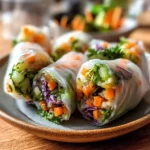
Ingredients
Here’s what you’ll need to create these delightful Veggie Rice Paper Rolls:
- Rice Paper Wrappers (20-25 sheets): These are thin, brittle, circular sheets made from rice flour and tapioca starch. They become soft and pliable when dipped in warm water. Look for a good quality brand, usually found in the Asian section of your supermarket.
- Rice Vermicelli Noodles (200g / 7oz): Thin rice noodles that cook quickly and provide a soft, satisfying texture to the rolls. They act as a neutral base, absorbing the flavors of other ingredients.
- Firm or Extra-Firm Tofu (1 block, approx. 400g / 14oz), optional: Pressed and pan-fried or baked until golden for a protein boost. You can also use pre-marinated and baked tofu.
- Large Carrots (2, medium): Julienned or finely shredded. They add a vibrant orange colour, sweetness, and a delightful crunch.
- Cucumber (1, large): Seeded and julienned. Provides a refreshing coolness and crisp texture. English cucumbers work well as they have fewer seeds.
- Red Bell Pepper (1, large): Thinly sliced. Adds a sweet, slightly tangy flavour and a beautiful red hue. Yellow or orange bell peppers can also be used for colour variation.
- Lettuce Leaves (1 small head, e.g., Butter, Romaine, or Little Gem): Washed and separated into individual leaves. These form a gentle cradle for the other fillings and prevent sharper ingredients from tearing the rice paper.
- Fresh Mint Leaves (1 cup, loosely packed): Picked from stems. Essential for that classic fresh spring roll flavour, adding a cool, aromatic note.
- Fresh Cilantro (Coriander) Leaves (1 cup, loosely packed): Picked from stems. Adds a bright, citrusy, and slightly peppery flavour.
- Fresh Thai Basil Leaves (1/2 cup, loosely packed, optional): If available, Thai basil adds a distinct anise-licorice flavour that elevates the rolls.
- Avocado (1-2, ripe): Sliced thinly. Adds a creamy texture and healthy fats. Ensure it’s ripe but still firm enough to slice.
For the Peanut Dipping Sauce (Highly Recommended):
- Creamy Peanut Butter (1/2 cup): The base of the sauce, providing richness and nutty flavour. Use natural, unsweetened if possible.
- Soy Sauce or Tamari (3 tablespoons): For a gluten-free option, use Tamari. Adds saltiness and umami.
- Rice Vinegar (2 tablespoons): Adds a tangy acidity to balance the richness of the peanut butter.
- Maple Syrup or Agave Nectar (2 tablespoons): For sweetness. Adjust to your preference. Honey can also be used if not strictly vegan.
- Lime Juice (1 tablespoon, freshly squeezed): Adds a bright, zesty kick.
- Sesame Oil (1 teaspoon): Adds a distinct nutty, toasted aroma and flavour.
- Garlic (1 clove, minced): For a pungent, savory note.
- Ginger (1 teaspoon, freshly grated): Adds warmth and a spicy zing.
- Warm Water (3-4 tablespoons, or as needed): To thin the sauce to desired consistency.
- Red Pepper Flakes (1/4 teaspoon, optional): For a touch of heat.
Instructions
Follow these steps carefully for perfectly assembled Veggie Rice Paper Rolls:
1. Prepare the Tofu (if using):
* Drain and press the tofu for at least 30 minutes to remove excess water. You can use a tofu press or place it between two plates with a heavy object on top.
* Cut the pressed tofu into thin strips, about ½ inch thick and 2-3 inches long.
* Optional: Marinate the tofu strips in a little soy sauce, sesame oil, and garlic powder for 15-20 minutes.
* Pan-fry the tofu strips in a lightly oiled skillet over medium-high heat until golden brown and slightly crispy on all sides (about 3-4 minutes per side). Alternatively, bake at 200°C (400°F) for 20-25 minutes, flipping halfway. Set aside to cool.
2. Cook the Rice Vermicelli Noodles:
* Bring a pot of water to a boil. Add the rice vermicelli noodles and cook according to package directions, usually for 3-5 minutes, or until tender. Be careful not to overcook them, as they can become mushy.
* Drain the noodles immediately and rinse thoroughly under cold running water to stop the cooking process and remove excess starch. This prevents them from sticking together.
* Drain well again and set aside. You can toss them with a tiny drizzle of sesame oil to prevent sticking if preparing them much ahead.
3. Prepare the Vegetables and Herbs:
* Wash all vegetables and herbs thoroughly.
* Julienne the carrots and cucumber. A mandoline slicer or a food processor with a julienne blade can make this task quicker, but a sharp knife works perfectly well.
* Thinly slice the red bell pepper.
* Separate lettuce leaves. If they are very large, you can tear them in half.
* Pick the mint, cilantro, and Thai basil leaves from their stems.
* Slice the avocado just before assembling to prevent browning. A little lime juice can help.
* Arrange all prepared vegetables, herbs, cooked noodles, and tofu (if using) on a large platter or in separate bowls for easy access during assembly. This is your “rolling station.”
4. Prepare the Rolling Station:
* Fill a shallow dish or pie plate (wider than the rice paper) with warm water (not too hot, or the rice paper will become too sticky too quickly).
* Have a clean, damp tea towel or a large, smooth cutting board ready as your rolling surface. Some people prefer a slightly damp surface to prevent the rice paper from sticking.
5. Assemble the Rice Paper Rolls:
* Take one sheet of rice paper and submerge it completely in the warm water for about 15-30 seconds, or until it becomes soft and pliable. It should still have a little bit of firmness as it will continue to soften as you fill it. Avoid oversoaking, which makes it tear easily.
* Carefully lay the softened rice paper flat on your damp rolling surface.
* Arrange the Fillings: In the lower third of the rice paper (closer to you), place a small piece of lettuce. This acts as a barrier and helps prevent sharper ingredients from tearing the paper.
* On top of the lettuce, layer a small amount of rice vermicelli noodles, a few strips of carrot, cucumber, red bell pepper, and tofu (if using). Add a few mint, cilantro, and Thai basil leaves, and a slice or two of avocado.
* Don’t overfill the roll, especially on your first few tries. It’s easier to roll a moderately filled roll tightly.
* Roll it Up:
* Start by folding the bottom edge of the rice paper (the edge closest to you) up and over the filling, tucking it in snugly.
* Fold in the left and right sides of the rice paper towards the center, like you’re folding an envelope.
* Continue rolling from the bottom up, keeping the roll tight and compact, until it’s fully sealed. The rice paper will stick to itself.
* Place the finished roll on a platter, seam-side down. Ensure rolls don’t touch each other initially, as they can stick together. You can cover them with a damp cloth if not serving immediately to prevent them from drying out.
* Repeat with the remaining rice paper sheets and fillings. It might take a couple of tries to get the hang of rolling, but you’ll quickly become proficient!
6. Prepare the Peanut Dipping Sauce:
* In a small bowl, whisk together the creamy peanut butter, soy sauce (or tamari), rice vinegar, maple syrup (or agave), lime juice, sesame oil, minced garlic, and grated ginger.
* Gradually whisk in the warm water, one tablespoon at a time, until the sauce reaches your desired consistency. It should be pourable but still thick enough to coat the rolls.
* Stir in the red pepper flakes if you like a bit of spice.
* Taste and adjust seasonings if necessary – more sweetness, acidity, or saltiness.
7. Serve:
* Arrange the Veggie Rice Paper Rolls on a serving platter.
* Serve immediately with the peanut dipping sauce on the side. You can also offer other dipping sauces like sweet chili sauce or a simple hoisin-based dip.
Nutrition
- Serving Size: one normal portion
- Calories: 220