

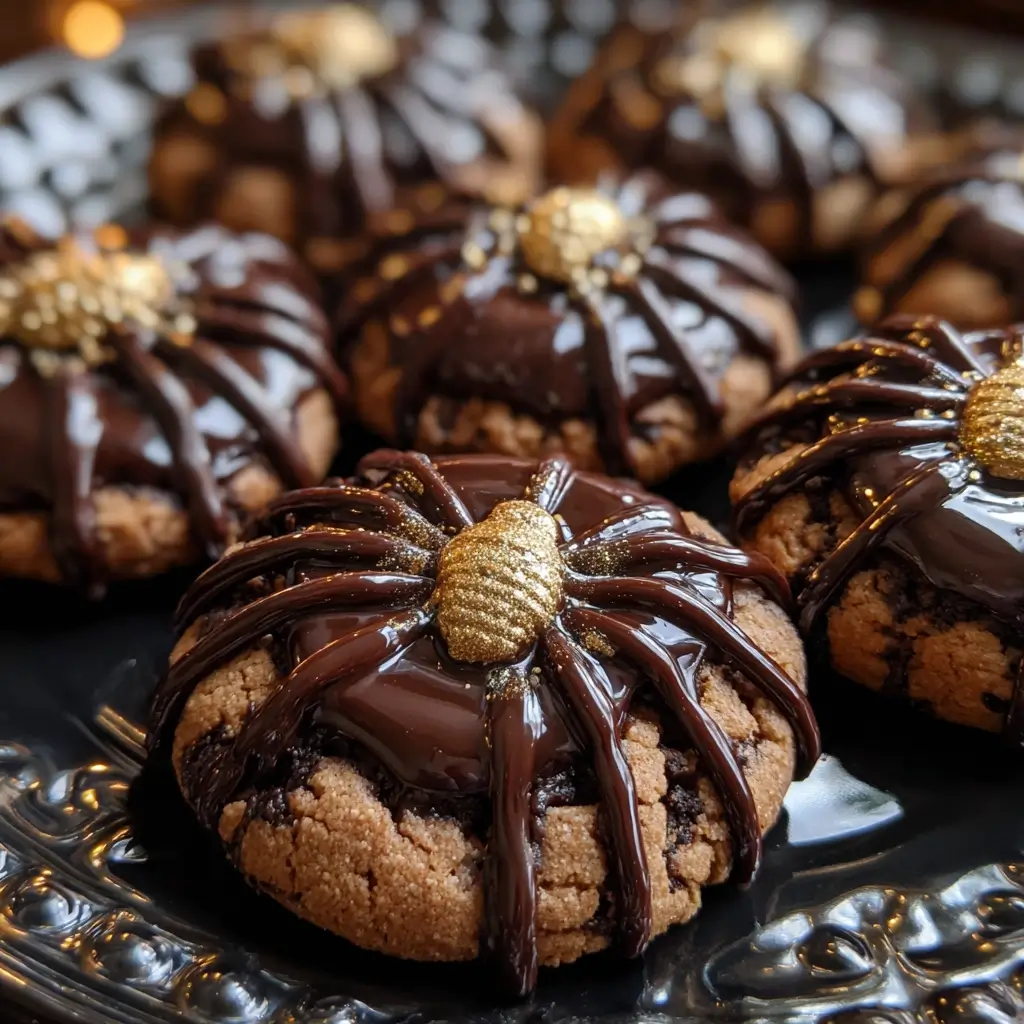

Of all the traditions my family has, our annual Halloween baking day is easily one of my favorites. Every year, as the crisp October air begins to settle in, the kitchen transforms into a deliciously spooky laboratory. We’ve tried countless recipes, from ghoulish ghost meringues to monstrous green monster rice krispie treats, but one recipe has become the undisputed champion, the one my kids beg for year after year: these incredible Chocolate Spider Cookies. The first time I made them, I wasn’t sure what to expect. Would they be too complicated? Would they actually look like spiders? The moment I pulled the first batch from the oven, their rich, chocolatey aroma filling the entire house, I knew we had a winner. But the real magic happened during the decorating phase. Watching my children’s eyes light up with a mix of delight and creative focus as they carefully piped on chocolate legs and placed the candy eyes was priceless. When my youngest held up his finished cookie, a slightly lopsided but utterly charming spider, and declared it “too cute to eat!” (before promptly gobbling it up), my heart melted. These cookies have become more than just a treat; they are the centerpiece of our Halloween dessert table, the star of the school bake sale, and the perfect fuel for a night of trick-or-treating. They are soft, chewy, intensely chocolatey, and just the right amount of spooky to be a festive masterpiece. This recipe isn’t just about making cookies; it’s about making memories, one chocolate spider at a time.
Ingredients
Here is everything you will need to craft these delightfully spooky chocolate spider cookies. Using high-quality ingredients will ensure the best possible flavor and texture for your festive treats.
- 1 ½ cups All-Purpose Flour: This forms the structural foundation of our cookies, giving them the perfect balance of softness and chewiness.
- ⅔ cup Unsweetened Cocoa Powder: This is where the deep, rich chocolate flavor comes from. Using unsweetened powder gives you full control over the sweetness.
- 1 teaspoon Baking Soda: Our leavening agent, which reacts with the acidic ingredients to give the cookies a gentle lift, preventing them from being too dense.
- ¼ teaspoon Salt: A crucial ingredient in any sweet recipe, salt enhances the chocolate flavor and balances the overall sweetness.
- ½ cup Unsalted Butter (softened): Using softened, room-temperature butter is key to achieving a light, creamy texture when mixed with the sugars.
- ½ cup Granulated Sugar: Provides the classic, clean sweetness and contributes to the cookies’ spread and crisp edges.
- ½ cup Packed Brown Sugar: Adds moisture and a hint of caramel flavor, which results in a chewier, softer cookie.
- 1 large Egg (room temperature): Acts as a binder, holding all the ingredients together and adding richness.
- 1 teaspoon Vanilla Extract: A wonderful flavor enhancer that complements the chocolate and adds aromatic depth.
- 24 Chocolate Truffles or Malted Milk Balls: These will form the “body” of our spiders. Choose a smooth, round chocolate candy for the best effect.
- 48 Candy Eyeballs: Essential for bringing our spiders to life! These small edible decorations add a ton of personality.
- ½ cup Semi-Sweet Chocolate Chips: To be melted down for “gluing” on the spider bodies and piping the delicate, creepy legs.
Instructions
Follow these step-by-step instructions carefully to create perfectly baked and decorated Chocolate Spider Cookies. The process is divided into making the cookie base and then assembling your spooky spiders.
Part 1: Making the Chocolate Cookie Base
- Preheat and Prepare: Begin by preheating your oven to 350°F (175°C). Line two large baking sheets with parchment paper. This prevents the cookies from sticking and makes for incredibly easy cleanup.
- Combine Dry Ingredients: In a medium-sized mixing bowl, whisk together the all-purpose flour, unsweetened cocoa powder, baking soda, and salt. Whisking is important as it aerates the flour and ensures all the dry ingredients are evenly distributed, which is crucial for a uniform cookie. Set this bowl aside.
- Cream Butter and Sugars: In a separate, larger bowl (or the bowl of a stand mixer fitted with the paddle attachment), beat the softened unsalted butter, granulated sugar, and packed brown sugar together on medium-high speed. Continue beating for about 2-3 minutes, or until the mixture is light, pale, and fluffy. This process, known as creaming, incorporates air into the dough, which is essential for a tender cookie.
- Add Wet Ingredients: Scrape down the sides of the bowl with a rubber spatula. Add the room-temperature egg and vanilla extract to the creamed butter and sugar mixture. Beat on medium speed until everything is well combined and the mixture is smooth.
- Combine Wet and Dry: Reduce the mixer speed to low and gradually add the dry ingredient mixture to the wet ingredients. Mix only until the flour is just incorporated. Be careful not to overmix at this stage; overmixing develops the gluten in the flour, which can lead to tough, dense cookies instead of soft, chewy ones. The dough will be thick and slightly sticky.
- Shape the Cookies: Using a medium cookie scoop (about 1.5 tablespoons), scoop out portions of dough and roll them into smooth balls between your palms. Place the dough balls about 2 inches apart on the prepared baking sheets to allow for spreading.
- Create an Indent: Using the back of a teaspoon or your thumb, gently press down in the center of each dough ball to create a small, shallow well. This indent is where the chocolate truffle “body” of the spider will nestle after baking.
- Bake: Place the baking sheets in the preheated oven and bake for 8-10 minutes. The cookies are done when the edges are set and the centers look soft and slightly underdone. It’s better to slightly underbake them to ensure they remain chewy once cooled.
- Press in the “Body”: As soon as you remove the cookies from the oven, while they are still hot and pliable, gently press one chocolate truffle into the indent of each cookie. The heat from the cookie will slightly melt the bottom of the truffle, helping it adhere.
- Cool Completely: Let the cookies cool on the baking sheet for 5-10 minutes before transferring them to a wire rack to cool completely. It is absolutely essential that the cookies are at room temperature before you begin decorating with the chocolate legs. If they are even slightly warm, the piped chocolate will melt and lose its shape.
Part 2: Decorating Your Spiders
- Melt the Chocolate: Place the semi-sweet chocolate chips in a microwave-safe bowl. Microwave in 20-second intervals, stirring well after each interval, until the chocolate is completely melted and smooth. Be careful not to overheat it, or it can become grainy. Alternatively, you can melt the chocolate using a double boiler.
- Prepare for Piping: Spoon the melted chocolate into a small piping bag fitted with a small round tip (like a Wilton #2 or #3), or into a small zip-top bag. If using a zip-top bag, simply snip off a tiny corner to pipe from.
- Pipe the Legs: Carefully pipe four spider legs on each side of the chocolate truffle body, extending out onto the cookie. Aim for eight legs in total for each spider. You can make them straight or give them a little “knee” bend in the middle for a more realistic, creepy-crawly look. Take your time with this step.
- Add the Eyes: While the piped chocolate for the legs is still wet, you can use a tiny dab of the remaining melted chocolate as “glue” to attach the candy eyeballs. Place two candy eyes onto the front of the chocolate truffle body. This is the step that truly brings your spiders to life!
- Let it Set: Allow the cookies to sit at room temperature for at least an hour, or until the piped chocolate legs have completely hardened. To speed up the process, you can place the decorated cookies in the refrigerator for about 10-15 minutes. Once set, they are ready to be served and admired!
Nutrition Facts
This recipe makes approximately 24 cookies. The nutritional information is an estimate per cookie.
- Servings: 24 Cookies
- Calories per serving: Approx. 165 kcal. A perfectly portioned, festive indulgence for the Halloween season.
- Fat: Approx. 8g. Primarily from the butter and chocolate, contributing to the rich flavor and satisfying texture.
- Carbohydrates: Approx. 22g. The main source of energy, coming from the sugars and flour that make these cookies a delicious treat.
- Protein: Approx. 2g. A small amount of protein, mainly from the flour and egg, which helps give the cookies structure.
- Sugar: Approx. 14g. The key to their sweetness, balanced by the rich, unsweetened cocoa powder.
Preparation Time
The entire process, from gathering your ingredients to having fully decorated and set cookies, can be broken down as follows. The total time is approximately 1 hour and 45 minutes, with most of that being inactive cooling and setting time.
- Active Preparation Time: 25 minutes (Mixing the dough, shaping the cookies)
- Baking Time: 8-10 minutes
- Cooling and Decorating Time: Approximately 1 hour and 10 minutes (This includes time for the cookies to cool completely and for the chocolate decorations to harden)
How to Serve
These Chocolate Spider Cookies are versatile and can be presented in many fun and creative ways to enhance the Halloween spirit.
- On a Spooky Party Platter:
- Arrange the cookies on a large black or orange platter to make their features pop.
- Scatter plastic spiders and spider web decorations (the cottony kind) around the cookies for a fully immersive effect.
- Serve them alongside other Halloween-themed treats like “Ghostly Brownie Bites” or a bowl of “Monster Munch” snack mix.
- As a “Creature Feature” Dessert:
- Serve each cookie on a small plate with a “web” of white icing or melted white chocolate drizzled onto the plate first.
- Pair with a glass of cold milk, or for a more festive touch, a “Witches’ Brew” punch (green sherbet and lemon-lime soda).
- For an adult gathering, a dark coffee or an espresso martini complements the deep chocolate flavor wonderfully.
- Packaged as Halloween Party Favors:
- Place individual cookies in small, clear cellophane bags.
- Tie the bags with orange and black ribbons.
- Attach a small, spooky tag that says “Happy Halloween!” or “A Spooky Treat For You!” for a personalized touch that guests can take home.
- For a Classroom Halloween Party:
- Arrange the cookies in a large, flat container for easy transport.
- They are an instant hit with kids and are often a welcome alternative to store-bought candy. (Always check for school policies on homemade treats and allergies first).
Additional Tips
To ensure your Chocolate Spider Cookies are a spectacular success every time, here are eight additional tips from my own kitchen experiments.
- Chill The Dough for Perfect Texture: If you have the time, chilling the cookie dough for at least 30 minutes before scooping and baking can make a big difference. Chilling solidifies the fat (butter), which means the cookies spread less in the oven. This results in a thicker, chewier cookie and also deepens the chocolate flavor.
- Room Temperature Ingredients are Non-Negotiable: For the best-emulsified batter, ensure your butter and egg are truly at room temperature. Cold ingredients don’t mix together as smoothly, which can affect the final texture. To quickly bring an egg to room temperature, place it in a bowl of warm (not hot) water for 5-10 minutes.
- Don’t Overbake!: The key to a soft, chewy chocolate cookie is to pull it from the oven when it still looks slightly underdone in the very center. The cookies will continue to cook from the residual heat on the baking sheet. Overbaking will lead to a dry, crumbly cookie.
- Experiment with Spider “Bodies”: While chocolate truffles are a fantastic choice, feel free to get creative! Mini peanut butter cups (placed upside down), Rolo candies, or even large chocolate-covered caramels make for delicious and visually interesting spider bodies.
- Master the Chocolate Melting: When melting your chocolate for the legs, patience is key. If you overheat it in the microwave, it can “seize” and become a thick, clumpy mess. If this happens, try stirring in a tiny amount (about ½ teaspoon) of neutral oil or shortening to smooth it out.
- Practice Your Piping: If you’re nervous about piping the legs directly onto the cookies, do a few practice runs on a piece of parchment paper first. This will help you get a feel for the pressure and speed needed to create consistent lines.
- Get the Kids Involved: This is a fantastic recipe for baking with children. Let them help with mixing the dry ingredients, rolling the dough into balls, pressing the indents, and of course, the best part—placing the chocolate bodies and candy eyes. It makes the process a memorable family activity.
- Long-Term Storage for a Head Start: You can make the cookie dough well in advance. It can be refrigerated for up to 3 days or frozen for up to 3 months. If freezing, scoop the dough into balls first, freeze them solid on a baking sheet, then transfer them to a freezer bag. You can bake them directly from frozen; just add 1-2 minutes to the baking time.
Frequently Asked Questions (FAQ)
Here are answers to some of the most common questions about making this Chocolate Spider Cookies recipe.
1. Can I make these cookies without a stand mixer?
Absolutely! While a stand mixer makes creaming the butter and sugar easier, you can achieve the same results with a good quality electric hand mixer. If you don’t have either, you can even mix this dough by hand with a wooden spoon and a bit of elbow grease. Just be sure to beat the butter and sugars together vigorously until they are noticeably lighter in color and fluffy.
2. My piped chocolate legs are smudging and not holding their shape. What did I do wrong?
This almost always happens for one of two reasons. First, the cookies may not have been cooled completely before you started piping. Any residual warmth will melt the piped chocolate. Second, your melted chocolate might be too warm or too thin. Let it cool for a few minutes after melting before spooning it into your piping bag to allow it to thicken slightly.
3. What can I use if I can’t find candy eyeballs?
If you can’t find pre-made candy eyeballs, you have several creative options. You can use a dab of white frosting with a mini chocolate chip or a bit of black frosting pressed into the center. Alternatively, you can use small white nonpareils or tiny pieces of a white Tic Tac for the eyes.
4. Can I make these cookies gluten-free?
Yes, you can adapt this recipe to be gluten-free. Simply substitute the all-purpose flour with a high-quality 1-to-1 gluten-free baking flour blend (one that contains xanthan gum). The texture will be slightly different, potentially a bit more delicate, but they will still be delicious.
5. Why did my cookies spread out too thin?
Cookie spread is usually caused by dough that is too warm or butter that was too soft (melted instead of softened). This is where the tip about chilling the dough comes in handy. Chilling for 30-60 minutes before baking is the best way to prevent excessive spreading. Also, ensure your oven is fully preheated before the cookies go in.
6. How should I store the finished Chocolate Spider Cookies?
Store the cookies in a single layer in an airtight container at room temperature. Stacking them can cause the delicate chocolate legs to break. They will stay fresh and chewy for up to 4-5 days. If you need to stack them, place a sheet of parchment paper between the layers.
7. Can I use a different type of cookie base for the spiders?
Of course! While this rich chocolate cookie base is fantastic, you can use this decorating technique on other cookies. Peanut butter cookies are a classic and delicious choice. You could also use a simple sugar cookie or even a chewy ginger molasses cookie for a different flavor profile. Just make sure to press the truffle “body” in as soon as they come out of the oven.
8. My melted chocolate is too thick to pipe thin legs. How can I fix it?
If your melted chocolate is too thick, you can thin it out by stirring in a very small amount of a neutral-flavored oil, such as canola or vegetable oil, or melted coconut oil. Start with just ¼ teaspoon at a time, stirring well after each addition, until you reach a smooth, pipeable consistency. Avoid adding water, as it will cause the chocolate to seize.

Chocolate Spider Cookies Recipe
Ingredients
Here is everything you will need to craft these delightfully spooky chocolate spider cookies. Using high-quality ingredients will ensure the best possible flavor and texture for your festive treats.
- 1 ½ cups All-Purpose Flour: This forms the structural foundation of our cookies, giving them the perfect balance of softness and chewiness.
- ⅔ cup Unsweetened Cocoa Powder: This is where the deep, rich chocolate flavor comes from. Using unsweetened powder gives you full control over the sweetness.
- 1 teaspoon Baking Soda: Our leavening agent, which reacts with the acidic ingredients to give the cookies a gentle lift, preventing them from being too dense.
- ¼ teaspoon Salt: A crucial ingredient in any sweet recipe, salt enhances the chocolate flavor and balances the overall sweetness.
- ½ cup Unsalted Butter (softened): Using softened, room-temperature butter is key to achieving a light, creamy texture when mixed with the sugars.
- ½ cup Granulated Sugar: Provides the classic, clean sweetness and contributes to the cookies’ spread and crisp edges.
- ½ cup Packed Brown Sugar: Adds moisture and a hint of caramel flavor, which results in a chewier, softer cookie.
- 1 large Egg (room temperature): Acts as a binder, holding all the ingredients together and adding richness.
- 1 teaspoon Vanilla Extract: A wonderful flavor enhancer that complements the chocolate and adds aromatic depth.
- 24 Chocolate Truffles or Malted Milk Balls: These will form the “body” of our spiders. Choose a smooth, round chocolate candy for the best effect.
- 48 Candy Eyeballs: Essential for bringing our spiders to life! These small edible decorations add a ton of personality.
- ½ cup Semi-Sweet Chocolate Chips: To be melted down for “gluing” on the spider bodies and piping the delicate, creepy legs.
Instructions
Follow these step-by-step instructions carefully to create perfectly baked and decorated Chocolate Spider Cookies. The process is divided into making the cookie base and then assembling your spooky spiders.
Part 1: Making the Chocolate Cookie Base
- Preheat and Prepare: Begin by preheating your oven to 350°F (175°C). Line two large baking sheets with parchment paper. This prevents the cookies from sticking and makes for incredibly easy cleanup.
- Combine Dry Ingredients: In a medium-sized mixing bowl, whisk together the all-purpose flour, unsweetened cocoa powder, baking soda, and salt. Whisking is important as it aerates the flour and ensures all the dry ingredients are evenly distributed, which is crucial for a uniform cookie. Set this bowl aside.
- Cream Butter and Sugars: In a separate, larger bowl (or the bowl of a stand mixer fitted with the paddle attachment), beat the softened unsalted butter, granulated sugar, and packed brown sugar together on medium-high speed. Continue beating for about 2-3 minutes, or until the mixture is light, pale, and fluffy. This process, known as creaming, incorporates air into the dough, which is essential for a tender cookie.
- Add Wet Ingredients: Scrape down the sides of the bowl with a rubber spatula. Add the room-temperature egg and vanilla extract to the creamed butter and sugar mixture. Beat on medium speed until everything is well combined and the mixture is smooth.
- Combine Wet and Dry: Reduce the mixer speed to low and gradually add the dry ingredient mixture to the wet ingredients. Mix only until the flour is just incorporated. Be careful not to overmix at this stage; overmixing develops the gluten in the flour, which can lead to tough, dense cookies instead of soft, chewy ones. The dough will be thick and slightly sticky.
- Shape the Cookies: Using a medium cookie scoop (about 1.5 tablespoons), scoop out portions of dough and roll them into smooth balls between your palms. Place the dough balls about 2 inches apart on the prepared baking sheets to allow for spreading.
- Create an Indent: Using the back of a teaspoon or your thumb, gently press down in the center of each dough ball to create a small, shallow well. This indent is where the chocolate truffle “body” of the spider will nestle after baking.
- Bake: Place the baking sheets in the preheated oven and bake for 8-10 minutes. The cookies are done when the edges are set and the centers look soft and slightly underdone. It’s better to slightly underbake them to ensure they remain chewy once cooled.
- Press in the “Body”: As soon as you remove the cookies from the oven, while they are still hot and pliable, gently press one chocolate truffle into the indent of each cookie. The heat from the cookie will slightly melt the bottom of the truffle, helping it adhere.
- Cool Completely: Let the cookies cool on the baking sheet for 5-10 minutes before transferring them to a wire rack to cool completely. It is absolutely essential that the cookies are at room temperature before you begin decorating with the chocolate legs. If they are even slightly warm, the piped chocolate will melt and lose its shape.
Part 2: Decorating Your Spiders
- Melt the Chocolate: Place the semi-sweet chocolate chips in a microwave-safe bowl. Microwave in 20-second intervals, stirring well after each interval, until the chocolate is completely melted and smooth. Be careful not to overheat it, or it can become grainy. Alternatively, you can melt the chocolate using a double boiler.
- Prepare for Piping: Spoon the melted chocolate into a small piping bag fitted with a small round tip (like a Wilton #2 or #3), or into a small zip-top bag. If using a zip-top bag, simply snip off a tiny corner to pipe from.
- Pipe the Legs: Carefully pipe four spider legs on each side of the chocolate truffle body, extending out onto the cookie. Aim for eight legs in total for each spider. You can make them straight or give them a little “knee” bend in the middle for a more realistic, creepy-crawly look. Take your time with this step.
- Add the Eyes: While the piped chocolate for the legs is still wet, you can use a tiny dab of the remaining melted chocolate as “glue” to attach the candy eyeballs. Place two candy eyes onto the front of the chocolate truffle body. This is the step that truly brings your spiders to life!
- Let it Set: Allow the cookies to sit at room temperature for at least an hour, or until the piped chocolate legs have completely hardened. To speed up the process, you can place the decorated cookies in the refrigerator for about 10-15 minutes. Once set, they are ready to be served and admired!
Nutrition
- Serving Size: one normal portion
- Calories: 165
- Sugar: 14g
- Fat: 8g
- Carbohydrates: 22g
- Protein: 2g