
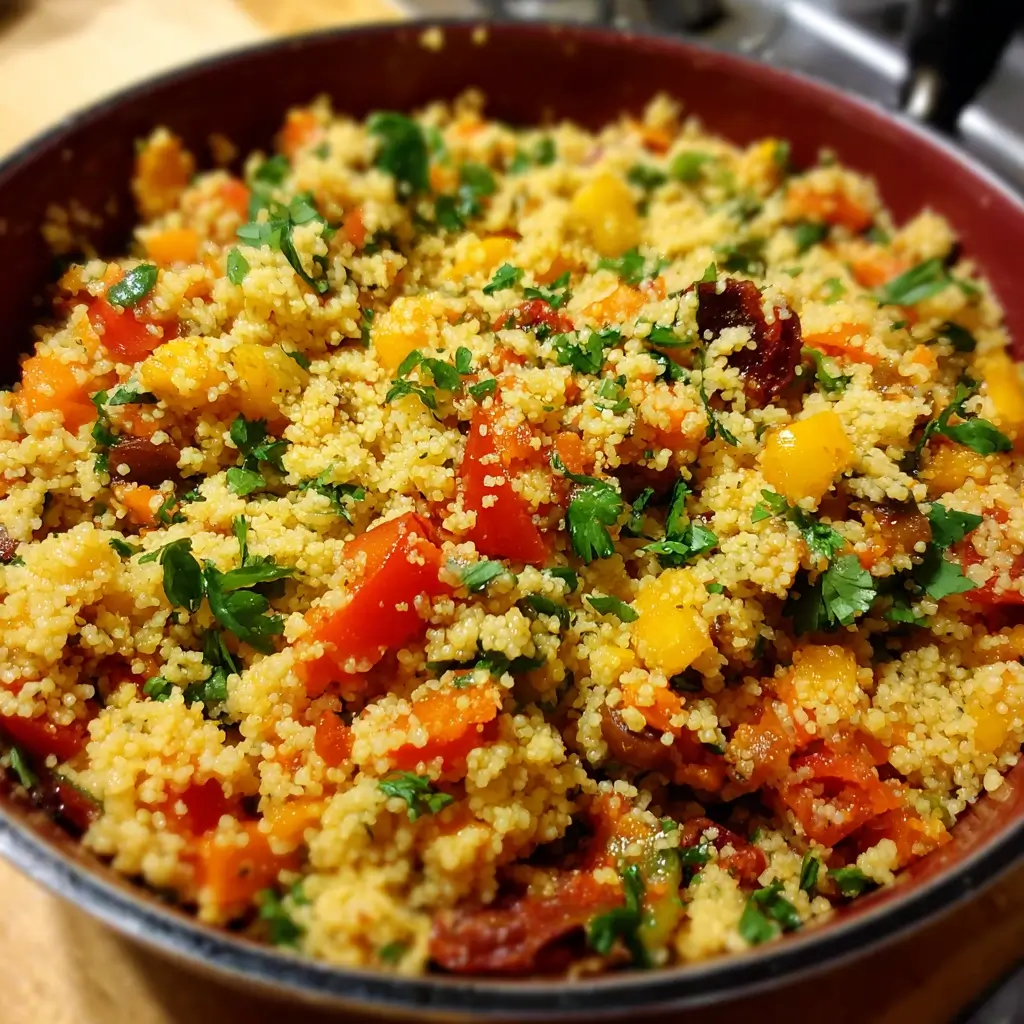
It all started on a hectic Tuesday evening. The kind of day where the thought of cooking an elaborate meal felt like climbing a mountain. I rummaged through the pantry, my eyes glazing over the usual suspects: pasta, rice, more pasta. But then, tucked away behind a bag of lentils, I found a box of pearl couscous. A lightbulb went off. I’d always loved the texture of fried rice, that satisfying chew and the way each grain seems to soak up the savory sauce. Why couldn’t I do the same with couscous? The experiment that followed has since become a legend in our household, affectionately known as “the weeknight wonder.” This Easy Veggie Fried Couscous is more than just a recipe; it’s a culinary revelation. The pearl couscous, with its delightful, slightly chewy bite, fries up beautifully, developing a subtle toastiness that you just don’t get from steaming alone. It became the perfect canvas for a rainbow of crisp-tender vegetables and a savory, umami-packed sauce. The first time I served it, my family was skeptical. “Couscous… fried?” But after the first bite, the silence was broken by a chorus of “Wow, what is this? It’s amazing!” It’s now our go-to for a quick, healthy, and incredibly flavorful meal that feels both comforting and excitingly different. It’s the perfect way to clean out the vegetable crisper and have a stunning dinner on the table in under 40 minutes.
Ingredients
Here is everything you will need to create this vibrant and satisfying dish. Each component is chosen for its specific contribution to the final harmony of flavors and textures, but feel free to make substitutions based on what you have available.
- 1 ½ cups Pearl (Israeli) Couscous, uncooked: This is the star of the show. Unlike its finer Moroccan counterpart, pearl couscous consists of larger, toasted semolina spheres. Their size and firm texture are essential for this recipe, as they hold up beautifully to stir-frying without becoming mushy, providing a delightful al dente “pop” in every bite.
- 2 tablespoons Olive Oil, divided: A versatile and heart-healthy oil used for the initial cooking of the vegetables. We divide it to ensure the vegetables are cooked perfectly before the other ingredients are added. You can also use avocado oil or another neutral-flavored oil.
- 1 tablespoon Toasted Sesame Oil: This is a finishing oil, not a cooking oil. Its deep, nutty, and aromatic flavor is a cornerstone of many Asian-inspired dishes. Adding it towards the end of the cooking process preserves its potent fragrance and taste, infusing the entire dish with a rich, savory aroma.
- 1 medium Yellow Onion, finely chopped: The foundational aromatic. Sautéing the onion until soft and translucent builds a layer of sweet, savory flavor that serves as the base for the entire dish.
- 2 cloves Garlic, minced: An indispensable aromatic that provides a pungent, savory kick. Mincing it finely allows its flavor to distribute evenly throughout the couscous.
- 1 tablespoon Fresh Ginger, grated: Ginger adds a warm, zesty, and slightly peppery note that cuts through the richness of the sauce and brightens the overall flavor profile.
- 1 large Carrot, finely diced: Carrots bring a subtle sweetness and a firm, satisfying crunch. Dicing them finely ensures they cook to a perfect crisp-tender texture in the short stir-frying time.
- 1 Red Bell Pepper, diced: Chosen for its vibrant color and sweet, fruity flavor, the red bell pepper adds visual appeal and a juicy crunch that contrasts beautifully with the chewy couscous.
- 1 cup Frozen Peas: A convenient and easy way to add a pop of color, sweetness, and a tender texture. They are added straight from the freezer towards the end of cooking, so they remain bright green and perfectly cooked.
- 2 Large Eggs, lightly beaten: A classic component of fried rice that we’ve borrowed for this dish. When quickly scrambled into the couscous, the eggs add a wonderful richness, a boost of protein, and a soft, fluffy texture.
- ¼ cup Low-Sodium Soy Sauce (or Tamari for gluten-free): This is the primary source of umami and savory saltiness in our sauce. Using a low-sodium version gives you better control over the final salt content of the dish.
- 2 Green Onions (Scallions), thinly sliced: Used as a garnish, green onions provide a fresh, mild oniony bite and a splash of vibrant green. They are added at the very end to maintain their crispness and flavor.
- Optional Garnish: Toasted Sesame Seeds and Fresh Cilantro: Toasted sesame seeds add a nutty crunch, while fresh cilantro lends a bright, citrusy, and herbaceous note that lifts all the other flavors.
Instructions
Follow these step-by-step instructions carefully to achieve the perfect texture and flavor. The key to success in this recipe is preparing all your ingredients beforehand (a technique known as “mise en place”) and ensuring your couscous is cooked and cooled.
- Cook the Couscous: Begin by cooking the pearl couscous according to the package directions. Typically, this involves toasting the dry couscous in a saucepan with a little oil for a minute until fragrant, then adding water or vegetable broth (about 2 cups for 1 ½ cups of couscous), bringing it to a boil, then simmering, covered, for about 8-10 minutes until the liquid is absorbed and the couscous is al dente. It’s crucial not to overcook it. Once cooked, fluff the couscous with a fork and spread it out on a large baking sheet in a single layer. This allows it to cool down quickly and prevents the grains from steaming further and clumping together. A cool, dry couscous is essential for a “fried” texture rather than a mushy one. Let it cool for at least 15-20 minutes.
- Prepare Your Workstation: While the couscous cools, this is the perfect time to prepare all your other ingredients. Finely chop the onion, mince the garlic, grate the ginger, and dice the carrot and red bell pepper. Slice the green onions and have your frozen peas, beaten eggs, and sauce ingredients measured and ready to go. Stir-frying is a fast process, so you won’t have time to chop once you start cooking.
- Sauté the Aromatics and Hard Vegetables: Place a large skillet, wok, or Dutch oven over medium-high heat. Add 1 tablespoon of the olive oil. Once the oil is shimmering, add the chopped yellow onion and diced carrots. Sauté for 3-4 minutes, stirring frequently, until the onion begins to soften and become translucent. This step builds the foundational flavor of your dish.
- Add Garlic, Ginger, and Peppers: Add the minced garlic and grated ginger to the skillet. Stir constantly for about 30 seconds until they become highly fragrant. Be careful not to burn the garlic. Immediately add the diced red bell pepper and continue to cook for another 2-3 minutes, until the pepper is crisp-tender.
- Make Room for the Eggs: Push all the vegetables to one side of the skillet, creating an empty space. If the pan seems dry, you can add a tiny splash more oil to the empty side. Pour the lightly beaten eggs into the empty space. Let them cook for a moment, then use a spatula to scramble them, breaking them up into small, bite-sized pieces as they cook. This should only take about 1-2 minutes.
- Combine and Fry the Couscous: Once the eggs are just cooked through, it’s time for the main event. Add the cooled pearl couscous to the skillet along with the remaining 1 tablespoon of olive oil. Break up any clumps with your spatula and toss everything together to combine the couscous with the vegetables and eggs. Spread the mixture evenly across the pan and let it cook for 2-3 minutes without stirring, allowing the couscous to get slightly toasted and crispy on the bottom.
- Add the Final Ingredients and Sauce: Add the frozen peas, the toasted sesame oil, and the low-sodium soy sauce to the skillet. Stir everything together vigorously to ensure every grain of couscous and every vegetable is coated in the savory sauce. Continue to cook and stir for another 2-3 minutes, until the peas are heated through and the sauce has been fully absorbed.
- Serve and Garnish: Remove the skillet from the heat. Stir in most of the sliced green onions, reserving some for garnish. Taste the fried couscous and adjust seasoning if necessary—you might want a little more soy sauce or a pinch of black pepper. To serve, divide the veggie fried couscous among bowls and garnish with the remaining green onions, a sprinkle of toasted sesame seeds, and some fresh cilantro leaves if desired. Serve immediately while hot.
Nutrition Facts
This recipe makes approximately 4 generous servings. The nutritional information is an estimate and can vary based on the specific ingredients and portion sizes used.
- Servings: 4
- Calories per serving: Approximately 460 kcal. This makes for a substantial and satisfying main course that is packed with energy from complex carbohydrates and nutrients from the vegetables.
- Protein (15g): A good source of plant-based protein from the pearl couscous, with an additional high-quality boost from the eggs. Protein is essential for muscle repair, immune function, and keeping you feeling full and satisfied longer.
- Fiber (8g): Rich in dietary fiber, thanks to the whole-wheat nature of most pearl couscous and the abundance of vegetables like carrots, peas, and peppers. Fiber aids in digestion, helps regulate blood sugar levels, and contributes to a healthy gut microbiome.
- Vitamin A & C: The carrots and red bell peppers are excellent sources of Vitamin A (important for vision and immune health) and Vitamin C (a powerful antioxidant that supports skin health and immune function), making this dish as nourishing as it is colorful.
- Healthy Fats (14g): The primary fats in this dish come from olive oil and sesame oil, which are rich in monounsaturated and polyunsaturated fats. These fats are beneficial for heart health and can help reduce bad cholesterol levels.
Preparation Time
This dish is designed for efficiency, making it an ideal choice for busy weeknights.
- Total Time: Approximately 35 minutes
- Prep Time: 15 minutes. This includes the time it takes to chop all the vegetables and measure out your ingredients while the couscous is cooking and cooling.
- Cook Time: 20 minutes. This is the active cooking time from the moment you heat the skillet to when you serve the finished dish. The fast, high-heat nature of stir-frying makes the cooking process quick and engaging.
How to Serve
This versatile Veggie Fried Couscous can be served in a variety of ways to suit any occasion, from a quick solo lunch to a family dinner. Here are some creative ideas:
- As a Standalone Main Course:
- Serve it hot and fresh from the pan in wide, shallow bowls to showcase the vibrant colors of the vegetables.
- Top with your favorite garnishes to add extra layers of texture and flavor. Some excellent options include:
- A drizzle of sriracha or chili garlic sauce for a spicy kick.
- A dollop of Greek yogurt or a lime wedge on the side to add a creamy, tangy element.
- A sprinkle of crispy fried shallots or onions for an irresistible crunch.
- Crushed peanuts or cashews for a nutty texture.
- As a Nutritious Side Dish:
- The savory flavors of this couscous make it an excellent accompaniment to a variety of proteins.
- Pair it with grilled or baked salmon for a healthy, omega-3-rich meal.
- Serve it alongside lemon-herb roasted chicken or grilled beef skewers.
- For a fully vegetarian or vegan meal, serve it with a side of pan-seared tofu, tempeh, or a hearty lentil soup.
- For Meal Prep and Lunches:
- This recipe is fantastic for meal prepping. It holds up well in the refrigerator for several days.
- Portion the cooled couscous into individual airtight containers.
- It can be enjoyed cold, straight from the fridge, as a refreshing couscous salad, or it can be easily reheated in the microwave or in a skillet for a quick and satisfying lunch.
Additional Tips
Take your Veggie Fried Couscous from great to absolutely spectacular with these eight professional tips and tricks.
- The Golden Rule: Cool Your Couscous! This cannot be overstated. Using warm, freshly cooked couscous is the number one reason for a mushy outcome. Spreading the cooked couscous on a baking sheet to cool allows excess moisture to evaporate and the starches to set, ensuring the grains remain separate and firm during the frying process, giving you that perfect chewy bite.
- High Heat is Your Best Friend: A key to a successful stir-fry is high heat. Get your wok or skillet screaming hot before you add your ingredients. This allows the vegetables to cook quickly, so they become crisp-tender rather than steaming and getting soggy. It also helps the couscous develop a delicious, slightly charred and toasted flavor.
- Don’t Crowd the Pan: If you’re doubling the recipe or using a smaller skillet, it’s better to cook in two batches. Overcrowding the pan lowers the temperature, causing the ingredients to steam instead of fry. Giving everything enough space ensures proper browning and texture development.
- Customize Your Vegetable Mix: This recipe is a perfect template for using up whatever vegetables you have in your refrigerator. Feel free to substitute or add other quick-cooking veggies like broccoli florets, sliced mushrooms, zucchini, corn, edamame, or chopped bok choy. Just be mindful of cooking times—add harder vegetables like broccoli first and softer ones like zucchini later.
- Elevate Your Sauce Game: While the simple soy sauce and sesame oil combination is delicious, you can easily customize it. Try adding a teaspoon of honey or maple syrup for a touch of sweetness, a splash of rice vinegar for some acidity, or a spoonful of hoisin sauce for a deeper, more complex flavor.
- Boost the Protein: To make this dish even more substantial, consider adding more protein. A can of drained and rinsed chickpeas or some shelled edamame can be tossed in with the peas. For a non-vegetarian option, you can add cooked, shredded chicken, shrimp, or small cubes of seared beef during the final stages of cooking.
- Toast Your Couscous First: For an even deeper, nuttier flavor, toast the dry pearl couscous in the saucepan with a little bit of oil for a couple of minutes before you add the water to cook it. Keep stirring until it turns a light golden brown and smells fragrant. This simple step adds a remarkable layer of flavor.
- The Power of Fresh Herbs: Don’t underestimate the impact of fresh herbs added at the end. While the recipe calls for cilantro, fresh parsley, mint, or Thai basil would also be delicious and completely change the dish’s character. They add a burst of freshness that cuts through the savory sauce.
FAQ Section
Here are answers to some of the most common questions about making Easy Veggie Fried Couscous.
1. Can I use regular Moroccan couscous instead of pearl couscous?
It is not recommended. Regular Moroccan couscous is much smaller and has a lighter, fluffier texture. It doesn’t have the structural integrity to hold up to the rigors of stir-frying and will likely turn into a porridge-like mush when mixed with sauce and vegetables in a hot pan. Pearl (Israeli) couscous is essential for achieving the desired “fried” texture.
2. How can I make this recipe vegan?
This recipe is very easy to make vegan! The only non-vegan ingredient is the egg. You can simply omit the eggs entirely for a lighter dish. Alternatively, for a fantastic vegan substitute that mimics the texture and protein content, you can use a “tofu scramble.” Crumble firm tofu and pan-fry it with a pinch of turmeric (for color) and black salt (kala namak, for an eggy flavor) before you start the vegetables, set it aside, and stir it back in at the end.
3. How do I make this dish gluten-free?
To make this recipe gluten-free, you will need to make two substitutions. First, swap the soy sauce for Tamari, which is a Japanese soy sauce that is typically brewed without wheat. Second, since couscous is made from semolina wheat, it is not gluten-free. A fantastic gluten-free alternative grain for this recipe is quinoa or even short-grain brown rice. Cook the quinoa or rice according to package directions and ensure it is fully cooled before using.
4. What is the best way to store and reheat leftovers?
Store any leftover Veggie Fried Couscous in an airtight container in the refrigerator for up to 4 days. To reheat, you can microwave it in 30-second intervals until warm. However, for the best texture, reheat it in a lightly oiled skillet or wok over medium-high heat for a few minutes, stirring occasionally. This will help to crisp up the couscous again.
5. My fried couscous turned out a bit mushy. What did I do wrong?
There are three likely culprits for mushy fried couscous. The most common reason is that the couscous was not cooled completely before being added to the pan. Warm, steamy couscous will not fry well. The second reason could be overcooking the couscous initially. Aim for an al dente texture. Finally, you may have used too much liquid sauce, which can oversaturate the grains. Start with the recommended amount and only add more if needed.
6. Can I freeze this Veggie Fried Couscous?
Yes, you can freeze this dish, though the texture of the vegetables may change slightly upon thawing. To freeze, let the cooked dish cool completely. Portion it into freezer-safe bags or containers, squeezing out as much air as possible. It can be stored in the freezer for up to 2 months. Thaw it overnight in the refrigerator before reheating in a skillet.
7. I don’t have fresh ginger or garlic. Can I use powdered versions?
While fresh aromatics will always provide the best and brightest flavor, you can certainly use powdered versions in a pinch. A good rule of thumb is to use 1/4 teaspoon of garlic powder for every clove of garlic and 1/4 teaspoon of ground ginger for every tablespoon of fresh ginger. Add the powders along with the soy sauce rather than sautéing them at the beginning to prevent them from burning.
8. How can I add some spice to this recipe?
There are several great ways to add a spicy kick! You can add 1/2 teaspoon of red pepper flakes into the pan along with the garlic and ginger. For a more direct and customizable heat, drizzle sriracha, chili-garlic sauce, or your favorite hot sauce over the finished dish. For a fresh and potent heat, you could even add a finely minced red chili or serrano pepper along with the bell peppers.
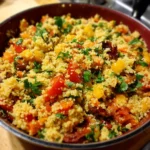
Easy Veggie Fried Couscous
Ingredients
Here is everything you will need to create this vibrant and satisfying dish. Each component is chosen for its specific contribution to the final harmony of flavors and textures, but feel free to make substitutions based on what you have available.
- 1 ½ cups Pearl (Israeli) Couscous, uncooked: This is the star of the show. Unlike its finer Moroccan counterpart, pearl couscous consists of larger, toasted semolina spheres. Their size and firm texture are essential for this recipe, as they hold up beautifully to stir-frying without becoming mushy, providing a delightful al dente “pop” in every bite.
- 2 tablespoons Olive Oil, divided: A versatile and heart-healthy oil used for the initial cooking of the vegetables. We divide it to ensure the vegetables are cooked perfectly before the other ingredients are added. You can also use avocado oil or another neutral-flavored oil.
- 1 tablespoon Toasted Sesame Oil: This is a finishing oil, not a cooking oil. Its deep, nutty, and aromatic flavor is a cornerstone of many Asian-inspired dishes. Adding it towards the end of the cooking process preserves its potent fragrance and taste, infusing the entire dish with a rich, savory aroma.
- 1 medium Yellow Onion, finely chopped: The foundational aromatic. Sautéing the onion until soft and translucent builds a layer of sweet, savory flavor that serves as the base for the entire dish.
- 2 cloves Garlic, minced: An indispensable aromatic that provides a pungent, savory kick. Mincing it finely allows its flavor to distribute evenly throughout the couscous.
- 1 tablespoon Fresh Ginger, grated: Ginger adds a warm, zesty, and slightly peppery note that cuts through the richness of the sauce and brightens the overall flavor profile.
- 1 large Carrot, finely diced: Carrots bring a subtle sweetness and a firm, satisfying crunch. Dicing them finely ensures they cook to a perfect crisp-tender texture in the short stir-frying time.
- 1 Red Bell Pepper, diced: Chosen for its vibrant color and sweet, fruity flavor, the red bell pepper adds visual appeal and a juicy crunch that contrasts beautifully with the chewy couscous.
- 1 cup Frozen Peas: A convenient and easy way to add a pop of color, sweetness, and a tender texture. They are added straight from the freezer towards the end of cooking, so they remain bright green and perfectly cooked.
- 2 Large Eggs, lightly beaten: A classic component of fried rice that we’ve borrowed for this dish. When quickly scrambled into the couscous, the eggs add a wonderful richness, a boost of protein, and a soft, fluffy texture.
- ¼ cup Low-Sodium Soy Sauce (or Tamari for gluten-free): This is the primary source of umami and savory saltiness in our sauce. Using a low-sodium version gives you better control over the final salt content of the dish.
- 2 Green Onions (Scallions), thinly sliced: Used as a garnish, green onions provide a fresh, mild oniony bite and a splash of vibrant green. They are added at the very end to maintain their crispness and flavor.
- Optional Garnish: Toasted Sesame Seeds and Fresh Cilantro: Toasted sesame seeds add a nutty crunch, while fresh cilantro lends a bright, citrusy, and herbaceous note that lifts all the other flavors.
Instructions
Follow these step-by-step instructions carefully to achieve the perfect texture and flavor. The key to success in this recipe is preparing all your ingredients beforehand (a technique known as “mise en place”) and ensuring your couscous is cooked and cooled.
- Cook the Couscous: Begin by cooking the pearl couscous according to the package directions. Typically, this involves toasting the dry couscous in a saucepan with a little oil for a minute until fragrant, then adding water or vegetable broth (about 2 cups for 1 ½ cups of couscous), bringing it to a boil, then simmering, covered, for about 8-10 minutes until the liquid is absorbed and the couscous is al dente. It’s crucial not to overcook it. Once cooked, fluff the couscous with a fork and spread it out on a large baking sheet in a single layer. This allows it to cool down quickly and prevents the grains from steaming further and clumping together. A cool, dry couscous is essential for a “fried” texture rather than a mushy one. Let it cool for at least 15-20 minutes.
- Prepare Your Workstation: While the couscous cools, this is the perfect time to prepare all your other ingredients. Finely chop the onion, mince the garlic, grate the ginger, and dice the carrot and red bell pepper. Slice the green onions and have your frozen peas, beaten eggs, and sauce ingredients measured and ready to go. Stir-frying is a fast process, so you won’t have time to chop once you start cooking.
- Sauté the Aromatics and Hard Vegetables: Place a large skillet, wok, or Dutch oven over medium-high heat. Add 1 tablespoon of the olive oil. Once the oil is shimmering, add the chopped yellow onion and diced carrots. Sauté for 3-4 minutes, stirring frequently, until the onion begins to soften and become translucent. This step builds the foundational flavor of your dish.
- Add Garlic, Ginger, and Peppers: Add the minced garlic and grated ginger to the skillet. Stir constantly for about 30 seconds until they become highly fragrant. Be careful not to burn the garlic. Immediately add the diced red bell pepper and continue to cook for another 2-3 minutes, until the pepper is crisp-tender.
- Make Room for the Eggs: Push all the vegetables to one side of the skillet, creating an empty space. If the pan seems dry, you can add a tiny splash more oil to the empty side. Pour the lightly beaten eggs into the empty space. Let them cook for a moment, then use a spatula to scramble them, breaking them up into small, bite-sized pieces as they cook. This should only take about 1-2 minutes.
- Combine and Fry the Couscous: Once the eggs are just cooked through, it’s time for the main event. Add the cooled pearl couscous to the skillet along with the remaining 1 tablespoon of olive oil. Break up any clumps with your spatula and toss everything together to combine the couscous with the vegetables and eggs. Spread the mixture evenly across the pan and let it cook for 2-3 minutes without stirring, allowing the couscous to get slightly toasted and crispy on the bottom.
- Add the Final Ingredients and Sauce: Add the frozen peas, the toasted sesame oil, and the low-sodium soy sauce to the skillet. Stir everything together vigorously to ensure every grain of couscous and every vegetable is coated in the savory sauce. Continue to cook and stir for another 2-3 minutes, until the peas are heated through and the sauce has been fully absorbed.
- Serve and Garnish: Remove the skillet from the heat. Stir in most of the sliced green onions, reserving some for garnish. Taste the fried couscous and adjust seasoning if necessary—you might want a little more soy sauce or a pinch of black pepper. To serve, divide the veggie fried couscous among bowls and garnish with the remaining green onions, a sprinkle of toasted sesame seeds, and some fresh cilantro leaves if desired. Serve immediately while hot.
Nutrition
- Serving Size: one normal portion
- Calories: 460
- Fat: 14g
- Fiber: 8g
- Protein: 15g