
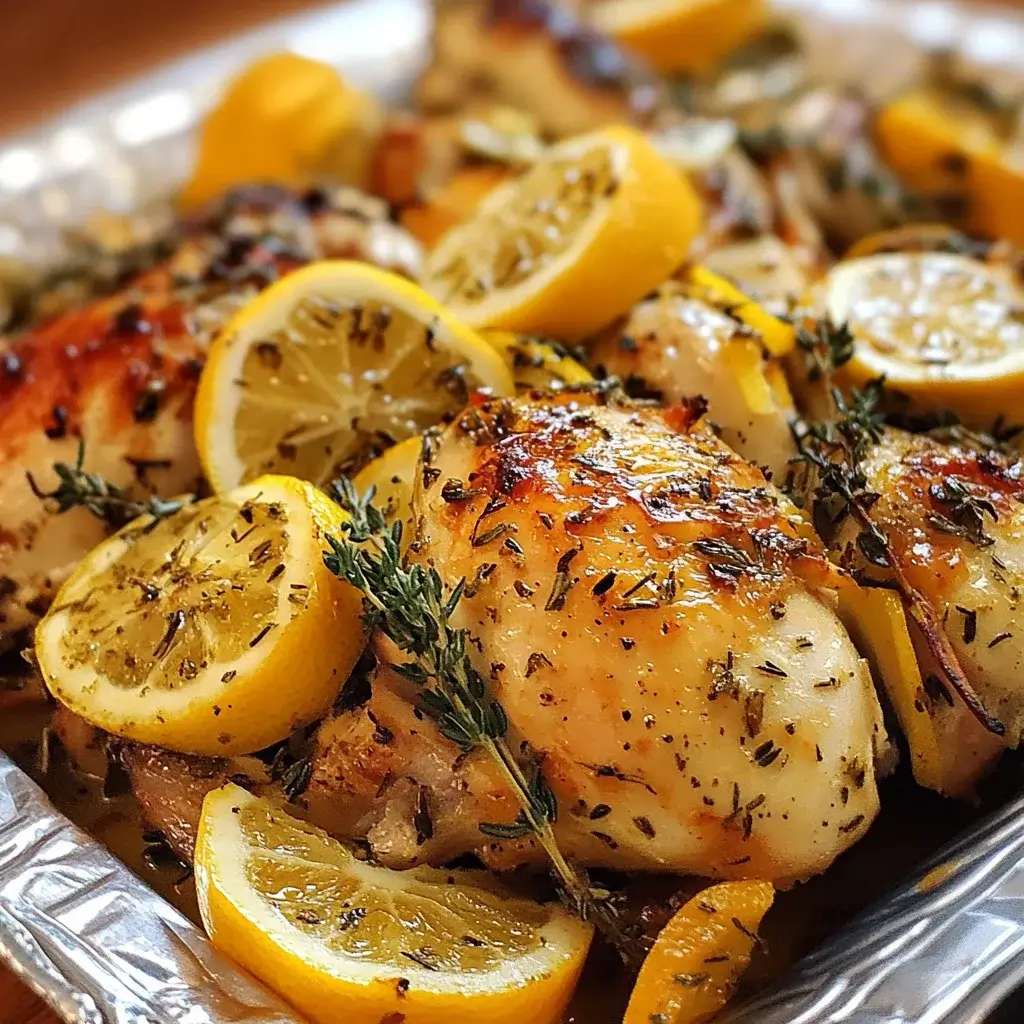

Herb-Roasted Lemon Chicken has become a staple in our household, and for good reason. The first time I made it, the aroma alone filled the kitchen with such a bright, inviting scent that everyone was practically hovering around the oven, impatient for dinner. And when we finally sat down to eat? Silence, except for happy murmurs and the clinking of forks. The chicken was incredibly juicy, infused with the zesty lemon and fragrant herbs, and the skin was perfectly crisp. Even my pickiest eater, who usually shies away from anything too “herby,” devoured it. Since then, this recipe has been on regular rotation, proving to be a guaranteed crowd-pleaser every single time. Whether it’s a simple weeknight meal or a casual weekend gathering, Herb-Roasted Lemon Chicken never fails to impress with its simplicity and delightful flavors. It’s truly a recipe that brings joy to both the cook and everyone at the table.
Ingredients for Flavorful Herb-Roasted Lemon Chicken
This recipe relies on fresh, high-quality ingredients to deliver its signature bright and herbaceous flavor. Here’s what you’ll need:
- Whole Chicken (3-4 lbs): The star of the show! Opt for a good quality, preferably free-range or organic chicken for the best flavor and texture. You can also use bone-in, skin-on chicken pieces like thighs and drumsticks if you prefer, adjusting the cooking time accordingly.
- Lemons (3-4): Essential for the bright, zesty flavor. You’ll need both the zest and juice of lemons, and some sliced lemons to stuff inside the chicken cavity and roast alongside. Choose lemons that are firm and heavy for their size, indicating they are juicy.
- Fresh Herbs (Rosemary, Thyme, Parsley): The heart of the herb-roasted element. Fresh herbs are crucial for the most vibrant flavor. Rosemary provides a piney, robust note, thyme adds earthy and slightly minty undertones, and parsley brings a fresh, clean finish. Feel free to experiment with other herbs like oregano, sage, or marjoram as well.
- Garlic (4-5 cloves): Aromatic and pungent, garlic enhances the savory notes of the chicken and complements the lemon and herbs beautifully. Fresh garlic cloves are a must for this recipe.
- Olive Oil (Extra Virgin): Used to coat the chicken and vegetables, olive oil adds richness and helps the chicken skin crisp up beautifully. Extra virgin olive oil is preferred for its flavor and health benefits.
- Salt and Black Pepper: Fundamental seasonings that enhance all the other flavors. Use kosher salt for its clean taste and freshly ground black pepper for its aromatic bite.
- Optional Vegetables (Potatoes, Carrots, Onions): Roasting vegetables alongside the chicken makes this a complete one-pan meal. Potatoes become wonderfully crispy and flavorful, carrots caramelize and sweeten, and onions become soft and savory, all infused with the chicken drippings and herb aromas.
Step-by-Step Instructions for Perfect Herb-Roasted Lemon Chicken
Follow these detailed instructions to create a juicy and flavorful Herb-Roasted Lemon Chicken every time:
Step 1: Preheat Oven and Prepare the Chicken
- Preheat your oven to 400°F (200°C): Ensure your oven is properly preheated for even cooking and optimal crisping of the chicken skin. This temperature is ideal for roasting chicken to golden perfection while keeping it juicy inside.
- Prepare the chicken: Remove the chicken from its packaging and take out any giblets or neck that may be inside the cavity. Pat the chicken thoroughly dry with paper towels, both inside and out. This step is crucial for achieving crispy skin. Excess moisture will steam the skin instead of allowing it to crisp.
- Season generously with salt and pepper: Season the chicken liberally inside and out with kosher salt and freshly ground black pepper. Don’t be shy with the seasoning! Proper seasoning is key to bringing out the flavors of the chicken and herbs. Make sure to get salt and pepper inside the cavity as well.
Step 2: Prepare the Lemon and Herb Mixture
- Zest and juice the lemons: Zest 2-3 lemons using a microplane or fine grater, being careful to only zest the yellow part and avoid the bitter white pith. Then, juice those lemons. You should have about 2-3 tablespoons of lemon zest and ¼ – ½ cup of lemon juice.
- Mince the garlic: Peel and mince the garlic cloves finely. Mincing releases the garlic’s aromatic oils and ensures it infuses the chicken with flavor.
- Chop the fresh herbs: Roughly chop the fresh rosemary, thyme, and parsley. You can adjust the quantities to your preference, but a good starting point is about 2 tablespoons of rosemary, 2 tablespoons of thyme, and ¼ cup of parsley.
- Combine the lemon zest, garlic, herbs, and olive oil: In a small bowl, combine the lemon zest, minced garlic, chopped herbs, and about 3-4 tablespoons of olive oil. Mix well to create a fragrant herb and lemon mixture.
Step 3: Stuff and Coat the Chicken
- Stuff the chicken cavity: Cut one lemon into quarters. Place the lemon quarters inside the cavity of the chicken. This will infuse the chicken from the inside out with lemon flavor and moisture during roasting.
- Loosen the skin (optional but recommended): Gently loosen the skin of the chicken from the breast meat and thighs using your fingers, being careful not to tear the skin. This creates pockets to stuff the herb mixture under the skin, directly flavoring the meat and keeping it moist.
- Rub the herb mixture under and over the skin: Spoon about half of the herb and lemon mixture under the loosened skin of the chicken, distributing it evenly over the breast and thighs. Then, rub the remaining herb mixture all over the outside of the chicken skin. Ensure the entire chicken is coated with the flavorful mixture.
- Drizzle with olive oil: Drizzle the chicken with an additional tablespoon or two of olive oil. This helps the skin to crisp up and become golden brown during roasting.
Step 4: Roast the Chicken
- Prepare vegetables (optional): If using vegetables, cut potatoes into wedges, carrots into chunks, and onions into quarters. Toss them with a tablespoon of olive oil, salt, and pepper in a large bowl.
- Arrange vegetables in a roasting pan (optional): Spread the vegetables in a single layer in the bottom of a large roasting pan. This creates a bed for the chicken and allows the vegetables to roast evenly and absorb the delicious chicken drippings.
- Place the chicken on top of the vegetables (or in the roasting pan): Place the prepared chicken on top of the vegetables in the roasting pan, or directly in the roasting pan if not using vegetables.
- Add sliced lemons to the pan: Slice the remaining 1-2 lemons into rounds and scatter them around the chicken and vegetables in the roasting pan. These lemons will caramelize and add extra flavor to the pan juices and vegetables.
- Roast in the preheated oven: Roast the chicken in the preheated oven for approximately 1 hour and 15 minutes to 1 hour and 45 minutes, or until the internal temperature reaches 165°F (74°C) in the thickest part of the thigh, avoiding the bone. Cooking time will vary depending on the size of the chicken and your oven.
- Baste occasionally (optional): For extra juicy chicken and crispy skin, you can baste the chicken with the pan juices every 20-30 minutes during the roasting process. This helps to keep the chicken moist and encourages even browning.
Step 5: Rest and Serve
- Check for doneness: Use a meat thermometer to check the internal temperature of the chicken. Insert the thermometer into the thickest part of the thigh, avoiding the bone. The chicken is cooked when it reaches 165°F (74°C). The juices should also run clear when pierced with a fork.
- Let the chicken rest: Once cooked, remove the chicken from the oven and let it rest for 10-15 minutes before carving. Tent it loosely with foil to keep it warm. Resting allows the juices to redistribute throughout the chicken, resulting in a more tender and flavorful bird. Skipping this step will result in drier chicken.
- Carve and serve: After resting, carve the chicken and serve immediately. Spoon the roasted vegetables and pan juices over the chicken for added flavor and moisture.
Nutrition Facts for Herb-Roasted Lemon Chicken
(Note: Nutritional values are approximate and can vary based on specific ingredients and serving sizes. The following is an estimate per serving, assuming 6 servings from a 3.5 lb chicken and including a moderate amount of roasted vegetables.)
- Servings: 6
- Calories per serving: Approximately 450-550 kcal
- Protein: 45-55g
This Herb-Roasted Lemon Chicken is a relatively healthy meal, providing a good source of lean protein from the chicken and fiber and vitamins from the vegetables. It is lower in carbohydrates and higher in protein and healthy fats compared to many other dinner options.
Preparation Time for Herb-Roasted Lemon Chicken
This recipe is wonderfully straightforward and doesn’t require hours in the kitchen. Here’s a breakdown of the preparation time:
- Prep Time: 20-25 minutes (includes chopping vegetables, zesting lemons, mincing garlic, and preparing the herb mixture and chicken)
- Cook Time: 1 hour 15 minutes – 1 hour 45 minutes (depending on chicken size and oven)
- Rest Time: 10-15 minutes
- Total Time: Approximately 1 hour 45 minutes – 2 hours 25 minutes
While the total time might seem a bit lengthy, most of it is hands-off cooking time in the oven. The active preparation is quick and easy, making this recipe perfect for a weeknight dinner or a relaxed weekend meal. You can even prep the vegetables and herb mixture ahead of time to further reduce the active cooking time on the day you plan to roast the chicken.
How to Serve Herb-Roasted Lemon Chicken for a Delicious Meal
Herb-Roasted Lemon Chicken is incredibly versatile and pairs well with a variety of side dishes. Here are some serving suggestions to create a complete and satisfying meal:
- Classic Comfort Sides:
- Mashed Potatoes: Creamy mashed potatoes are a perfect complement to the flavorful chicken and pan juices.
- Roasted Vegetables: Serve the chicken with the roasted vegetables from the pan for a simple and complete meal. Add extra roasted vegetables like broccoli, Brussels sprouts, or sweet potatoes.
- Creamy Polenta: Soft and cheesy polenta provides a comforting base for the juicy chicken and flavorful sauce.
- Rice Pilaf: Fluffy rice pilaf, infused with herbs or lemon zest, adds a light and flavorful grain side.
- Fresh and Light Sides:
- Green Salad: A crisp green salad with a lemon vinaigrette provides a refreshing contrast to the richness of the chicken.
- Quinoa Salad: A vibrant quinoa salad with fresh herbs, vegetables, and a lemon dressing adds a healthy and flavorful side.
- Cucumber and Tomato Salad: A simple and refreshing salad with cucumbers, tomatoes, red onion, and a light vinaigrette.
- Asparagus with Lemon: Grilled or roasted asparagus drizzled with lemon juice and olive oil.
- Bread for Sopping Up Juices:
- Crusty Bread: Serve with crusty bread like sourdough or baguette to soak up the delicious pan juices and herb-infused olive oil.
- Garlic Bread: Warm garlic bread adds another layer of flavor and is perfect for enjoying with the chicken.
- Sauce Enhancements:
- Pan Juices: Don’t discard the pan juices! They are packed with flavor and make a delicious natural gravy to drizzle over the chicken and sides.
- Chimichurri Sauce: For a vibrant and herbaceous kick, serve with a bright chimichurri sauce made with parsley, cilantro, garlic, and olive oil.
- Lemon-Herb Yogurt Sauce: A cooling lemon-herb yogurt sauce can provide a refreshing contrast to the roasted chicken.
Additional Tips for the Best Herb-Roasted Lemon Chicken
Elevate your Herb-Roasted Lemon Chicken to the next level with these helpful tips:
- Use High-Quality Chicken: Starting with a good quality chicken, preferably free-range or organic, will make a noticeable difference in flavor and texture. These chickens tend to be more flavorful and have better texture.
- Don’t Skimp on Fresh Herbs: Fresh herbs are essential for the vibrant flavor of this dish. Dried herbs can be used in a pinch, but fresh herbs provide a much brighter and more aromatic result. Use a generous amount of fresh herbs for the best flavor infusion.
- Marinate for Extra Flavor (Optional): For even more intense flavor, you can marinate the chicken in the lemon-herb mixture for at least 30 minutes, or up to a few hours in the refrigerator, before roasting. This allows the flavors to penetrate deeper into the meat.
- Pat the Chicken Dry Thoroughly: As mentioned earlier, patting the chicken dry, inside and out, with paper towels is crucial for achieving crispy skin. Dry skin browns and crisps much better in the oven.
- Loosen the Skin to Infuse Flavor: Gently loosening the skin of the chicken and stuffing the herb mixture underneath allows the flavors to directly infuse the meat, making it more flavorful and juicy.
- Use a Meat Thermometer for Accuracy: The best way to ensure your chicken is cooked to perfection and safe to eat is to use a meat thermometer. Cook until the internal temperature reaches 165°F (74°C) in the thickest part of the thigh.
- Let the Chicken Rest Before Carving: Resting the chicken for 10-15 minutes after roasting is crucial for juicy meat. During resting, the juices redistribute throughout the chicken, resulting in a more tender and flavorful bird.
- Save the Pan Juices and Drippings: The pan juices and drippings are liquid gold! They are packed with flavor from the chicken, herbs, and lemons. Use them to drizzle over the chicken and vegetables, or use them as a base for a delicious pan sauce or gravy.
Frequently Asked Questions (FAQ) about Herb-Roasted Lemon Chicken
Here are some common questions and answers to help you make the perfect Herb-Roasted Lemon Chicken:
Q1: Can I use frozen chicken for this recipe?
A: Yes, you can use frozen chicken, but it’s essential to thaw it completely before roasting. Thawing ensures even cooking and proper seasoning. The safest way to thaw chicken is in the refrigerator overnight or for 24-48 hours, depending on the size of the chicken. You can also thaw it in cold water, changing the water every 30 minutes, but this method requires more attention.
Q2: Can I use dried herbs instead of fresh herbs?
A: While fresh herbs are highly recommended for the most vibrant flavor, you can use dried herbs if needed. Use about one-third the amount of dried herbs compared to fresh herbs, as dried herbs are more concentrated in flavor. For example, if the recipe calls for 2 tablespoons of fresh rosemary, use about 2 teaspoons of dried rosemary.
Q3: How do I know when the chicken is fully cooked?
A: The most reliable way to determine if chicken is cooked through is to use a meat thermometer. Insert the thermometer into the thickest part of the thigh, avoiding the bone. The internal temperature should reach 165°F (74°C). The juices should also run clear when you pierce the thigh with a fork or knife, and the meat should no longer be pink.
Q4: Can I add other vegetables to roast with the chicken?
A: Absolutely! Root vegetables like potatoes, carrots, parsnips, and sweet potatoes are excellent choices for roasting alongside the chicken. You can also add onions, bell peppers, and broccoli. Just ensure the vegetables are cut into similar sizes for even cooking and toss them with olive oil, salt, and pepper before roasting.
Q5: How long does leftover Herb-Roasted Lemon Chicken last in the refrigerator?
A: Cooked chicken, when stored properly in an airtight container, can last in the refrigerator for 3-4 days. Ensure it cools down to room temperature before refrigerating, and reheat thoroughly to an internal temperature of 165°F (74°C) before serving.
Q6: Can I prepare the Herb-Roasted Lemon Chicken ahead of time?
A: You can prep some components of this recipe ahead of time. You can chop the vegetables, prepare the herb and lemon mixture, and even stuff and season the chicken earlier in the day. Store the prepared chicken in the refrigerator until you are ready to roast it. However, it’s best to roast the chicken fresh for the best flavor and texture.
Q7: What wine pairs well with Herb-Roasted Lemon Chicken?
A: Herb-Roasted Lemon Chicken pairs beautifully with crisp white wines that have good acidity to complement the lemon and herbs. Sauvignon Blanc, Pinot Grigio, Vermentino, and unoaked Chardonnay are excellent choices. For red wine lovers, a light-bodied red like Pinot Noir or a dry Rosé can also work well.
Q8: Can I use different herbs in this recipe?
A: Yes, feel free to experiment with different herbs based on your preferences. Oregano, sage, marjoram, and tarragon would all be delicious additions or substitutions for rosemary and thyme. You can create your own custom herb blend to personalize the flavor of your Herb-Roasted Lemon Chicken.
Print
Herb-Roasted Lemon Chicken
Ingredients
This recipe relies on fresh, high-quality ingredients to deliver its signature bright and herbaceous flavor. Here’s what you’ll need:
- Whole Chicken (3-4 lbs): The star of the show! Opt for a good quality, preferably free-range or organic chicken for the best flavor and texture. You can also use bone-in, skin-on chicken pieces like thighs and drumsticks if you prefer, adjusting the cooking time accordingly.
- Lemons (3-4): Essential for the bright, zesty flavor. You’ll need both the zest and juice of lemons, and some sliced lemons to stuff inside the chicken cavity and roast alongside. Choose lemons that are firm and heavy for their size, indicating they are juicy.
- Fresh Herbs (Rosemary, Thyme, Parsley): The heart of the herb-roasted element. Fresh herbs are crucial for the most vibrant flavor. Rosemary provides a piney, robust note, thyme adds earthy and slightly minty undertones, and parsley brings a fresh, clean finish. Feel free to experiment with other herbs like oregano, sage, or marjoram as well.
- Garlic (4-5 cloves): Aromatic and pungent, garlic enhances the savory notes of the chicken and complements the lemon and herbs beautifully. Fresh garlic cloves are a must for this recipe.
- Olive Oil (Extra Virgin): Used to coat the chicken and vegetables, olive oil adds richness and helps the chicken skin crisp up beautifully. Extra virgin olive oil is preferred for its flavor and health benefits.
- Salt and Black Pepper: Fundamental seasonings that enhance all the other flavors. Use kosher salt for its clean taste and freshly ground black pepper for its aromatic bite.
- Optional Vegetables (Potatoes, Carrots, Onions): Roasting vegetables alongside the chicken makes this a complete one-pan meal. Potatoes become wonderfully crispy and flavorful, carrots caramelize and sweeten, and onions become soft and savory, all infused with the chicken drippings and herb aromas.
Instructions
Follow these detailed instructions to create a juicy and flavorful Herb-Roasted Lemon Chicken every time:
Step 1: Preheat Oven and Prepare the Chicken
- Preheat your oven to 400°F (200°C): Ensure your oven is properly preheated for even cooking and optimal crisping of the chicken skin. This temperature is ideal for roasting chicken to golden perfection while keeping it juicy inside.
- Prepare the chicken: Remove the chicken from its packaging and take out any giblets or neck that may be inside the cavity. Pat the chicken thoroughly dry with paper towels, both inside and out. This step is crucial for achieving crispy skin. Excess moisture will steam the skin instead of allowing it to crisp.
- Season generously with salt and pepper: Season the chicken liberally inside and out with kosher salt and freshly ground black pepper. Don’t be shy with the seasoning! Proper seasoning is key to bringing out the flavors of the chicken and herbs. Make sure to get salt and pepper inside the cavity as well.
Step 2: Prepare the Lemon and Herb Mixture
- Zest and juice the lemons: Zest 2-3 lemons using a microplane or fine grater, being careful to only zest the yellow part and avoid the bitter white pith. Then, juice those lemons. You should have about 2-3 tablespoons of lemon zest and ¼ – ½ cup of lemon juice.
- Mince the garlic: Peel and mince the garlic cloves finely. Mincing releases the garlic’s aromatic oils and ensures it infuses the chicken with flavor.
- Chop the fresh herbs: Roughly chop the fresh rosemary, thyme, and parsley. You can adjust the quantities to your preference, but a good starting point is about 2 tablespoons of rosemary, 2 tablespoons of thyme, and ¼ cup of parsley.
- Combine the lemon zest, garlic, herbs, and olive oil: In a small bowl, combine the lemon zest, minced garlic, chopped herbs, and about 3-4 tablespoons of olive oil. Mix well to create a fragrant herb and lemon mixture.
Step 3: Stuff and Coat the Chicken
- Stuff the chicken cavity: Cut one lemon into quarters. Place the lemon quarters inside the cavity of the chicken. This will infuse the chicken from the inside out with lemon flavor and moisture during roasting.
- Loosen the skin (optional but recommended): Gently loosen the skin of the chicken from the breast meat and thighs using your fingers, being careful not to tear the skin. This creates pockets to stuff the herb mixture under the skin, directly flavoring the meat and keeping it moist.
- Rub the herb mixture under and over the skin: Spoon about half of the herb and lemon mixture under the loosened skin of the chicken, distributing it evenly over the breast and thighs. Then, rub the remaining herb mixture all over the outside of the chicken skin. Ensure the entire chicken is coated with the flavorful mixture.
- Drizzle with olive oil: Drizzle the chicken with an additional tablespoon or two of olive oil. This helps the skin to crisp up and become golden brown during roasting.
Step 4: Roast the Chicken
- Prepare vegetables (optional): If using vegetables, cut potatoes into wedges, carrots into chunks, and onions into quarters. Toss them with a tablespoon of olive oil, salt, and pepper in a large bowl.
- Arrange vegetables in a roasting pan (optional): Spread the vegetables in a single layer in the bottom of a large roasting pan. This creates a bed for the chicken and allows the vegetables to roast evenly and absorb the delicious chicken drippings.
- Place the chicken on top of the vegetables (or in the roasting pan): Place the prepared chicken on top of the vegetables in the roasting pan, or directly in the roasting pan if not using vegetables.
- Add sliced lemons to the pan: Slice the remaining 1-2 lemons into rounds and scatter them around the chicken and vegetables in the roasting pan. These lemons will caramelize and add extra flavor to the pan juices and vegetables.
- Roast in the preheated oven: Roast the chicken in the preheated oven for approximately 1 hour and 15 minutes to 1 hour and 45 minutes, or until the internal temperature reaches 165°F (74°C) in the thickest part of the thigh, avoiding the bone. Cooking time will vary depending on the size of the chicken and your oven.
- Baste occasionally (optional): For extra juicy chicken and crispy skin, you can baste the chicken with the pan juices every 20-30 minutes during the roasting process. This helps to keep the chicken moist and encourages even browning.
Step 5: Rest and Serve
- Check for doneness: Use a meat thermometer to check the internal temperature of the chicken. Insert the thermometer into the thickest part of the thigh, avoiding the bone. The chicken is cooked when it reaches 165°F (74°C). The juices should also run clear when pierced with a fork.
- Let the chicken rest: Once cooked, remove the chicken from the oven and let it rest for 10-15 minutes before carving. Tent it loosely with foil to keep it warm. Resting allows the juices to redistribute throughout the chicken, resulting in a more tender and flavorful bird. Skipping this step will result in drier chicken.
- Carve and serve: After resting, carve the chicken and serve immediately. Spoon the roasted vegetables and pan juices over the chicken for added flavor and moisture.
Nutrition
- Serving Size: one normal portion
- Calories: 550
- Protein: 55g