
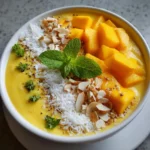
There are some mornings when the usual routine just won’t cut it. Cereal feels bland, toast seems uninspired, and the thought of another scramble is simply tiring. It was on one such morning, staring into the pantry with a distinct lack of enthusiasm, that I decided to create something that felt less like a meal and more like an escape. I wanted sunshine in a bowl. With a bag of frozen mango chunks in the freezer and a can of creamy coconut milk in the pantry, the idea for this Mango Coconut Smoothie Bowl was born. The first time I blended it, the color alone was enough to lift my spirits—a vibrant, sunny yellow that promised pure tropical bliss. The taste? It was even better. It was rich, creamy, and intensely fruity without being overly sweet. It instantly transported me to a mental vacation, complete with palm trees and a warm breeze. When I served it to my family, the initial silence was followed by the clinking of spoons against ceramic and a chorus of “Wow, this is amazing!” It has since become our go-to for a special weekend breakfast, a healthy afternoon treat, and even a light, refreshing dessert. It’s more than just a recipe; it’s our little bowl of happiness, a simple way to bring a taste of the tropics to our kitchen table, no matter the weather outside.
Ingredients
Here is the simple, yet powerful, list of ingredients you’ll need to create this bowl of tropical sunshine. Each component is chosen for its specific contribution to the final flavor and, most importantly, the luxurious texture.
- Frozen Mango Chunks: 2 ½ cups. This is the star of the show and the key to a thick, spoonable consistency. Using frozen mango eliminates the need for ice, which can water down the flavor.
- Full-Fat Canned Coconut Milk: ½ cup. This is the secret to the incredible creaminess. The high-fat content creates a rich, velvety texture that feels incredibly decadent. Be sure to use the thick cream from the top of the can for the best results.
- Frozen Banana: 1 medium, sliced. A frozen banana adds natural sweetness and contributes significantly to the thick, ice-cream-like texture. It’s the supporting actor that makes the star shine.
- Pure Maple Syrup: 1 tablespoon (optional). If your mango isn’t at its peak sweetness, a touch of maple syrup can enhance the flavors. You can also use agave nectar or honey if you prefer.
- Lime Juice: 1 teaspoon, freshly squeezed. A small amount of acidity is crucial. It cuts through the richness of the coconut and mango, brightening all the flavors and making the entire bowl taste more vibrant and fresh.
- A Pinch of Sea Salt. Just a tiny pinch is all you need to elevate and balance the sweetness, making the fruit flavors pop.
For Topping (Suggestions):
- Toasted Coconut Flakes: Adds a delightful crunch and reinforces the coconut flavor.
- Fresh Mango Slices or Diced Mango: Provides a different texture and a fresh burst of mango flavor.
- Granola: For a hearty crunch and added fiber. Choose a low-sugar variety to keep it healthy.
- Chia Seeds or Hemp Hearts: A fantastic way to add a boost of omega-3s, fiber, and protein.
- Fresh Berries: Blueberries, raspberries, or sliced strawberries add a beautiful color contrast and a touch of tartness.
Instructions
Creating the perfect smoothie bowl is an art, but it’s a very simple one to master. The key is in the order of operations and having a little patience with your blender. Follow these steps for a flawless, thick, and creamy result every time.
- Prepare Your Blender: Before you begin, make sure your blender is clean and ready to go. If you are using a high-speed blender like a Vitamix or Blendtec, have the tamper handy. This tool is your best friend for achieving a smooth consistency without adding extra liquid.
- Add Liquids First: Pour the ½ cup of full-fat coconut milk and the 1 teaspoon of fresh lime juice into the bottom of the blender jar. Placing the liquids at the bottom, closest to the blades, helps the blender get started and creates a vortex that will pull the frozen ingredients down. This simple step prevents the blades from getting stuck and spinning in the air.
- Add the Frozen Fruit: Next, add the frozen ingredients. Place the 1 sliced frozen banana and the 2 ½ cups of frozen mango chunks on top of the liquid. Add the optional maple syrup and the pinch of sea salt now as well.
- Start Blending on Low: Secure the lid on your blender. Begin blending on the lowest speed and gradually increase the speed. This gradual start allows the blades to break up the large frozen chunks without overheating the motor.
- Use the Tamper (for high-speed blenders): As you increase the speed, the mixture will become very thick and may form air pockets around the blades. This is where the tamper comes in. While the blender is running (with the lid on!), insert the tamper through the lid opening and use it to push the frozen fruit down and towards the blades. Move it around the four corners of the blender jar. You will see the mixture start to churn and become smooth and creamy, almost like a soft-serve ice cream.
- For Blenders Without a Tamper: If you are using a standard blender, you will need to stop the blender periodically, remove the lid, and use a spatula to scrape down the sides and push the ingredients toward the blades. This process may take a little longer, but it is essential for a smooth result. Resist the urge to add more liquid, as this will result in a thin, drinkable smoothie rather than a thick, spoonable bowl. A little patience is key!
- Check for Consistency: Blend until the mixture is completely smooth, with no remaining chunks of fruit. The final texture should be thick, rich, and hold its shape on a spoon. Be careful not to over-blend, as the friction from the blades can start to heat the mixture, causing it to melt and become thin. This whole process should only take about 60-90 seconds in a high-speed blender.
- Serve Immediately: Once blended to perfection, use a spatula to scoop the thick smoothie mixture out of the blender and into one or two bowls. Work quickly, as it will start to melt. Smooth the top with the back of a spoon and immediately add your favorite toppings.
Nutrition Facts
This Mango Coconut Smoothie Bowl isn’t just a treat for your taste buds; it’s also packed with beneficial nutrients. The following is an approximate nutritional overview for one serving (this recipe makes two servings).
- Servings: 2
- Calories per Serving: Approximately 350-400 kcal (this can vary widely based on your choice of toppings).
- Rich in Vitamin C: Mango is one of the best dietary sources of Vitamin C, an essential antioxidant. A single serving of this bowl provides a significant portion of your daily requirement, helping to support a robust immune system, promote healthy skin by aiding collagen production, and protect your cells from damage.
- Excellent Source of Dietary Fiber: With contributions from the mango, banana, and any seed or granola toppings, this bowl is packed with fiber. Dietary fiber is crucial for digestive health, helping to promote regularity, and it also aids in blood sugar control and can contribute to a feeling of fullness, which can help with weight management.
- Contains Healthy Fats: The full-fat coconut milk is a source of medium-chain triglycerides (MCTs). Unlike other types of fat, MCTs are more easily digested and absorbed, providing a quick source of energy for your body and brain. These healthy fats also contribute to the bowl’s satisfying and satiating quality.
- Packed with Potassium: Bananas are famously rich in potassium, an essential mineral and electrolyte. Potassium plays a vital role in maintaining proper heart function, regulating fluid balance, and supporting muscle contractions. It’s a perfect nutrient to replenish after a workout or to start your day off right.
- Source of Natural Energy: The carbohydrates in this smoothie bowl come from whole fruits, providing natural sugars (fructose) combined with fiber. This combination allows for a steady release of energy without the sharp spike and crash associated with processed sugars, making it an ideal breakfast or pre-workout meal to fuel your day.
Preparation time
This recipe is the epitome of a quick and satisfying meal. From gathering your ingredients to the final, beautifully-topped bowl, you’re looking at a total time of about 5 to 7 minutes. The actual blending process itself takes less than two minutes in a high-speed blender. The rest of the time is spent simply measuring out your ingredients and creatively arranging your toppings. This makes it an absolutely perfect solution for busy mornings when you crave something nutritious and delicious but are short on time. It delivers a gourmet breakfast experience with minimal effort and virtually no cleanup.
How to Serve
Serving a smoothie bowl is all about the presentation and the delicious contrast of textures. The creamy, smooth base is a blank canvas for your culinary creativity. Here are some inspiring ways to serve your Mango Coconut Smoothie Bowl:
- The Classic Bowl Presentation:
- Spoon the thick smoothie base into a shallow, wide bowl (a coconut shell bowl is perfect for the tropical theme!).
- Smooth the top with the back of a spoon.
- Create distinct lines or sections for your toppings. Arrange a line of toasted coconut flakes, a neat row of sliced strawberries, a small pile of blueberries, and a sprinkle of chia seeds.
- This organized, artistic approach makes the bowl as beautiful to look at as it is to eat.
- The Abundant & Rustic Style:
- Pour the smoothie base into your favorite bowl.
- Don’t worry about perfect lines. Generously scatter a handful of your favorite granola over the top.
- Add a spoonful of hemp hearts or bee pollen in the center.
- Artfully place a few larger pieces of fruit, like fresh mango chunks or raspberry halves, around the bowl.
- Finish with a drizzle of honey or a spoonful of almond butter. This style feels more organic and bountiful.
- The Layered Parfait Jar:
- For a portable or visually stunning option, serve it in a glass mason jar.
- Start with a layer of granola at the bottom.
- Add a thick layer of the mango coconut smoothie.
- Add a layer of chopped fresh fruit (like kiwi or pineapple for more tropical flavor).
- Repeat with another layer of the smoothie.
- Top with a sprinkle of toasted coconut and a few berries. This method is great for meal prep, as you can prepare it the night before (see FAQ for storage tips).
- The Drinkable Smoothie Version:
- If you’re in a real hurry or prefer to drink your breakfast, simply add an extra ¼ to ½ cup of coconut milk or coconut water to the recipe.
- Blend until it reaches a smooth, drinkable consistency.
- Pour it into a tall glass or a travel tumbler.
- Sprinkle a few chia seeds on top and enjoy on the go. You get all the flavor in a more convenient format.
Additional tips
Take your Mango Coconut Smoothie Bowl from great to absolutely spectacular with these eight expert tips.
- The Thicker-is-Better Secret: The ultimate goal of a smoothie bowl is a thick, spoonable, ice-cream-like texture. The non-negotiable rule is to maintain a high ratio of frozen ingredients to liquid. Start with the recommended amount of coconut milk and only add more, one tablespoon at a time, if your blender is truly struggling. Using very cold, very frozen fruit is paramount.
- Choose Your Mango Wisely: While any frozen mango will work, the type of mango can affect the flavor. Ataulfo or Honey mangoes are often sweeter and less fibrous, resulting in a creamier, more flavorful base. If you have access to sweet, ripe fresh mangoes, you can chop them up and freeze them yourself on a baking sheet for an even more intense flavor.
- Harness the Power of Your Blender: A high-speed blender is ideal for smoothie bowls because its powerful motor can pulverize frozen fruit with minimal liquid. If you don’t have one, don’t despair! You can still make a great bowl. Just be sure to cut your frozen fruit into smaller pieces and have patience, stopping often to scrape down the sides.
- Meal Prep for Lightning-Fast Mornings: For the ultimate convenience, create “smoothie packs.” In a zip-top bag or container, portion out the 2 ½ cups of mango and 1 sliced banana. You can make several of these at once and store them in the freezer. In the morning, just dump one pack into the blender, add your liquid, and blend.
- Don’t Over-Blend: It might be tempting to let the blender run for a long time to ensure everything is smooth, but this is a mistake. The friction created by the fast-spinning blades generates heat. This heat will begin to melt your frozen ingredients, turning your thick, frosty bowl into a thin, soupy smoothie. Aim for a blending time of 60-90 seconds at most.
- Perfecting the Sweetness: The sweetness of your bowl will depend heavily on the ripeness of your fruit. Always taste the smoothie base before pouring it into your bowl. If it’s not quite sweet enough for your liking, you can blend in a pitted Medjool date, a little more maple syrup, or a few drops of liquid stevia for a sugar-free option.
- Get Creative with Your Liquids: While full-fat coconut milk provides the best creaminess, you can experiment with other liquids. Light coconut milk will work for a lower-calorie option. Almond milk will give a nuttier flavor. For an extra tropical punch, try using a splash of pineapple juice or orange juice in combination with the coconut milk.
- The Art of Topping Balance: A great smoothie bowl is a symphony of textures and flavors. When choosing toppings, aim for balance. Pair the creamy base with something crunchy (granola, nuts, seeds), something fresh (berries, sliced fruit), and something a little extra (a drizzle of nut butter, a sprinkle of cinnamon). This creates a more satisfying and engaging eating experience.
FAQ section
Here are answers to some of the most frequently asked questions about making the perfect Mango Coconut Smoothie Bowl.
1. Can I make this smoothie bowl without a banana?
Absolutely! While frozen banana is excellent for creaminess and sweetness, you can easily substitute it. For a similar texture, use ½ cup of frozen young coconut meat or an additional ½ cup of frozen mango. You can also add ¼ of an avocado (you won’t taste it, but it adds incredible creaminess and healthy fats) or 2-3 tablespoons of soaked cashews. You may need to adjust the sweetness with a little extra maple syrup.
2. My smoothie bowl is too thin. How can I make it thicker?
This is the most common issue, and it’s almost always due to an excess of liquid. The best fix is to add more frozen ingredients. Add another ½ cup of frozen mango or a handful of ice and blend again. For future bowls, start with less liquid than you think you need—you can always add more, but you can’t take it away. Using a powerful blender also helps immensely.
3. Can I use fresh mango instead of frozen?
You can, but you will need to make adjustments to achieve a thick consistency. Fresh mango contains much more water and won’t provide the frosty texture. If you only have fresh mango, you will need to add about 1 to 1 ½ cups of ice to the blender to get it thick and cold. However, for the best flavor and texture without watering it down, using frozen mango is highly recommended.
4. Is this Mango Coconut Smoothie Bowl healthy?
Yes, it is a very healthy meal option when made correctly. It’s packed with vitamins, minerals, and fiber from whole fruits. The coconut milk provides healthy fats for lasting energy. The key to keeping it healthy is to be mindful of your toppings. Avoid sugary granolas and excessive sweeteners. Stick to fresh fruit, nuts, seeds, and toasted coconut for a balanced and nutritious breakfast or snack.
5. How long can I store a smoothie bowl? Can I make it the night before?
A smoothie bowl is best enjoyed immediately after blending for the optimal texture and temperature. However, you can store it in the freezer for a short period. Pour the blended smoothie into a freezer-safe, airtight container. It will become very firm. About 15-20 minutes before you want to eat it, take it out of the freezer to let it soften slightly. You may need to stir it vigorously to regain some of its creamy texture. It’s a good option for meal prep, but the texture will be more like a sorbet than a fresh smoothie bowl.
6. What other fruits can I add or substitute in this recipe?
This recipe is a wonderful template for experimentation! For a different tropical vibe, try substituting half the mango with frozen pineapple or papaya. A handful of frozen peaches or strawberries would also be delicious and would pair well with the coconut flavor. Just remember to keep the bulk of your fruit frozen to maintain the thick consistency.
7. My smoothie bowl melted really fast. What did I do wrong?
This can happen for a couple of reasons. First, you may have over-blended the mixture, which generates heat and starts the melting process. Second, your bowl itself might be warm. A great pro tip is to chill your serving bowl in the freezer for 10-15 minutes before you start blending. A pre-chilled bowl will keep your smoothie bowl cold and thick for much longer.
8. Can I add protein powder to this recipe?
Yes, this is a fantastic way to boost the protein content and make it a more complete post-workout meal. Add one scoop of your favorite protein powder along with the other ingredients. A vanilla or unflavored plant-based or whey protein powder would work best to complement the tropical flavors. You may need to add an extra splash of coconut milk, as the powder will absorb some of the liquid and make the mixture even thicker.
Mango Coconut Smoothie Bowl
Ingredients
Here is the simple, yet powerful, list of ingredients you’ll need to create this bowl of tropical sunshine. Each component is chosen for its specific contribution to the final flavor and, most importantly, the luxurious texture.
- Frozen Mango Chunks: 2 ½ cups. This is the star of the show and the key to a thick, spoonable consistency. Using frozen mango eliminates the need for ice, which can water down the flavor.
- Full-Fat Canned Coconut Milk: ½ cup. This is the secret to the incredible creaminess. The high-fat content creates a rich, velvety texture that feels incredibly decadent. Be sure to use the thick cream from the top of the can for the best results.
- Frozen Banana: 1 medium, sliced. A frozen banana adds natural sweetness and contributes significantly to the thick, ice-cream-like texture. It’s the supporting actor that makes the star shine.
- Pure Maple Syrup: 1 tablespoon (optional). If your mango isn’t at its peak sweetness, a touch of maple syrup can enhance the flavors. You can also use agave nectar or honey if you prefer.
- Lime Juice: 1 teaspoon, freshly squeezed. A small amount of acidity is crucial. It cuts through the richness of the coconut and mango, brightening all the flavors and making the entire bowl taste more vibrant and fresh.
- A Pinch of Sea Salt. Just a tiny pinch is all you need to elevate and balance the sweetness, making the fruit flavors pop.
For Topping (Suggestions):
- Toasted Coconut Flakes: Adds a delightful crunch and reinforces the coconut flavor.
- Fresh Mango Slices or Diced Mango: Provides a different texture and a fresh burst of mango flavor.
- Granola: For a hearty crunch and added fiber. Choose a low-sugar variety to keep it healthy.
- Chia Seeds or Hemp Hearts: A fantastic way to add a boost of omega-3s, fiber, and protein.
- Fresh Berries: Blueberries, raspberries, or sliced strawberries add a beautiful color contrast and a touch of tartness.
Instructions
Creating the perfect smoothie bowl is an art, but it’s a very simple one to master. The key is in the order of operations and having a little patience with your blender. Follow these steps for a flawless, thick, and creamy result every time.
- Prepare Your Blender: Before you begin, make sure your blender is clean and ready to go. If you are using a high-speed blender like a Vitamix or Blendtec, have the tamper handy. This tool is your best friend for achieving a smooth consistency without adding extra liquid.
- Add Liquids First: Pour the ½ cup of full-fat coconut milk and the 1 teaspoon of fresh lime juice into the bottom of the blender jar. Placing the liquids at the bottom, closest to the blades, helps the blender get started and creates a vortex that will pull the frozen ingredients down. This simple step prevents the blades from getting stuck and spinning in the air.
- Add the Frozen Fruit: Next, add the frozen ingredients. Place the 1 sliced frozen banana and the 2 ½ cups of frozen mango chunks on top of the liquid. Add the optional maple syrup and the pinch of sea salt now as well.
- Start Blending on Low: Secure the lid on your blender. Begin blending on the lowest speed and gradually increase the speed. This gradual start allows the blades to break up the large frozen chunks without overheating the motor.
- Use the Tamper (for high-speed blenders): As you increase the speed, the mixture will become very thick and may form air pockets around the blades. This is where the tamper comes in. While the blender is running (with the lid on!), insert the tamper through the lid opening and use it to push the frozen fruit down and towards the blades. Move it around the four corners of the blender jar. You will see the mixture start to churn and become smooth and creamy, almost like a soft-serve ice cream.
- For Blenders Without a Tamper: If you are using a standard blender, you will need to stop the blender periodically, remove the lid, and use a spatula to scrape down the sides and push the ingredients toward the blades. This process may take a little longer, but it is essential for a smooth result. Resist the urge to add more liquid, as this will result in a thin, drinkable smoothie rather than a thick, spoonable bowl. A little patience is key!
- Check for Consistency: Blend until the mixture is completely smooth, with no remaining chunks of fruit. The final texture should be thick, rich, and hold its shape on a spoon. Be careful not to over-blend, as the friction from the blades can start to heat the mixture, causing it to melt and become thin. This whole process should only take about 60-90 seconds in a high-speed blender.
- Serve Immediately: Once blended to perfection, use a spatula to scoop the thick smoothie mixture out of the blender and into one or two bowls. Work quickly, as it will start to melt. Smooth the top with the back of a spoon and immediately add your favorite toppings.
Nutrition
- Serving Size: one normal portion
- Calories: 400