
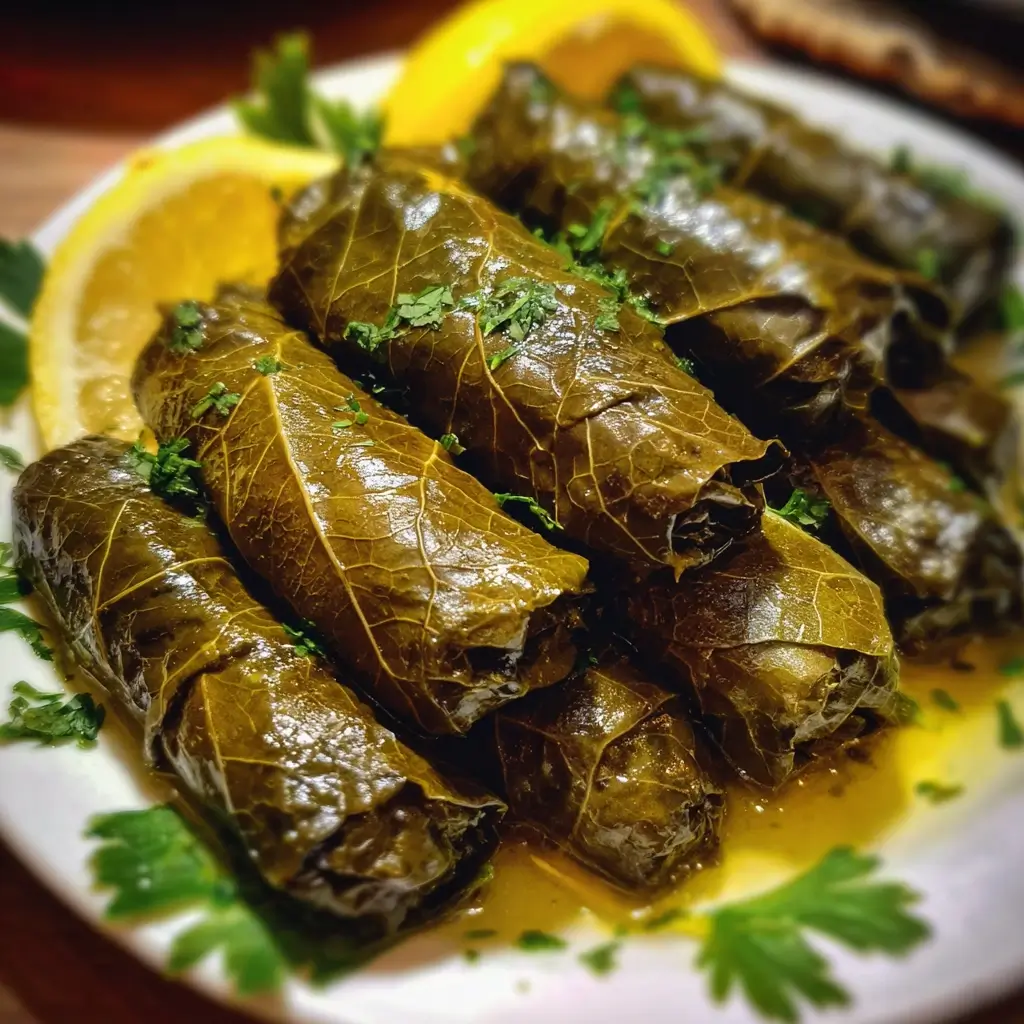

I still remember the first time I decided to tackle Mediterranean Stuffed Grape Leaves, or Dolmades, as they’re affectionately called in our home. It was for a big family get-together, and I wanted to bring something that felt special, something that spoke of tradition and care. I spent the better part of an afternoon in my sun-drenched kitchen, meticulously rolling each little parcel, feeling a deep connection to generations of Mediterranean cooks who had done the same. The air filled with the intoxicating aroma of simmering lemon, fresh dill, and savory herbs. When I finally presented the platter, garnished with bright yellow lemon wedges and a glistening drizzle of olive oil, the reaction was everything I had hoped for. The initial silence as everyone took their first bite, followed by a chorus of appreciative murmurs, was my reward. They were a sensation—tender, tangy, and deeply flavorful. My nephew, who is usually the pickiest eater, declared them his new favorite food. Now, these stuffed grape leaves are a non-negotiable staple at every celebration. They are more than just a recipe; they are a tradition, a labor of love that brings everyone to the table and fills our home with warmth and delicious memories.
Ingredients
Here is everything you will need to create these delicious, authentic Mediterranean parcels of flavor. Each component plays a crucial role in building the final, harmonious taste profile.
For the Grape Leaves and Cooking Liquid:
- 1 jar (16 ounces) grape leaves in brine: These are the tender wrappers for our filling. Look for a jar with large, intact leaves for easier rolling.
- 1/2 cup extra virgin olive oil, divided: A foundational flavor in Mediterranean cooking. We’ll use some for the filling and the rest for the cooking liquid, ensuring richness and a silky texture.
- 1/2 cup freshly squeezed lemon juice (from 2-3 lemons): This provides the signature tangy, bright flavor that cuts through the richness of the filling.
- 3 cups water or vegetable broth: This is the simmering liquid that will gently cook the dolmades, infusing them with moisture and flavor.
- Several extra grape leaves or slices of potato/tomato: These are used to line the bottom of the pot to prevent the dolmades from scorching during the long simmer.
For the Savory Filling:
- 1 lb lean ground beef: Provides a hearty, savory base for the filling. Its rich flavor pairs beautifully with the herbs and lemon.
- 1 large yellow onion, finely chopped: Adds a sweet, aromatic foundation to the filling when sautéed.
- 3-4 cloves garlic, minced: Lends a pungent, savory depth that is essential in Mediterranean cuisine.
- 1 cup uncooked long-grain white rice (like Carolina or Calrose), rinsed: This is the binder and heart of the filling. It will absorb all the delicious flavors as it cooks inside the grape leaf. Rinsing removes excess starch for a better texture.
- 1/2 cup fresh parsley, finely chopped: Brings a clean, peppery freshness.
- 1/2 cup fresh dill, finely chopped: Adds a unique, slightly anise-like, and quintessentially Greek/Mediterranean aroma and taste.
- 1/4 cup fresh mint, finely chopped: Provides a cool, bright counterpoint to the other savory ingredients.
- 1 teaspoon dried oregano: A classic Mediterranean herb that adds a robust, earthy flavor.
- 1 teaspoon salt, or to taste: Enhances all the other flavors in the filling.
- 1/2 teaspoon black pepper: Adds a gentle, warming spice.
- Pinch of allspice or cinnamon (optional): A secret ingredient in many traditional recipes, it adds a subtle warmth and complexity to the meat filling.
Instructions
Making stuffed grape leaves is a process, but each step is simple and meditative. Follow this guide carefully for perfect results every time.
Step 1: Prepare the Grape Leaves
First, you need to prepare your primary ingredient: the grape leaves. Carefully open the jar and pour out the brine. Gently separate the leaves, being careful not to tear them. Place them in a large bowl and cover them with hot water. Let them soak for about 15-20 minutes. This step is crucial as it helps to remove the excess salty brine and makes the leaves more tender and pliable, which is essential for easy rolling. After soaking, drain the leaves in a colander and gently pat them dry with a paper towel. Set aside the torn or very small leaves; we will use these to line the pot later.
Step 2: Start the Filling
In a large skillet or Dutch oven, heat 1/4 cup of the extra virgin olive oil over medium heat. Once the oil is shimmering, add the finely chopped yellow onion. Sauté for 5-7 minutes, stirring occasionally, until the onion becomes soft, translucent, and slightly sweet. Add the minced garlic and cook for another minute until fragrant. Be careful not to let the garlic burn, as it will become bitter.
Step 3: Cook the Meat and Combine Filling Ingredients
Add the lean ground beef to the skillet with the onions and garlic. Use a wooden spoon to break up the meat into small crumbles. Cook until the beef is browned all over, about 8-10 minutes. Drain off any excess fat from the skillet.
Now, turn off the heat. Add the rinsed long-grain white rice, the chopped fresh parsley, dill, and mint, the dried oregano, salt, black pepper, and the optional pinch of allspice or cinnamon to the skillet. Stir everything together until it’s thoroughly combined. Your kitchen should be filled with an incredible aroma at this point! This mixture is your filling. It’s a good idea to taste a tiny bit of the mixture (keeping in mind the rice is raw) to check for seasoning, adding more salt or pepper if needed.
Step 4: The Art of Rolling the Grape Leaves
This is the most time-consuming but also the most rewarding part of the process. Set up a clean work surface, like a large cutting board.
- Take one grape leaf and lay it flat, shiny-side down. The dull, veiny side should be facing up towards you. The stem end should be closest to you. If there is a tough stem, carefully snip it off with kitchen shears.
- Place about one tablespoon of the filling in the center of the leaf, near the stem end. Shape the filling into a small, compact log. Do not overfill, as the rice will expand during cooking.
- Begin rolling: Fold the bottom of the leaf (the part with the stem) up and over the filling, tucking it in snugly.
- Fold the right side of the leaf over towards the center.
- Fold the left side of the leaf over towards the center, creating a neat rectangular packet.
- Continue rolling the packet upwards towards the top point of the leaf, keeping it snug but not overly tight. It should look like a small, neat cigar or burrito.
- Set the completed dolma aside, seam-side down, and repeat the process with the remaining leaves and filling.
Step 5: Arranging the Dolmades in the Pot
Select a large, heavy-bottomed pot or Dutch oven. To create a protective layer at the bottom, use the torn or small grape leaves you set aside earlier to line the entire bottom surface of the pot. You can also use thin slices of potato or tomato for this. This clever trick prevents the dolmades from sticking to the bottom and scorching during the long, slow simmer.
Arrange the rolled grape leaves in the pot, seam-side down. Pack them in tightly, side by side, in a single layer. This snug fit is important as it helps prevent them from unravelling while they cook. If you have enough, you can create a second layer on top of the first.
Step 6: Simmering to Perfection
Pour the remaining 1/4 cup of extra virgin olive oil and the 1/2 cup of fresh lemon juice over the arranged dolmades. Then, pour in the 3 cups of water or vegetable broth, or just enough to almost cover the dolmades.
To keep the dolmades submerged and prevent them from floating and unrolling, place a heatproof plate upside down directly on top of them. This acts as a weight.
Bring the liquid to a gentle boil over medium-high heat. Once it’s boiling, immediately reduce the heat to the lowest possible setting. Cover the pot with a tight-fitting lid and let the dolmades simmer for 60 to 90 minutes. The cooking time can vary depending on the tenderness of your leaves. The dolmades are done when the grape leaves are very tender and the rice inside is fully cooked. You can test one to check for doneness.
Step 7: The Crucial Resting Period
Once the dolmades are cooked, turn off the heat but do not remove the lid or the plate. Let them rest in the pot for at least 30 minutes, or even longer, until they come to room temperature. This resting period is vital. It allows the dolmades to absorb any remaining flavorful liquid and helps them firm up, making them easier to handle and enhancing their taste significantly.
Nutrition Facts
This recipe yields approximately 50-60 dolmades.
Servings: 8-10
Calories per serving (approx. 6 dolmades): 350-400 kcal
- Protein: The ground beef provides a substantial amount of high-quality protein, essential for muscle repair and overall body function.
- Fiber: The grape leaves themselves contain dietary fiber, which aids in digestion and helps promote a feeling of fullness.
- Healthy Fats: Extra virgin olive oil is a fantastic source of monounsaturated fats, which are known to support heart health.
- Iron: Ground beef is a rich source of heme iron, a form of iron that is easily absorbed by the body and is vital for preventing anemia.
- Vitamins and Antioxidants: The abundance of fresh herbs like parsley, dill, and mint, along with garlic and lemon, provides a wealth of vitamins (like Vitamin C and K) and powerful antioxidants.
Preparation Time
This is a recipe to be enjoyed, not rushed. It’s perfect for a lazy weekend afternoon.
- Prep Time: Approximately 1 hour 15 minutes (includes soaking leaves, making the filling, and rolling).
- Cook Time: Approximately 1 hour 30 minutes.
- Resting Time: At least 30 minutes.
- Total Time: Approximately 3 hours 15 minutes.
How to Serve
Stuffed grape leaves are incredibly versatile and can be served in a variety of delightful ways. They are traditionally served at room temperature or slightly chilled, but can also be enjoyed warm.
- As a Meze or Appetizer:
- Arrange them beautifully on a large platter.
- Serve alongside a bowl of creamy, thick Greek yogurt or a tangy Tzatziki sauce for dipping.
- Create a full Mediterranean meze platter by adding bowls of hummus, baba ghanoush, feta cheese, Kalamata olives, and warm pita bread.
- As a Light Main Course:
- Serve a generous portion of 6-8 dolmades per person.
- Accompany with a simple and refreshing Greek salad (Horiatiki) of tomatoes, cucumbers, red onion, and feta cheese.
- A side of roasted lemon potatoes or a fluffy rice pilaf would also complement them perfectly.
- Garnishes are Key:
- Always serve with plenty of fresh lemon wedges on the side for squeezing over the top. The extra hit of acidity brightens all the flavors.
- Drizzle with a little extra-virgin olive oil just before serving for a beautiful sheen and added richness.
- Sprinkle with a bit of extra chopped fresh dill or parsley for a pop of color and fresh flavor.
Additional Tips
Follow these pro tips to ensure your stuffed grape leaves are flawless every time.
- Don’t Overstuff the Leaves: This is the most common mistake. Remember that the rice will expand to nearly double its size during cooking. A scant tablespoon of filling is plenty. Overstuffing will cause the leaves to burst open.
- The Rolling Technique is Key: Roll them snugly, but not so tight that there’s no room for the rice to expand. The goal is a firm parcel that holds its shape, not a rock-hard cylinder. Practice makes perfect!
- Don’t Skip Lining the Pot: Using extra leaves, potato slices, or even tomato slices to line the bottom of your pot is a time-honored trick. It creates a buffer that prevents the delicate dolmades from sticking and burning during the long, slow simmer.
- Weigh Them Down: The inverted plate placed on top of the dolmades before simmering is not just a suggestion; it’s essential. It keeps them fully submerged in the cooking liquid and stops them from floating around and unravelling.
- Low and Slow is the Way to Go: After bringing the liquid to a boil, immediately turn the heat down to the lowest possible simmer. A rapid boil will be too aggressive and can cause the dolmades to tear or unroll. Gentle, slow cooking is what makes them meltingly tender.
- Patience During the Resting Phase: Do not rush the resting period after cooking. This step is crucial for the flavors to meld and for the dolmades to firm up. If you try to remove them from the pot while hot, they can be fragile and fall apart.
- Taste Your Filling: Before you start the rolling process, it’s wise to taste the filling mixture. While the rice is raw, you can still get a very good sense of the seasoning. Adjust salt, pepper, or herbs to your preference.
- Make a Big Batch and Freeze: This recipe is perfect for batch cooking. You can freeze the cooked and cooled dolmades for later. Lay them in a single layer on a baking sheet to freeze individually, then transfer them to a freezer-safe bag or container. They can be stored for up to 3 months. Thaw in the refrigerator and bring to room temperature before serving.
FAQ Section
Here are answers to some frequently asked questions about making Mediterranean Stuffed Grape Leaves.
1. Can I use fresh grape leaves instead of jarred ones?
Yes, absolutely! If you are lucky enough to have access to fresh, young grape leaves, they are wonderful. You will need to blanch them first. Bring a large pot of salted water to a boil, drop the fresh leaves in (in batches) for about 1-2 minutes until they turn a darker olive green and become pliable. Immediately transfer them to an ice bath to stop the cooking process, then drain and pat dry before using.
2. How can I make this recipe vegetarian or vegan?
It’s very easy to adapt this recipe. For a delicious vegetarian/vegan version, simply omit the ground beef. To create a hearty and flavorful filling, replace the meat with a combination of sautéed mushrooms, finely chopped walnuts or pine nuts, lentils, or even crumbled firm tofu. You can also increase the amount of rice and add other finely diced vegetables like zucchini or carrots.
3. Why did my grape leaves unroll while they were cooking?
This usually happens for one of three reasons: they were not rolled tightly enough, they were overstuffed, or they were not packed snugly enough in the pot and/or weighed down with a plate. Ensure your rolls are snug, the filling is portioned correctly, and they are packed tightly in the pot with a plate on top to keep them in place.
4. What is the difference between Dolma and Dolmades?
“Dolma” is a broader Turkish term for any stuffed vegetable (like peppers, zucchini, or tomatoes). “Dolmades” (or “dolmadakia” in Greek) specifically refers to stuffed grape leaves. So, all dolmades are a type of dolma, but not all dolmas are dolmades! The core concept of a savory filling wrapped or stuffed is the same.
5. How should I store leftover stuffed grape leaves?
Store leftovers in an airtight container in the refrigerator. They will last for up to 5-7 days. In fact, many people believe the flavor is even better on the second or third day as the tastes continue to meld. Drizzle with a little olive oil before storing to keep them moist.
6. My cooked grape leaves are tough. What went wrong?
This could be due to a few factors. The brand of jarred leaves might be of lower quality with tougher leaves. Ensure you soak them properly in hot water before using them to help soften them. Most often, however, toughness is a sign of undercooking. They need a long, slow simmer to become truly tender. If you test one and it’s tough, simply add a splash more water if needed, and continue simmering for another 20-30 minutes.
7. Can I use a different type of rice?
Yes, but it may affect the texture and cooking time. Long-grain white rice is traditional because it cooks to a soft, fluffy texture. You could use medium-grain rice like Calrose or Arborio, which will result in a creamier filling. Brown rice can be used for a healthier option, but it will require a longer cooking time, so you may need to par-cook the rice before adding it to the filling.
8. What is the best brand of jarred grape leaves to buy?
While quality can vary, look for brands from California, Turkey, or Greece. It’s often recommended to choose a brand that packs its leaves in a glass jar rather than a can, as you can see the quality and size of the leaves. Look for jars that contain large, whole, and uniformly colored leaves. Orlando and Ziyad are two commonly available and reliable brands.
Mediterranean Stuffed Grape Leaves
Ingredients
Here is everything you will need to create these delicious, authentic Mediterranean parcels of flavor. Each component plays a crucial role in building the final, harmonious taste profile.
For the Grape Leaves and Cooking Liquid:
- 1 jar (16 ounces) grape leaves in brine: These are the tender wrappers for our filling. Look for a jar with large, intact leaves for easier rolling.
- 1/2 cup extra virgin olive oil, divided: A foundational flavor in Mediterranean cooking. We’ll use some for the filling and the rest for the cooking liquid, ensuring richness and a silky texture.
- 1/2 cup freshly squeezed lemon juice (from 2-3 lemons): This provides the signature tangy, bright flavor that cuts through the richness of the filling.
- 3 cups water or vegetable broth: This is the simmering liquid that will gently cook the dolmades, infusing them with moisture and flavor.
- Several extra grape leaves or slices of potato/tomato: These are used to line the bottom of the pot to prevent the dolmades from scorching during the long simmer.
For the Savory Filling:
- 1 lb lean ground beef: Provides a hearty, savory base for the filling. Its rich flavor pairs beautifully with the herbs and lemon.
- 1 large yellow onion, finely chopped: Adds a sweet, aromatic foundation to the filling when sautéed.
- 3–4 cloves garlic, minced: Lends a pungent, savory depth that is essential in Mediterranean cuisine.
- 1 cup uncooked long-grain white rice (like Carolina or Calrose), rinsed: This is the binder and heart of the filling. It will absorb all the delicious flavors as it cooks inside the grape leaf. Rinsing removes excess starch for a better texture.
- 1/2 cup fresh parsley, finely chopped: Brings a clean, peppery freshness.
- 1/2 cup fresh dill, finely chopped: Adds a unique, slightly anise-like, and quintessentially Greek/Mediterranean aroma and taste.
- 1/4 cup fresh mint, finely chopped: Provides a cool, bright counterpoint to the other savory ingredients.
- 1 teaspoon dried oregano: A classic Mediterranean herb that adds a robust, earthy flavor.
- 1 teaspoon salt, or to taste: Enhances all the other flavors in the filling.
- 1/2 teaspoon black pepper: Adds a gentle, warming spice.
- Pinch of allspice or cinnamon (optional): A secret ingredient in many traditional recipes, it adds a subtle warmth and complexity to the meat filling.
Instructions
Making stuffed grape leaves is a process, but each step is simple and meditative. Follow this guide carefully for perfect results every time.
Step 1: Prepare the Grape Leaves
First, you need to prepare your primary ingredient: the grape leaves. Carefully open the jar and pour out the brine. Gently separate the leaves, being careful not to tear them. Place them in a large bowl and cover them with hot water. Let them soak for about 15-20 minutes. This step is crucial as it helps to remove the excess salty brine and makes the leaves more tender and pliable, which is essential for easy rolling. After soaking, drain the leaves in a colander and gently pat them dry with a paper towel. Set aside the torn or very small leaves; we will use these to line the pot later.
Step 2: Start the Filling
In a large skillet or Dutch oven, heat 1/4 cup of the extra virgin olive oil over medium heat. Once the oil is shimmering, add the finely chopped yellow onion. Sauté for 5-7 minutes, stirring occasionally, until the onion becomes soft, translucent, and slightly sweet. Add the minced garlic and cook for another minute until fragrant. Be careful not to let the garlic burn, as it will become bitter.
Step 3: Cook the Meat and Combine Filling Ingredients
Add the lean ground beef to the skillet with the onions and garlic. Use a wooden spoon to break up the meat into small crumbles. Cook until the beef is browned all over, about 8-10 minutes. Drain off any excess fat from the skillet.
Now, turn off the heat. Add the rinsed long-grain white rice, the chopped fresh parsley, dill, and mint, the dried oregano, salt, black pepper, and the optional pinch of allspice or cinnamon to the skillet. Stir everything together until it’s thoroughly combined. Your kitchen should be filled with an incredible aroma at this point! This mixture is your filling. It’s a good idea to taste a tiny bit of the mixture (keeping in mind the rice is raw) to check for seasoning, adding more salt or pepper if needed.
Step 4: The Art of Rolling the Grape Leaves
This is the most time-consuming but also the most rewarding part of the process. Set up a clean work surface, like a large cutting board.
- Take one grape leaf and lay it flat, shiny-side down. The dull, veiny side should be facing up towards you. The stem end should be closest to you. If there is a tough stem, carefully snip it off with kitchen shears.
- Place about one tablespoon of the filling in the center of the leaf, near the stem end. Shape the filling into a small, compact log. Do not overfill, as the rice will expand during cooking.
- Begin rolling: Fold the bottom of the leaf (the part with the stem) up and over the filling, tucking it in snugly.
- Fold the right side of the leaf over towards the center.
- Fold the left side of the leaf over towards the center, creating a neat rectangular packet.
- Continue rolling the packet upwards towards the top point of the leaf, keeping it snug but not overly tight. It should look like a small, neat cigar or burrito.
- Set the completed dolma aside, seam-side down, and repeat the process with the remaining leaves and filling.
Step 5: Arranging the Dolmades in the Pot
Select a large, heavy-bottomed pot or Dutch oven. To create a protective layer at the bottom, use the torn or small grape leaves you set aside earlier to line the entire bottom surface of the pot. You can also use thin slices of potato or tomato for this. This clever trick prevents the dolmades from sticking to the bottom and scorching during the long, slow simmer.
Arrange the rolled grape leaves in the pot, seam-side down. Pack them in tightly, side by side, in a single layer. This snug fit is important as it helps prevent them from unravelling while they cook. If you have enough, you can create a second layer on top of the first.
Step 6: Simmering to Perfection
Pour the remaining 1/4 cup of extra virgin olive oil and the 1/2 cup of fresh lemon juice over the arranged dolmades. Then, pour in the 3 cups of water or vegetable broth, or just enough to almost cover the dolmades.
To keep the dolmades submerged and prevent them from floating and unrolling, place a heatproof plate upside down directly on top of them. This acts as a weight.
Bring the liquid to a gentle boil over medium-high heat. Once it’s boiling, immediately reduce the heat to the lowest possible setting. Cover the pot with a tight-fitting lid and let the dolmades simmer for 60 to 90 minutes. The cooking time can vary depending on the tenderness of your leaves. The dolmades are done when the grape leaves are very tender and the rice inside is fully cooked. You can test one to check for doneness.
Step 7: The Crucial Resting Period
Once the dolmades are cooked, turn off the heat but do not remove the lid or the plate. Let them rest in the pot for at least 30 minutes, or even longer, until they come to room temperature. This resting period is vital. It allows the dolmades to absorb any remaining flavorful liquid and helps them firm up, making them easier to handle and enhancing their taste significantly.
Nutrition
- Serving Size: one normal portion
- Calories: 400