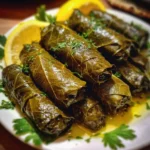
Ingredients
Here is everything you will need to create these delicious, authentic Mediterranean parcels of flavor. Each component plays a crucial role in building the final, harmonious taste profile.
For the Grape Leaves and Cooking Liquid:
- 1 jar (16 ounces) grape leaves in brine: These are the tender wrappers for our filling. Look for a jar with large, intact leaves for easier rolling.
- 1/2 cup extra virgin olive oil, divided: A foundational flavor in Mediterranean cooking. We’ll use some for the filling and the rest for the cooking liquid, ensuring richness and a silky texture.
- 1/2 cup freshly squeezed lemon juice (from 2-3 lemons): This provides the signature tangy, bright flavor that cuts through the richness of the filling.
- 3 cups water or vegetable broth: This is the simmering liquid that will gently cook the dolmades, infusing them with moisture and flavor.
- Several extra grape leaves or slices of potato/tomato: These are used to line the bottom of the pot to prevent the dolmades from scorching during the long simmer.
For the Savory Filling:
- 1 lb lean ground beef: Provides a hearty, savory base for the filling. Its rich flavor pairs beautifully with the herbs and lemon.
- 1 large yellow onion, finely chopped: Adds a sweet, aromatic foundation to the filling when sautéed.
- 3–4 cloves garlic, minced: Lends a pungent, savory depth that is essential in Mediterranean cuisine.
- 1 cup uncooked long-grain white rice (like Carolina or Calrose), rinsed: This is the binder and heart of the filling. It will absorb all the delicious flavors as it cooks inside the grape leaf. Rinsing removes excess starch for a better texture.
- 1/2 cup fresh parsley, finely chopped: Brings a clean, peppery freshness.
- 1/2 cup fresh dill, finely chopped: Adds a unique, slightly anise-like, and quintessentially Greek/Mediterranean aroma and taste.
- 1/4 cup fresh mint, finely chopped: Provides a cool, bright counterpoint to the other savory ingredients.
- 1 teaspoon dried oregano: A classic Mediterranean herb that adds a robust, earthy flavor.
- 1 teaspoon salt, or to taste: Enhances all the other flavors in the filling.
- 1/2 teaspoon black pepper: Adds a gentle, warming spice.
- Pinch of allspice or cinnamon (optional): A secret ingredient in many traditional recipes, it adds a subtle warmth and complexity to the meat filling.
Instructions
Making stuffed grape leaves is a process, but each step is simple and meditative. Follow this guide carefully for perfect results every time.
Step 1: Prepare the Grape Leaves
First, you need to prepare your primary ingredient: the grape leaves. Carefully open the jar and pour out the brine. Gently separate the leaves, being careful not to tear them. Place them in a large bowl and cover them with hot water. Let them soak for about 15-20 minutes. This step is crucial as it helps to remove the excess salty brine and makes the leaves more tender and pliable, which is essential for easy rolling. After soaking, drain the leaves in a colander and gently pat them dry with a paper towel. Set aside the torn or very small leaves; we will use these to line the pot later.
Step 2: Start the Filling
In a large skillet or Dutch oven, heat 1/4 cup of the extra virgin olive oil over medium heat. Once the oil is shimmering, add the finely chopped yellow onion. Sauté for 5-7 minutes, stirring occasionally, until the onion becomes soft, translucent, and slightly sweet. Add the minced garlic and cook for another minute until fragrant. Be careful not to let the garlic burn, as it will become bitter.
Step 3: Cook the Meat and Combine Filling Ingredients
Add the lean ground beef to the skillet with the onions and garlic. Use a wooden spoon to break up the meat into small crumbles. Cook until the beef is browned all over, about 8-10 minutes. Drain off any excess fat from the skillet.
Now, turn off the heat. Add the rinsed long-grain white rice, the chopped fresh parsley, dill, and mint, the dried oregano, salt, black pepper, and the optional pinch of allspice or cinnamon to the skillet. Stir everything together until it’s thoroughly combined. Your kitchen should be filled with an incredible aroma at this point! This mixture is your filling. It’s a good idea to taste a tiny bit of the mixture (keeping in mind the rice is raw) to check for seasoning, adding more salt or pepper if needed.
Step 4: The Art of Rolling the Grape Leaves
This is the most time-consuming but also the most rewarding part of the process. Set up a clean work surface, like a large cutting board.
- Take one grape leaf and lay it flat, shiny-side down. The dull, veiny side should be facing up towards you. The stem end should be closest to you. If there is a tough stem, carefully snip it off with kitchen shears.
- Place about one tablespoon of the filling in the center of the leaf, near the stem end. Shape the filling into a small, compact log. Do not overfill, as the rice will expand during cooking.
- Begin rolling: Fold the bottom of the leaf (the part with the stem) up and over the filling, tucking it in snugly.
- Fold the right side of the leaf over towards the center.
- Fold the left side of the leaf over towards the center, creating a neat rectangular packet.
- Continue rolling the packet upwards towards the top point of the leaf, keeping it snug but not overly tight. It should look like a small, neat cigar or burrito.
- Set the completed dolma aside, seam-side down, and repeat the process with the remaining leaves and filling.
Step 5: Arranging the Dolmades in the Pot
Select a large, heavy-bottomed pot or Dutch oven. To create a protective layer at the bottom, use the torn or small grape leaves you set aside earlier to line the entire bottom surface of the pot. You can also use thin slices of potato or tomato for this. This clever trick prevents the dolmades from sticking to the bottom and scorching during the long, slow simmer.
Arrange the rolled grape leaves in the pot, seam-side down. Pack them in tightly, side by side, in a single layer. This snug fit is important as it helps prevent them from unravelling while they cook. If you have enough, you can create a second layer on top of the first.
Step 6: Simmering to Perfection
Pour the remaining 1/4 cup of extra virgin olive oil and the 1/2 cup of fresh lemon juice over the arranged dolmades. Then, pour in the 3 cups of water or vegetable broth, or just enough to almost cover the dolmades.
To keep the dolmades submerged and prevent them from floating and unrolling, place a heatproof plate upside down directly on top of them. This acts as a weight.
Bring the liquid to a gentle boil over medium-high heat. Once it’s boiling, immediately reduce the heat to the lowest possible setting. Cover the pot with a tight-fitting lid and let the dolmades simmer for 60 to 90 minutes. The cooking time can vary depending on the tenderness of your leaves. The dolmades are done when the grape leaves are very tender and the rice inside is fully cooked. You can test one to check for doneness.
Step 7: The Crucial Resting Period
Once the dolmades are cooked, turn off the heat but do not remove the lid or the plate. Let them rest in the pot for at least 30 minutes, or even longer, until they come to room temperature. This resting period is vital. It allows the dolmades to absorb any remaining flavorful liquid and helps them firm up, making them easier to handle and enhancing their taste significantly.
Nutrition
- Serving Size: one normal portion
- Calories: 400