Ingredients
Scale
- 2 ½ cups (300g) All-Purpose Flour: The structural foundation of our cake. Using all-purpose flour provides the perfect balance of tenderness and strength, ensuring the cake holds its shape while remaining soft.
- 1 ½ cups (300g) Granulated Sugar: This is our primary sweetener, but it also plays a crucial role in the texture, helping to create a tender crumb by incorporating air when creamed with butter.
- 1 cup (226g) Unsalted Butter, at room temperature: The key to a rich, flavorful, and moist cake. Using unsalted butter allows you to control the salt content, and having it at room temperature is non-negotiable for proper creaming.
- 4 large Eggs, at room temperature: Eggs provide structure, richness, and leavening. Room temperature eggs will incorporate more easily into the batter, creating a smoother, more uniform texture.
- 1 cup (240ml) Buttermilk, at room temperature: This is the secret weapon for an unbelievably moist cake. The acidity in buttermilk tenderizes the gluten in the flour, resulting in a super soft crumb.
- 2 teaspoons Baking Powder: A crucial leavening agent that gives the cake its lift and light, airy texture.
- ½ teaspoon Baking Soda: Works in conjunction with the acidic buttermilk to provide additional lift and tenderness.
- ½ teaspoon Salt: A small amount of salt is essential to balance the sweetness and enhance all the other flavors in the cake.
- 2 teaspoons Pure Vanilla Extract: The heart of our vanilla batter. Use a high-quality pure vanilla extract for the best, most aromatic flavor.
- ⅓ cup (30g) Unsweetened Dutch-Processed Cocoa Powder: For a deep, rich, and smooth chocolate flavor without any bitterness. Dutch-processing neutralizes the acidity for a milder taste and darker color.
- 3 tablespoons (45ml) Hot Coffee or Hot Water: This is used to “bloom” the cocoa powder, which intensifies the chocolate flavor and ensures it mixes smoothly into the batter without creating lumps.
Instructions
- Preparation and Preheating: Begin by preheating your oven to 350°F (175°C). Thoroughly grease and flour a 10-cup bundt pan or a 9×5 inch loaf pan. This two-step process of greasing (with butter or baking spray) and then lightly dusting with flour creates a non-stick barrier that is essential for ensuring your beautifully swirled cake releases from the pan cleanly and without breaking. Set the prepared pan aside.
- Combine Dry Ingredients: In a medium-sized mixing bowl, whisk together the 2 ½ cups of all-purpose flour, 2 teaspoons of baking powder, ½ teaspoon of baking soda, and ½ teaspoon of salt. Sifting these ingredients together is highly recommended. This step not only removes any potential lumps but also aerates the flour, which contributes to a lighter, more tender final cake texture.
- Cream Butter and Sugar: In the large bowl of a stand mixer fitted with the paddle attachment, or in a large bowl with a hand mixer, beat the 1 cup of room temperature unsalted butter on medium speed until it is smooth and creamy. Gradually add the 1 ½ cups of granulated sugar and continue to beat on medium-high speed for a full 3-5 minutes. The mixture should become pale, light, and very fluffy. This creaming process is vital; it incorporates thousands of tiny air bubbles into the butter and sugar, which will later expand in the oven and act as a primary leavener for the cake.
- Incorporate Eggs and Vanilla: Reduce the mixer speed to medium-low. Add the 4 room temperature eggs one at a time, making sure each egg is fully incorporated into the batter before adding the next. Scrape down the sides and bottom of the bowl with a spatula after adding the last egg to ensure everything is well combined. Mix in the 2 teaspoons of pure vanilla extract.
- Alternate Wet and Dry Ingredients: With the mixer on its lowest speed, begin adding the dry ingredient mixture and the buttermilk. Add approximately one-third of the dry ingredients, followed by half of the buttermilk. Repeat this process, ending with the final third of the dry ingredients. Mix only until the last streaks of flour have just disappeared. It is crucial not to overmix at this stage, as doing so can develop the gluten in the flour and lead to a tough, dense cake.
- Divide and Flavor the Batter: Remove the bowl from the mixer. Measure out approximately half of the vanilla batter (about 3 cups) and transfer it to a separate medium bowl. In a small bowl, whisk together the ⅓ cup of cocoa powder and the 3 tablespoons of hot coffee or water until a smooth, thick paste forms. Add this chocolate paste to one of the bowls of batter and gently fold it in with a spatula until it is evenly combined and no streaks remain. You now have one bowl of vanilla batter and one bowl of chocolate batter.
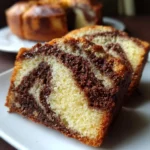
- Create the Marble Effect: Spoon the batters into your prepared pan, alternating between large dollops of the vanilla and chocolate batters. You can place them side by side or layer them on top of each other. Once all the batter is in the pan, insert a butter knife or a wooden skewer straight down into the batter. Gently drag the knife through the batter in a “figure-eight” or “S” motion 2-3 times around the pan. Be very careful not to overmix; the goal is to create distinct swirls, not to blend the two colors into a uniform light brown. Two or three passes are all you need for a beautiful marble pattern.
- Bake to Perfection: Place the pan in the preheated oven on the center rack. Bake for 45-55 minutes for a bundt pan, or 60-70 minutes for a loaf pan. The cake is done when it is golden brown, the sides are pulling away from the pan, and a wooden skewer or toothpick inserted into the center comes out clean or with a few moist crumbs attached (but no wet batter).
- Cooling the Cake: Once baked, remove the cake from the oven and place it on a wire cooling rack. Let the cake cool completely in the pan for at least 15-20 minutes. This allows the cake to set and firm up, preventing it from breaking when you invert it. After the initial cooling period, carefully invert the pan onto the wire rack to release the cake. Allow the cake to cool completely to room temperature before slicing and serving. This final cooling step is important for the texture to fully set.
Nutrition
- Serving Size: one normal portion
- Calories: 400