
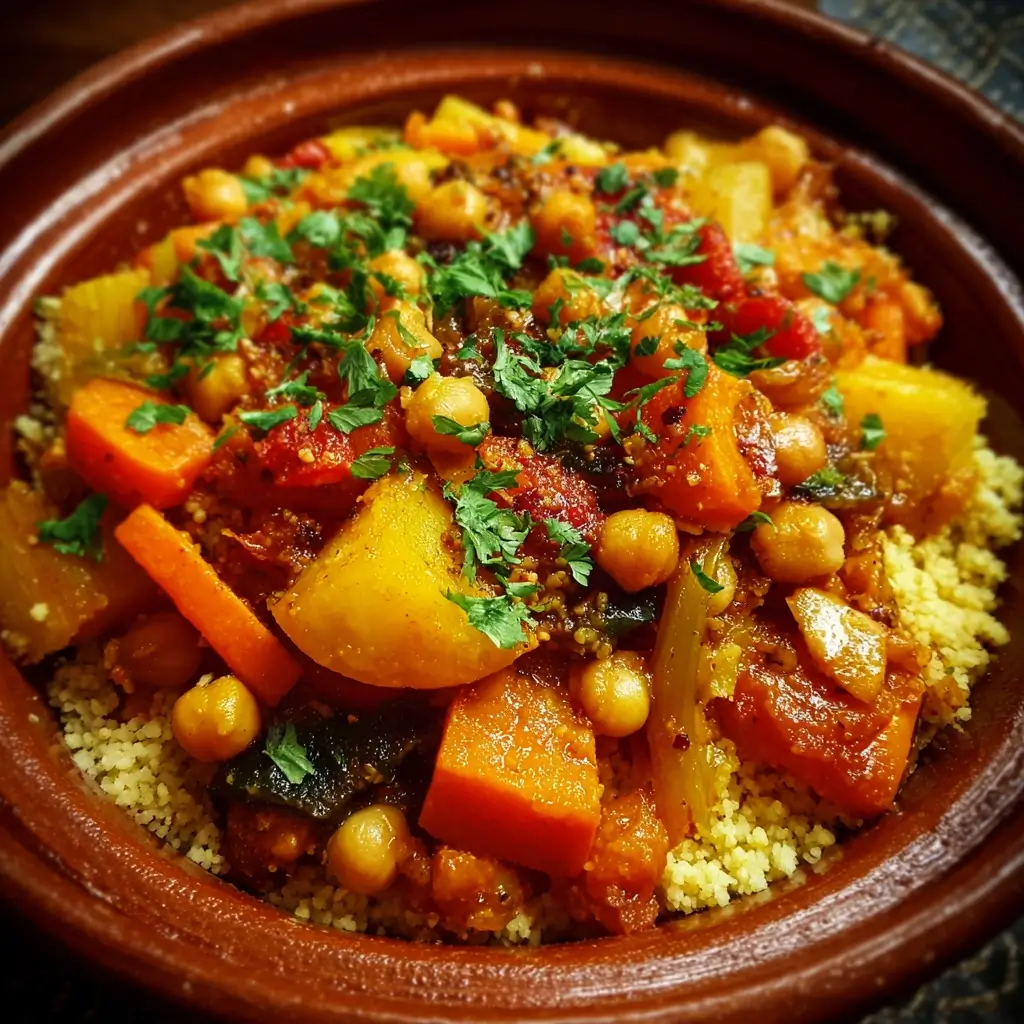

The first time the aroma of this Vegetable and Chickpea Tagine filled my kitchen, it felt like an instant transportation to a bustling Marrakesh souk. I had been searching for a meal that was both profoundly comforting and vibrantly healthy, a dish that could break the monotony of our weekly dinner rotation. I’ll admit, when I first announced we were having a “Moroccan stew,” my family was a bit skeptical. The kids eyed the list of spices with suspicion, and my husband raised an eyebrow, likely picturing a bland and boring vegetable dish. But then, the magic began. As the onions softened in the warm olive oil and the spices hit the heat, the house was enveloped in a scent that was sweet, earthy, and impossibly alluring. Skepticism slowly turned to curiosity. By the time I lifted the lid to reveal the jewel-toned vegetables, tender chickpeas, and plump apricots simmering in a rich, fragrant broth, everyone was gathered around, plates in hand. The verdict? An overwhelming success. It has since become our go-to “culinary hug in a bowl,” a dish we make to celebrate small victories, to warm up on a chilly evening, or simply when we need a meal that nourishes both body and soul. This recipe isn’t just about food; it’s an experience—a delightful, easy, and incredibly flavorful journey that I’m so excited to share with you.
Unveiling the Magic: What Exactly is a Tagine?
Before we dive into the heart of the recipe, it’s worth taking a moment to understand what a “tagine” truly is. The word refers to two things: the iconic North African cooking vessel and the aromatic, slow-simmered stew that is cooked within it.
The pot itself is a marvel of ancient culinary engineering. Traditionally made from clay or ceramic, it consists of two parts: a flat, circular base and a large, conical or dome-shaped lid that sits snugly on top. The design is ingenious. As the stew simmers, steam rises from the food, condenses on the cooler, tall walls of the lid, and then trickles back down into the dish. This self-basting process creates a uniquely moist and tender result, locking in all the flavors and aromas of the ingredients. It’s a method of slow cooking that allows tough cuts of beef or lamb to become fall-apart tender and vegetables to absorb the rich tapestry of spices without turning to mush.
The dish, the tagine itself, is the heart of Moroccan cuisine. It is a harmonious blend of sweet and savory flavors, a hallmark of the region’s culinary style. Common ingredients include meats like lamb, beef, or chicken, combined with vegetables, legumes, and often a sweet element like dried apricots, prunes, or dates. The soul of any tagine, however, lies in its complex spice blend. Spices like cumin, coriander, turmeric, ginger, cinnamon, and the famous Moroccan blend known as Ras el Hanout are not just additions; they are the foundation upon which the entire dish is built. This Vegetable and Chickpea Tagine is a beautiful vegetarian expression of this tradition, proving that you don’t need meat to create a dish with incredible depth, complexity, and satisfying richness. While using a traditional tagine pot enhances the experience, the beauty of this recipe is that its soul can be captured in a heavy-bottomed Dutch oven or a deep pot with a tight-fitting lid, making it accessible to every home cook.
The Symphony of Flavors: Your Ingredients List
The magic of this tagine lies in the beautiful interplay of simple, wholesome ingredients. Each component is chosen not just for its individual taste, but for how it contributes to the overall harmony of the dish.
The Aromatic Foundation
- 2 tablespoons Olive Oil: The starting point for building flavor. A good quality extra virgin olive oil will add a subtle, fruity depth.
- 2 medium Yellow Onions, chopped: When slowly sautéed, onions provide a sweet, caramelized base that is essential for the tagine’s richness.
- 4 cloves Garlic, minced: Adds a pungent, aromatic kick that cuts through the sweetness and earthiness of the other ingredients.
- 1 tablespoon Fresh Ginger, grated: Brings a warm, zesty spice that brightens the entire dish.
The Hearty Vegetable and Protein Core
- 2 large Carrots, peeled and cut into 1-inch chunks: Their natural sweetness intensifies with slow cooking, and they hold their shape well.
- 2 medium Sweet Potatoes, peeled and cut into 1-inch cubes: These are the star of the show, providing a creamy texture and earthy sweetness that pairs perfectly with the spices.
- 1 medium Zucchini, cut into 1-inch chunks: Adds a lovely tenderness and a fresh, green element to the stew. It’s added later in the cooking process to prevent it from getting mushy.
- 1 (15-ounce) can Diced Tomatoes, undrained: Forms the acidic and liquid base of the sauce, helping to meld all the flavors together.
- 1 (15-ounce) can Chickpeas, rinsed and drained: These provide a wonderful, nutty flavor, a satisfyingly firm texture, and a fantastic source of plant-based protein and fiber.
The Essential Spice Blend & Liquids
- 2 teaspoons Ground Cumin: Earthy and warm, cumin is a cornerstone of Moroccan cooking.
- 2 teaspoons Ground Coriander: Adds a bright, citrusy, and slightly sweet note that complements the other spices.
- 1 teaspoon Turmeric: Provides a beautiful golden hue and a subtle, musky flavor with powerful anti-inflammatory properties.
- 1 teaspoon Smoked Paprika: Lends a gentle smokiness and deep red color, adding a layer of complexity.
- ½ teaspoon Ground Cinnamon: Don’t be shy! Cinnamon adds a surprising warmth and sweetness that is characteristic of many tagines.
- ¼ teaspoon Cayenne Pepper (or more, to taste): For a gentle background heat. Feel free to adjust based on your preference for spice.
- 4 cups Vegetable Broth: The primary cooking liquid. Use a low-sodium, good-quality broth to control the saltiness of the final dish.
- Pinch of Saffron threads (optional): The ultimate touch of luxury. Saffron imparts an exquisite floral aroma and a stunning golden color.
The Finishing Touches of Sweetness and Zest
- ½ cup Dried Apricots, halved: These plump up during cooking, releasing a concentrated sweetness that beautifully balances the savory spices.
- 2 tablespoons Lemon Juice, freshly squeezed: A critical final step. The acidity from the lemon juice brightens and lifts all the flavors, cutting through the richness.
- Salt and freshly ground Black Pepper, to taste: Essential for seasoning and bringing all the flavors into focus.
- For Garnish (optional but highly recommended): Fresh cilantro or parsley, toasted slivered almonds, and a dollop of plain yogurt or coconut yogurt.
Step-by-Step Instructions to Tagine Perfection
Follow these detailed steps to create a deeply flavorful and aromatic tagine. The key is to build layers of flavor at each stage. This recipe is designed for a large Dutch oven or a heavy-bottomed pot with a tight-fitting lid, but if you have a traditional tagine pot, use it!
- Build the Aromatic Base: Place your Dutch oven or large pot over medium heat and add the olive oil. Once the oil is shimmering, add the chopped onions. Sauté for 5-7 minutes, stirring occasionally, until the onions are soft, translucent, and just beginning to caramelize. This slow sautéing process develops a sweet foundation. Add the minced garlic and grated ginger and cook for another minute until fragrant. Be careful not to burn the garlic.
- Bloom the Spices: Add the ground cumin, ground coriander, turmeric, smoked paprika, cinnamon, and cayenne pepper directly to the pot with the onions. Stir constantly for about 60 seconds. This step, known as “blooming,” toasts the spices, awakening their essential oils and unlocking their full aromatic potential. Your kitchen should start to smell absolutely incredible at this point.
- Incorporate the Hearty Vegetables: Add the carrot and sweet potato chunks to the pot. Stir well to coat them completely in the fragrant spice mixture. Let them cook for about 5 minutes, allowing them to absorb the flavors and get a slight head start on cooking.
- Create the Simmering Broth: Pour in the can of undrained diced tomatoes and the vegetable broth. If you’re using saffron, crumble the threads between your fingers and add them now. Stir everything together, scraping up any flavorful browned bits from the bottom of the pot. Bring the mixture to a boil.
- The Slow Simmer: Once the liquid is boiling, reduce the heat to low, cover the pot with a tight-fitting lid, and let it simmer gently. This is where the magic happens. Allow it to cook for 25-30 minutes. The goal is to get the sweet potatoes and carrots tender, but not mushy.
- Add the Final Components: After the initial simmer, remove the lid and stir in the zucchini chunks, the rinsed and drained chickpeas, and the halved dried apricots. The zucchini is added now to ensure it becomes tender-crisp rather than disintegrating. The chickpeas just need to be heated through, and the apricots will plump up beautifully in the hot broth.
- Finish the Cook: Place the lid back on the pot and continue to simmer for another 10-15 minutes, or until the zucchini is tender and the flavors have had a chance to meld together perfectly.
- The Final Flourish: Turn off the heat. Stir in the freshly squeezed lemon juice. This is a non-negotiable step! The bright acidity will awaken all the deep, savory, and sweet notes in the dish. Taste the tagine and season generously with salt and freshly ground black pepper until the flavors pop.
- Rest and Serve: Allow the tagine to rest for at least 10 minutes off the heat before serving. This gives the flavors even more time to settle and deepen. Garnish generously before bringing it to the table.
Nutrition Facts
This tagine is as nourishing as it is delicious. The nutritional information is an estimate and can vary based on specific ingredients used.
Servings: 6-8
Calories per serving: Approximately 350-400 kcal
- High in Fiber: Thanks to the chickpeas, sweet potatoes, and other vegetables, this dish is packed with dietary fiber, which is crucial for digestive health and helps keep you feeling full and satisfied.
- Rich in Vitamin A: The sweet potatoes and carrots are powerhouse sources of beta-carotene, which the body converts to Vitamin A, essential for vision, immune function, and skin health.
- Excellent Source of Plant-Based Protein: Chickpeas provide a substantial amount of protein, making this a satisfying and complete meal for vegetarians and meat-eaters alike.
- Loaded with Antioxidants: The array of spices like turmeric and paprika, along with the garlic and onions, provides a wealth of antioxidants that help combat cellular damage in the body.
- Naturally Low in Fat: This stew relies on whole foods and a minimal amount of healthy olive oil, making it a heart-healthy choice that is low in saturated fat.
Preparation Time
This dish is perfect for a lazy weekend or even a manageable weeknight if you prep your vegetables in advance.
- Prep Time: 20 minutes (chopping vegetables, measuring spices)
- Cook Time: 50-60 minutes
- Total Time: Approximately 1 hour and 15 minutes
The majority of the time is hands-off simmering, allowing you to relax or prepare your side dishes while the incredible aromas fill your home.
How to Serve Your Vegetable and Chickpea Tagine
Serving a tagine is an experience in itself. The goal is to complement its rich flavors and textures. Here are some traditional and modern ways to present your masterpiece:
- The Traditional Grain Base:
- Fluffy Couscous: This is the quintessential pairing. Prepare a simple, fluffy couscous (instant or traditional) to soak up every last drop of the fragrant sauce. To enhance it, fluff the couscous with a bit of butter or olive oil and a sprinkle of salt.
- Hearty Pearl Couscous: Also known as Israeli couscous, these larger pearls have a satisfying, chewy texture that provides a wonderful contrast to the tender vegetables.
- Alternative Grain Options:
- Quinoa: A fantastic gluten-free option that is high in protein. Its nutty flavor works beautifully with the tagine.
- Brown or White Rice: A simple bed of long-grain rice is always a welcome and comforting base.
- Millet or Bulgur Wheat: Both offer a lovely texture and nutty flavor that complements the dish well.
- Don’t Forget the Bread:
- Moroccan Khobz or Pita Bread: A soft, warm flatbread is essential for scooping and dipping. There’s nothing better than using a piece of bread to mop up the flavorful sauce at the bottom of your bowl.
- Crusty Sourdough: A slice of crusty bread also works wonderfully for dipping.
- The Crucial Garnishes: Garnishes are not just for looks; they add a final layer of flavor and texture.
- Fresh Herbs: A generous sprinkle of roughly chopped fresh cilantro or flat-leaf parsley adds a burst of freshness that cuts through the richness.
- Crunch and Richness: Toasted slivered almonds or pine nuts provide a delightful crunch and nutty flavor.
- Creamy Contrast: A dollop of plain Greek yogurt, labneh, or a dairy-free coconut yogurt offers a cool, creamy tang that balances the warm spices.
- A Final Zing: A few extra wedges of fresh lemon on the side for those who like an extra bit of brightness.
Additional Tips for an Unforgettable Tagine
Take your tagine from great to absolutely exceptional with these eight professional tips.
- Don’t Rush the Onions: The first step is one of the most important. Sautéing the onions slowly over medium-low heat until they are deeply soft and sweet builds an incredible flavor foundation. Rushing this step will result in a less complex and savory broth.
- Make Your Own Simple Ras el Hanout: If you can’t find a pre-made Ras el Hanout blend, don’t worry. You can approximate its flavor by adding a pinch of allspice and a tiny grating of nutmeg to the existing spice mix. It will add that extra layer of Moroccan authenticity.
- The Power of Preserved Lemons: For a truly authentic flavor, consider adding a finely chopped preserved lemon (pulp and rind) along with the zucchini. Preserved lemons offer a unique, salty, and intensely lemony flavor that is impossible to replicate with fresh lemon alone. You can find them in specialty stores or online.
- Control Your Liquid: If you find your tagine is too watery towards the end of cooking, simply remove the lid for the last 10-15 minutes. This will allow some of the excess liquid to evaporate and the sauce to thicken naturally into a more stew-like consistency.
- Balance is Key: Taste your tagine before serving and adjust. Does it need more salt to bring out the flavors? A bit more lemon juice for brightness? A pinch more cayenne for heat? A touch of honey or maple syrup if you feel it needs more sweetness? Trust your palate.
- Better the Next Day: Like many stews, this tagine tastes even better on the second day. The flavors have more time to meld and deepen. Make a big batch and enjoy the leftovers for a quick and delicious lunch or dinner.
- Cut Vegetables Uniformly: Try to cut your sweet potatoes and carrots into similar-sized chunks (about 1-inch). This ensures they cook evenly, so you won’t have some pieces that are hard while others are falling apart.
- Toast Whole Spices: For the ultimate flavor boost, start with whole cumin and coriander seeds. Toast them in a dry skillet for a few minutes until fragrant, then cool and grind them yourself. The difference in aroma and taste is remarkable.
Frequently Asked Questions (FAQ)
Here are answers to some common questions about making this Vegetable and Chickpea Tagine.
1. Can I make this tagine without a traditional tagine pot?
Absolutely! This recipe is specifically written to be made in a heavy-bottomed Dutch oven or a large pot with a tight-fitting lid. The key is to have a pot that distributes heat evenly and a lid that traps moisture, simulating the action of a classic tagine.
2. Can I add meat to this recipe?
Yes, this recipe is a wonderful base for a meat tagine. You could add 1.5 lbs of cubed beef stew meat or lamb shoulder. Brown the meat in batches after sautéing the onions, remove it from the pot, and then proceed with the recipe. Add the meat back in with the broth and simmer for at least 1-1.5 hours, or until the meat is tender, before adding the zucchini and chickpeas.
3. How do I store and reheat leftovers?
Store any leftover tagine in an airtight container in the refrigerator for up to 4 days. It reheats beautifully on the stovetop over low heat or in the microwave. The flavors will be even more developed the next day!
4. Can I freeze this vegetable tagine?
Yes, this dish freezes very well. Let it cool completely, then transfer it to a freezer-safe container or bag. It can be frozen for up to 3 months. Thaw it overnight in the refrigerator before reheating. Note that the sweet potatoes may be slightly softer in texture after freezing, but the flavor will still be excellent.
5. What is Ras el Hanout and is it necessary?
Ras el Hanout is a complex Moroccan spice blend that translates to “head of the shop,” meaning it’s the best blend a spice merchant has to offer. It can contain dozens of spices. While this recipe creates a beautiful flavor profile without it, adding a teaspoon of Ras el Hanout along with the other spices will provide an extra layer of authenticity and complexity.
6. My tagine seems too watery. How can I thicken it?
The easiest way is to let it simmer uncovered for the last 10-15 minutes of cooking time to allow the sauce to reduce. Alternatively, you can make a slurry by mixing 1 tablespoon of cornstarch with 2 tablespoons of cold water, then stirring it into the simmering tagine until it thickens.
7. Can I use different vegetables in this recipe?
Definitely! This recipe is very forgiving. Feel free to substitute or add other vegetables. Butternut squash is a great substitute for sweet potato. You could also add bell peppers (add with the zucchini), cauliflower florets, or green beans. Just be mindful of cooking times for different vegetables.
8. Is this recipe vegan and gluten-free?
As written, this recipe is naturally vegan. It is also gluten-free, provided you use a certified gluten-free vegetable broth. When serving, opt for gluten-free grains like quinoa or rice instead of couscous to keep the entire meal gluten-free.

Vegetable and Chickpea Tagine
Ingredients
The magic of this tagine lies in the beautiful interplay of simple, wholesome ingredients. Each component is chosen not just for its individual taste, but for how it contributes to the overall harmony of the dish.
The Aromatic Foundation
- 2 tablespoons Olive Oil: The starting point for building flavor. A good quality extra virgin olive oil will add a subtle, fruity depth.
- 2 medium Yellow Onions, chopped: When slowly sautéed, onions provide a sweet, caramelized base that is essential for the tagine’s richness.
- 4 cloves Garlic, minced: Adds a pungent, aromatic kick that cuts through the sweetness and earthiness of the other ingredients.
- 1 tablespoon Fresh Ginger, grated: Brings a warm, zesty spice that brightens the entire dish.
The Hearty Vegetable and Protein Core
- 2 large Carrots, peeled and cut into 1-inch chunks: Their natural sweetness intensifies with slow cooking, and they hold their shape well.
- 2 medium Sweet Potatoes, peeled and cut into 1-inch cubes: These are the star of the show, providing a creamy texture and earthy sweetness that pairs perfectly with the spices.
- 1 medium Zucchini, cut into 1-inch chunks: Adds a lovely tenderness and a fresh, green element to the stew. It’s added later in the cooking process to prevent it from getting mushy.
- 1 (15-ounce) can Diced Tomatoes, undrained: Forms the acidic and liquid base of the sauce, helping to meld all the flavors together.
- 1 (15-ounce) can Chickpeas, rinsed and drained: These provide a wonderful, nutty flavor, a satisfyingly firm texture, and a fantastic source of plant-based protein and fiber.
The Essential Spice Blend & Liquids
- 2 teaspoons Ground Cumin: Earthy and warm, cumin is a cornerstone of Moroccan cooking.
- 2 teaspoons Ground Coriander: Adds a bright, citrusy, and slightly sweet note that complements the other spices.
- 1 teaspoon Turmeric: Provides a beautiful golden hue and a subtle, musky flavor with powerful anti-inflammatory properties.
- 1 teaspoon Smoked Paprika: Lends a gentle smokiness and deep red color, adding a layer of complexity.
- ½ teaspoon Ground Cinnamon: Don’t be shy! Cinnamon adds a surprising warmth and sweetness that is characteristic of many tagines.
- ¼ teaspoon Cayenne Pepper (or more, to taste): For a gentle background heat. Feel free to adjust based on your preference for spice.
- 4 cups Vegetable Broth: The primary cooking liquid. Use a low-sodium, good-quality broth to control the saltiness of the final dish.
- Pinch of Saffron threads (optional): The ultimate touch of luxury. Saffron imparts an exquisite floral aroma and a stunning golden color.
The Finishing Touches of Sweetness and Zest
- ½ cup Dried Apricots, halved: These plump up during cooking, releasing a concentrated sweetness that beautifully balances the savory spices.
- 2 tablespoons Lemon Juice, freshly squeezed: A critical final step. The acidity from the lemon juice brightens and lifts all the flavors, cutting through the richness.
- Salt and freshly ground Black Pepper, to taste: Essential for seasoning and bringing all the flavors into focus.
- For Garnish (optional but highly recommended): Fresh cilantro or parsley, toasted slivered almonds, and a dollop of plain yogurt or coconut yogurt.
Instructions
Follow these detailed steps to create a deeply flavorful and aromatic tagine. The key is to build layers of flavor at each stage. This recipe is designed for a large Dutch oven or a heavy-bottomed pot with a tight-fitting lid, but if you have a traditional tagine pot, use it!
- Build the Aromatic Base: Place your Dutch oven or large pot over medium heat and add the olive oil. Once the oil is shimmering, add the chopped onions. Sauté for 5-7 minutes, stirring occasionally, until the onions are soft, translucent, and just beginning to caramelize. This slow sautéing process develops a sweet foundation. Add the minced garlic and grated ginger and cook for another minute until fragrant. Be careful not to burn the garlic.
- Bloom the Spices: Add the ground cumin, ground coriander, turmeric, smoked paprika, cinnamon, and cayenne pepper directly to the pot with the onions. Stir constantly for about 60 seconds. This step, known as “blooming,” toasts the spices, awakening their essential oils and unlocking their full aromatic potential. Your kitchen should start to smell absolutely incredible at this point.
- Incorporate the Hearty Vegetables: Add the carrot and sweet potato chunks to the pot. Stir well to coat them completely in the fragrant spice mixture. Let them cook for about 5 minutes, allowing them to absorb the flavors and get a slight head start on cooking.
- Create the Simmering Broth: Pour in the can of undrained diced tomatoes and the vegetable broth. If you’re using saffron, crumble the threads between your fingers and add them now. Stir everything together, scraping up any flavorful browned bits from the bottom of the pot. Bring the mixture to a boil.
- The Slow Simmer: Once the liquid is boiling, reduce the heat to low, cover the pot with a tight-fitting lid, and let it simmer gently. This is where the magic happens. Allow it to cook for 25-30 minutes. The goal is to get the sweet potatoes and carrots tender, but not mushy.
- Add the Final Components: After the initial simmer, remove the lid and stir in the zucchini chunks, the rinsed and drained chickpeas, and the halved dried apricots. The zucchini is added now to ensure it becomes tender-crisp rather than disintegrating. The chickpeas just need to be heated through, and the apricots will plump up beautifully in the hot broth.
- Finish the Cook: Place the lid back on the pot and continue to simmer for another 10-15 minutes, or until the zucchini is tender and the flavors have had a chance to meld together perfectly.
- The Final Flourish: Turn off the heat. Stir in the freshly squeezed lemon juice. This is a non-negotiable step! The bright acidity will awaken all the deep, savory, and sweet notes in the dish. Taste the tagine and season generously with salt and freshly ground black pepper until the flavors pop.
- Rest and Serve: Allow the tagine to rest for at least 10 minutes off the heat before serving. This gives the flavors even more time to settle and deepen. Garnish generously before bringing it to the table.
Nutrition
- Serving Size: one normal portion
- Calories: 400