
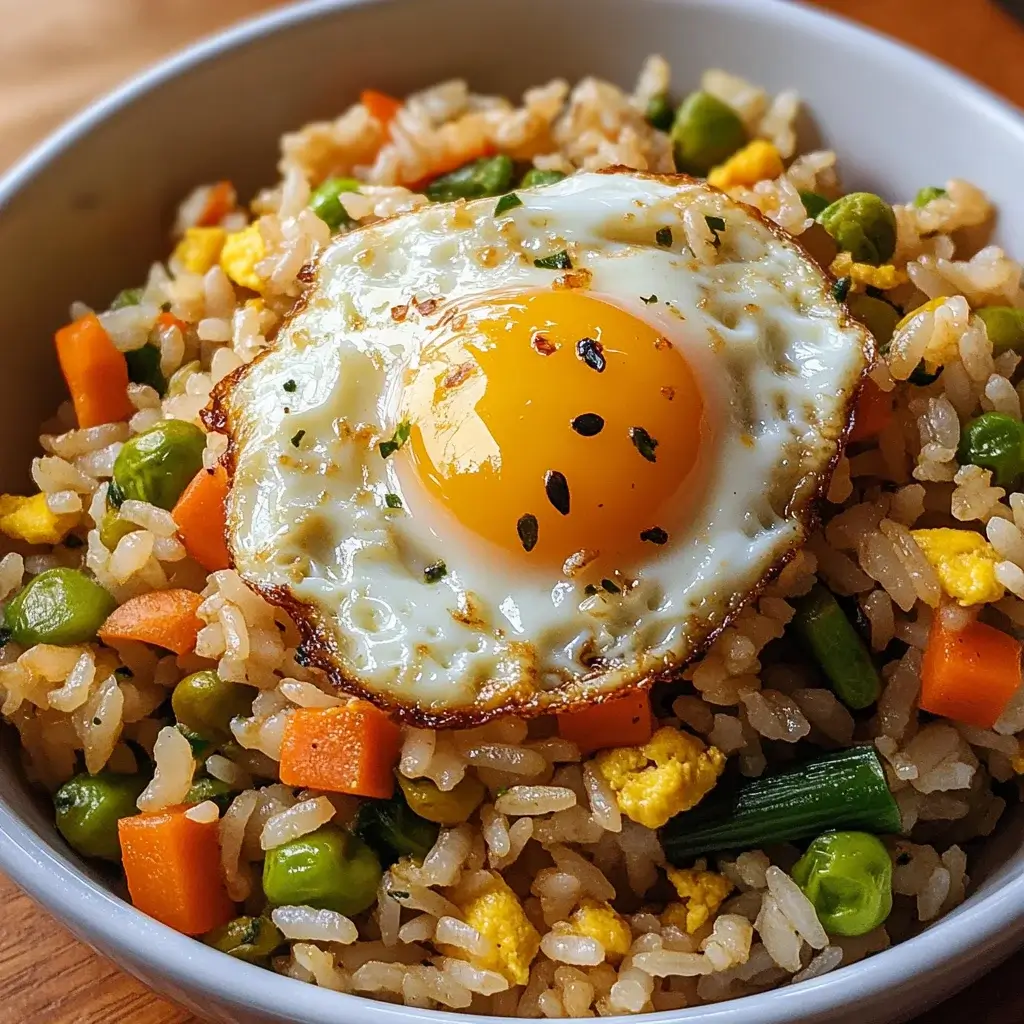

It’s funny how some of the simplest dishes can become family staples, isn’t it? For us, it’s definitely Vegetable Rice with Fried Egg. I stumbled upon this recipe during a busy weeknight scramble, needing something quick, healthy, and satisfying. Honestly, I wasn’t expecting much – just basic sustenance. But the aroma that filled the kitchen as the vegetables softened and mingled with the nutty rice was surprisingly inviting. And then, the crispy-edged fried egg on top? Pure magic! Even my usually picky eaters devoured it, asking for seconds. Since then, it’s become a regular in our rotation. It’s versatile enough to use whatever vegetables we have on hand, budget-friendly, and always a crowd-pleaser. If you’re looking for a comforting, nutritious, and incredibly easy meal that will bring smiles to your table, look no further. This Vegetable Rice with Fried Egg is it!
Ingredients
- Cooked Rice: 2 cups of cooked rice (long-grain, basmati, or jasmine work well). Provides the base of the dish, offering carbohydrates and a fluffy texture.
- Onion: 1 medium onion, chopped. Adds a savory and aromatic foundation to the vegetable medley.
- Carrot: 1 medium carrot, diced. Contributes sweetness, color, and a slight crunch.
- Bell Pepper: 1 bell pepper (any color), diced. Introduces sweetness, vitamins, and vibrant color.
- Frozen Peas: 1 cup of frozen peas. Adds a pop of sweetness, green color, and convenience.
- Garlic: 2 cloves of garlic, minced. Infuses the dish with pungent and savory flavor.
- Soy Sauce: 2 tablespoons of soy sauce (low sodium preferred). Provides umami and saltiness, enhancing the overall flavor profile.
- Sesame Oil: 1 tablespoon of sesame oil. Adds a nutty aroma and distinct Asian-inspired flavor.
- Vegetable Oil: 2 tablespoons of vegetable oil (or olive oil). Used for sautéing the vegetables and frying the eggs.
- Eggs: 4 large eggs. The star topping, providing protein, richness, and a delicious runny yolk.
- Salt and Black Pepper: To taste. Enhances and balances the flavors of all the ingredients.
- Optional Garnishes: Fresh cilantro, chopped green onions, sesame seeds, chili flakes. Adds visual appeal and extra flavor dimensions.
Instructions
- Prepare the Vegetables: Begin by chopping the onion, carrot, and bell pepper into small, uniform pieces. Mince the garlic cloves. Having all your vegetables prepped and ready to go will make the cooking process smoother and faster. This step is crucial for even cooking and flavor distribution.
- Sauté the Aromatics: Heat vegetable oil in a large skillet or wok over medium heat. Once the oil is hot and shimmering, add the chopped onion and sauté for about 3-4 minutes, or until softened and translucent. Stir occasionally to prevent burning. Sautéing the onion first releases its aromatic compounds and creates a flavorful base for the dish.
- Add Harder Vegetables: Add the diced carrots and bell peppers to the skillet with the softened onions. Continue to sauté for another 5-7 minutes, or until the carrots are slightly tender and the bell peppers are becoming soft. Stir frequently to ensure even cooking. Cooking the harder vegetables like carrots and bell peppers first ensures they are cooked through before adding softer vegetables.
- Incorporate Garlic and Frozen Peas: Add the minced garlic to the skillet and sauté for about 1 minute, or until fragrant. Be careful not to burn the garlic, as it can become bitter. Then, add the frozen peas directly from the freezer into the skillet. Stir everything together and cook for another 2-3 minutes, or until the peas are heated through and bright green. Frozen peas cook very quickly, so they are added towards the end to retain their vibrant color and texture.
- Add Cooked Rice and Seasoning: Add the cooked rice to the skillet with the vegetables. Break up any clumps of rice with a spatula or spoon. Pour in the soy sauce and sesame oil over the rice and vegetables. Stir everything together thoroughly, ensuring the rice is evenly coated with the soy sauce and sesame oil, and mixed with the vegetables. Continue to cook and stir for 3-5 minutes, or until the rice is heated through and the flavors are well combined. Taste and season with salt and black pepper to your preference. Remember that soy sauce is already salty, so adjust the added salt accordingly.
- Fry the Eggs: While the rice is heating through, prepare the fried eggs. Heat a separate non-stick skillet over medium heat with vegetable oil. Once the oil is hot, gently crack the eggs into the skillet, keeping them separated. Cook the eggs to your desired doneness. For runny yolks, cook for about 2-3 minutes, or until the whites are set and the yolks are still soft. For firmer yolks, cook for a bit longer. You can baste the eggs with hot oil from the pan to cook the tops and yolks more evenly, if desired.
- Assemble and Serve: Divide the vegetable rice among serving bowls. Top each serving with a freshly fried egg. Garnish with optional fresh cilantro, chopped green onions, sesame seeds, or chili flakes if desired. Serve immediately and enjoy the delightful combination of savory vegetable rice and runny-yolked fried egg. The warm runny yolk will coat the rice and vegetables, adding richness and flavor to each bite.
Nutrition Facts (Per Serving, Estimated)
- Servings: 4
- Calories: Approximately 450 kcal
- Protein: 15g
Note: Nutritional values are estimates and can vary based on specific ingredients and portion sizes.
Preparation Time
- Prep Time: 15 minutes (chopping vegetables, mincing garlic)
- Cook Time: 20 minutes (sautéing vegetables, cooking rice, frying eggs)
- Total Time: 35 minutes
This Vegetable Rice with Fried Egg is a fantastic option for a quick and satisfying meal, ready in under 40 minutes from start to finish. The minimal prep work and fast cooking time make it perfect for busy weeknights.
How to Serve
This versatile Vegetable Rice with Fried Egg can be enjoyed in numerous ways. Here are a few serving suggestions:
- As a Complete Meal: Serve it as a hearty and balanced main course for lunch or dinner. The combination of rice, vegetables, and egg provides carbohydrates, vitamins, and protein, making it a satisfying standalone dish.
- With a Side Salad: Pair it with a fresh and crisp side salad to add extra vegetables and lightness to the meal. A simple green salad with a vinaigrette dressing complements the richness of the rice and egg.
- Topped with Sauce: Enhance the flavor profile by drizzling your favorite sauce over the dish. Consider:
- Sriracha or Chili Garlic Sauce: For a spicy kick.
- Hoisin Sauce: For a sweet and savory Asian-inspired flavor.
- Oyster Sauce: For a richer umami depth.
- Yum Yum Sauce: For a creamy and tangy Japanese-style sauce.
- Alongside Protein: While it’s delicious on its own, you can also serve it as a side dish alongside grilled chicken, tofu, or shrimp for an even more substantial meal.
- In a Bowl with Toppings: Create a customizable bowl experience by offering various toppings like:
- Avocado slices: For creaminess and healthy fats.
- Kimchi: For a fermented and spicy element.
- Pickled ginger: For a tangy and palate-cleansing bite.
- Roasted seaweed snacks: For a crunchy and salty addition.
- As a Base for Leftovers: Vegetable rice is an excellent base for using up leftover cooked meats or vegetables. Simply stir in leftover shredded chicken, beef, or roasted vegetables to create a new and flavorful meal.
Additional Tips for Perfect Vegetable Rice with Fried Egg
- Rice Choice Matters: While any cooked rice will work, using day-old cooked rice is ideal. Day-old rice is drier and less sticky, which results in better texture when stir-fried. If using freshly cooked rice, spread it out on a plate to cool slightly and dry out a bit before adding it to the skillet.
- Vegetable Versatility: Feel free to customize the vegetables based on your preferences and what you have on hand. Broccoli florets, zucchini, mushrooms, corn kernels, snap peas, and edamame are all excellent additions. Consider seasonal vegetables for the freshest flavors.
- Don’t Overcrowd the Pan: When sautéing vegetables, ensure you don’t overcrowd the skillet. Overcrowding can lower the pan temperature, causing the vegetables to steam instead of sauté, resulting in a less flavorful dish. Cook vegetables in batches if necessary.
- High Heat for Fried Eggs: For crispy-edged fried eggs with runny yolks, use medium-high heat and a generous amount of oil or butter. The higher heat helps to quickly set the egg whites and create those desirable crispy edges.
- Egg Doneness Control: Cook the fried eggs to your preferred doneness. For runny yolks, cook for a shorter time. For firmer yolks, cook for a longer time or gently break the yolk with a toothpick and cook for a few seconds more. You can also cover the pan with a lid for the last minute of cooking to help set the yolks gently.
- Flavor Boost with Aromatics: Don’t underestimate the power of aromatics like garlic and onion. Sautéing them properly in the beginning is crucial for building a flavorful base for the dish. You can also add ginger along with garlic for an extra layer of warmth and spice.
- Soy Sauce Adjustment: Soy sauce provides saltiness and umami. Start with the recommended amount and adjust to your taste. If you are watching your sodium intake, use low-sodium soy sauce. You can also add a splash of rice vinegar or lemon juice for brightness and acidity.
- Garnish for Freshness and Flavor: Garnishes are not just for aesthetics; they add fresh flavors and textures. Fresh cilantro, chopped green onions, sesame seeds, and a sprinkle of chili flakes can elevate the dish and make it even more appealing. Experiment with different garnishes to find your favorites.
FAQ Section: Your Questions Answered about Vegetable Rice with Fried Egg
Q1: Can I make this recipe vegan?
A: Yes, you can easily make this recipe vegan by omitting the fried egg topping. The vegetable rice itself is vegan-friendly. To ensure it remains a complete and satisfying meal, consider adding plant-based protein sources like tofu crumbles or tempeh to the rice mixture. You can also enhance the richness by adding a drizzle of tahini or a sprinkle of nutritional yeast for a cheesy flavor.
Q2: What type of rice is best for this recipe?
A: Long-grain rice, such as basmati or jasmine, is generally preferred for stir-fried rice dishes like this. They cook up fluffy and separate, which is ideal for absorbing flavors without becoming mushy. However, you can also use medium-grain rice or even leftover brown rice for a nuttier flavor and added fiber. Just adjust the cooking time slightly if using brown rice, as it may require a bit more moisture.
Q3: Can I prepare the vegetable rice ahead of time?
A: Yes, you can prepare the vegetable rice ahead of time. It’s actually a great make-ahead meal component. You can cook the rice and sauté the vegetables up to a day in advance and store them separately in airtight containers in the refrigerator. When you’re ready to serve, simply reheat the vegetable rice in a skillet or microwave until heated through. Fry the eggs fresh just before serving for the best quality and texture.
Q4: How do I reheat leftover vegetable rice?
A: Leftover vegetable rice can be easily reheated in a skillet or microwave. For skillet reheating, add a tablespoon of oil to a skillet over medium heat, add the rice, and stir-fry until heated through, adding a splash of water or broth if it seems dry. For microwave reheating, place the rice in a microwave-safe dish, add a tablespoon of water, cover, and microwave in 1-2 minute intervals until heated through, stirring in between.
Q5: Can I add meat to this recipe?
A: While this recipe is designed to be vegetarian, you can certainly add cooked meat if you wish. Cooked chicken, shrimp, beef, or tofu can be added to the skillet along with the cooked rice and vegetables. Make sure any meat you add is already cooked through before incorporating it into the rice mixture. Shredded rotisserie chicken or pre-cooked shrimp are convenient options.
Q6: What are some good vegetable substitutions?
A: The beauty of this recipe is its versatility. Feel free to substitute vegetables based on your preferences or what’s in season. Good substitutions include broccoli, cauliflower, zucchini, mushrooms, spinach, kale, corn, green beans, and snow peas. Root vegetables like sweet potatoes or parsnips can also be added, but they may require a longer cooking time to soften.
Q7: How can I make this recipe spicier?
A: To add a spicy kick to your Vegetable Rice with Fried Egg, you have several options. You can add a pinch of red pepper flakes while sautéing the vegetables, incorporate a chopped chili pepper (like serrano or jalapeño) into the vegetable mixture, or serve it with a side of sriracha, chili garlic sauce, or your favorite hot sauce. You can also use a spicy soy sauce or add a dash of chili oil for both heat and flavor.
Q8: Can I make this recipe gluten-free?
A: Yes, you can easily make this recipe gluten-free. The key is to ensure that the soy sauce you use is gluten-free. Many brands offer tamari, which is a gluten-free alternative to soy sauce. Double-check the labels of all your ingredients to ensure they are certified gluten-free if you are strictly following a gluten-free diet. All other ingredients in the recipe are naturally gluten-free.
Print
Vegetable Rice with Fried Egg
Ingredients
- Cooked Rice: 2 cups of cooked rice (long-grain, basmati, or jasmine work well). Provides the base of the dish, offering carbohydrates and a fluffy texture.
- Onion: 1 medium onion, chopped. Adds a savory and aromatic foundation to the vegetable medley.
- Carrot: 1 medium carrot, diced. Contributes sweetness, color, and a slight crunch.
- Bell Pepper: 1 bell pepper (any color), diced. Introduces sweetness, vitamins, and vibrant color.
- Frozen Peas: 1 cup of frozen peas. Adds a pop of sweetness, green color, and convenience.
- Garlic: 2 cloves of garlic, minced. Infuses the dish with pungent and savory flavor.
- Soy Sauce: 2 tablespoons of soy sauce (low sodium preferred). Provides umami and saltiness, enhancing the overall flavor profile.
- Sesame Oil: 1 tablespoon of sesame oil. Adds a nutty aroma and distinct Asian-inspired flavor.
- Vegetable Oil: 2 tablespoons of vegetable oil (or olive oil). Used for sautéing the vegetables and frying the eggs.
- Eggs: 4 large eggs. The star topping, providing protein, richness, and a delicious runny yolk.
- Salt and Black Pepper: To taste. Enhances and balances the flavors of all the ingredients.
- Optional Garnishes: Fresh cilantro, chopped green onions, sesame seeds, chili flakes. Adds visual appeal and extra flavor dimensions.
Instructions
- Prepare the Vegetables: Begin by chopping the onion, carrot, and bell pepper into small, uniform pieces. Mince the garlic cloves. Having all your vegetables prepped and ready to go will make the cooking process smoother and faster. This step is crucial for even cooking and flavor distribution.
- Sauté the Aromatics: Heat vegetable oil in a large skillet or wok over medium heat. Once the oil is hot and shimmering, add the chopped onion and sauté for about 3-4 minutes, or until softened and translucent. Stir occasionally to prevent burning. Sautéing the onion first releases its aromatic compounds and creates a flavorful base for the dish.
- Add Harder Vegetables: Add the diced carrots and bell peppers to the skillet with the softened onions. Continue to sauté for another 5-7 minutes, or until the carrots are slightly tender and the bell peppers are becoming soft. Stir frequently to ensure even cooking. Cooking the harder vegetables like carrots and bell peppers first ensures they are cooked through before adding softer vegetables.
- Incorporate Garlic and Frozen Peas: Add the minced garlic to the skillet and sauté for about 1 minute, or until fragrant. Be careful not to burn the garlic, as it can become bitter. Then, add the frozen peas directly from the freezer into the skillet. Stir everything together and cook for another 2-3 minutes, or until the peas are heated through and bright green. Frozen peas cook very quickly, so they are added towards the end to retain their vibrant color and texture.
- Add Cooked Rice and Seasoning: Add the cooked rice to the skillet with the vegetables. Break up any clumps of rice with a spatula or spoon. Pour in the soy sauce and sesame oil over the rice and vegetables. Stir everything together thoroughly, ensuring the rice is evenly coated with the soy sauce and sesame oil, and mixed with the vegetables. Continue to cook and stir for 3-5 minutes, or until the rice is heated through and the flavors are well combined. Taste and season with salt and black pepper to your preference. Remember that soy sauce is already salty, so adjust the added salt accordingly.
- Fry the Eggs: While the rice is heating through, prepare the fried eggs. Heat a separate non-stick skillet over medium heat with vegetable oil. Once the oil is hot, gently crack the eggs into the skillet, keeping them separated. Cook the eggs to your desired doneness. For runny yolks, cook for about 2-3 minutes, or until the whites are set and the yolks are still soft. For firmer yolks, cook for a bit longer. You can baste the eggs with hot oil from the pan to cook the tops and yolks more evenly, if desired.
- Assemble and Serve: Divide the vegetable rice among serving bowls. Top each serving with a freshly fried egg. Garnish with optional fresh cilantro, chopped green onions, sesame seeds, or chili flakes if desired. Serve immediately and enjoy the delightful combination of savory vegetable rice and runny-yolked fried egg. The warm runny yolk will coat the rice and vegetables, adding richness and flavor to each bite.
Nutrition
- Serving Size: one normal portion
- Calories: 450
- Protein: 15g