
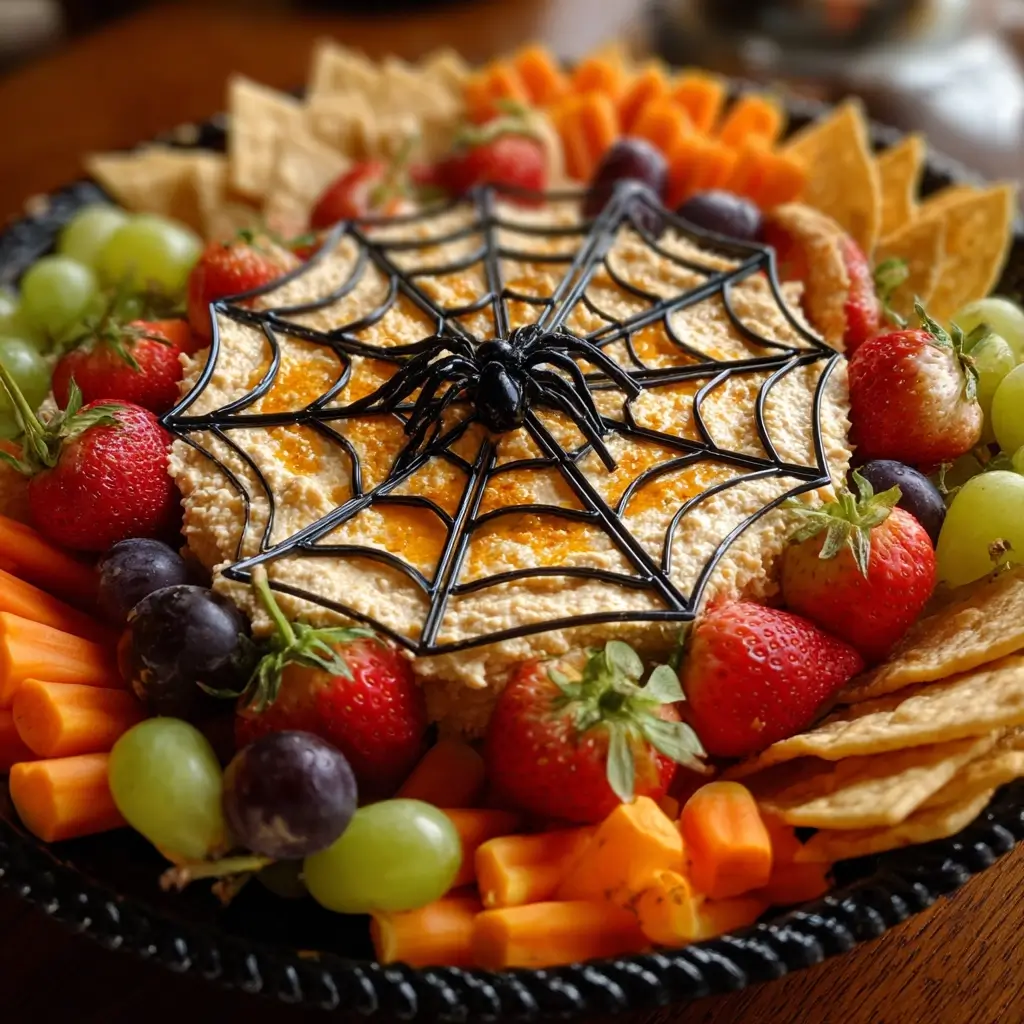
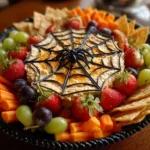
Of all the Halloween traditions my family has, our annual “Spooky Movie Marathon” is my absolute favorite. The lights go down, the classic monster movies come on, and the snack table becomes the star of the show. For years, I struggled to find that perfect centerpiece snack—something that was festive and fun but not loaded with sugar. I wanted a dish that both kids and adults would flock to, something visually impressive yet secretly simple to create. That’s when I stumbled upon the idea of a Spider Web Hummus Platter. The first time I made it, I wasn’t sure what to expect. I set the large, round platter on the table, the dark, glistening web of balsamic glaze looking perfectly eerie against the pale hummus. My kids, who can be notoriously picky, were instantly intrigued. “Whoa, it’s a spider’s house!” my youngest exclaimed. They dove in with carrot sticks and pita chips, completely forgetting they were eating something packed with healthy chickpeas and veggies. It was an instant, resounding success. Now, it’s not just a recipe; it’s a non-negotiable part of our Halloween celebration. It’s the first thing to disappear from the snack table every single year, proving that the best party food can be both spooky and spectacularly delicious.
Ingredients
Crafting this ghoulishly good platter requires a handful of simple, fresh ingredients. The beauty of this recipe lies in its wholesome components, which come together to create a dip that’s as nutritious as it is novel. Here’s what you’ll need to spin your own edible web:
- For the Hummus:
- 2 cans (15 ounces each) Chickpeas (Garbanzo Beans): These are the heart and soul of our hummus. Drained and thoroughly rinsed, they provide the creamy, protein-packed base. Using canned chickpeas makes this recipe incredibly quick and convenient, but if you have the time, you can certainly cook your own from dried.
- 2/3 cup Tahini: This is a smooth paste made from ground sesame seeds. It’s a non-negotiable ingredient for authentic hummus, lending a rich, nutty, and slightly bitter flavor that perfectly balances the other ingredients. Be sure to stir it well before measuring, as the oil often separates.
- 1/2 cup Freshly Squeezed Lemon Juice: This provides the essential bright, zesty tang that cuts through the richness of the tahini. Freshly squeezed juice offers a far superior flavor compared to bottled varieties, so it’s worth the extra minute of effort.
- 2-4 Cloves Garlic, Minced: Garlic adds a pungent, savory depth. The amount can be adjusted to your personal preference. For a milder, sweeter garlic flavor, you can roast the cloves before adding them to the food processor.
- 1 teaspoon Sea Salt: Essential for enhancing all the other flavors. You can start with one teaspoon and add more to taste after blending.
- 1/2 teaspoon Ground Cumin: This warm, earthy spice is a classic addition to hummus, providing a subtle smoky complexity that pairs beautifully with the chickpeas and tahini.
- 4-6 tablespoons Ice Cold Water: This is the secret to achieving an ultra-smooth, whipped, and creamy texture. The cold temperature helps emulsify the ingredients, resulting in a lighter, fluffier dip.
- For the Spider Web and Garnish:
- 2 tablespoons Extra Virgin Olive Oil: A drizzle of good quality olive oil over the top not only adds a rich, fruity flavor but also helps create a smooth canvas for your web design.
- 2-3 teaspoons Balsamic Glaze: This is what you’ll use for the “ink” of your spider web. Balsamic glaze is thicker and sweeter than regular balsamic vinegar, allowing it to hold its shape for a perfect design. You can find it pre-made in most grocery stores or make your own by reducing balsamic vinegar.
- 1 can (4 ounces) Large Black Olives, Pitted: These are for creating your creepy crawly spiders! You’ll need whole olives for the bodies and halved olives for the legs. They provide a briny, salty bite that complements the creamy hummus.
- Optional: 1 teaspoon Paprika or Smoked Paprika: A light dusting around the edge of the platter adds a beautiful pop of color and a touch of smoky flavor.
- For Serving (Dippers):
- Pita Bread or Pita Chips: The classic and beloved companion to hummus.
- Assorted Fresh Vegetables: Carrot sticks, cucumber slices, bell pepper strips (orange and black look especially festive!), celery sticks, and broccoli florets are all fantastic, healthy options.
- Crackers and Pretzels: An assortment of your favorite crackers, pretzel thins, or breadsticks provides a variety of textures.
Instructions
Follow these simple steps to bring your spooky Spider Web Hummus Platter to life. The process is straightforward and fun, making it a great recipe to involve kids in, especially when it comes to the decorating part!
- Prepare the Chickpeas: Open the cans of chickpeas and pour them into a fine-mesh sieve or colander. Rinse them thoroughly under cold running water for at least 30 seconds. This step is crucial as it removes the excess sodium and the “canned” flavor, resulting in a cleaner-tasting hummus. Give the colander a good shake to remove as much water as possible. For an even creamier texture, you can take the extra step of pinching the skins off each chickpea, but this is optional.
- Combine the Base Ingredients: In the bowl of a food processor, combine the well-stirred tahini and the freshly squeezed lemon juice. Secure the lid and process for about 60 seconds. The mixture will look a bit thick and pasty. Stop the processor and scrape down the sides and bottom of the bowl with a spatula. This initial blending, often called “whipping,” is key to a smooth final product.
- Add the Aromatics and Spices: Add the minced garlic, sea salt, and ground cumin to the whipped tahini-lemon mixture. Put the lid back on and process for another 30 seconds until everything is well incorporated and fragrant.
- Blend the Chickpeas: Add half of the rinsed and drained chickpeas to the food processor. Blend for about 1 minute until smooth. Add the remaining chickpeas and continue to blend until the mixture is thick and relatively smooth, stopping to scrape down the sides as needed.
- Achieve the Perfect Creaminess: With the food processor running, slowly drizzle in the ice-cold water, one tablespoon at a time. Continue to process for a total of 3-5 minutes. This extended blending time, combined with the ice water, is the secret to exceptionally light and creamy hummus. You’ll see the texture transform from grainy to silky smooth. Keep adding water until you reach your desired consistency. Once it’s perfect, give it a final taste and adjust the salt or lemon juice if necessary.
- Create the Canvas: Spoon the finished hummus onto a large, round, shallow platter or into a wide bowl. Using the back of a spoon or a small offset spatula, spread the hummus evenly, creating a smooth, flat surface. A slight swirl or mound in the center is perfectly fine. Drizzle the extra virgin olive oil over the top to give it a nice sheen.
- Spin the Web: Now for the fun part! Take your balsamic glaze and transfer it to a small squeeze bottle or a small plastic bag with a tiny corner snipped off. Starting from the center of the hummus, carefully squeeze a continuous spiral of glaze, working your way outwards towards the edge of the platter. Leave about half an inch of space between each line of the spiral.
- Form the Web Pattern: Take a wooden skewer, toothpick, or the tip of a sharp knife. Starting from the center of the spiral, gently drag the skewer in a straight line out to the edge of the hummus. Wipe the skewer clean. Rotate the platter and repeat this process, dragging from the center outwards, about 6-8 times, creating the classic spider web effect.
- Craft the Spiders: To make the olive spiders, take one whole pitted black olive for the body. Slice another olive in half lengthwise. Place one half on either side of the “body” olive. Then, thinly slice those halves crosswise to create eight small, curved “legs.” Carefully arrange four legs on each side of the body olive. Create 3-5 of these spiders and place them strategically on your web.
- Final Touches and Serving: If desired, lightly sprinkle paprika around the outer rim of the platter for extra color. Arrange your chosen dippers—pita chips, vibrant vegetable sticks, and crackers—around the hummus platter and serve immediately for the best visual effect.
Nutrition Facts
While this platter looks like an indulgent treat, it’s packed with beneficial nutrients. This breakdown is an estimate based on the recipe yielding approximately 10 servings.
- Servings: 10
- Calories per serving: Approximately 185 kcal
- Protein (6g): The combination of chickpeas and tahini provides a good source of plant-based protein, which is essential for muscle repair and keeping you feeling full and satisfied.
- Fiber (5g): Primarily from the chickpeas, dietary fiber aids in digestion, helps maintain stable blood sugar levels, and contributes to a feeling of satiety, preventing overeating at the party.
- Healthy Fats (13g): The majority of the fat content comes from heart-healthy monounsaturated fats in the tahini and extra virgin olive oil, which are beneficial for cardiovascular health.
- Iron (2mg): Chickpeas are a good source of iron, a vital mineral that helps transport oxygen throughout the body and prevent fatigue.
- Low in Saturated Fat (2g): This recipe is naturally low in saturated fats, making it a heart-conscious choice compared to many other creamy, cheese-based party dips.
Preparation Time
This impressive-looking appetizer comes together surprisingly quickly, making it an ideal choice for busy party hosts.
- Active Time: 20-25 minutes. This includes rinsing the chickpeas, blending the hummus, and decorating the platter with the web and olive spiders.
- Total Time: 25 minutes. There is no additional chilling or resting time required, so you can make it and serve it right away. If you choose to make it ahead of time, simply factor in a few minutes to decorate just before serving.
How to Serve
Presentation is key to making this Spider Web Hummus Platter a showstopper. Here’s how to serve it for maximum visual and culinary impact:
- Choose the Right Platter:
- Color Contrast: Serve the hummus on a dark-colored platter (black, charcoal grey, or even a deep orange) to make the pale hummus and the dark web design stand out dramatically.
- Shape and Size: A large, round, flat platter or a wide, shallow bowl works best. This provides a generous canvas for the web design and ample space for arranging dippers around the edge.
- Offer a Variety of Dippers: The key to a great platter is a diverse selection of items for dipping. Cater to all tastes and dietary needs with a colorful assortment.
- Breads: Warm, soft pita bread cut into triangles, crispy baked pita chips, and thin, crunchy breadsticks.
- Vegetables: Create a vibrant and healthy border with an array of fresh veggies. Think “Halloween colors” like bright orange carrot sticks and bell pepper strips, and deep purple cauliflower florets, alongside green cucumber slices and celery sticks.
- Crackers & Chips: Include a mix of textures. Buttery crackers, seeded whole-grain crisps, salty pretzel thins, and even blue corn tortilla chips can add to the spooky color scheme.
- Elevate the Spooky Theme:
- Garnish Generously: Don’t be afraid to add extra festive touches. A sprinkle of black sesame seeds can add texture, while finely chopped parsley can create a “grassy” border.
- Incorporate Props: Place a few clean, plastic spider rings or other small Halloween-themed props around the base of the platter to enhance the spooky atmosphere.
- Label with Flair: Use a small, tombstone-shaped chalkboard sign to label your creation as “Spider Web Dip” or “Spooky Hummus.”
Additional Tips
Take your Spider Web Hummus Platter from great to ghoulishly gourmet with these eight professional tips.
- The Ultimate Creamy Hummus Secret: For the absolute smoothest, restaurant-quality hummus, take the time to peel the skins from the chickpeas. After rinsing, gently pinch each chickpea, and the skin will slide right off. It takes about 10-15 extra minutes, but the resulting velvety texture is unparalleled.
- Boost the Flavor Profile: Don’t be afraid to experiment with the hummus base. Roasting the garlic cloves before adding them will impart a deep, sweet, and mellow flavor. You can also add a pinch of smoked paprika directly into the hummus for a smoky undertone or a tablespoon of chopped sun-dried tomatoes for a savory twist.
- Make-Ahead for Party Success: The hummus can be made up to 3 days in advance and stored in an airtight container in the refrigerator. In fact, the flavors often meld and become even better overnight. When you’re ready to serve, give it a good stir (adding a splash of water if it has thickened too much), then spread it on your platter and decorate.
- Perfect Web “Ink” Alternatives: If you don’t have balsamic glaze, you have other options. You can use black tahini paste, which will create a striking, dark web. Alternatively, mix a small amount of sour cream or Greek yogurt with a drop of black food gel coloring for a creamy, easy-to-pipe web.
- Crafting Cleaner Olive Spiders: To get clean cuts for your spider legs, use a very sharp paring knife. Chilling the olives in the refrigerator for 20 minutes before slicing can also help them firm up, making them easier to cut neatly.
- Scaling the Recipe for a Crowd: This recipe can easily be doubled or tripled for a larger Halloween bash. Simply double or triple all the ingredients and use a larger food processor, or blend in two batches to avoid overloading the machine. Serve it on an extra-large platter or create two separate platters for different snack stations.
- Embrace Dietary Accommodations: This recipe is naturally vegan, dairy-free, and nut-free (tahini is a seed paste). To ensure it’s fully gluten-free, simply serve it with certified gluten-free crackers, tortilla chips, and plenty of fresh vegetables.
- Get the Kids Involved: This is the perfect recipe for little helpers. Kids can help rinse the chickpeas, press the buttons on the food processor (with supervision), and arrange the dippers. They will especially love the artistic part—helping to create the olive spiders and placing them on the web. It’s a fantastic way to make fun holiday memories in the kitchen.
FAQ Section
Here are answers to some of the most common questions about creating the perfect Spider Web Hummus Platter.
1. Can I use store-bought hummus for this recipe?
Absolutely! If you’re short on time, using a good quality store-bought hummus is a fantastic shortcut. Simply choose your favorite brand (a plain or roasted garlic flavor works best), spread it onto your platter, and proceed directly with the decorating steps—creating the web and adding the olive spiders. You can even stir in a little extra lemon juice or a drizzle of olive oil to freshen up the flavor.
2. My hummus is too thick or too thin. How can I fix it?
This is a very common and easily solvable issue. If your hummus is too thick, simply add more ice-cold water, one tablespoon at a time, with the food processor running, until it reaches your desired creamy consistency. If you’ve accidentally made it too thin, you can thicken it by adding a few more chickpeas or a tablespoon of tahini and blending again.
3. How long will the Spider Web Hummus Platter last in the refrigerator?
The decorated platter is best served fresh, as the balsamic web can start to bleed slightly over time. However, the base hummus can be stored in an airtight container in the refrigerator for up to 5 days. If you have leftovers from the decorated platter, they are still perfectly delicious for a day or two, even if the web design is no longer pristine.
4. What is tahini, and is there a substitute?
Tahini is a paste made from ground sesame seeds, and it’s a fundamental ingredient for the authentic taste and texture of hummus. If you have a sesame allergy or can’t find tahini, you can substitute it with a creamy, unsweetened nut butter like cashew or almond butter for a similar richness, though the flavor will be different. For a nut-free and sesame-free version, you can simply omit it and add a bit more olive oil.
5. My balsamic glaze web lines are messy. Any tips for a cleaner design?
For a sharp, clean web, control is key. A squeeze bottle with a fine tip offers the most precision. If using a plastic bag, snip a very tiny corner to start—you can always make it bigger. Squeeze with steady, even pressure. Also, ensure your hummus surface is as smooth and level as possible to prevent the glaze from running into low spots.
6. Is this Halloween recipe considered healthy?
Yes, it’s a wonderfully healthy party option! It’s rich in plant-based protein, fiber, and healthy fats. Unlike many party foods that are high in saturated fat and refined sugars, this platter is based on whole foods like chickpeas, lemon, and garlic. Serving it with a rainbow of fresh vegetables makes it an even more nutritious and satisfying snack.
7. Can I freeze homemade hummus?
You can! Homemade hummus freezes quite well. Store it in an airtight, freezer-safe container, leaving a little space at the top for expansion. Drizzle a thin layer of olive oil over the top to prevent it from drying out. It can be frozen for up to 3-4 months. To thaw, place it in the refrigerator overnight. You will need to stir it vigorously before serving to restore its creamy texture. It’s best to freeze the hummus plain and decorate it after it has thawed.
8. What are some other spooky dip design ideas?
This platter concept is very versatile! Instead of a web, you could use black olives and black beans to create a spooky face on the hummus. For a green “monster” dip, blend spinach or avocado into your hummus and use veggie pieces for eyes and a mouth. You could also make a “graveyard” by spreading the hummus in a rectangular dish, crumbling dark rye or pumpernickel bread on top for “dirt,” and sticking crackers or vegetable sticks in it to look like tombstones.
Spider Web Hummus Platter
Ingredients
Crafting this ghoulishly good platter requires a handful of simple, fresh ingredients. The beauty of this recipe lies in its wholesome components, which come together to create a dip that’s as nutritious as it is novel. Here’s what you’ll need to spin your own edible web:
- For the Hummus:
- 2 cans (15 ounces each) Chickpeas (Garbanzo Beans): These are the heart and soul of our hummus. Drained and thoroughly rinsed, they provide the creamy, protein-packed base. Using canned chickpeas makes this recipe incredibly quick and convenient, but if you have the time, you can certainly cook your own from dried.
- 2/3 cup Tahini: This is a smooth paste made from ground sesame seeds. It’s a non-negotiable ingredient for authentic hummus, lending a rich, nutty, and slightly bitter flavor that perfectly balances the other ingredients. Be sure to stir it well before measuring, as the oil often separates.
- 1/2 cup Freshly Squeezed Lemon Juice: This provides the essential bright, zesty tang that cuts through the richness of the tahini. Freshly squeezed juice offers a far superior flavor compared to bottled varieties, so it’s worth the extra minute of effort.
- 2–4 Cloves Garlic, Minced: Garlic adds a pungent, savory depth. The amount can be adjusted to your personal preference. For a milder, sweeter garlic flavor, you can roast the cloves before adding them to the food processor.
- 1 teaspoon Sea Salt: Essential for enhancing all the other flavors. You can start with one teaspoon and add more to taste after blending.
- 1/2 teaspoon Ground Cumin: This warm, earthy spice is a classic addition to hummus, providing a subtle smoky complexity that pairs beautifully with the chickpeas and tahini.
- 4–6 tablespoons Ice Cold Water: This is the secret to achieving an ultra-smooth, whipped, and creamy texture. The cold temperature helps emulsify the ingredients, resulting in a lighter, fluffier dip.
- For the Spider Web and Garnish:
- 2 tablespoons Extra Virgin Olive Oil: A drizzle of good quality olive oil over the top not only adds a rich, fruity flavor but also helps create a smooth canvas for your web design.
- 2–3 teaspoons Balsamic Glaze: This is what you’ll use for the “ink” of your spider web. Balsamic glaze is thicker and sweeter than regular balsamic vinegar, allowing it to hold its shape for a perfect design. You can find it pre-made in most grocery stores or make your own by reducing balsamic vinegar.
- 1 can (4 ounces) Large Black Olives, Pitted: These are for creating your creepy crawly spiders! You’ll need whole olives for the bodies and halved olives for the legs. They provide a briny, salty bite that complements the creamy hummus.
- Optional: 1 teaspoon Paprika or Smoked Paprika: A light dusting around the edge of the platter adds a beautiful pop of color and a touch of smoky flavor.
- For Serving (Dippers):
- Pita Bread or Pita Chips: The classic and beloved companion to hummus.
- Assorted Fresh Vegetables: Carrot sticks, cucumber slices, bell pepper strips (orange and black look especially festive!), celery sticks, and broccoli florets are all fantastic, healthy options.
- Crackers and Pretzels: An assortment of your favorite crackers, pretzel thins, or breadsticks provides a variety of textures.
Instructions
Follow these simple steps to bring your spooky Spider Web Hummus Platter to life. The process is straightforward and fun, making it a great recipe to involve kids in, especially when it comes to the decorating part!
- Prepare the Chickpeas: Open the cans of chickpeas and pour them into a fine-mesh sieve or colander. Rinse them thoroughly under cold running water for at least 30 seconds. This step is crucial as it removes the excess sodium and the “canned” flavor, resulting in a cleaner-tasting hummus. Give the colander a good shake to remove as much water as possible. For an even creamier texture, you can take the extra step of pinching the skins off each chickpea, but this is optional.
- Combine the Base Ingredients: In the bowl of a food processor, combine the well-stirred tahini and the freshly squeezed lemon juice. Secure the lid and process for about 60 seconds. The mixture will look a bit thick and pasty. Stop the processor and scrape down the sides and bottom of the bowl with a spatula. This initial blending, often called “whipping,” is key to a smooth final product.
- Add the Aromatics and Spices: Add the minced garlic, sea salt, and ground cumin to the whipped tahini-lemon mixture. Put the lid back on and process for another 30 seconds until everything is well incorporated and fragrant.
- Blend the Chickpeas: Add half of the rinsed and drained chickpeas to the food processor. Blend for about 1 minute until smooth. Add the remaining chickpeas and continue to blend until the mixture is thick and relatively smooth, stopping to scrape down the sides as needed.
- Achieve the Perfect Creaminess: With the food processor running, slowly drizzle in the ice-cold water, one tablespoon at a time. Continue to process for a total of 3-5 minutes. This extended blending time, combined with the ice water, is the secret to exceptionally light and creamy hummus. You’ll see the texture transform from grainy to silky smooth. Keep adding water until you reach your desired consistency. Once it’s perfect, give it a final taste and adjust the salt or lemon juice if necessary.
- Create the Canvas: Spoon the finished hummus onto a large, round, shallow platter or into a wide bowl. Using the back of a spoon or a small offset spatula, spread the hummus evenly, creating a smooth, flat surface. A slight swirl or mound in the center is perfectly fine. Drizzle the extra virgin olive oil over the top to give it a nice sheen.
- Spin the Web: Now for the fun part! Take your balsamic glaze and transfer it to a small squeeze bottle or a small plastic bag with a tiny corner snipped off. Starting from the center of the hummus, carefully squeeze a continuous spiral of glaze, working your way outwards towards the edge of the platter. Leave about half an inch of space between each line of the spiral.
- Form the Web Pattern: Take a wooden skewer, toothpick, or the tip of a sharp knife. Starting from the center of the spiral, gently drag the skewer in a straight line out to the edge of the hummus. Wipe the skewer clean. Rotate the platter and repeat this process, dragging from the center outwards, about 6-8 times, creating the classic spider web effect.
- Craft the Spiders: To make the olive spiders, take one whole pitted black olive for the body. Slice another olive in half lengthwise. Place one half on either side of the “body” olive. Then, thinly slice those halves crosswise to create eight small, curved “legs.” Carefully arrange four legs on each side of the body olive. Create 3-5 of these spiders and place them strategically on your web.
- Final Touches and Serving: If desired, lightly sprinkle paprika around the outer rim of the platter for extra color. Arrange your chosen dippers—pita chips, vibrant vegetable sticks, and crackers—around the hummus platter and serve immediately for the best visual effect.
Nutrition
- Serving Size: one normal portion
- Calories: 185
- Fat: 13g
- Saturated Fat: 2g
- Fiber: 5g
- Protein: 6g