
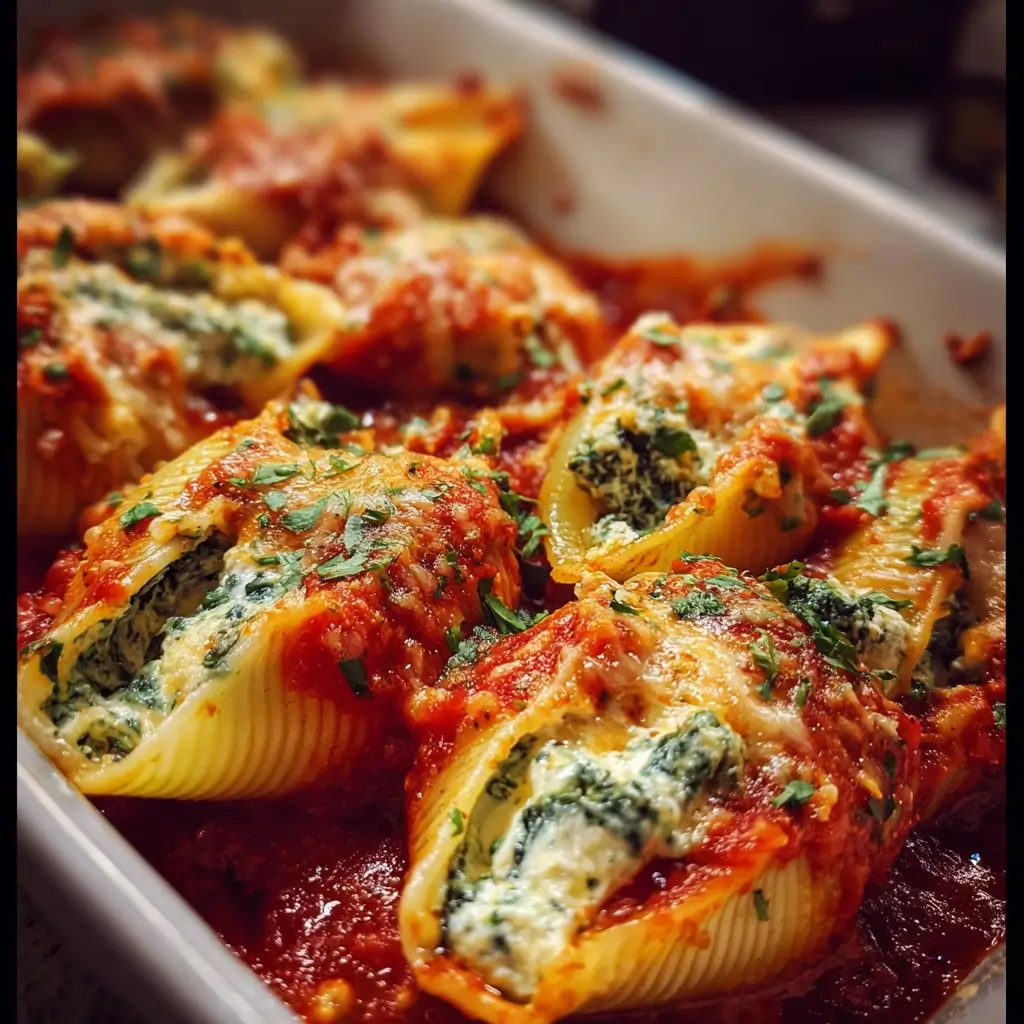
There are certain meals that feel like a warm hug on a plate, and this Spinach Ricotta Stuffed Shells recipe is the absolute epitome of that feeling. I remember the first time I made it for a Sunday family dinner. The house filled with the incredible aroma of simmering garlic, tangy tomato sauce, and baking cheese. My kids, who are usually skeptical of anything green, were peeking into the oven, mesmerized by the bubbling mozzarella. When I finally pulled the golden-brown, beautiful casserole out and set it on the table, there was a collective “wow.” The shells were perfectly cooked, cradling a creamy, savory filling of rich ricotta and earthy spinach, all bathed in a robust marinara sauce. Every bite was a perfect harmony of textures and flavors. It wasn’t just a meal; it was an event. Since that day, these stuffed shells have become our go-to for special occasions, potlucks, and whenever we need a dose of pure, unadulterated comfort food. It’s a recipe that proves simple, high-quality ingredients can come together to create something truly spectacular and universally loved.
Why This Spinach Ricotta Stuffed Shells Recipe is a Keeper
Before we dive into the nuts and bolts of creating this masterpiece, let’s talk about why this specific recipe will become a permanent fixture in your culinary rotation. It’s more than just a delicious meal; it’s a versatile, reliable, and impressive dish that works for almost any occasion.
- Ultimate Comfort Food: The combination of tender pasta, creamy cheese filling, and rich tomato sauce is the trifecta of comfort. It’s hearty, satisfying, and reminiscent of traditional Italian-American home cooking.
- Perfect for Making Ahead: This is a dream recipe for busy individuals and families. You can assemble the entire dish a day or two in advance, cover it, and keep it in the refrigerator. When you’re ready to eat, simply pop it in the oven. This makes it an ideal choice for entertaining, allowing you to spend more time with your guests and less time in the kitchen.
- Freezer-Friendly: Not only can you make it ahead, but this dish also freezes beautifully. You can freeze the entire assembled casserole or freeze individual portions for quick and easy weeknight meals. We’ll cover the exact method later in the FAQ section.
- A Crowd-Pleasing Vegetarian Main: Finding a vegetarian dish that satisfies everyone can be a challenge, but these Spinach Ricotta Stuffed Shells hit the mark every time. It’s substantial enough to be a main course and is beloved by vegetarians and meat-eaters alike.
- Customizable and Versatile: While this classic recipe is perfect as is, it also serves as a fantastic base for your own culinary creativity. You can add different cheeses, sneak in more vegetables, or even incorporate some protein if you wish.
Ingredients
The beauty of this dish lies in its simplicity and the quality of its components. Here’s what you’ll need to create the perfect pan of stuffed shells.
- Jumbo Pasta Shells (12-ounce box): These are the star vehicle for our creamy filling. You’ll need the large, shell-shaped pasta, which is specifically designed for stuffing. We’ll cook the whole box, as some will inevitably tear during the boiling process.
- Whole Milk Ricotta Cheese (32 ounces): This is the heart of the filling. Using whole milk ricotta is crucial for achieving a luxuriously creamy and rich texture that part-skim varieties just can’t replicate.
- Frozen Chopped Spinach (10-ounce package): A key flavor component that adds a wonderful, earthy depth and a boost of nutrients. It’s essential to thaw it completely and squeeze out as much water as possible to prevent a watery filling.
- Shredded Mozzarella Cheese (2 cups, divided): This provides that classic, gooey, cheesy pull we all love. We’ll use some in the filling and reserve the rest for that glorious golden-brown topping.
- Grated Parmesan Cheese (1 cup, divided): For a nutty, salty, and savory kick. Freshly grating your Parmesan will always yield a superior flavor and melt compared to pre-shredded varieties.
- Large Egg (1): This acts as a binder, holding the ricotta filling together so it doesn’t ooze out of the shells while baking.
- Garlic (4 cloves, minced): Provides the aromatic foundation of the filling. Don’t be shy with the garlic; it’s a cornerstone of Italian flavor.
- Yellow Onion (1 small, finely diced): Adds a subtle sweetness and depth to the filling when sautéed.
- Italian Seasoning (2 teaspoons): A convenient blend of dried herbs like oregano, basil, and thyme that instantly infuses the dish with classic Italian flavor.
- Salt (1 teaspoon) and Black Pepper (½ teaspoon): To season the filling and enhance all the other flavors.
- Red Pepper Flakes (¼ teaspoon, optional): For a tiny bit of background heat that brightens up the rich cheese and sauce. You can adjust this to your personal preference.
- Marinara Sauce (45-ounce jar): A high-quality store-bought marinara sauce works beautifully here and saves a lot of time. Choose your favorite brand, or feel free to use your own homemade sauce for an extra personal touch.
- Olive Oil (1 tablespoon): For sautéing the onion and garlic to build our flavor base.
- Fresh Basil or Parsley (for garnish): A sprinkle of fresh herbs at the end adds a pop of color and a fresh, bright flavor that cuts through the richness of the dish.
Instructions
Follow these step-by-step instructions carefully to ensure your Spinach Ricotta Stuffed Shells come out perfectly every time. The process is straightforward and can be broken down into a few key stages: preparing the components, assembling the dish, and baking to perfection.
Step 1: Cook the Pasta Shells
Bring a large pot of heavily salted water to a rolling boil. Add the entire 12-ounce box of jumbo pasta shells and cook according to the package directions, aiming for al dente. The shells should be tender but still have a firm bite. It’s crucial not to overcook them, as they will continue to cook in the oven and can become mushy if boiled for too long. Once cooked, drain the shells carefully in a colander and rinse them with cold water. This immediately stops the cooking process and prevents them from sticking together. Set them aside while you prepare the filling.
Step 2: Prepare the Spinach
While the pasta is cooking, prepare your spinach. If you haven’t already, thaw the frozen chopped spinach completely. The most effective way to remove excess water is to place the thawed spinach in the center of a clean kitchen towel or several layers of heavy-duty paper towels. Gather the ends of the towel and twist, squeezing firmly over the sink until no more liquid comes out. This step is absolutely critical; excess water will result in a runny, bland filling. You should be left with a compact, dry ball of spinach.
Step 3: Create the Aromatic Base
In a medium skillet, heat the olive oil over medium heat. Add the finely diced onion and sauté for 4-5 minutes, or until it becomes soft and translucent. Add the minced garlic and the optional red pepper flakes and cook for another minute until fragrant. Be careful not to burn the garlic. Remove the skillet from the heat and let it cool slightly.
Step 4: Mix the Ricotta Filling
In a large mixing bowl, combine the 32 ounces of whole milk ricotta, 1 cup of the shredded mozzarella, ½ cup of the grated Parmesan, and the beaten egg. Add the thoroughly squeezed spinach, the cooled onion and garlic mixture, the Italian seasoning, salt, and black pepper. Mix everything together with a sturdy spoon or spatula until it is well combined. The filling should be thick, creamy, and flecked with green. Take a moment to taste the filling and adjust the seasoning if necessary. It’s your last chance to perfect the flavor before stuffing the shells.
Step 5: Stuff the Shells
Now for the fun part! Using a small spoon, carefully fill each cooked pasta shell with a generous amount of the ricotta mixture. Don’t be afraid to pack it in. For a quicker and cleaner method, you can transfer the filling to a large piping bag or a zip-top bag with the corner snipped off. This allows you to pipe the filling neatly into each shell.
Step 6: Assemble the Casserole
Preheat your oven to 375°F (190°C). Spread a layer of marinara sauce, about 1 ½ to 2 cups, evenly over the bottom of a 9×13-inch baking dish. This prevents the shells from sticking and creates a flavorful base. Arrange the filled shells in a single layer in the dish, with the open side facing up. Nestle them snugly against each other.
Step 7: Sauce and Bake
Pour the remaining marinara sauce over the top of the stuffed shells, ensuring they are well-covered. This keeps the pasta moist during baking. Sprinkle the remaining 1 cup of shredded mozzarella and ½ cup of grated Parmesan cheese evenly over the entire dish.
Cover the baking dish tightly with aluminum foil. This traps the steam and helps the shells cook through without the cheese on top burning. Bake for 25-30 minutes.
Step 8: Brown the Top and Rest
After 25-30 minutes, carefully remove the aluminum foil. Return the dish to the oven and bake, uncovered, for another 10-15 minutes, or until the sauce is bubbly and the cheese is melted and turning golden brown in spots. For a more browned, bubbly top, you can switch the oven to the broil setting for the last 1-2 minutes, but watch it very carefully to prevent burning.
Once baked, remove the dish from the oven and let it rest for at least 10-15 minutes before serving. This crucial resting period allows the filling and sauce to set, making it much easier to serve intact portions. Garnish with fresh chopped basil or parsley just before bringing it to the table.
Nutrition Facts
This is an estimate, and actual values may vary based on the specific brands of ingredients used.
- Servings: 8 servings
- Calories per Serving: Approximately 580 kcal
- Protein (28g): A significant source of protein, primarily from the ricotta, mozzarella, and Parmesan cheeses, making it a very satisfying vegetarian meal.
- Calcium (650mg): Thanks to the large amount of dairy from the three cheeses, this dish is exceptionally rich in calcium, which is essential for bone health.
- Carbohydrates (55g): The pasta shells provide complex carbohydrates for sustained energy, while the marinara sauce contributes a small amount as well.
- Fat (28g): The use of whole milk cheeses contributes to the fat content, which is responsible for the dish’s rich flavor and creamy texture.
- Iron (4mg): Spinach is an excellent source of iron, an important mineral for energy and red blood cell production.
Preparation Time
This recipe requires some assembly, but much of it can be done in advance to make the final bake quick and easy.
- Prep Time: 30 minutes
- Cook Time: 45 minutes
- Total Time: 1 hour 15 minutes
How to Serve
These Spinach Ricotta Stuffed Shells are a hearty main course on their own, but they truly shine when accompanied by a few classic side dishes. Here are some wonderful ways to serve them to create a complete and memorable meal.
- Breads for Dipping:
- Classic Garlic Bread: A warm, crusty loaf of garlic bread is the quintessential partner for any saucy Italian dish. It’s perfect for sopping up every last bit of the delicious marinara sauce.
- Cheesy Focaccia: A soft, dimpled focaccia bread topped with rosemary and sea salt is another fantastic option.
- Simple Breadsticks: Soft or crunchy breadsticks are great for a lighter, but still satisfying, side.
- Fresh and Simple Salads:
- Simple Green Salad: A crisp salad of mixed greens, cherry tomatoes, and cucumber tossed in a light Italian vinaigrette provides a fresh, acidic contrast that cuts through the richness of the shells.
- Caesar Salad: The bold, tangy flavors of a classic Caesar salad with crunchy croutons and a creamy dressing stand up well to the hearty pasta.
- Caprese Salad: Slices of fresh mozzarella, ripe tomatoes, and fragrant basil drizzled with balsamic glaze offer a light and refreshing Italian-inspired side.
- Roasted or Sautéed Vegetables:
- Roasted Broccoli or Broccolini: Tossing broccoli florets with olive oil, garlic, and a pinch of red pepper flakes and roasting until tender-crisp creates a delicious and healthy side.
- Sautéed Green Beans: Quickly sautéing fresh green beans with garlic and almonds adds a lovely crunch and a pop of green to the plate.
- Roasted Asparagus with Parmesan: Simple, elegant, and delicious, roasted asparagus spears are a perfect complement.
Additional Tips
Follow these pro tips to elevate your stuffed shells from great to absolutely unforgettable.
- Squeeze That Spinach Bone Dry: This tip is so important it’s worth repeating. Any leftover water in the spinach will leak into your ricotta filling as it bakes, resulting in a watery, soupy mess. Wring it out with your hands, then use a kitchen towel for a final, aggressive squeeze.
- Use Whole Milk Ricotta: The difference in creaminess, flavor, and texture between whole milk and part-skim ricotta is night and day. For the most luscious, restaurant-quality filling, always opt for whole milk.
- Cook Extra Shells: Pasta shells are delicate, and a few will almost certainly tear or break during the boiling and handling process. Cooking the entire box ensures you have more than enough perfect shells to fill your baking dish.
- The Piping Bag Trick: For perfectly filled, uniform shells without the mess, use a piping bag (or a large zip-top bag with the corner cut off). It makes the stuffing process faster, cleaner, and surprisingly fun.
- Grate Your Own Cheese: Pre-shredded cheeses are often coated with anti-caking agents like potato starch, which prevents them from melting as smoothly and can impart a slightly grainy texture. Grating a block of mozzarella and a wedge of Parmesan yourself takes a few extra minutes but pays huge dividends in flavor and meltability.
- Don’t Overcook the Pasta: Remember to cook the shells to al dente. They will finish cooking in the oven while covered in sauce. If they are fully cooked or mushy after boiling, they will be far too soft after baking.
- Taste the Filling Before Stuffing: Always taste your ricotta filling before you begin stuffing the shells. This is your only chance to adjust the seasonings. Does it need more salt, another pinch of red pepper, or more Italian seasoning? Season it boldly, as the flavor will mellow slightly when combined with the pasta and sauce.
- Let It Rest: It’s tempting to dive right in as soon as the bubbly casserole comes out of the oven, but patience is a virtue. Letting the stuffed shells rest for 10-15 minutes allows the cheese and sauce to set up, ensuring that when you serve it, you get a beautiful, intact shell rather than a collapsed pile of cheese and pasta.
FAQ Section
Here are answers to some of the most common questions about making Spinach Ricotta Stuffed Shells.
1. Can I make these stuffed shells ahead of time?
Absolutely! This is one of the best make-ahead meals. You can assemble the entire dish up to 2 days in advance. Simply follow all the steps right up to baking, then cover the dish tightly with plastic wrap or foil and store it in the refrigerator. When you’re ready to bake, remove the plastic wrap, cover with foil, and add about 10-15 minutes to the initial covered baking time to account for the cold dish.
2. How do I freeze stuffed shells?
These shells freeze wonderfully. For best results, assemble the dish in a freezer-safe baking dish. Cover it tightly with a layer of plastic wrap, followed by a layer of heavy-duty aluminum foil. Label with the date and baking instructions. They can be frozen for up to 3 months. To bake, you can either thaw them overnight in the refrigerator and bake as directed (adding extra time) or bake directly from frozen. To bake from frozen, cover with foil and bake at 375°F for 60-75 minutes, then uncover and bake for another 15-20 minutes until hot and bubbly.
3. Can I use fresh spinach instead of frozen?
Yes, you can. You will need about 1 to 1.5 pounds of fresh spinach to equal a 10-ounce package of frozen. Sauté the fresh spinach in a little olive oil until it is completely wilted down. Let it cool, then chop it finely and squeeze out all the excess moisture, just as you would with the frozen variety.
4. Why is my ricotta filling watery?
A watery filling is almost always caused by one of two things: not squeezing enough water out of the spinach, or using a lower-quality or part-skim ricotta that has a higher water content. To prevent this, be extremely thorough when drying your spinach and always opt for a good quality, whole milk ricotta cheese.
5. Can I add meat to this recipe?
Certainly. If you’d like to add meat, brown 1 pound of ground beef, Italian sausage, or ground turkey with the onion and garlic. Drain off any excess fat before mixing it into the ricotta filling. This will create an even heartier and more robust dish.
6. How do I prevent my pasta shells from tearing?
To minimize tearing, be gentle. Don’t boil the pasta too vigorously. When draining, avoid dumping them harshly into a colander. Rinsing with cold water not only stops the cooking but also makes them easier to handle. Finally, handle them gently as you stuff them. Having extra cooked shells on hand is the best insurance policy.
7. What can I use instead of ricotta cheese?
While ricotta is classic, you could substitute it with cottage cheese (blended until smooth for a better texture) or a combination of cream cheese and mascarpone for an extra-decadent filling. Keep in mind that this will alter the traditional flavor and texture.
8. What’s the best way to reheat leftovers?
Leftovers can be reheated in the microwave for a quick meal, but for the best results, reheat them in the oven. Place the desired portion in an oven-safe dish, add a splash of water or a little extra sauce to keep it from drying out, cover with foil, and bake at 350°F (175°C) for 15-20 minutes, or until heated through.
Spinach Ricotta Stuffed Shells
Ingredients
The beauty of this dish lies in its simplicity and the quality of its components. Here’s what you’ll need to create the perfect pan of stuffed shells.
- Jumbo Pasta Shells (12-ounce box): These are the star vehicle for our creamy filling. You’ll need the large, shell-shaped pasta, which is specifically designed for stuffing. We’ll cook the whole box, as some will inevitably tear during the boiling process.
- Whole Milk Ricotta Cheese (32 ounces): This is the heart of the filling. Using whole milk ricotta is crucial for achieving a luxuriously creamy and rich texture that part-skim varieties just can’t replicate.
- Frozen Chopped Spinach (10-ounce package): A key flavor component that adds a wonderful, earthy depth and a boost of nutrients. It’s essential to thaw it completely and squeeze out as much water as possible to prevent a watery filling.
- Shredded Mozzarella Cheese (2 cups, divided): This provides that classic, gooey, cheesy pull we all love. We’ll use some in the filling and reserve the rest for that glorious golden-brown topping.
- Grated Parmesan Cheese (1 cup, divided): For a nutty, salty, and savory kick. Freshly grating your Parmesan will always yield a superior flavor and melt compared to pre-shredded varieties.
- Large Egg (1): This acts as a binder, holding the ricotta filling together so it doesn’t ooze out of the shells while baking.
- Garlic (4 cloves, minced): Provides the aromatic foundation of the filling. Don’t be shy with the garlic; it’s a cornerstone of Italian flavor.
- Yellow Onion (1 small, finely diced): Adds a subtle sweetness and depth to the filling when sautéed.
- Italian Seasoning (2 teaspoons): A convenient blend of dried herbs like oregano, basil, and thyme that instantly infuses the dish with classic Italian flavor.
- Salt (1 teaspoon) and Black Pepper (½ teaspoon): To season the filling and enhance all the other flavors.
- Red Pepper Flakes (¼ teaspoon, optional): For a tiny bit of background heat that brightens up the rich cheese and sauce. You can adjust this to your personal preference.
- Marinara Sauce (45-ounce jar): A high-quality store-bought marinara sauce works beautifully here and saves a lot of time. Choose your favorite brand, or feel free to use your own homemade sauce for an extra personal touch.
- Olive Oil (1 tablespoon): For sautéing the onion and garlic to build our flavor base.
- Fresh Basil or Parsley (for garnish): A sprinkle of fresh herbs at the end adds a pop of color and a fresh, bright flavor that cuts through the richness of the dish.
Instructions
Follow these step-by-step instructions carefully to ensure your Spinach Ricotta Stuffed Shells come out perfectly every time. The process is straightforward and can be broken down into a few key stages: preparing the components, assembling the dish, and baking to perfection.
Step 1: Cook the Pasta Shells
Bring a large pot of heavily salted water to a rolling boil. Add the entire 12-ounce box of jumbo pasta shells and cook according to the package directions, aiming for al dente. The shells should be tender but still have a firm bite. It’s crucial not to overcook them, as they will continue to cook in the oven and can become mushy if boiled for too long. Once cooked, drain the shells carefully in a colander and rinse them with cold water. This immediately stops the cooking process and prevents them from sticking together. Set them aside while you prepare the filling.
Step 2: Prepare the Spinach
While the pasta is cooking, prepare your spinach. If you haven’t already, thaw the frozen chopped spinach completely. The most effective way to remove excess water is to place the thawed spinach in the center of a clean kitchen towel or several layers of heavy-duty paper towels. Gather the ends of the towel and twist, squeezing firmly over the sink until no more liquid comes out. This step is absolutely critical; excess water will result in a runny, bland filling. You should be left with a compact, dry ball of spinach.
Step 3: Create the Aromatic Base
In a medium skillet, heat the olive oil over medium heat. Add the finely diced onion and sauté for 4-5 minutes, or until it becomes soft and translucent. Add the minced garlic and the optional red pepper flakes and cook for another minute until fragrant. Be careful not to burn the garlic. Remove the skillet from the heat and let it cool slightly.
Step 4: Mix the Ricotta Filling
In a large mixing bowl, combine the 32 ounces of whole milk ricotta, 1 cup of the shredded mozzarella, ½ cup of the grated Parmesan, and the beaten egg. Add the thoroughly squeezed spinach, the cooled onion and garlic mixture, the Italian seasoning, salt, and black pepper. Mix everything together with a sturdy spoon or spatula until it is well combined. The filling should be thick, creamy, and flecked with green. Take a moment to taste the filling and adjust the seasoning if necessary. It’s your last chance to perfect the flavor before stuffing the shells.
Step 5: Stuff the Shells
Now for the fun part! Using a small spoon, carefully fill each cooked pasta shell with a generous amount of the ricotta mixture. Don’t be afraid to pack it in. For a quicker and cleaner method, you can transfer the filling to a large piping bag or a zip-top bag with the corner snipped off. This allows you to pipe the filling neatly into each shell.
Step 6: Assemble the Casserole
Preheat your oven to 375°F (190°C). Spread a layer of marinara sauce, about 1 ½ to 2 cups, evenly over the bottom of a 9×13-inch baking dish. This prevents the shells from sticking and creates a flavorful base. Arrange the filled shells in a single layer in the dish, with the open side facing up. Nestle them snugly against each other.
Step 7: Sauce and Bake
Pour the remaining marinara sauce over the top of the stuffed shells, ensuring they are well-covered. This keeps the pasta moist during baking. Sprinkle the remaining 1 cup of shredded mozzarella and ½ cup of grated Parmesan cheese evenly over the entire dish.
Cover the baking dish tightly with aluminum foil. This traps the steam and helps the shells cook through without the cheese on top burning. Bake for 25-30 minutes.
Step 8: Brown the Top and Rest
After 25-30 minutes, carefully remove the aluminum foil. Return the dish to the oven and bake, uncovered, for another 10-15 minutes, or until the sauce is bubbly and the cheese is melted and turning golden brown in spots. For a more browned, bubbly top, you can switch the oven to the broil setting for the last 1-2 minutes, but watch it very carefully to prevent burning.
Once baked, remove the dish from the oven and let it rest for at least 10-15 minutes before serving. This crucial resting period allows the filling and sauce to set, making it much easier to serve intact portions. Garnish with fresh chopped basil or parsley just before bringing it to the table.
Nutrition
- Serving Size: one normal portion
- Calories: 580
- Fat: 28g
- Carbohydrates: 55g
- Protein: 28g